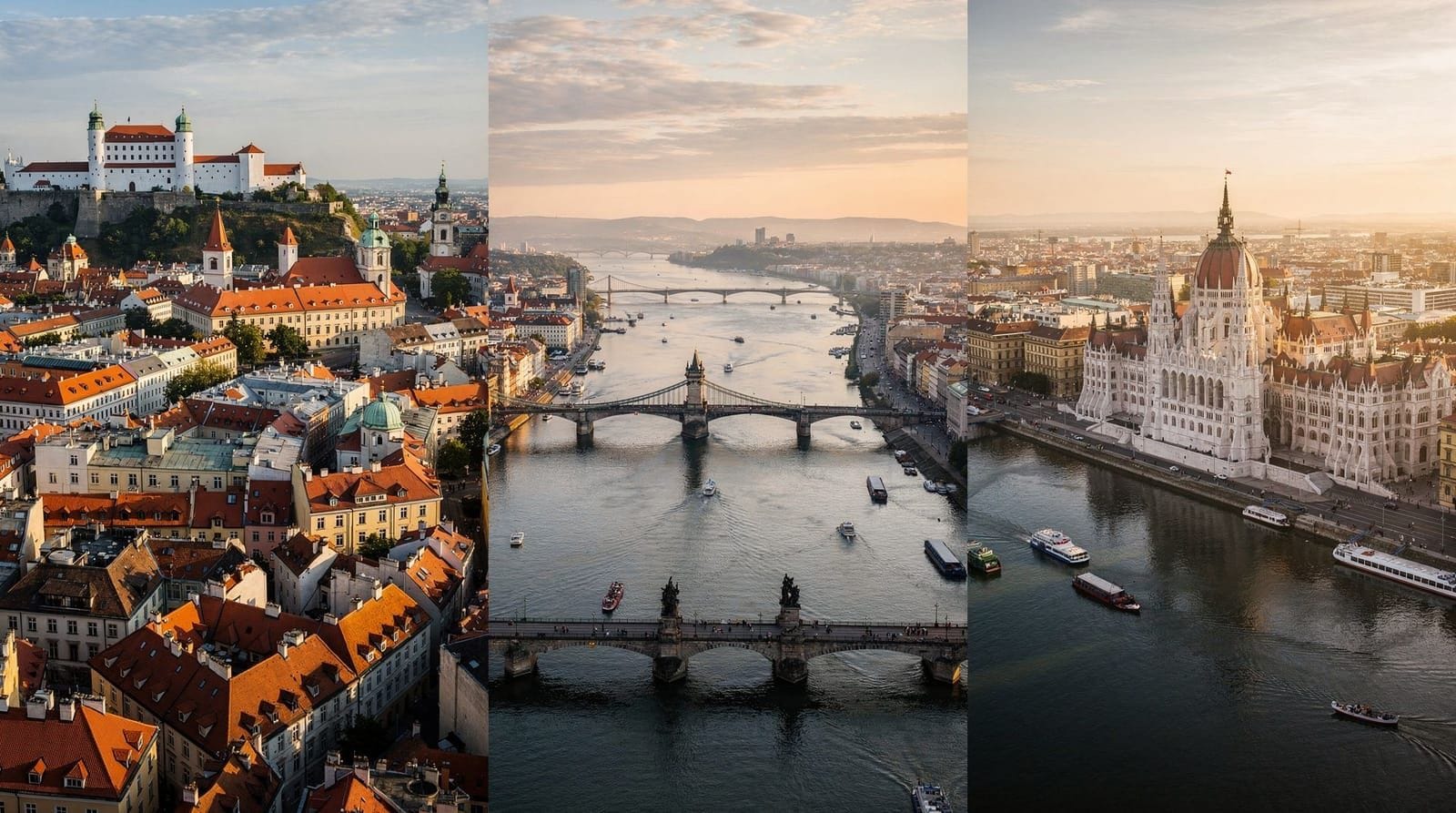
Bratislava vs Vienna: which city should you visit?
Should I visit Bratislava or Vienna?
Vienna wins for imperial grandeur, world-class art, and classical music. Bratislava wins for authentic atmosphere, lower prices, wine culture, and a compact, crowd-free old town. Most travellers who visit one end up wishing they had seen both — they are only 80 km apart.
Two capitals. Eighty kilometres. One Danube. The Bratislava-versus-Vienna question is one of the most common travel dilemmas in Central Europe, and it is genuinely hard to answer badly — both cities reward a visit. But they reward it in entirely different ways, and understanding the difference before you book saves a lot of confusion. Vienna is one of the great imperial capitals of the world, dense with world-class museums, Habsburg architecture, and a classical music tradition that is still a living part of daily life. Bratislava is something else entirely: compact, affordable, genuinely local, and refreshingly free of the tourist machinery that can make more famous cities feel like a performance of themselves.
This guide is not going to tell you that one city is better than the other. It will tell you which one is right for your specific trip — and explain why many travellers end up doing both.
| At a glance | |
|---|---|
| Distance | Around 80 km apart |
| Fastest transfer | Direct train, about 1 hour |
| Cheapest transfer | Flixbus, around €5–15 in advance |
| Most scenic transfer | Twin City Liner catamaran, April–October, about 1h15 |
| Typical daily budget | Bratislava around €30–50, Vienna around €70–120 |
| Best base if combining both | Bratislava (cheaper nights, both airports within reach) |
How far apart are Bratislava and Vienna?
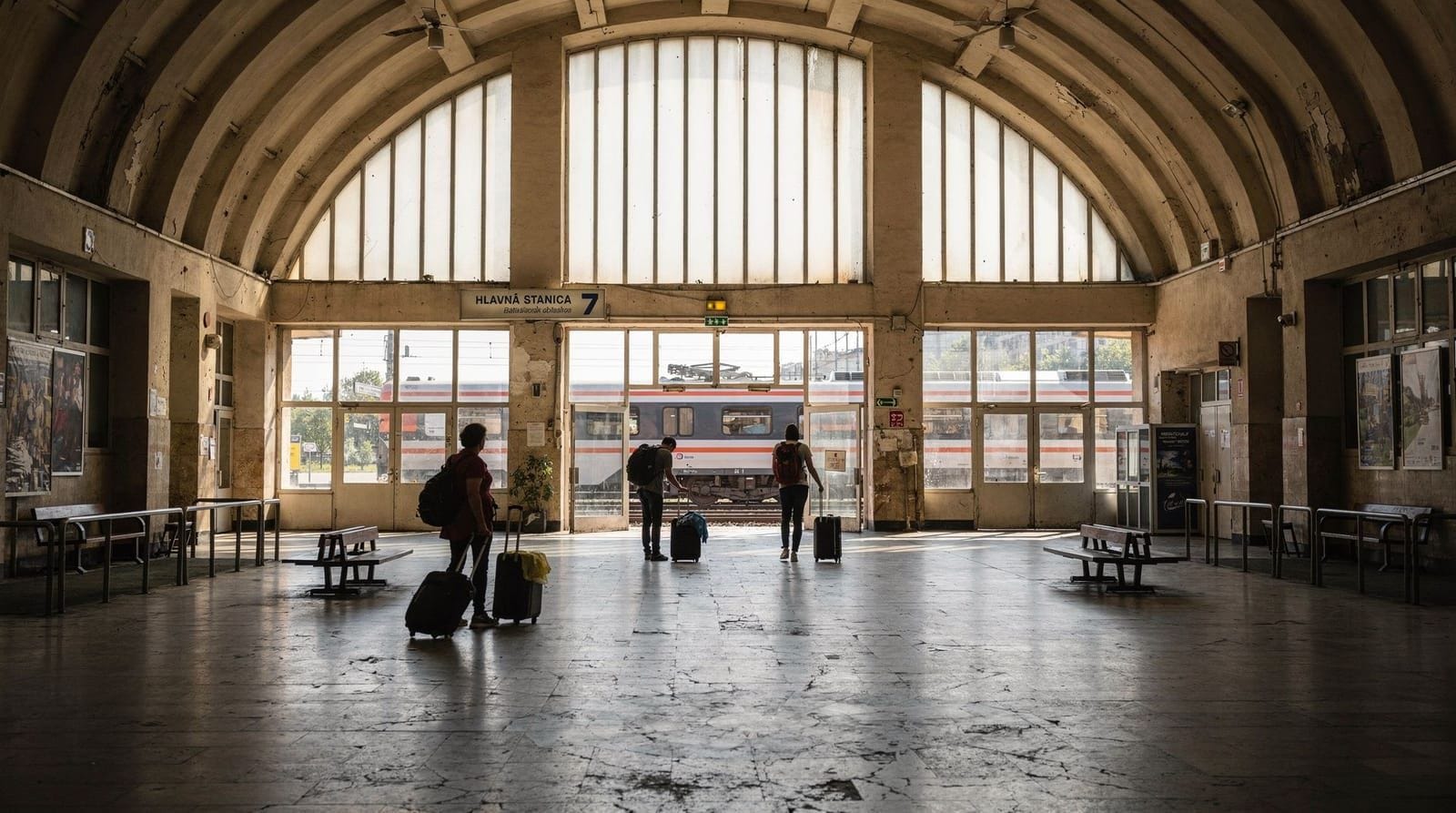
The distance between the two city centres is approximately 80 kilometres, which makes them among the closest capital pairs in the world. The journey by direct train takes about one hour from Wien Hauptbahnhof to Bratislava Hlavná stanica; RegioJet, ÖBB, and Railjet all serve the route, with tickets starting from around €10 and reaching €25 for flexible fares booked on the day. Flixbus and Eurolines coaches take around 1 hour 20 minutes and are often cheaper still for travellers booking in advance.
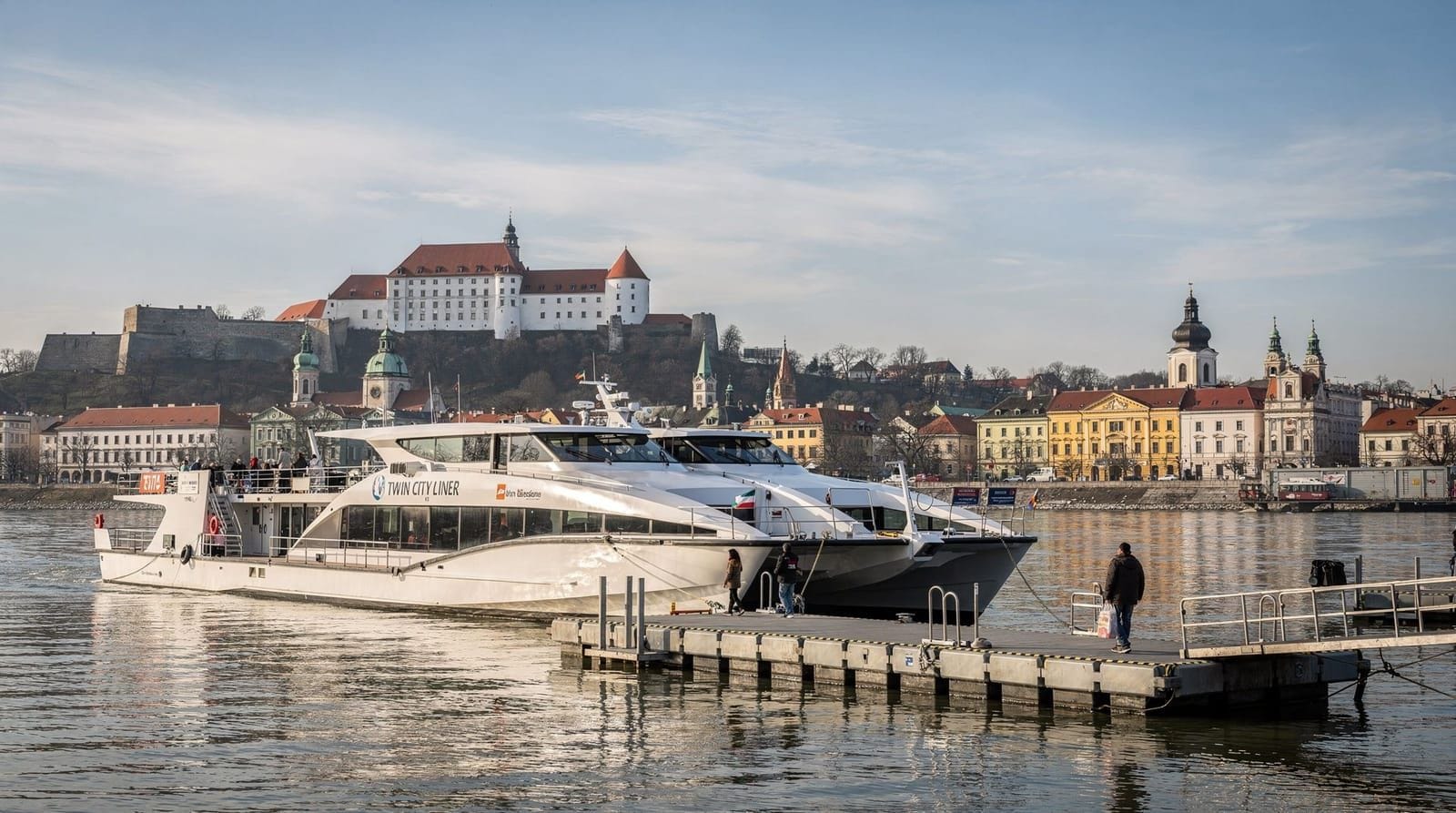
The most distinctive option is the Twin City Liner catamaran, which runs seasonally between April and October and covers the route along the Danube in about 1 hour 15 minutes. Boarding in Vienna at the Schwedenplatz terminal and arriving at Bratislava’s waterfront passenger terminal, it turns the transfer itself into an attraction — the Danube views through Lower Austria and into Slovakia are genuinely beautiful, and arriving by river rather than by rail gives Bratislava’s city silhouette a dramatic introduction. You can read a full rundown of the options in the Twin City Liner guide and the broader trains and transport guide.
One often-overlooked geographical quirk: Vienna International Airport (VIE) at Schwechat is actually closer to Bratislava city centre than it is to Vienna city centre. The airport bus from VIE to Bratislava takes about 45 minutes and costs under €10, which makes it a natural arrival point for anyone combining the two cities. If you are flying into VIE, staying two nights in Bratislava before moving to Vienna — or the reverse — makes excellent logistical sense. The Vienna airport to Bratislava guide covers every transport option in detail.
GetYourGuideVienna from Bratislava: full-day guided excursionCheck availability →What Vienna offers that Bratislava cannot match
Vienna operates at a different scale. With a population of around two million — four times that of Bratislava — it is one of Europe’s major metropolises, and the density of world-class attractions reflects that. A week in Vienna spent purely in its museums would still leave things unseen. This is not hyperbole: the Kunsthistorisches Museum alone would take two full days to explore properly, and Belvedere’s collection — home to Gustav Klimt’s The Kiss, which regularly tops lists of the most-visited paintings in the world — merits a full morning on its own.
The imperial heritage is simply staggering. Schönbrunn Palace, the summer residence of the Habsburgs, has 1,441 rooms and gardens that extend for kilometres into the western hills. The Hofburg, the winter palace complex in the city centre, is so large that it functions as a small city within the city, housing the Spanish Riding School, the Imperial Apartments, the Sisi Museum, and the Imperial Silver Collection.
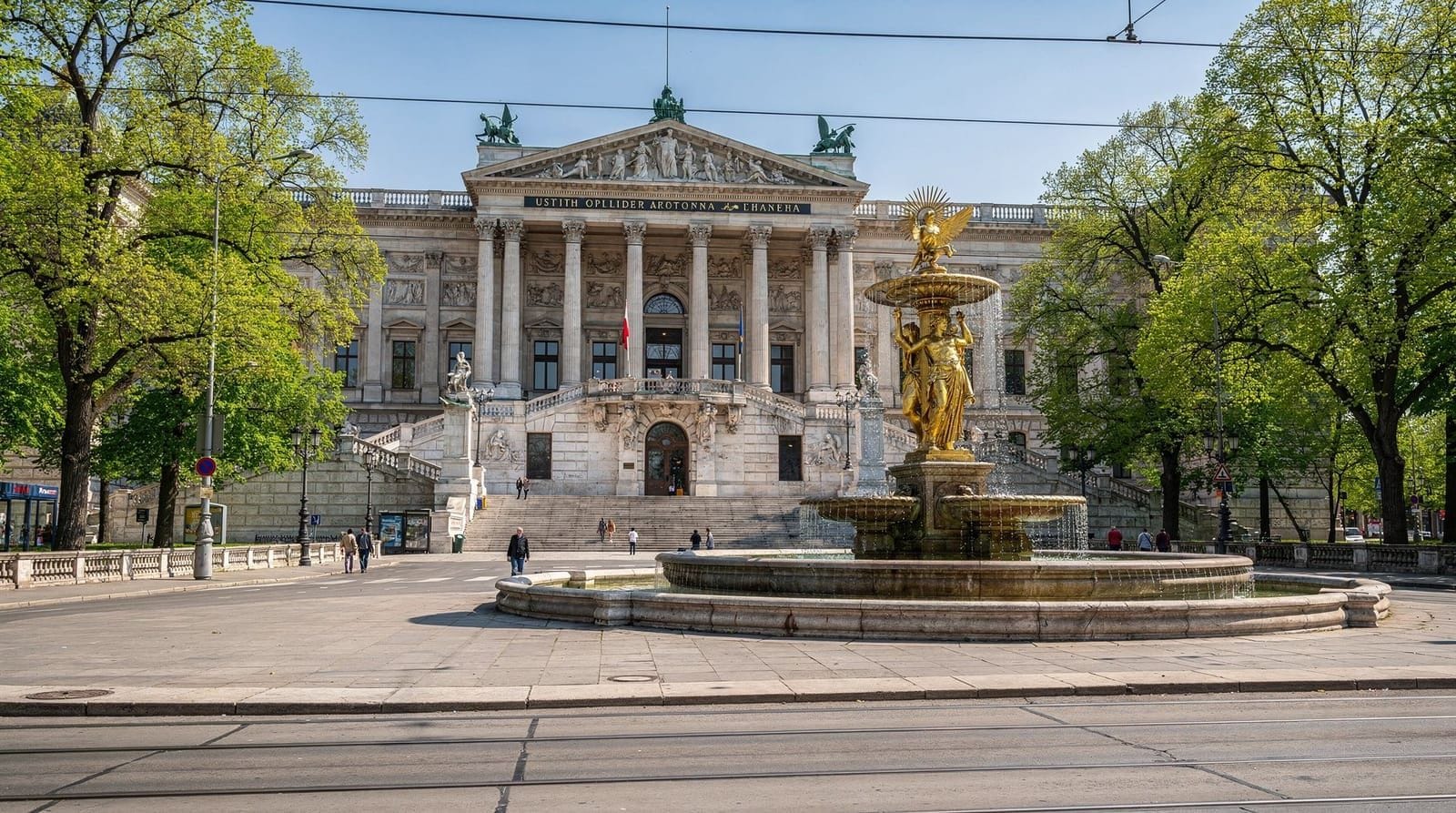
The Ringstrasse boulevard — constructed in the second half of the 19th century on Franz Joseph I’s orders — is lined with some of the grandest public buildings in Europe: the Parliament, the Rathaus, the Burgtheater, the State Opera. Walking the Ring in the early morning, before the tourist coaches arrive, is one of the genuinely great urban experiences on the continent.
Classical music is another dimension where Vienna simply has no peer. The Vienna State Opera (Wiener Staatsoper) is one of the busiest opera houses in the world, staging around 300 performances per year. Standing tickets in the top gallery cost as little as €4, which is one of the great cultural bargains anywhere. Mozart concerts, Vienna Philharmonic performances, and the Musikverein’s year-round programme mean that on almost any evening in Vienna, there is something extraordinary happening. Bratislava has a good Slovak Philharmonic and a pleasantly affordable opera house, but the comparison is not really fair to attempt.
Vienna’s Naschmarkt is one of Europe’s best food markets, running along the Wienzeile for around 500 metres and combining fresh produce stalls with restaurant terraces and antique dealers on Saturday mornings. The Prater park, with the 1897 Riesenrad Ferris wheel and kilometres of chestnut-lined paths, offers the kind of recreational grandeur that a city of Vienna’s size can maintain.
Hundertwasserhaus, the eccentric residential building decorated by Friedensreich Hundertwasser in the 1980s, is the kind of architectural curio that smaller cities rarely have the budget or ambition to produce. The city’s U-Bahn network is comprehensive, clean, and runs until well past midnight on weekends, making Vienna navigable in a way that Bratislava — which has good trams but no metro — is not.
All of this comes at a price. A beer in a Vienna pub costs €5 to €6; a restaurant meal for one without wine runs to €20 or more at anything beyond the most basic establishments. Accommodation in a mid-range hotel starts at €100 per night and rises sharply for anything near the centre. Vienna rewards visitors who can spend freely or who plan carefully to take advantage of its standing-ticket offers and free museum days.
GetYourGuideBratislava to Vienna day tripCheck availability →What Bratislava does better
Bratislava’s great virtue is authenticity. With around half a million residents and a tourist infrastructure that is still growing rather than fully established, it has retained the quality that many European capitals have spent the last twenty years gradually losing: the sense that you are visiting somewhere real, somewhere that exists primarily for the people who live there rather than for the visitors who come to photograph it.
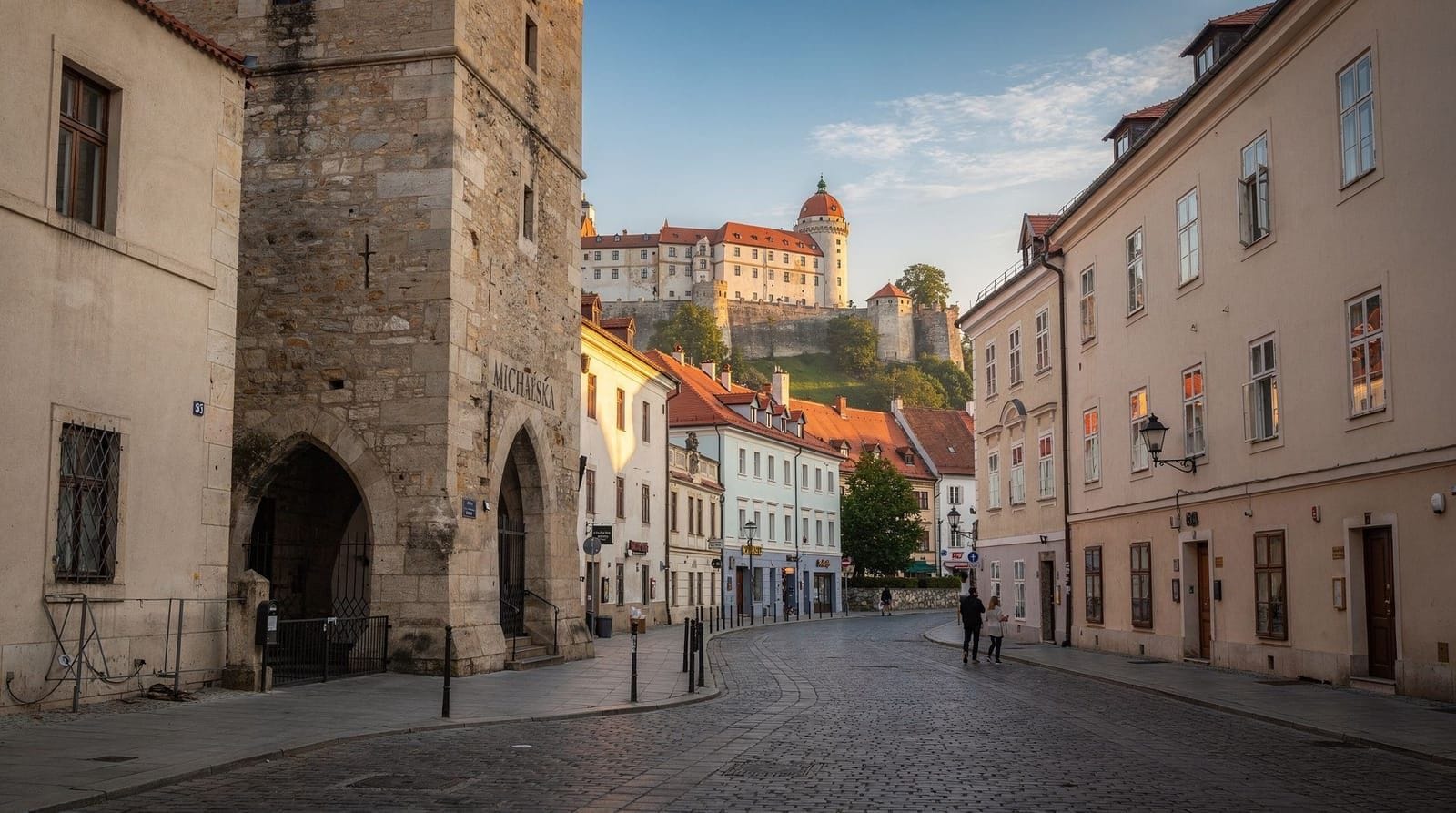
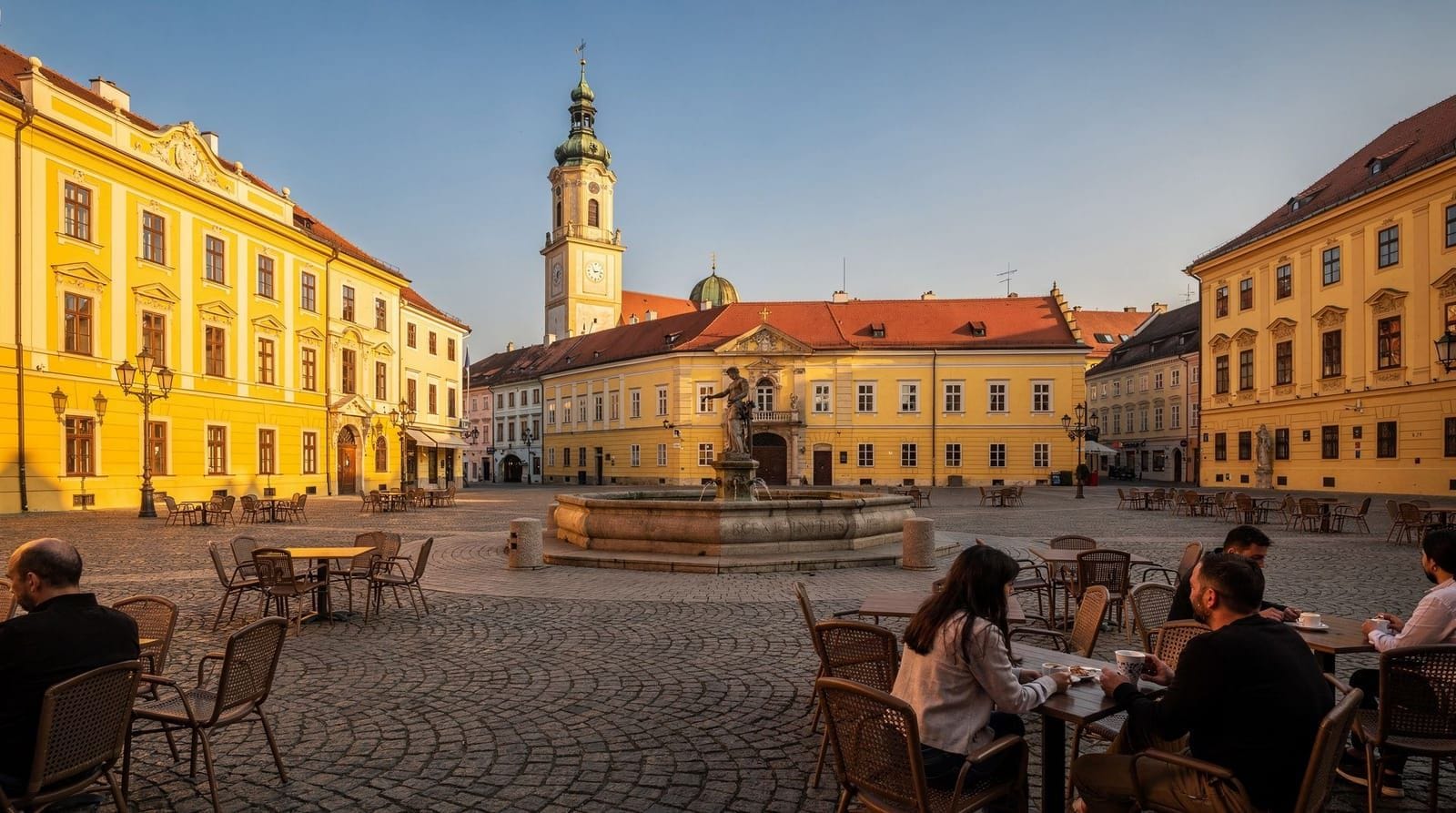
The Old Town is compact enough to walk entirely in an afternoon. Hlavné námestie — the main square — fills with café terraces in summer but never quite reaches the tourist-saturation of, say, Prague’s Old Town Square. The bronze street statues scattered through the pedestrian zone — Čumil the peering sewer worker, the napoleonic soldier resting on a bench — are genuinely charming rather than manufactured, small moments of civic whimsy that feel earned rather than designed for Instagram. Michael’s Gate, the last surviving medieval gate in the city’s fortification system, can be climbed in twenty minutes and offers rooftop views across the Old Town for €5.
Prices are consistently lower than Vienna across every category. A half-litre of Slovak lager in an Old Town pub costs €2 to €3. Dinner at one of the best restaurants in the Old Town runs to €12 to €20 per person including a glass of wine, and the quality is genuinely good — Bratislava’s restaurant scene has improved sharply over the past decade, with young Slovak chefs applying modern European technique to local ingredients. Traditional Slovak food — bryndzové halušky (sheep’s cheese gnocchi), kapustnica (sauerkraut soup), pečená kačka (roast duck) — is well represented in unpretentious restaurants that have no interest in charging Vienna prices for it.
The wine situation deserves particular attention. Bratislava sits at the southern edge of the Small Carpathians wine region, and the vineyards of Pezinok and Modra are just 30 minutes from the city centre. Slovak wine has spent decades in the shadow of its Austrian and Hungarian neighbours, but quality has risen dramatically since the 1990s, and a tasting afternoon in the Small Carpathians — white Welschriesling and Müller-Thurgau, along with some excellent Frankovka Modrá reds — represents extraordinary value. The Small Carpathians wine guide covers the region’s best producers and tasting routes in detail.
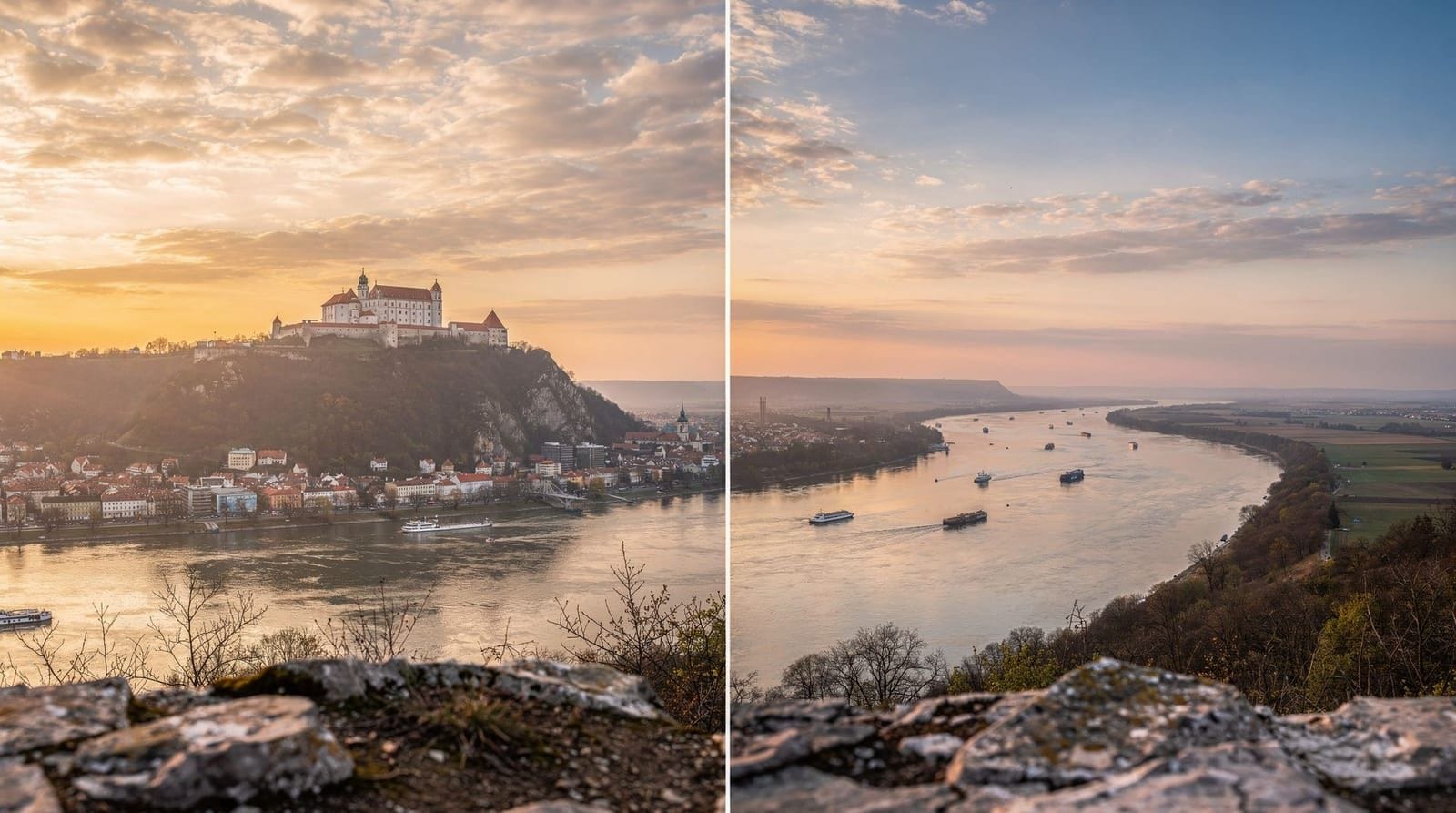
Devín Castle is Bratislava’s most dramatic sight and one that Vienna simply cannot replicate. Perched on a rocky promontory above the confluence of the Danube and Morava rivers, its ruins — some Roman, some medieval, some deliberately blown up by Napoleon’s troops in 1809 — have an almost operatic quality.
The site sits directly on the Iron Curtain line, and the communist and Iron Curtain history of the location adds a layer of significance that makes it far more than a scenic ruin. Buses from Bratislava’s Most SNP stop reach Devín in about 20 minutes, and a full Devín Castle day trip with time for the riverside walk back toward the city is one of the best half-days in the region.
The UFO Observation Deck on the SNP Bridge offers one of Central Europe’s more unusual viewpoints: a restaurant and viewing platform suspended in the flying-saucer-shaped pylon of a 1972 communist-era bridge, 85 metres above the Danube. The view encompasses the entire city, the Danube’s course toward Vienna, the Small Carpathians to the north, and — on clear days — the plains of Austria to the west. The design is audacious in the way that only communist-era architecture could be, and the price of entry (around €7) is a fraction of what equivalent viewpoints cost in larger cities.
GetYourGuideBratislava city highlights tourCheck availability →The cost comparison in numbers
For travellers on a budget, the difference between Bratislava and Vienna is not marginal. It is substantial enough to meaningfully affect what kind of trip is possible.
A beer in Bratislava costs €2 to €3, compared to €5 to €6 in Vienna. A mid-range restaurant meal runs €8 to €15 in Bratislava versus €15 to €30 in Vienna for comparable quality. Hotel accommodation in a decent three-star property costs €60 to €120 per night in Bratislava’s centre, against €100 to €200 or more in Vienna. Museum entry at Bratislava’s major sites runs €5 to €10; Vienna’s big museums — the Kunsthistorisches, the Natural History Museum, Belvedere — charge €15 to €20 per person.
Coffee is worth mentioning separately because of what it represents in each city. A cappuccino costs €2 to €3 in Bratislava’s cafes and coffeehouses. In Vienna it costs €4 to €5, but the Viennese coffee house — the Kaffeehaus — is a UNESCO-recognised cultural heritage institution, a room where time genuinely seems to slow down and where ordering one Melange entitles you to sit with a newspaper for as long as you like. The price difference is real, but so is the experience gap: what you get in a Vienna Kaffeehaus is not just coffee but a specific mode of civilised leisure that has no precise equivalent anywhere else.
The practical upshot is this: a day of sightseeing in Bratislava might cost €30 to €50 all in, including entry fees, meals, and drinks. The same day in Vienna costs €70 to €120 or more. For budget-conscious travellers, the Bratislava budget guide is the right starting point. For travellers who want Vienna’s full cultural offer without paying Vienna prices for accommodation, basing in Bratislava and day-tripping to Vienna is a legitimate strategy — the one-hour train makes it entirely practical.
Combining both cities: practical itinerary options
The cleanest reason to visit both Bratislava and Vienna is that they complement each other almost perfectly. Vienna is the grander, denser, more demanding city — you need several days to scratch the surface. Bratislava is more immediately legible: you can understand it in a day, fall in love with it in a weekend, and come back for the wine region the next time. Sequencing them back to back turns what could be an either-or decision into a both-and experience.
The Bratislava and Vienna combo itinerary covers the logistics in detail, but the broad framework works as follows. If you have four to five days total, two nights in each city with a day trip in each direction gives you a full Vienna experience (Ringstrasse, Schönbrunn, Belvedere, a night at the opera) and a full Bratislava experience (Old Town, Bratislava Castle, Devín, an evening in the wine bars near Michael’s Gate). The Twin City Liner catamaran is the most memorable way to make the transfer, arriving by river at Bratislava’s waterfront in the early afternoon after a morning departure from Vienna.
If you are flying in and out of Vienna airport, consider starting in Bratislava. The airport bus to Bratislava takes 45 minutes and deposits you directly in the city, letting you use your first day productively rather than spending it on airport transfers to Vienna. Spend two nights in Bratislava, take the train to Vienna, spend two or three nights there, and return to VIE for your flight. This is arguably the most efficient use of the geography — you are never backtracking, and the trip ends in the city with the better late-night transport connections to the airport.
The Danube capitals itinerary extends the logic further, adding Budapest to the east of Bratislava and creating a three-capital trip that covers Vienna, Bratislava, and Budapest in a week. All three cities are connected by direct trains; Bratislava sits geographically between the other two and works well as a two-night midpoint. The Budapest day trip guide is useful context if you are considering adding Hungary to the mix.
Quick comparison table
| Category | Bratislava | Vienna |
|---|---|---|
| Population | Around 500,000 | Around 2 million |
| Old Town size | Compact, walkable in an afternoon | Large, needs several days |
| Beer (0.5L) | €2–3 | €5–6 |
| Restaurant meal | €8–20 | €15–30+ |
| Mid-range hotel | €60–120/night | €100–200+/night |
| Signature sight | Devín Castle, UFO Observation Deck | Schönbrunn, Belvedere, the Opera |
| Museum density | Modest but improving | Among Europe’s best |
| Crowds | Low, still finding its feet | High in peak season |
| Best for | Wine, value, an authentic feel | Grand museums, imperial history, classical music |
Which city is right for your trip?
This depends almost entirely on what you are looking for.
Go to Vienna if you want world-class art museums and genuinely want time to explore them properly. If the Klimt paintings at Belvedere and the Egyptian antiquities collection at the Kunsthistorisches are on your list, there is no substitute. Go to Vienna for the Wiener Staatsoper and the experience of hearing a Beethoven symphony performed in the hall for which it was written. Go to Vienna if you want a city that rewards multiple days of deep, layered exploration, where every neighbourhood has its own character and its own café tradition.
Go to Bratislava if you want to feel like a traveller rather than a tourist. The absence of mass tourism machinery — the absence of tour bus queues, twenty-person deep viewing lines, and restaurants calibrated entirely to international visitors — creates space for a different kind of experience. Go to Bratislava if you want excellent food and wine at prices that do not require strategic budgeting.
Go to Bratislava for Devín Castle, for a morning on the Small Carpathians hiking trails, for wine tasting in the villages that lie twenty minutes from the Old Town. Go to Bratislava if you are visiting with children and want a city that is manageable in scale and gentle on the family budget.
Go to both if you can. The 80-kilometre separation is not a complication but an asset — it puts two genuinely different Central European experiences within an easy train ride of each other. Is Bratislava worth visiting is a question with a clear answer once you have seen it, and the answer almost always involves wishing you had planned to stay longer.
Frequently asked questions about Bratislava vs Vienna
Is Bratislava worth visiting if I am already going to Vienna?
Yes, without reservation. The one-hour train journey and the dramatically lower cost of living in Bratislava mean that adding a night or two in the Slovak capital costs very little in time or money but adds a genuinely different experience. Many Vienna visitors who include a Bratislava day trip end up wishing they had stayed overnight.
How much cheaper is Bratislava than Vienna?
As a rough guide, expect to spend 40 to 60 percent less on food, drink, and accommodation in Bratislava compared to Vienna. A mid-range restaurant dinner costs €8 to €15 in Bratislava versus €20 to €30 in Vienna. Hotel rooms in central Bratislava start at €60 to €80 per night where equivalent Vienna hotels cost €120 to €160. Museum entry fees are typically half what Vienna charges.
Can I do Bratislava as a day trip from Vienna?
Yes, easily. The one-hour direct train from Wien Hauptbahnhof runs multiple times per day, and Bratislava’s Old Town, castle, and waterfront are all walkable from the main station. A day trip gives you enough time to cover the main sights, have a long lunch, and explore the area around Michael’s Gate before catching the early evening train back. The Vienna day trip guide and Bratislava in one day both outline realistic day itineraries from each direction.
Which city is better for families with children?
Bratislava has advantages for families: it is compact and entirely walkable, the cost of meals and activities is significantly lower, and attractions like Devín Castle and the SNP Bridge observation deck appeal to children who might find Vienna’s museum density overwhelming. Vienna has the Prater park, the Riesenrad, and the Natural History Museum (one of Europe’s best for dinosaurs and meteorites), which are strong draws for older children. The Bratislava with kids guide covers the best family-friendly activities in detail.
What is the best way to travel between Bratislava and Vienna?
The direct train is the most practical: roughly one hour, departures every two hours or so, tickets from €10. The Twin City Liner catamaran is the most scenic, running April to October in about 1 hour 15 minutes along the Danube. Buses via Flixbus are the cheapest option for flexible travellers. If you are arriving or departing via Vienna International Airport, note that direct buses reach Bratislava in 45 minutes, making the airport an efficient interchange point.
Does Bratislava have good nightlife compared to Vienna?
Vienna has a more diverse and internationally recognised nightlife scene, from classical concerts and opera to established electronic music venues. Bratislava’s nightlife is concentrated in the Old Town and has improved considerably over the past decade — there are good wine bars, craft beer pubs, and club nights, all at prices well below Viennese equivalents. For a lively but affordable evening, Bratislava competes well; for range and scale, Vienna wins. The Bratislava nightlife guide covers the best bars and evening options in the city.
When is the best time to visit Bratislava and Vienna together?
Late spring (May to June) and early autumn (September to October) offer the best combination of weather, manageable crowds, and seasonal events. The autumn wine harvest in the Small Carpathians runs through September and October and is a strong reason to time a Bratislava visit for the shoulder season. Vienna’s high tourist season peaks in July and August; visiting in May or September means shorter queues at major attractions and more comfortable temperatures for exploring on foot. December brings Christmas markets to both cities — Bratislava’s are smaller and less crowded, Vienna’s are more spectacular.
Is Slovak the same as Czech — will I understand anything?
Slovak and Czech are closely related Slavic languages and mutually intelligible to their native speakers, but neither has much connection to German, which is Vienna’s native language. In practice, English is widely spoken in both cities among anyone working in tourism, hospitality, or services. In Bratislava you will also encounter German fairly often, given the city’s proximity to Austria and the historical German-speaking presence in the region. Neither city requires any local language for a standard tourist visit.
tours.vienna
Verified deep-linked GetYourGuide tours. Book through these links and we earn a small commission at no cost to you.