Traditional Slovak food: a guide to what to eat in Bratislava
What is traditional Slovak food and what should I try first in Bratislava?
Slovak cuisine is hearty Central European fare built around potatoes, pork, sauerkraut, and sheep's milk cheese. The national dish is bryndzové halušky — potato dumplings with bryndza sheep cheese and crispy bacon. Start there, then work your way through kapustnica soup, rezeň schnitzel, and a glass of Small Carpathians white wine.
| At a glance | |
|---|---|
| Where | Old Town restaurants, Obchodná Street, and the denné menu lunch spots citywide |
| Cost | Around €6-10 for a lunch menu, €20-30 for a mid-range dinner |
| Time needed | An hour for a sit-down meal; half a day for a food tour |
| Getting there | Most recommended restaurants are within a 10-minute walk of Hlavné námestie |
| Best time | Lunch (11:00-14:30) for the denné menu; autumn for game and harvest specials |
Slovak food does not make the top ten lists. It is not as exported as Hungarian goulash or as internationally famous as Viennese schnitzel, and Slovakia itself is small enough that most visitors arrive not quite knowing what to expect on the plate. What they find is a cuisine shaped by centuries of highland farming: filling, uncomplicated, and built on ingredients that kept well through mountain winters. If you are eating in Bratislava for the first time, this guide will help you understand what you are looking at on the menu, what is worth ordering, and where to find honest versions of the classics.
The flavours that define Slovak cooking
Slovak cuisine sits at the intersection of Central European influences. Centuries of Hungarian rule left a visible mark: paprika appears in sauces, goulash variants turn up on local menus, and stuffed cabbage (holubky) bears a clear family resemblance to Hungarian töltött káposzta. The proximity of Vienna and the long Habsburg period brought Viennese techniques — breaded escalopes, cream sauces, apricot pastries. Czech influence is strong too, particularly in bread dumplings and svíčková, the beef sirloin dish that many Slovaks grew up eating and which remains enormously popular here even though it originated across the border.
What distinguishes Slovak food from its neighbours is the primacy of a single ingredient: bryndza. This is a semi-soft sheep’s milk cheese made in the mountain regions of central Slovakia, sharp and slightly salty, crumbling easily and used in everything from dumplings to spreads to filled pastries. The other signature element is kapusta — sauerkraut — which appears in soups, alongside roasted pork, and in festive dishes. The basic flavour vocabulary of Slovak cooking is sour, savoury, rich, and warming.
The food is not light. A full Slovak lunch of soup, main course, and dessert is a serious commitment. In Bratislava, as in most Slovak cities, lunch is the main meal of the day and restaurants offer a fixed lunch menu (denné menu) between roughly 11:00 and 14:30 — usually soup plus a main for €6–10 — which is how most locals actually eat during the working week.
Bryndzové halušky: the national dish
If you eat only one Slovak dish in Bratislava, it should be bryndzové halušky. The dish is so central to Slovak identity that it appears on the menu at every traditional restaurant in the city, it anchors the national food festival calendar, and it comes up within about thirty seconds of asking a Slovak what food to try.
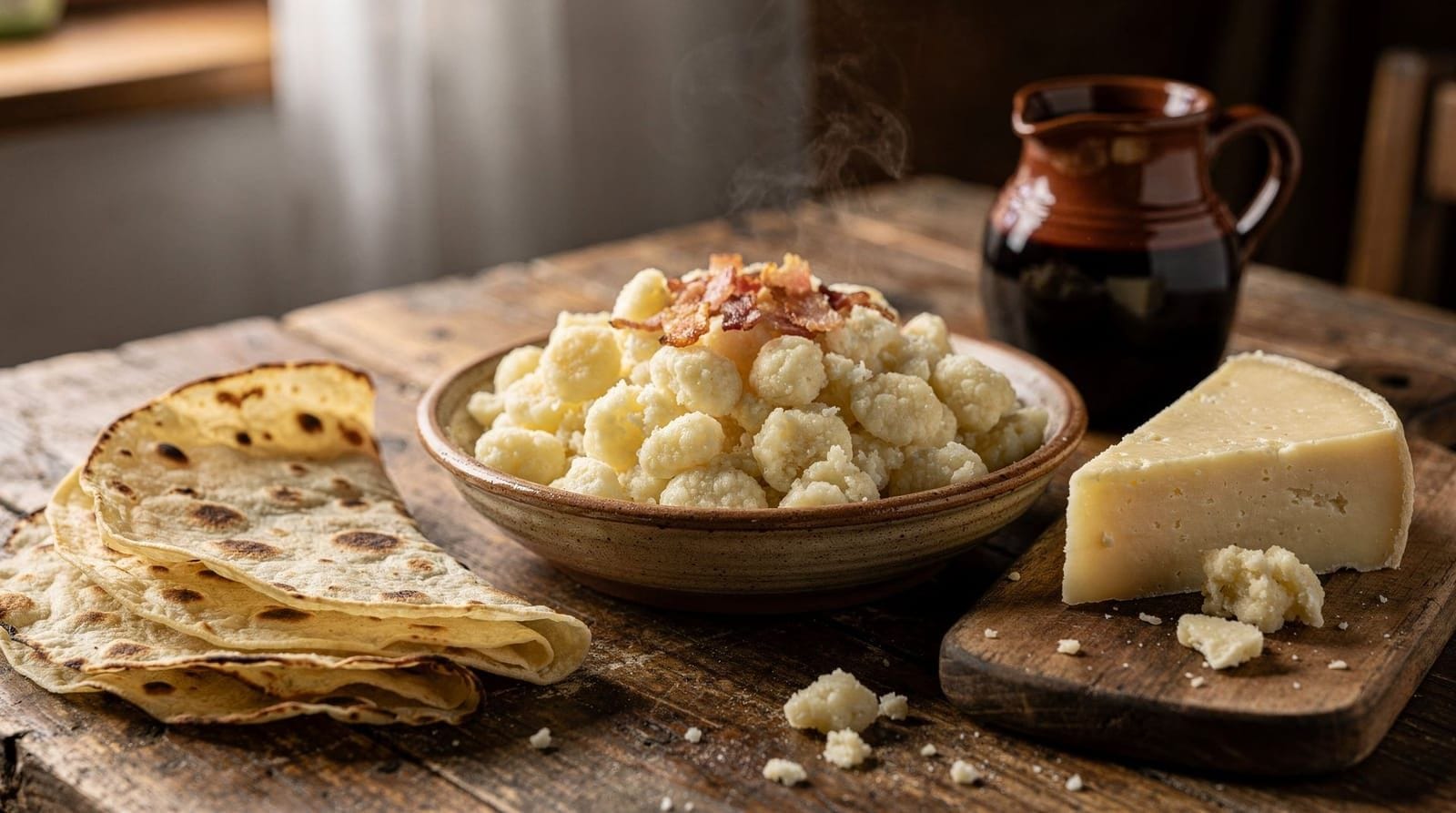
Halušky are small potato dumplings — irregular, soft, and slightly chewy — made from grated raw potato mixed with flour. They are boiled in salted water and then combined with bryndza (the sheep’s milk cheese described above) until the cheese melts into a coating that clings to every dumpling. The dish is finished with several strips of opekaná slanina — crispy fried bacon — scattered over the top, and often a spoonful of sour cream. Some kitchens add a ladle of the bacon fat from the pan, which makes the dish richer still.
The result is intensely savoury and filling in the way that very few dishes manage. It is not the most photogenic plate — pale dumplings in a yellowish cheese sauce, topped with bacon — but the taste is substantial and genuinely distinctive. Bryndza has a sharpness that cuts through the starchiness of the potato, and the bacon adds crunch and smoke. A portion typically costs €8–12 at a sit-down restaurant. At Slovak Pub on Obchodná Street, it is one of the most-ordered dishes and reliably made.
Bryndzové halušky is comfort food in the deepest sense: it tastes like something that would have been made in a farmhouse kitchen in the mountains, which is essentially what it is.
GetYourGuideBratislava guided culinary tourCheck availability →Kapustnica: the soup that defines winter
Kapustnica is sauerkraut soup, and it is the dish most Slovaks associate with Christmas and New Year. The base is fermented white cabbage (kapusta) simmered in a rich meat stock, usually pork or smoked sausage (klobása), with dried mushrooms, onion, paprika, and sometimes a splash of cream or sour cream stirred in at the end. The dried mushrooms give it an earthy depth; the sauerkraut provides acidity and slight fermented tang. It is a dark, savoury soup that smells of smoke and winter.
In restaurants it appears on menus year-round, not only at Christmas, and it typically costs €4–6 for a generous bowl. Order it as a first course before a heavier main and you will understand immediately why Slovak cuisine developed the way it did: this soup is designed to warm you from the inside out before you step back into the cold.
A note on quality: kapustnica varies significantly between kitchens. The best versions use real smoked sausage and take time; the worst are a pale, thin broth with limp cabbage. Modrá Hviezda (Blue Star) on Beblavého Street, near Bratislava Castle, is one of the kitchens that gets it right — their version uses klobása from a reliable producer and is properly seasoned. Slovak Pub also does a solid version at lunch.
Svíčková: the Czech influence that stayed
Svíčková na smetaně — beef sirloin in cream sauce — is technically a Czech national dish, but it crossed the border so completely that you will find it on virtually every traditional Slovak restaurant menu and many Bratislavans consider it part of their own food culture. The dish consists of roasted beef sirloin braised with root vegetables and spices, then served sliced in a cream sauce made from the braising liquid, typically enriched with cream and finished with a squeeze of lemon. It arrives with bread dumplings (knedľa), a spoonful of cranberry compote, and a dollop of whipped cream on the side.
The combination sounds strange — meat with cream sauce and cranberries — but works because the cranberry acidity cuts the richness of the sauce, and the dumplings absorb everything. It is one of those dishes where the individual components only make sense once you eat them together. In Bratislava, prices run €10–15 for a full portion. Zylinder on Hviezdoslavovo námestie is a reliable address for svíčková, as is Kolkovna Bratislava on Kolárska Street.
Rezeň: breaded and pan-fried
Rezeň is the Slovak version of the Wiener Schnitzel, which is itself an Austrian version of the Italian cotoletta. The name simply means “schnitzel” in Slovak. Traditionally it is pork loin or chicken breast, pounded thin, dredged in flour, beaten egg, and breadcrumbs, then pan-fried in oil or lard until golden and crisp. A good rezeň should be thin enough that the breadcrumb coating crackles when you cut into it, with no gap between the meat and the crust.
It comes everywhere: at traditional Slovak restaurants, at Czech-style pubs, at beer halls. A standard portion costs €8–12. The version at Bratislavský Meštiansky Pivovar (the Bratislava Burgher Brewery on Dunkajská Street) is notably good — they use pork loin of reasonable quality and the kitchen does not cut corners on the crust. Rezeň is typically served with potato salad (zemiakový šalát) or sometimes just fried potatoes; the potato salad version, dressed with mayonnaise and diced pickles, is the more traditional accompaniment.
GetYourGuideBratislava taste of Slovakia private walking tourCheck availability →Lokša: the potato flatbread worth knowing
Lokša are thin potato flatbreads — more pancake than bread — made from cooked mashed potato mixed with flour, rolled thin and cooked on a dry griddle or pan without oil. They are soft, slightly chewy, and taste of potato in a mild, neutral way that works well as a vehicle for other flavours. They appear in several contexts: alongside roast duck as an alternative to bread, spread with duck fat (husacia masť) and eaten as a snack, or filled with poppy seed paste (mak) or apple as a sweet version.
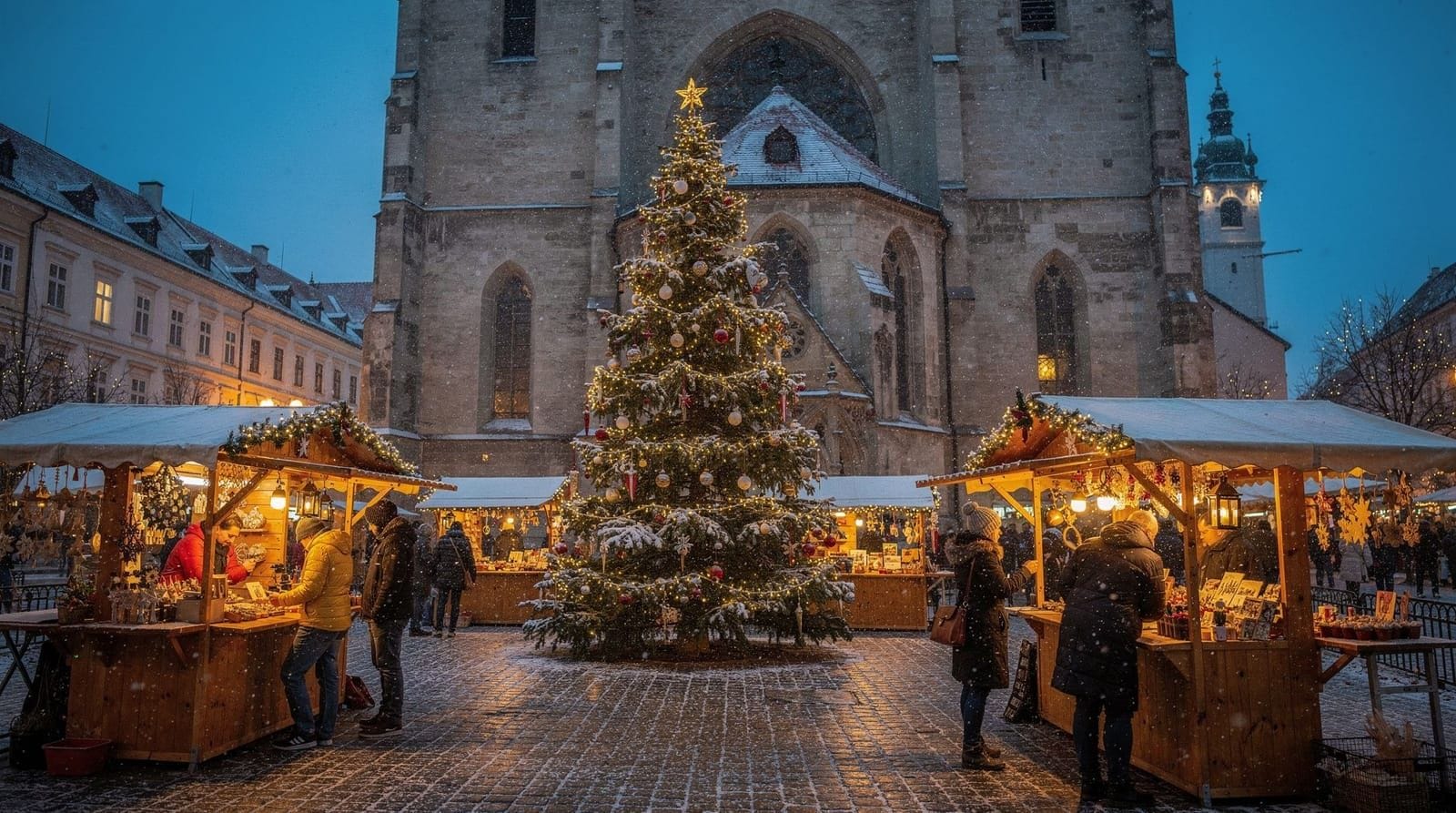
At Christmas markets in Bratislava, lokše filled with duck fat and sold rolled up are one of the most popular snacks — simple, warming, and made on the spot. The version at the Christmas market stalls around Hlavné námestie and Františkánske námestie is reliably good. Outside of the markets, look for lokše on the menus at Slovak Pub and Modrá Hviezda. They cost €3–5 as a side or snack portion.
Trdelník: the touristy spiral pastry
A word of honesty about trdelník: it is everywhere in Bratislava’s Old Town and is sold as a traditional Slovak treat, but its Slovak credentials are contested. The pastry — a strip of dough wound around a wooden cylinder, roasted over charcoal, and rolled in cinnamon sugar — has Hungarian and Transylvanian origins (kürtőskalács) and was popularised as a street food across Central European tourist destinations in the early 2000s. That said, Bratislavans do eat it, it is genuinely pleasant when made fresh and still warm, and it costs €3–4 for a full cone. The stalls around Michael’s Gate and Hlavné námestie do reasonable versions.
The current trend is filling the hollow cone with ice cream or Nutella and serving it as a dessert, which has nothing to do with tradition but is at least honest in its intent to sell dessert. If you want a traditional bakery pastry with more local credibility, look for pagáče (savoury sheep cheese biscuits) or šúľance s makom (potato noodles with poppy seed and butter) at Slovak restaurants.
Slovak drinks: pálenka and wine
Pálenka: fruit brandy at the table
Pálenka is the Slovak word for fruit brandy distilled from fermented fruit — plums (slivovica), pears, apricots, and various berries. Slivovica, plum brandy, is the most widespread and ranges enormously in quality. The commercially bottled versions (Stock, Dynybyl) are consistent but unexceptional; the homemade (domáca) or small-producer versions, which circulate quietly in rural areas and surface at Slovak restaurants that source carefully, are a different matter entirely.
In Bratislava restaurants a glass of good pálenka costs €2–4. It is typically drunk as a digestif after a heavy meal or as a brief warm-up before eating in cold weather. Modrá Hviezda stocks a selection of small-producer spirits and can advise on what is worth trying. Do not order it expecting a smooth spirit — the character is rustic, direct, and aromatic in a way that eau de vie drinkers will recognise and appreciate.
Wine from the Small Carpathians
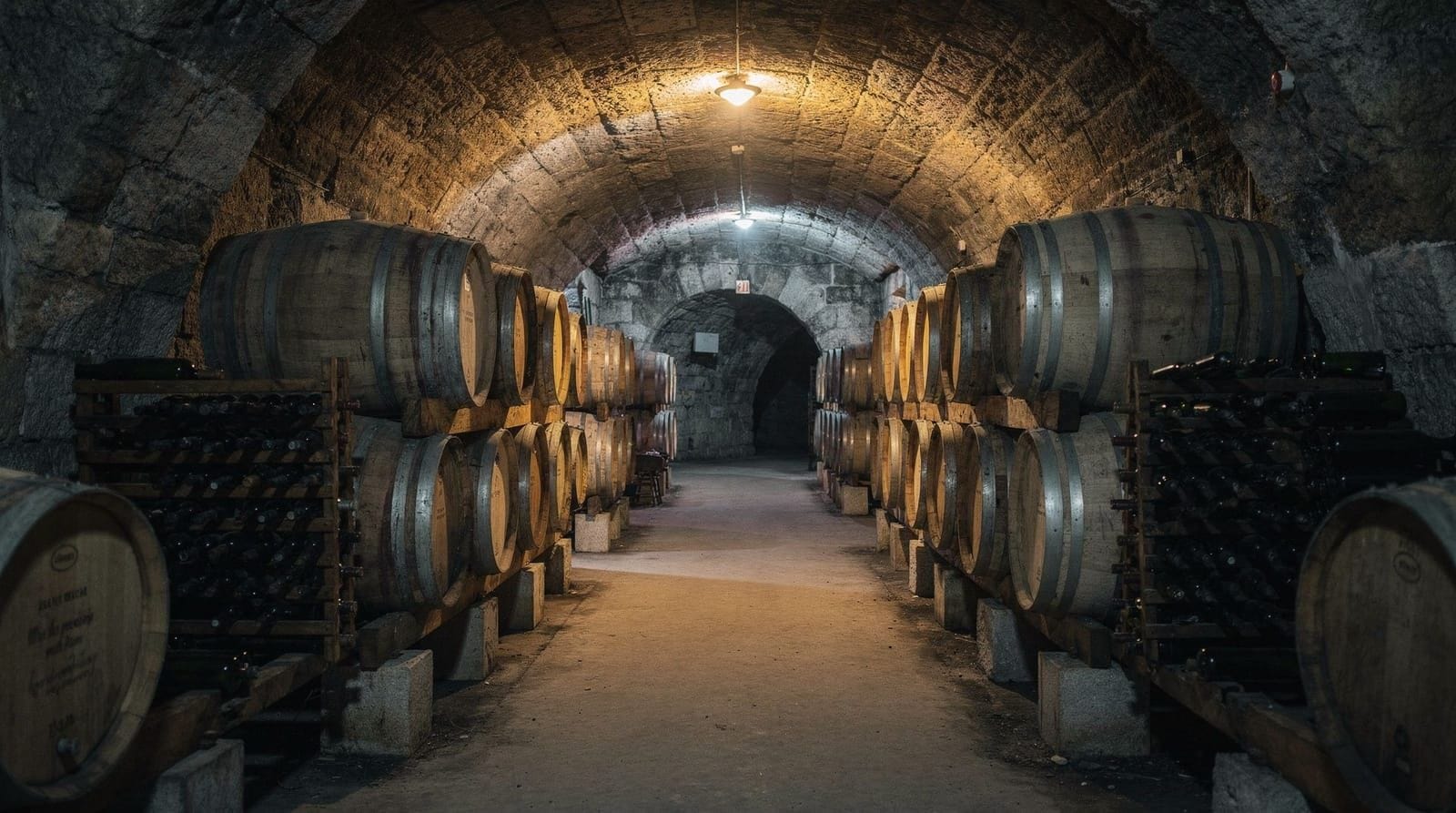
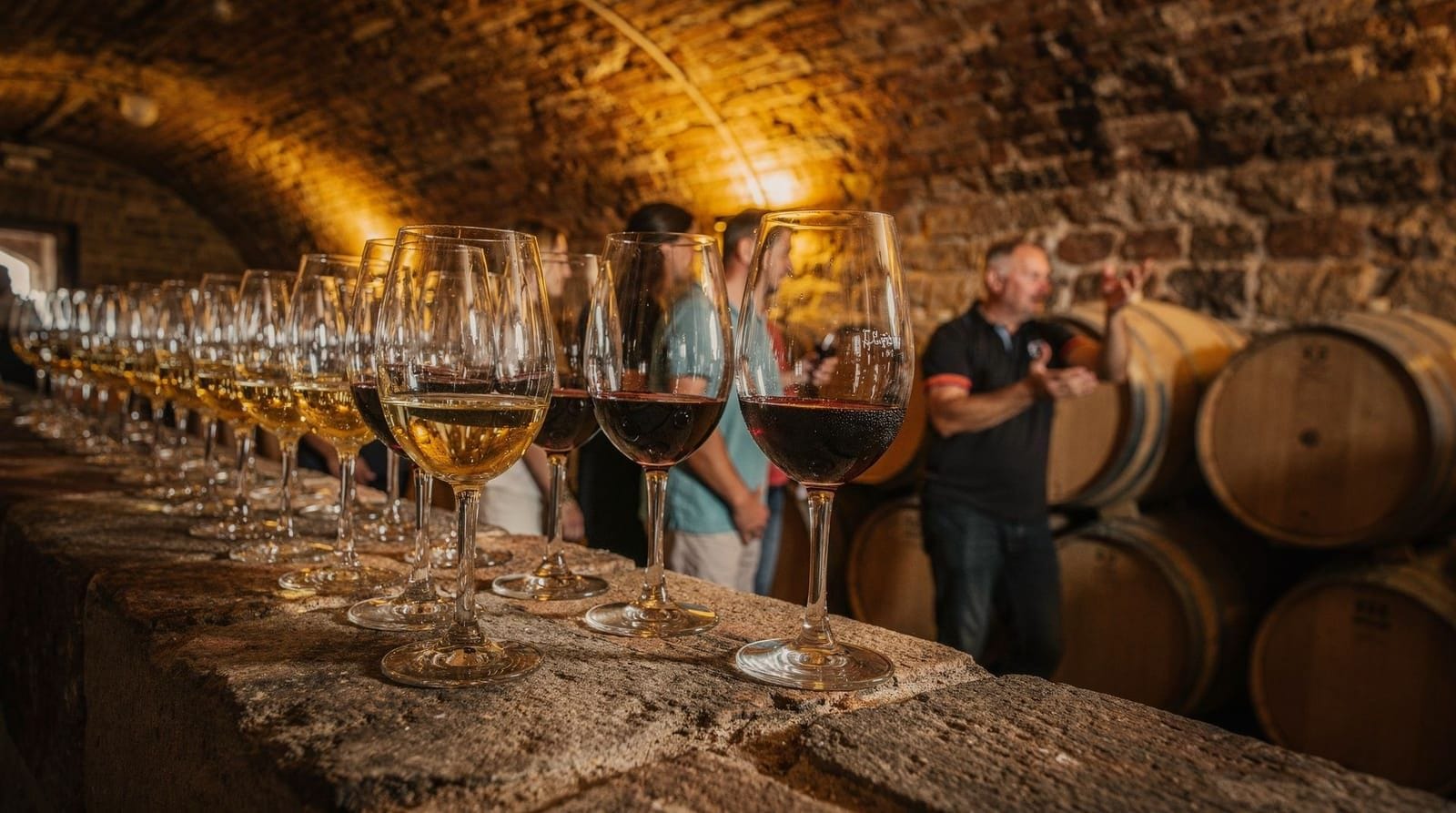
Slovakia is a wine-producing country and Bratislava sits almost at the edge of the Small Carpathians wine region — the vineyard villages of Pezinok and Modra are less than 25 kilometres from the city centre. The region specialises in white wines from Welschriesling (Rizling vlašský), Grüner Veltliner (Veltlínske zelené), and Müller-Thurgau, alongside indigenous varieties such as Feteasca Albă and Devín. Reds are produced from Frankovka Modrá (Blaufränkisch) and Sankt Laurent.
The most public-facing wine event is St Martin’s Day on 11 November, when the season’s St Martin’s wine (svätomartinské víno) is ceremonially released — young, lively, and low in alcohol, drunk across the country over the following weeks. At any time of year, restaurants in Bratislava’s Old Town carry local bottles; a glass typically costs €3–6 and a bottle €12–20 at a restaurant, or €8–14 in a wine shop. Wine tasting tours into the Small Carpathians villages are bookable from Bratislava and make an excellent day out, especially in autumn.
Beer is also well established here — Slovak Pub and Bratislavský Meštiansky Pivovar both serve their own brewed lagers, and the craft beer scene has grown considerably since 2015.
GetYourGuideBratislava vegan food tourCheck availability →Where to eat traditional Slovak food in Bratislava
Modrá Hviezda (Blue Star)
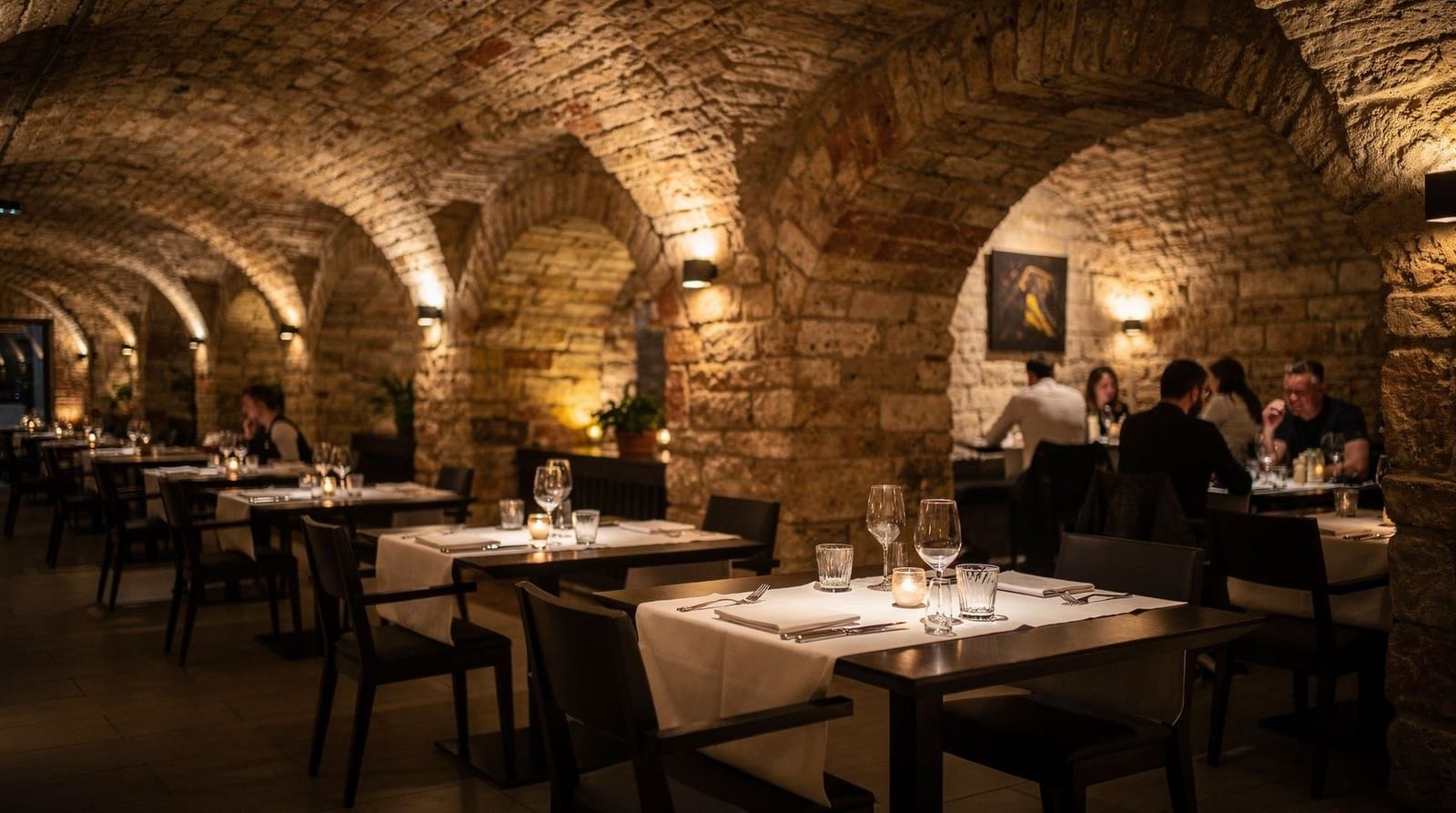
This is the restaurant most frequently recommended by Bratislavans when visitors ask where to eat properly Slovak food. Located on Beblavého Street near the castle, it occupies a quiet corner of the old town that sees fewer tourists than the main square area. The menu is compact and focused on traditional dishes: bryndzové halušky, kapustnica, grilled meats, and seasonal specials. The bryndza comes from a named producer; the wine list is mostly Slovak. Reservations are advisable in the evenings; lunch is usually manageable without booking. Main courses run €12–18.
Slovak Pub (Obchodná Street)
Slovak Pub is the largest and most accessible traditional Slovak restaurant in central Bratislava. It occupies multiple floors of a building on Obchodná Street (the shopping street running north of the old town) and is decorated with folk art, farming implements, and various items of Slovak cultural nostalgia. The menu is extensive: bryndzové halušky, kapustnica, rezeň, lokše, holubky (stuffed cabbage), and a full page of regional specialities. Quality is consistent if not exceptional — this is reliable, honest Slovak food at accessible prices (mains €8–14), and the portions are large. It is also one of the few kitchens that explicitly sources from Slovak producers. Booking recommended for dinner.
Zylinder (Hviezdoslavovo námestie)
Zylinder occupies a beautiful Art Nouveau space on Hviezdoslavovo námestie, Bratislava’s theatrical square. The dining room is high-ceilinged and elegant, and the menu leans toward game — venison, wild boar, duck — alongside svíčková and other Central European classics. It sits at a higher price point than Slovak Pub (mains €15–25), but the kitchen is serious and the sourcing is noticeably better. If you want to eat traditional Slovak food at a celebratory level, this is the obvious choice in the old town.
Bratislavský Meštiansky Pivovar (Bratislava Burgher Brewery)
The Burgher Brewery on Dunajská Street is a brewpub that produces its own unfiltered lager on the premises. The food matches the setting: rezeň, pork knuckle (koleno), goulash, grilled sausages, and hearty soups. It is not the most refined kitchen in Bratislava, but the beer is excellent, the atmosphere is convivial, and the rezeň is among the better versions in the city. Prices are mid-range (mains €9–15) and the place fills up quickly after 18:00 — arrive early or book.
Leberfinger
Leberfinger on Rybárska brána, near the waterfront end of the old town, occupies a space that has been a restaurant in various forms for over a century. The current kitchen cooks Slovak classics with somewhat more attention to presentation than the average pub kitchen — duck with lokše, grilled trout, seasonal game. The riverside setting adds atmosphere in summer. Mains €12–18.
Street food and market eating
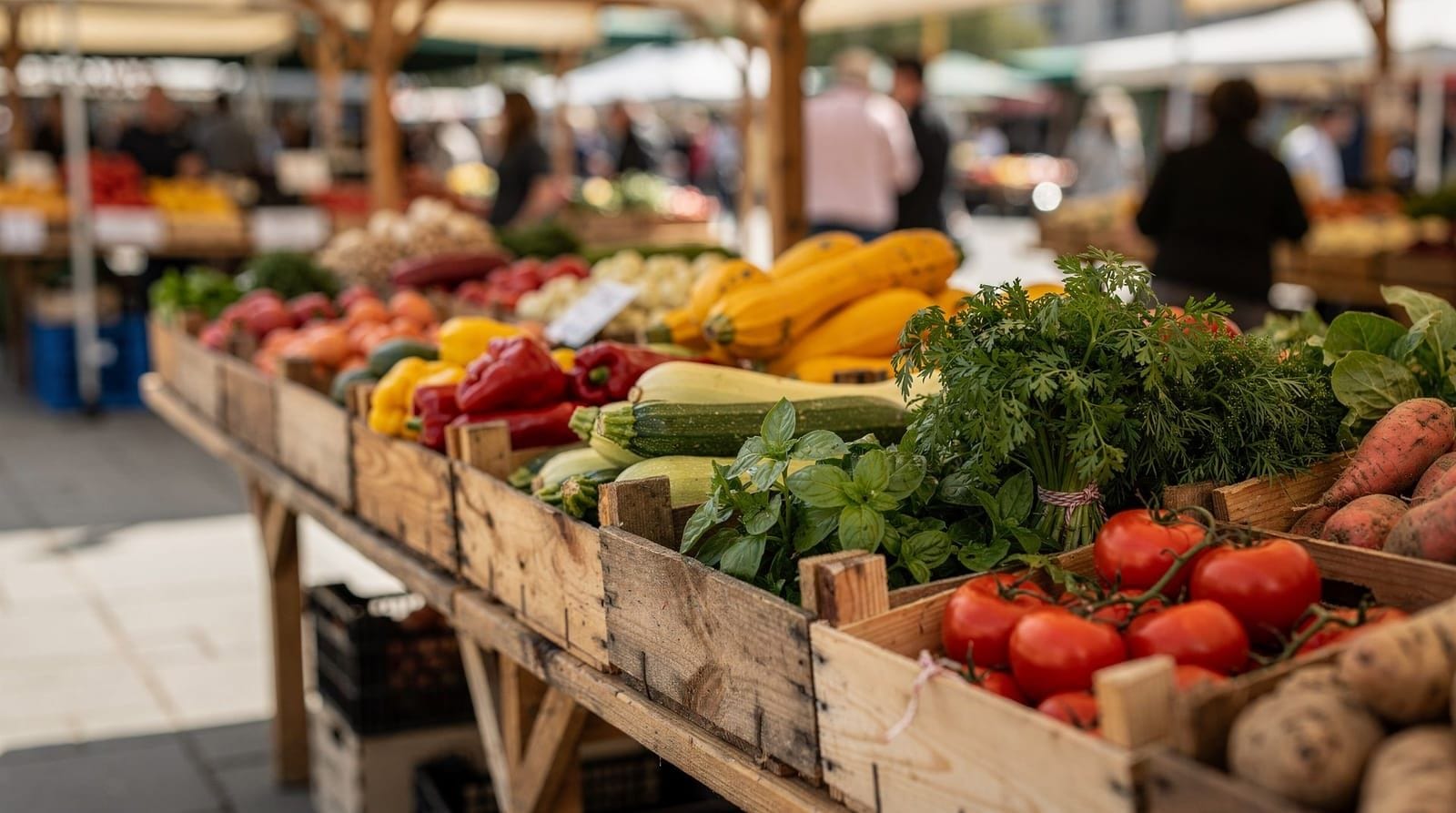
The old town walking route passes several spots where street food is worth stopping for, particularly at the weekend markets at Hviezdoslavovo námestie and the year-round stalls on Obchodná Street. Standard offerings include langos (deep-fried flatbread topped with garlic, sour cream, and cheese — a Hungarian street food imported so completely that most Slovaks consider it their own), grilled klobása sausage served in a roll, and seasonal roast chestnuts in autumn.
During the Christmas markets, which run from late November through December in the main squares, the street food becomes the main attraction: lokše with duck fat, kapustnica served from large pots, trdelník, and mulled wine (varené víno) scented with cinnamon and cloves. This is the best time of year to eat outdoors in Bratislava — the cold makes the warming food taste more correct.
GetYourGuideBratislava Miletichka market food tour with tastingsCheck availability →Avoiding tourist traps and eating well on a budget
The restaurants immediately around Hlavné námestie (the main square) tend to be the least good value in the city. A few are perfectly acceptable — they have to be, given the competition — but the combination of premium location, tourist footfall, and menu laminated in eight languages is a reliable signal to look elsewhere. Prices on the square run 20–40% higher than on parallel streets for broadly equivalent food.
The reliable budget strategy is the denné menu (daily lunch menu), served at most restaurants from around 11:00 to 14:30. A two-course lunch — soup plus main — typically costs €6–10, which is how Bratislavans eat at work. Slovak Pub offers this, as does Leberfinger and many of the brewpubs. The budget guide has a fuller breakdown of daily costs.
For grocery shopping, the Albert and Billa supermarkets in the city centre stock good domestic products including bryndza cheese, klobása, and locally bottled spirits at prices that make excellent picnic components or take-home gifts.
Seasonal food: what changes through the year
Slovak food is more seasonal than it might appear from a menu. Spring brings young nettles (žihľava) used in soups and spreads; early summer sees fresh strawberries and cherries from the Small Carpathians villages. Autumn is the richest season: mushrooms (huby) appear in everything from soups to pasta, game season opens (venison and wild boar on menus from September), and the grape harvest brings the young wines of St Martin’s wine festival in November. Winter centres on warming soups, roast pork, and the Christmas market food described above.
The wine harvest season from late September through October is a particularly good time to explore Slovak food culture in depth — the Small Carpathians villages run harvest festivals, local wineries open for tastings, and the food at Bratislava’s better restaurants shifts toward autumnal and game-focused menus. If you are planning a day trip to the wine villages, timing it for the harvest period gives the visit a specific local character.
Frequently asked questions about traditional Slovak food
Is Slovak food the same as Czech food?
They overlap significantly due to shared history — both countries were Czechoslovakia until 1993 — but there are real differences. Slovak food relies more on bryndza (sheep’s milk cheese) and bryndzové halušky, which have no real Czech equivalent. Czech food uses more bread dumplings (knedlíky) as a staple. Both cuisines share svíčková, guláš, and rezeň, but with variations in seasoning and preparation. Slovak cooking also shows stronger Hungarian influence, reflected in the use of paprika and in certain soup and stew recipes.
What should vegetarians eat in Bratislava?
This is a reasonable concern: traditional Slovak cuisine is heavily meat-focused, and vegetarian options at traditional restaurants can be limited. That said, bryndzové halušky is meatless (the bacon is typically served separately or can be requested without), lokše and potato dishes are usually vegetarian, and soups made with mushrooms and vegetables are common. The café and modern restaurant scene in Bratislava has improved significantly for vegetarians over the past decade — options are better outside of the specifically traditional Slovak restaurants. Slovak Pub has a small vegetarian section of its menu.
What is bryndza and can I take it home?
Bryndza is a semi-soft sheep’s milk cheese produced in the Carpathian mountains of central Slovakia. It is PDO-protected (protected designation of origin) under EU food law, meaning that “Slovak bryndza” must be produced in Slovakia from Slovak sheep’s milk. The cheese is available in supermarkets (Albert, Billa, Tesco) across Bratislava in 125g and 250g packaging, and it travels reasonably well if vacuum-sealed. It keeps for several weeks in the fridge. It is one of the most practical Slovak food souvenirs.
Where can I try pálenka and is it safe to drink?
Commercially produced pálenka sold in licensed restaurants and shops is regulated and safe. The quality varies — the better version is small-batch production rather than mass-market brands. In Bratislava, Modrá Hviezda and several wine bars in the old town carry a selection. The legally produced minimum alcohol content for fruit spirits in Slovakia is 37.5% ABV; most pálenka runs 45–55%. Drink it neat, at room temperature, in small quantities.
How much should a traditional Slovak meal cost in Bratislava?
At a mid-range traditional restaurant (Slovak Pub, Zylinder, Leberfinger): a two-course meal with a glass of wine or beer comes to roughly €20–30 per person. At the high end (Modrá Hviezda, Albrecht): €35–50 per person. At a lunchtime denné menu: €6–10 for soup plus main. A portion of bryndzové halušky alone: €8–12. Beer: €2.50–4 for a half litre. Wine by the glass: €3–6.
When is the best time of year for food-focused travel to Bratislava?
Autumn — September to November — is the strongest season. The wine harvest brings energy to the Small Carpathians villages, game appears on menus, mushroom dishes are at their best, and the weather is mild enough for comfortable outdoor dining. The Christmas market period (late November to December) is also excellent for street food specifically. Summer is good for outdoor café culture and river-adjacent dining. Spring is the weakest season for traditional Slovak food with no particular seasonal highlight.
Are food tours available in Bratislava?
Yes, and they are a genuinely useful way to cover a lot of ground efficiently, particularly if you are visiting for only a day or two. The better tours combine tastings at multiple stops with cultural context — they explain why the food is the way it is, which helps the experience add up to something more than a series of snacks. Several operators run walking food tours in the old town.
What is the difference between denné menu and ordering à la carte?
The denné menu is a fixed lunch set — typically soup plus a main course — served on weekdays roughly 11:00 to 14:30 at around €6-10, considerably cheaper than ordering the same dishes à la carte in the evening. It is how most locals eat during the working week, and visiting restaurants at lunchtime rather than dinner is one of the simplest ways to eat well on a budget in Bratislava.
Bratislava food experiences on GetYourGuide
Verified deep-linked GetYourGuide tours. Book through these links and we earn a small commission at no cost to you.