Bratislava food tours: tasting your way through the old town
Are food tours in Bratislava worth it?
Yes, especially if you are visiting for a day or two. The old town is compact and walkable, but the best traditional spots are not always obvious from the street. A guided food tour lets you taste bryndzové halušky, lokša, slivovica, and Slovak wine in a single morning without the guesswork of finding authentic places on your own.
Bratislava is one of those cities that rewards visitors who eat their way through it slowly. The Slovak capital’s old town is compact — you can walk from one end to the other in fifteen minutes — which means a single guided morning can cover an extraordinary amount of ground. A good food tour takes you inside the courtyards, down the side streets, and into the wine bars and delis that most visitors walk straight past. It connects food to history in ways that make the experience stick: when you taste bryndzové halušky for the first time in a family restaurant that has been operating since the 1970s, the dish means more than it would in a tourist-facing bistro that added it to the menu last year.
That said, food tours vary considerably in quality. This guide explains what to look for, what to expect from the different formats available, how much you should pay, and how to get the most out of the experience whether you are visiting on a day trip from Vienna or settling in for a long weekend.
| At a glance | |
|---|---|
| Where | Old town, starting near Hlavné námestie (most tours) |
| Cost | Group walking tour around €40–70; private around €80–150 per person; market tours around €25–40 |
| Time needed | Around 2–3 hours for most formats |
| Getting there | Everything on foot within the pedestrian old town; the market tour uses tram line 13 |
| Best time | Spring and early autumn for weather and crowds; book a few days ahead in summer |
What makes Bratislava particularly good for food tours
The argument for taking a guided food tour in Bratislava is stronger than it might initially seem. Several factors combine to make the format work particularly well here.
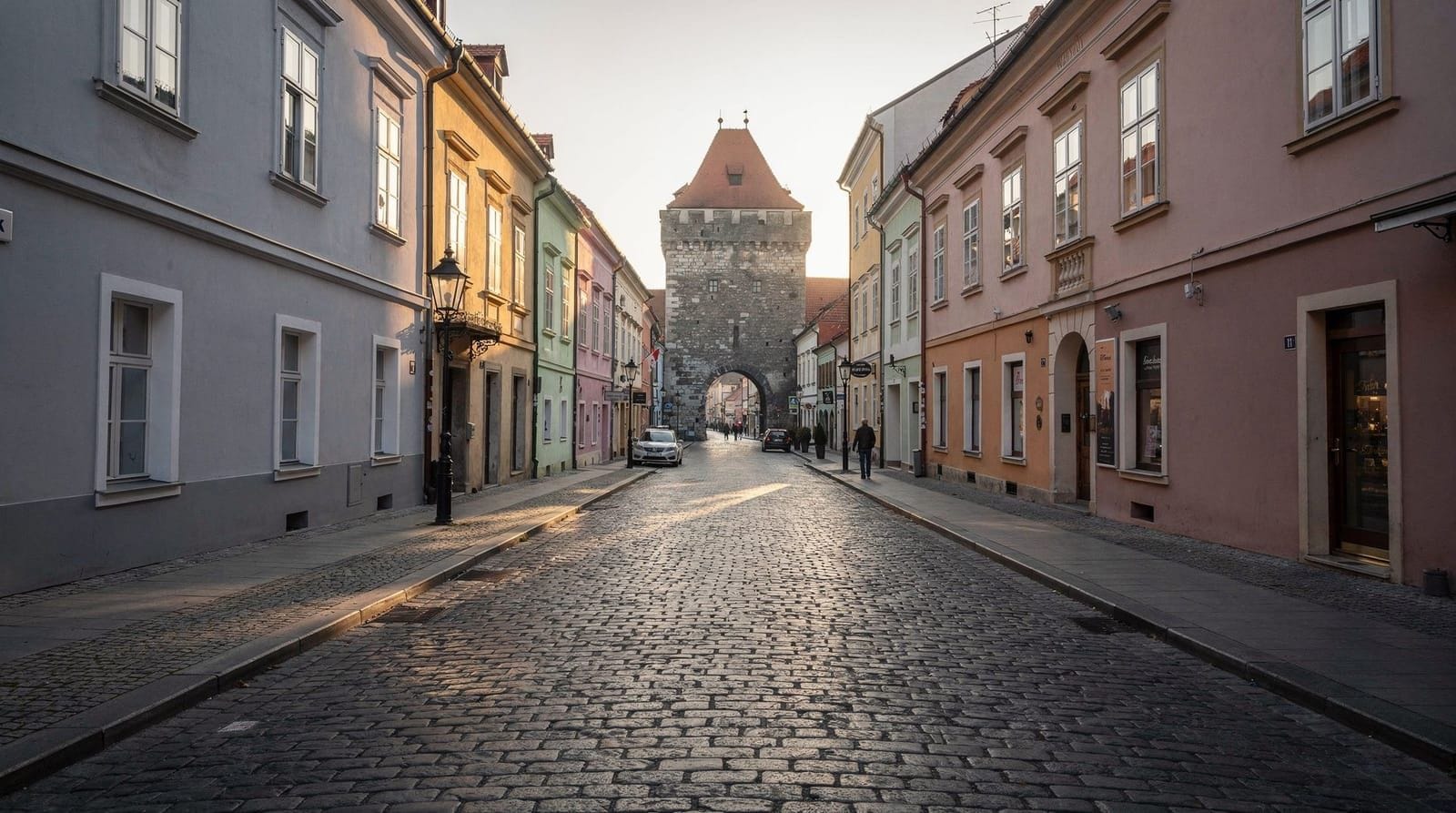
The old town is pedestrian-friendly and genuinely walkable. Unlike cities where food tour stops are spread across different neighbourhoods requiring taxis or trams, Bratislava’s most interesting eating can be reached on foot within a small radius of Hlavné námestie. Distances between stops are short enough that the conversation between tastings is the experience rather than a logistical interruption.
Authentic Slovak food is genuinely hard to identify without local knowledge. The city has no shortage of restaurants that claim to serve traditional food but are primarily oriented toward tourists — hearty presentations of generic Central European dishes at prices calibrated for day-trippers. The real thing is there, but it tends to be found in unmarked courtyard restaurants, in delis attached to butcher shops, and in wine bars that do not display menus in English outside. A knowledgeable guide is a legitimate shortcut.
Slovak culinary culture is also worth understanding rather than just eating. The food is rooted in mountain pastoralism — sheep’s cheese, cured meats, root vegetables — with Hungarian influences in the sweeter preparations and Austrian influences in the baked goods. A good guide contextualises what you are tasting within a geography and history that makes the flavours legible. You leave knowing why bryndza is the way it is, not just that you liked it.
Finally, the old town hosts a genuine food producer culture that is easy to miss. There are small-batch slivovica distillers, artisan bread bakers, and a handful of cheese specialists operating within walking distance of the main square. Food tours often include stops that are not restaurants at all — a producer’s shop, a market stall, a bakery that opens at six in the morning and sells out by noon.
GetYourGuideBratislava guided culinary tourCheck availability →Types of food tour available in Bratislava
Walking food tours
The most popular format and the most practical for first-time visitors. A typical group walking food tour runs for three hours and covers between five and eight stops, with eight to twelve individual tastings spread across them. Groups are usually capped at twelve to fifteen people. Tours are conducted in English as standard, with most operators also offering German-language tours on selected days.
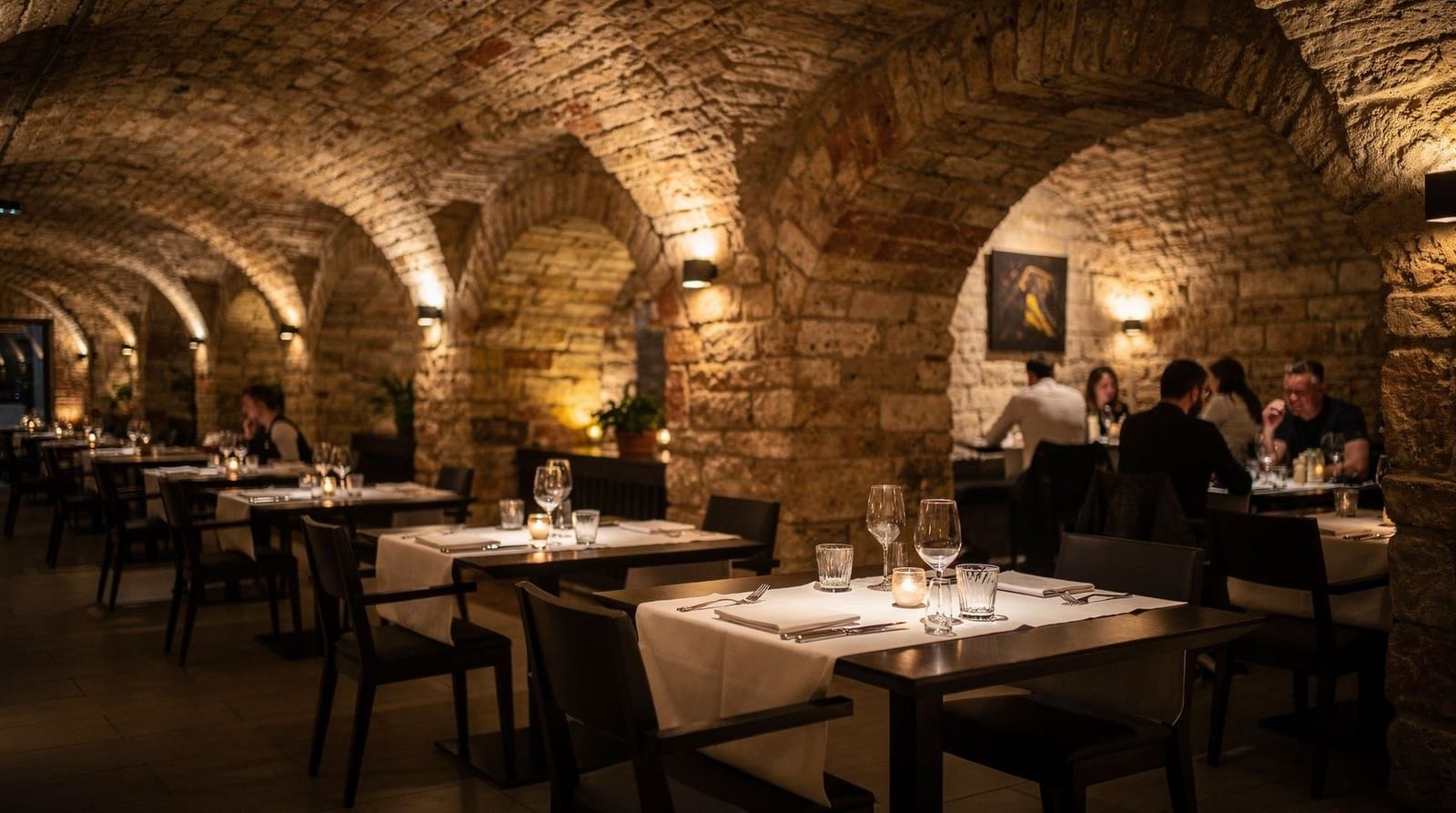
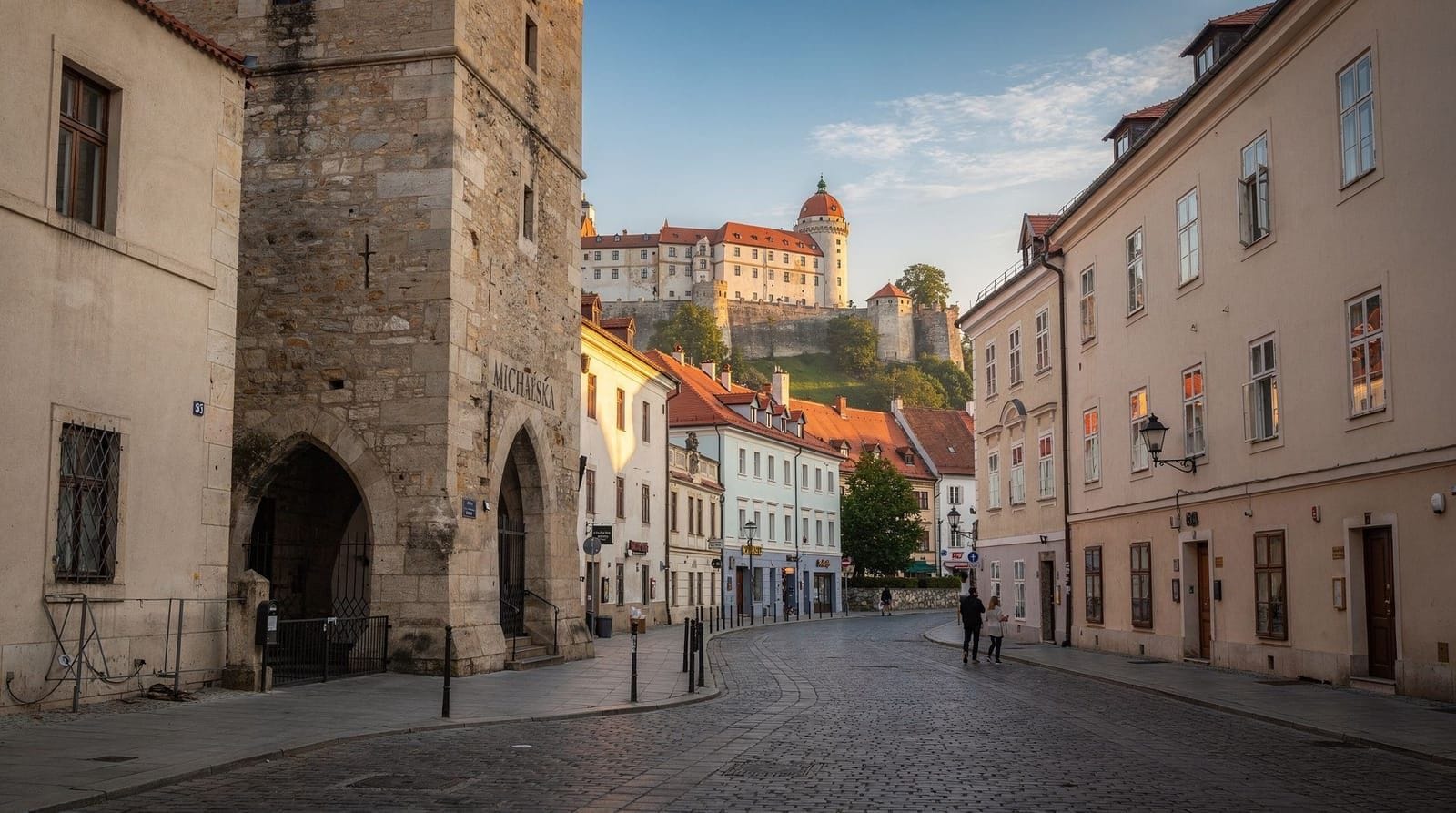
The route almost always passes through Hlavné námestie and Michalská Street — the old town’s main pedestrian axis — but the best operators take you off it as quickly as possible, into the streets and courtyards where the interesting eating actually happens. A well-designed route might begin at a morning bakery on Obchodná for fresh pastry, move to a deli on Laurinská for cured meats and bryndza, stop at a courtyard wine bar for a glass of Malý Rád white, visit a restaurant kitchen for a small bowl of bryndzové halušky with sheep’s bacon, and finish at a liquor specialist for a tasting of regional brandies. The exact sequence varies by operator and season.
Group walking food tours in Bratislava typically cost between €40 and €70 per person. The difference in price usually reflects the number and quality of stops rather than the length of the tour — a €65 tour that includes restaurant tastings and local wine is substantively different from a €40 tour that concentrates on street food and market samples. Read the stop list in the tour description before booking.
Private food tours
Private tours follow the same walking format but are tailored to your group’s preferences and dietary requirements. They cost considerably more — typically €80 to €150 per person for a group of two to four, with prices per head dropping as group size increases — but offer flexibility that group tours cannot. A private guide can slow down at stops that interest you, skip categories you do not enjoy, and answer extended questions without feeling responsible for keeping fourteen other people engaged.
Private tours are worth the premium for visitors with specific interests (Slovak wine in particular depth, or a focus on Jewish food heritage in the old town), for those with dietary restrictions that would make a standard group tour difficult, or simply for couples or small families who prefer a more intimate experience.
Market tours
Bratislava’s main market — Miletičova trhovisko, about fifteen minutes south of the old town on tram line 13 — is one of the city’s most authentic food environments and one that most visitors never see. A handful of operators run early-morning market tours that begin at the market and work back toward the old town, combining a guided walk through the stalls with a sit-down breakfast at a local eatery nearby.
Market tours are shorter and cheaper than walking food tours (typically two hours, €25–€40 per person) and offer a genuinely local atmosphere — this is where Bratislava residents shop, not tourists. The trade-off is that the market is at its best Tuesday through Saturday mornings before 10:00, which requires an early start. If you are visiting during the Christmas market season (late November through December), the old town’s Hlavné námestie and Franciscan Square host a good Christmas market with Slovak food stalls that partially replicate the market-tour experience within the old town itself.
GetYourGuideBratislava taste of Slovakia private walking tourCheck availability →Cooking classes
Several operators in Bratislava run cooking classes focused on Slovak home cooking. The flagship experience is making bryndzové halušky from scratch: grating the potato dough, forming the small irregular dumplings, boiling them and coating them in bryndza sheep’s cheese, then finishing with fried bacon bits. The process takes about ninety minutes and produces a quantity of food that constitutes a full meal.
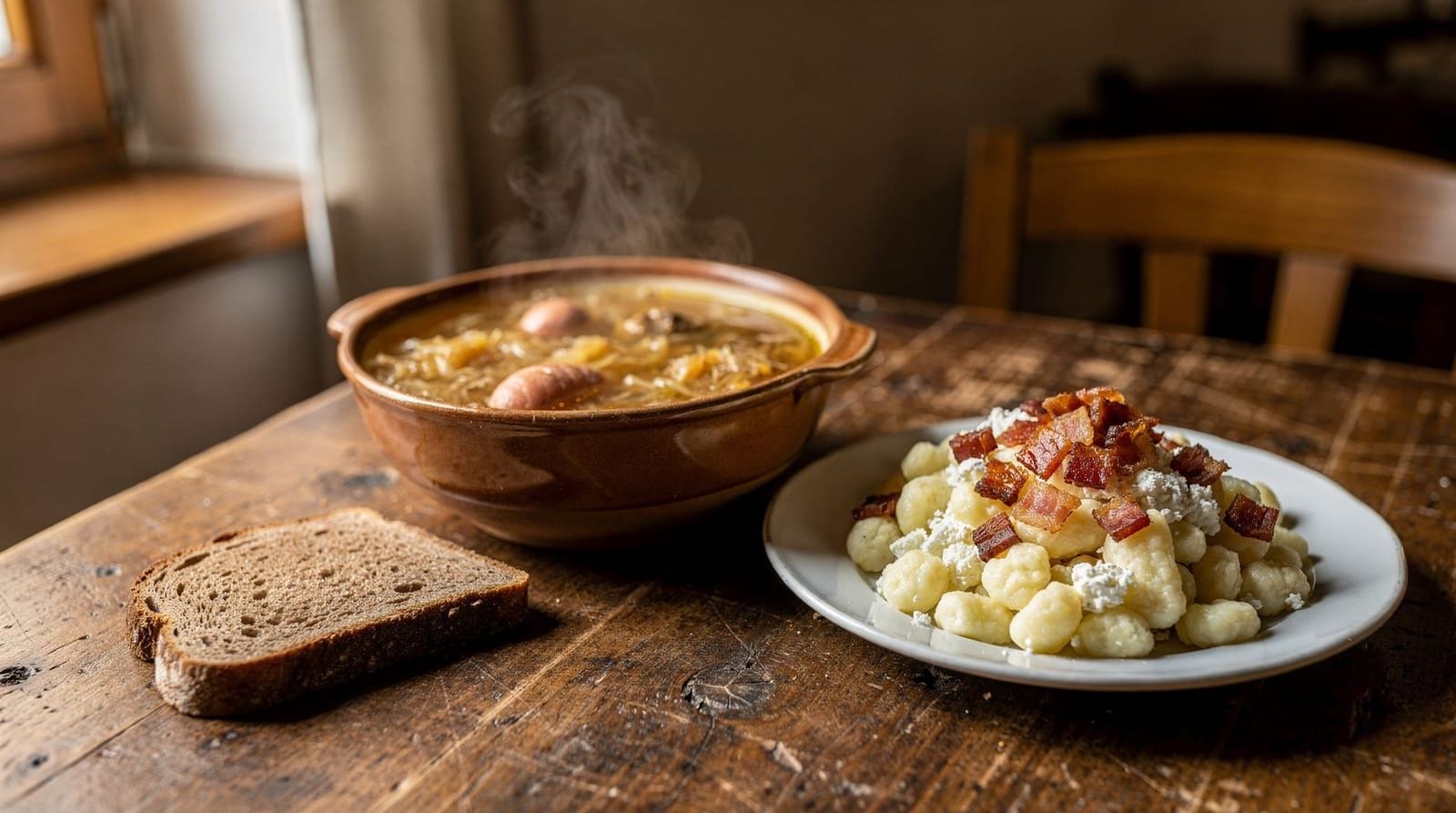
Other common formats include making lokša (thin potato flatbreads, traditionally filled with poppy paste or goose liver, depending on the season), preparing kapustnica (the sauerkraut and smoked sausage soup that is traditionally served at Christmas), and baking medovník (layered honey cake). Classes typically run for two to three hours, cost €45–€80 per person, and take place in a private kitchen or a culinary school in or near the old town.
Cooking classes are a meaningful way to spend a morning if you have two or three days in Bratislava rather than one, and they pair well with a visit to Bratislava Castle or an afternoon wine tasting to complete a full day.
Wine and food combinations
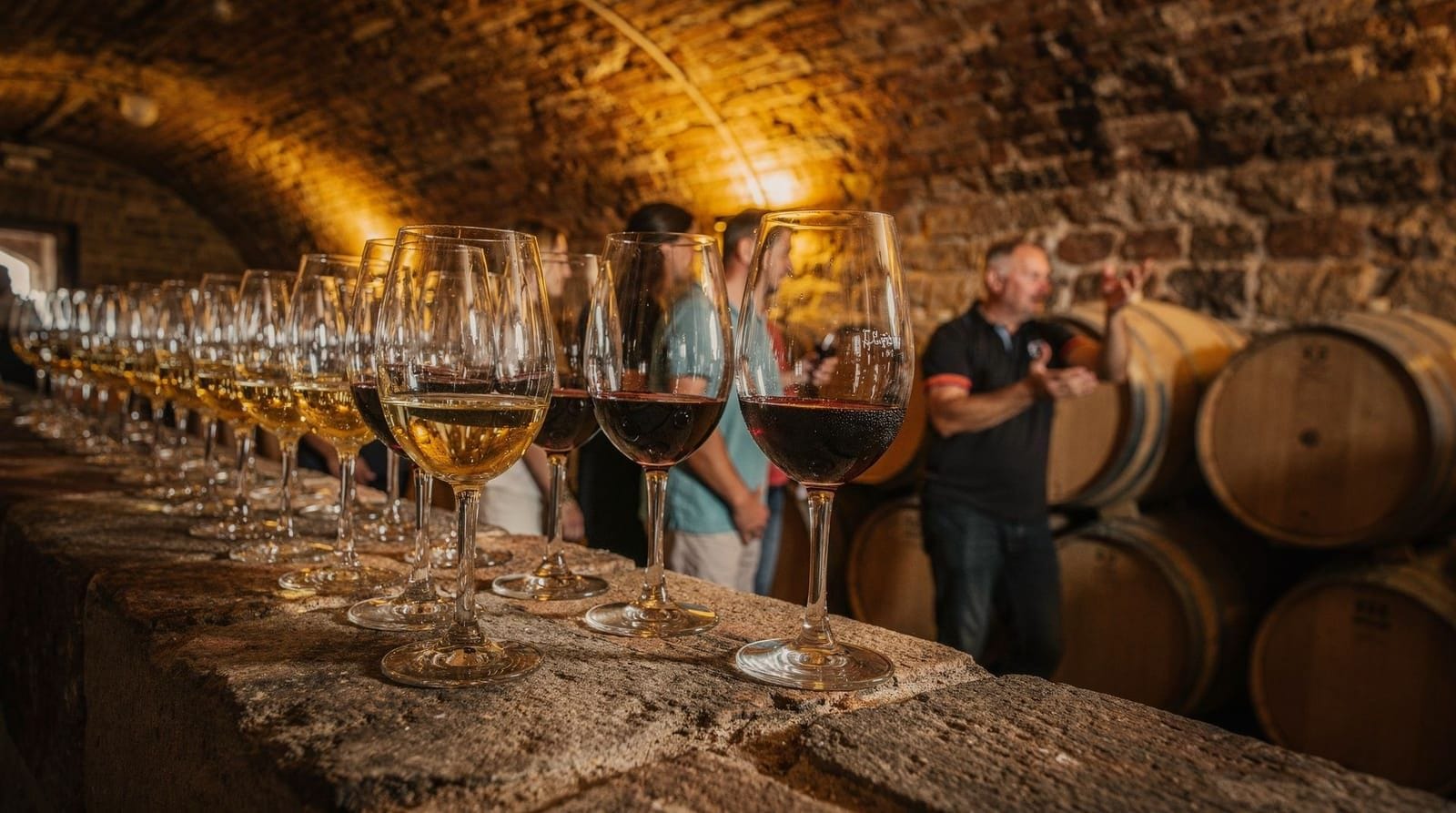
Slovakia’s wine country begins immediately north of Bratislava in the Small Carpathians region, with the wine towns of Pezinok and Modra reachable in thirty minutes by car. Several operators combine a Bratislava old town food tasting in the morning with an afternoon visit to a Pezinok or Modra winery — typically two or three traditional wineries, barrel tastings, and a light lunch of charcuterie and Slovak cheeses in the vineyard.
These combined day tours are particularly good in autumn, from late August through October, when the wine harvest is active and the vineyards are accessible for short walks among the vines. The Small Carpathians wine weekend is the logical extension if you have more time.
GetYourGuideBratislava vegan food tourCheck availability →What you will typically taste
The specifics vary by tour and operator, but a standard Bratislava walking food tour covers most of the following.
Bryndzové halušky is the national dish and appears on virtually every food tour. The dish is made from grated potato dough formed into small, irregular-shaped dumplings and tossed with bryndza — a soft, pungent, slightly tangy sheep’s milk cheese produced in the Slovak highlands. It is finished with fried smoked bacon (called škvarky) and sometimes a spoonful of sour cream. It is heavy, intensely savoury, and deeply satisfying, and it tastes substantially better in Slovakia than anywhere it is reproduced outside the country, partly because bryndza made from Slovak highland sheep’s milk has a protected designation of origin and cannot legally be produced elsewhere under that name.
Lokša are thin potato pancakes that appear both as a street food and as a component in fine dining. In their simplest market form they are sold warm and plain, or filled with poppy paste (maková nádievka) and folded into a half-moon. On restaurant menus they appear as a sophisticated base for duck liver or foie gras during the wine harvest season.
Slivovica (plum brandy) is Slovakia’s national spirit and an essential part of any food tour that extends to a drinks stop. Slovak slivovica is double-distilled and unaged in most traditional forms, producing a clear, intensely aromatic brandy with a clean plum flavour and no added sugar. The best regional producers operate in the Záhorie region west of Bratislava. A tasting might include three or four expressions: young unaged slivovica, a four-year barrel-aged version, and possibly a single-distillery bottling from an artisan producer. At licensed tastings this typically costs €5–€10 extra on top of the tour price.
Slovak wine has improved markedly in the past fifteen years. The country produces about 30,000 hectares of wine, primarily in the Small Carpathians and the eastern Nitra region, and the best white wines — Veltlínske zelené (Grüner Veltliner), Rizling vlašský (Welschriesling), and the local Devín and Pálava varieties — are worth seeking out. A food tour stop at a wine bar might include two or three small pours paired with cheese or charcuterie.
Trdelník is a chimney cake made from rolled dough wrapped around a wooden spit and cooked over an open flame, then rolled in cinnamon sugar. It arrived in Slovakia from Transylvania centuries ago and has become something of a tourist staple, particularly at Christmas markets. It is not uniquely Slovak — the same pastry is called kürtőskalács in Hungary and trdelník in Czechia — but done properly, with good dough and real cinnamon, it is a satisfying warm pastry, particularly on a cold morning.
Pork dishes are fundamental to Slovak cooking: roasted koleno (pork knuckle), rillette-style tlačenka (head cheese), and smoked sausages. Soup is also central — česnečka (garlic soup, sometimes served in a bread bowl), fazuľová polievka (bean soup), and broth-based beef soups appear regularly.
Practical information for booking
When to go
Food tours run year-round in Bratislava, but the season affects both availability and atmosphere. Spring (April through June) and early autumn (September through October) offer the best combination of pleasant weather and manageable crowd levels. Summer (July and August) is peak season, tours fill quickly, and the old town becomes noticeably more crowded by midday. Book two to three days ahead in summer to be safe; a week ahead for private tours in high season.
The Christmas market season from late November through late December is excellent for market-focused food tours: the combination of mulled wine (varené víno), trdelník from open-fire stalls, and the general atmosphere of Hlavné námestie in winter makes for a distinctly different experience than the rest of the year. Specialised Christmas market food tours run during this period.
Winter (January through March) is quiet, some operators reduce frequency, but private tours remain available. The upside is availability and lower prices.
Time of day
Most group walking food tours depart at 10:00 or 11:00 in the morning, when the old town is active but not yet at peak midday crowds, and producers and restaurants are open. A second wave of tours typically departs at 16:00 or 17:00 for a late afternoon and early evening format, which suits visitors who want to combine the tour with dinner at one of the last stops.
Morning tours are slightly better for market stops and bakery visits; afternoon tours have more atmosphere in the wine bars and tend to conclude more naturally with a sit-down meal. If you are visiting on a single day in Bratislava, a morning food tour from 10:00 to 13:00 leaves the afternoon free for the castle, the UFO deck, and the waterfront.
Dietary requirements
Most operators accommodate vegetarian and pescatarian diets with advance notice. The core of Slovak food is meat-heavy, so vegetarian tours require some substitutions: bryndza without the bacon, mushroom-based soups, cheese and wine stops replacing the slivovica tasting. True vegan accommodations are harder and worth discussing directly with the operator before booking.
Gluten-free is genuinely difficult given how much of traditional Slovak food is potato or wheat-based. Enquire specifically if this matters to your group.
What to wear
Comfortable walking shoes are essential. The old town’s streets are cobblestoned in many sections, and any tour that goes off the main pedestrian axis will involve uneven surfaces. Flat, sturdy-soled shoes are better than anything with a heel. In summer, a hat and water bottle are sensible additions; in winter, dress for standing outdoors between stops.
GetYourGuideBratislava Miletichka market food tour with tastingsCheck availability →Combining a food tour with other Bratislava experiences
A food tour pairs naturally with several other Bratislava activities. The most complementary combination for a first-time visitor is a food tour in the morning followed by an old town walking tour in the early afternoon — the food tour covers the culinary and social history of the city, while the architectural walking tour adds the political and dynastic layer. Together they provide a rounded introduction to Bratislava in around six hours.
For visitors staying two or more days, a food tour on day one and a wine tasting in the Small Carpathians on day two creates a logical progression from urban food culture to the rural producing region that supplies it. The pub crawl and bar scene is a natural evening complement to a daytime food tour if you want to understand Bratislava’s drinking culture as well as its eating.
Visitors interested in the historical dimension of Slovak food — particularly the peasant and Jewish food traditions of the city — might combine a food tour with a visit to the Jewish heritage sites of the old town and the Rybné námestie area, where the former Jewish quarter once bordered the market district.
How to choose between operators
Several reputable operators run food tours in Bratislava, and the market has matured enough that most established tours deliver reliably. A few things worth checking before booking:
The quality of the guide matters more than almost anything else. Reviews that mention a specific guide by name, or describe the guide’s knowledge in detail, are a better signal than aggregate scores. Look for mentions of local knowledge — guides who grew up in Bratislava or have worked professionally in Slovak food rather than simply learned a script.
The stop list in the tour description tells you a lot. If the description is vague (“local eateries and hidden gems”), ask for specifics. Good operators are specific about what you will taste, how many stops there are, and whether the tasting portions constitute a meal or a series of small bites. You should not need a restaurant booking after a three-hour food tour; if the portions described suggest otherwise, look elsewhere.
Check whether the tour price includes all food and drink or whether some stops are extras. Some tours list a base price that excludes the wine and spirits tasting, which adds €10–€15. Know what you are paying for before you show up.
Solo travellers and food tours
Food tours are one of the better organised activities in Bratislava for solo visitors, since the group format means you are eating alongside other people by default rather than dining alone at a restaurant table. Group tours skew toward couples and small groups of friends, but solo travellers are common enough that guides are used to including them naturally in the conversation between stops. If eating alone in a city is one of the more awkward parts of solo travel for you, a morning food tour followed by an old town walking tour is a comfortable way to structure a first day without ever sitting down to a solo meal until dinner.
How food tours fit around the rest of your itinerary
If you only have one day in Bratislava, a food tour works best as either the opening move (10:00–13:00, leaving the castle and UFO deck for the afternoon) or the closing one (16:00–19:00, ending near a dinner spot). Trying to fit a three-hour tour into the middle of an already packed single day usually means rushing one half of it. Visitors on a Bratislava weekend or in for three days have more flexibility and can treat the food tour as a dedicated morning rather than a slot squeezed between other sights.
Frequently asked questions about food tours in Bratislava
How much food do you eat on a food tour?
A well-designed three-hour group food tour provides roughly the equivalent of a large lunch spread across eight to twelve small portions. You should not be hungry afterwards. If the tour is described as “tastings,” expect smaller portions; if the description mentions “full portions” at any stop, the total quantity will be more substantial. It is generally advisable not to eat a large breakfast before a morning food tour.
Is it necessary to speak Slovak to get the most out of a food tour?
No. All standard group tours in Bratislava are conducted in English, and most also operate in German. Private tours can be arranged in a range of languages — French, Spanish, and Italian are available from some operators on request. The guides are typically bilingual professionals who enjoy the translation dimension of their work.
Do food tours in Bratislava include alcohol?
Most do, in the form of small wine pours and a slivovica tasting. The alcohol component is never compulsory — you can decline individual tastings without difficulty. If you prefer a tour without any alcohol, enquire specifically when booking; some operators run alcohol-free formats.
How far in advance should I book?
For group tours in the April to October season, one to two days ahead is usually sufficient during the week; book two to four days ahead for weekend departures. In peak summer (July to August) and during Christmas market season, a week ahead is safer for group tours and essential for private tours. Most operators allow same-day booking for group tours if spaces remain, but availability cannot be guaranteed.
Are food tours suitable for children?
Generally yes, with some caveats. The walking pace is gentle and the food is filling. Younger children may find some tastings — particularly slivovica and strong bryndza — too intense. Most operators allow children under 12 to join at a reduced rate or free, and guides are accustomed to adjusting the experience for mixed-age groups. Check the minimum age policy with your specific operator, as it varies.
What is the difference between a food tour and a cooking class?
A food tour is a walking experience focused on tasting food at various locations across the city. A cooking class takes place in a single kitchen and teaches you to make one or two Slovak dishes from scratch. The two formats complement each other well over a multi-day visit. If you only have one experience available, a food tour gives broader exposure to Slovak food culture; a cooking class gives a deeper, more hands-on understanding of a specific dish.
Can dietary restrictions be accommodated?
Vegetarian: yes, with advance notice. Most stops can substitute or adapt. Pescatarian: yes. Vegan: possible but limited — enquire directly with the operator. Gluten-free: difficult, given how central potato dough and wheat bread are to traditional Slovak cooking; discuss specifics before booking. Nut allergies: Slovak cuisine does not heavily feature nuts, but always confirm with the operator.
Is tipping expected on food tours?
Tipping is not mandatory but is genuinely appreciated. A tip of €5–€10 per person at the end of a group tour is a reasonable and common gesture for a guide who has performed well. For private tours, €15–€20 per couple is a standard expectation. There is no obligation and no payment mechanism that requires it, but guides on group food tours are often paid on a per-head commission basis and tips make a real difference.
Are food tours good for solo travellers?
Yes — they are one of the more solo-friendly activities in Bratislava, since you are naturally grouped with other travellers rather than eating alone. Guides are used to solo participants and tend to fold them into the group conversation without making a point of it.
Should I do the food tour before or after the old town walking tour?
Either order works, but a food tour in the morning followed by an old town walking tour in the early afternoon is the more common sequence, since it leaves the architectural and historical walk for when energy is a little lower and appetite has been satisfied.
Bratislava food experiences on GetYourGuide
Verified deep-linked GetYourGuide tours. Book through these links and we earn a small commission at no cost to you.