Jewish heritage in Bratislava: a complete guide
What Jewish heritage sites can I visit in Bratislava?
The three main sites are the Chatam Sofer Mausoleum (beneath the SNP Bridge approach ramp, free entry), the Museum of Jewish Culture on Židovská 17 (open Mon-Fri and Sun, €7), and the Heydukova Synagogue at Heydukova 11-13, now used as an exhibition gallery. A self-guided walk linking all three takes about two hours.
At a glance
| Where | Chatam Sofer Mausoleum (Rybné námestie), Museum of Jewish Culture (Židovská 17), Heydukova Synagogue |
| Cost | Mausoleum free (donation welcomed); Museum around €7; synagogue free/small fee |
| Time needed | Half a day for the full route, including the museum |
| Getting there | All three sites within a 15-minute walk of the Old Town main square |
| Best time | Sunday–Thursday mornings; mausoleum closed Saturdays and Friday afternoons |
Few European capitals wear their Jewish past as visibly — and yet as quietly — as Bratislava. This compact city on the Danube, known for centuries as Pressburg in German and Pozsony in Hungarian, was home to one of Central Europe’s most intellectually distinguished Jewish communities. Its rabbinical school shaped Orthodox Judaism worldwide. Its streets harboured scholars, merchants, craftspeople, and families across seven centuries. And then, between the Nazi deportations of 1942-1944 and the communist-era bulldozers of the 1960s and 1970s, almost all of it was erased.
What remains is a small collection of sites that repay careful attention: an underground mausoleum wedged beneath a motorway ramp, a lone surviving synagogue repurposed as a gallery, a baroque palace housing one of Slovakia’s best Jewish history museums, and a street name — Žydovská ulica, Jewish Street — that is one of the oldest in the city. This guide walks you through every site, explains what you’re looking at, and puts it in the context Bratislava’s mainstream tourism rarely provides.
A community that shaped Orthodox Judaism worldwide
The Jewish presence in Bratislava stretches back to the medieval period, though the community’s most formative era began in the late 18th century. By 1940 the city had roughly 15,000 Jewish residents — about 12 percent of the total population, an exceptionally high proportion for any Central European city of comparable size.
The single most important figure in this story is Rabbi Moses Schreiber (1762-1839), universally known by his pen name Chatam Sofer. Born in Frankfurt, he arrived in Pressburg in 1806 and remained until his death. The yeshiva he established here drew students from across Europe, the Ottoman Empire, and beyond. His rulings on Jewish law, collected in the volumes also called Chatam Sofer, became foundational texts for Orthodox Judaism and are still studied and cited today. His dictum — anything new is forbidden by the Torah — was a direct intellectual response to the emerging Reform movement and defined what we now call Orthodox halachic conservatism.
The Pressburg Yeshiva under his direction was the most prestigious Orthodox institution of the 19th century. Rabbis trained here went on to lead communities from Amsterdam to Bucharest to Jerusalem. When Chatam Sofer died in 1839, he was buried in the Jewish cemetery that then bordered the city walls near the Danube. That cemetery is the reason for one of Europe’s strangest and most sacred monuments, which we come to shortly.
The Chatam Sofer Mausoleum
Nothing quite prepares you for the Chatam Sofer Mausoleum. You approach it through a short underground passage near the western end of the SNP Bridge, descending below road level into a preserved burial chamber that holds the graves of Chatam Sofer and eighteen other distinguished rabbis who died in Pressburg between the 17th and early 20th centuries.
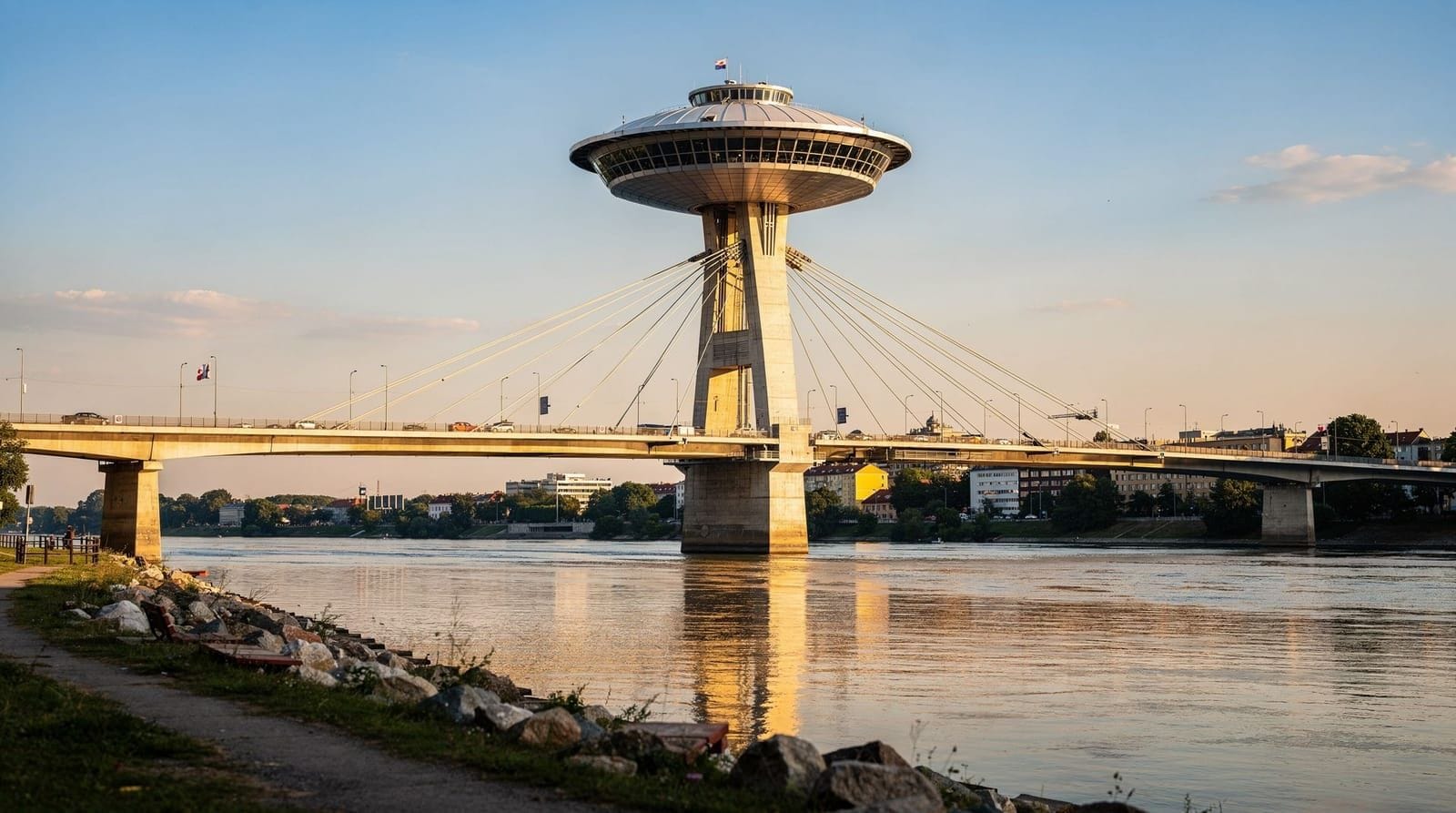
The mausoleum exists because of an unlikely act of communist-era preservation. When the SNP Bridge was built in 1972 — itself part of a broader programme that demolished the old Jewish quarter and two of the city’s synagogues — the authorities were informed by the city’s tiny surviving Jewish community that this was the burial site of one of the most significant rabbis in world Jewish history. Rather than demolish the graves, they encased and preserved them, building the motorway ramp overhead and around the site. The result is architecturally bizarre: a solemn underground shrine with concrete and tarmac directly above it, reached through what looks like a utility access passage.
For observant Jews, this is a place of pilgrimage. Chatam Sofer’s yahrtzeit — his death anniversary on 25 Tevet in the Hebrew calendar, falling in late December or early January — draws visitors from Israel, the United States, the United Kingdom, and across Europe. Ordinary pilgrimage visits happen year-round.
Practical information:
- Address: Rybné námestie, near the western approach of the SNP Bridge; look for the small entrance passage in the retaining wall
- Hours: Sunday to Thursday 10:00-16:00, Friday 09:00-12:00; closed Saturday and Jewish holidays
- Entry: free; a donation of €2 is suggested and welcomed
- Photography inside: ask the caretaker; rules may vary depending on whether a service is in progress
- Modest dress is expected; head covering for men (kippot available at the entrance)
The erased Jewish quarter
To understand the mausoleum’s strange surroundings, you need to understand what was here before the bridge. The area between Bratislava Castle hill and the Danube riverbank — known historically as Schlossgrund, or the castle grounds — was the old Jewish quarter, a dense neighbourhood of synagogues, schools, bathhouses, shops, and homes that had existed in some form since the medieval period.
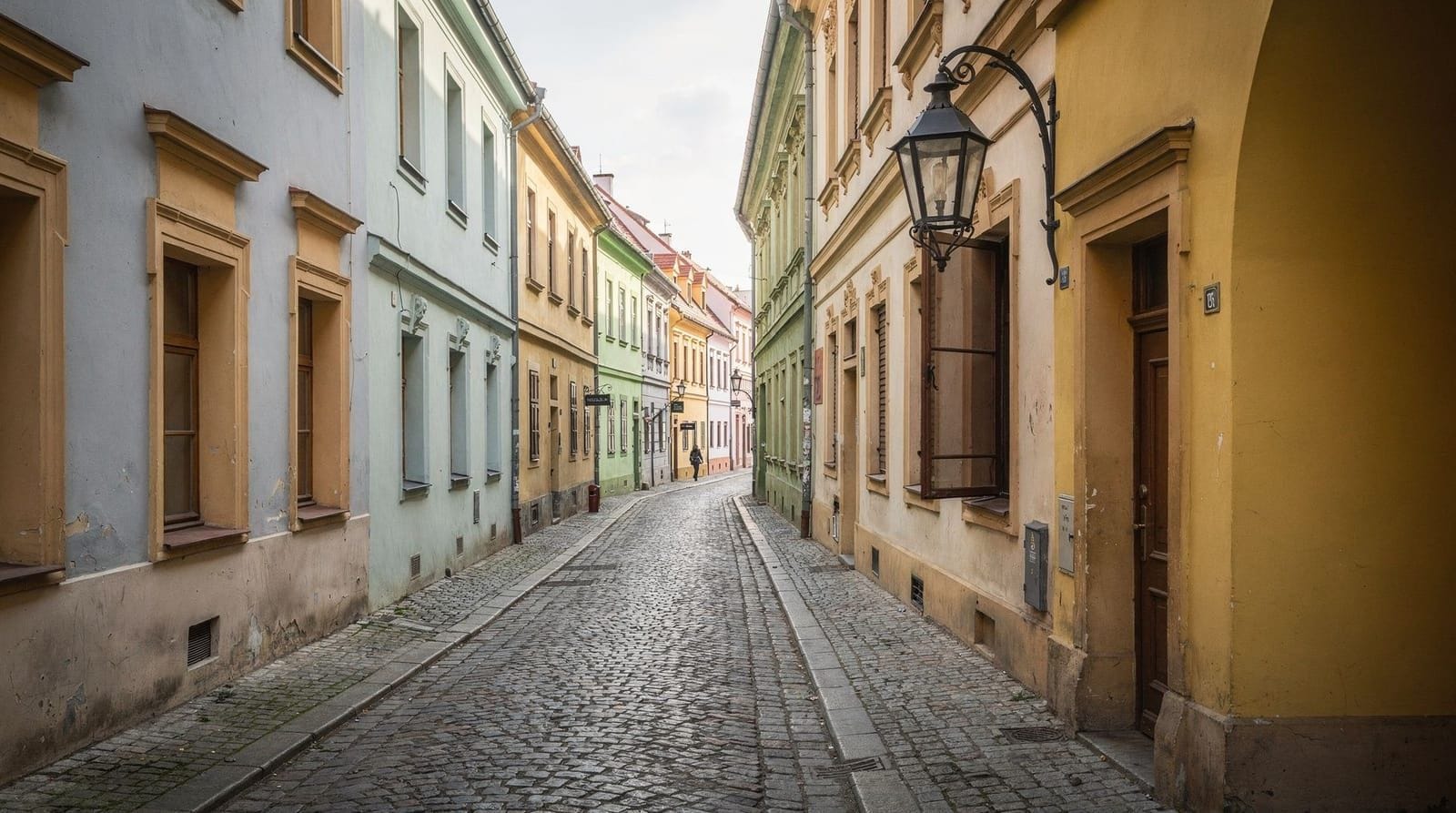
Žydovská ulica — Jewish Street — still runs along the base of the castle hill and is one of the oldest named streets in the city. You can walk it today, though most of what lines it now is postwar construction. The street name is a direct survival from a time when this was the heart of a living community.
The quarter was not destroyed in the Holocaust. It was destroyed by the communist urban planners of the 1960s and 1970s, who demolished the neighbourhood to build the SNP Bridge and its approach roads. Two synagogues were knocked down in this process: the Neolog synagogue (demolished to make way for the bridge itself) and another that fell in earlier clearances. Only the Heydukova Synagogue in a different part of the city centre survived.
This double tragedy — Holocaust followed by communist erasure — is something the communist and Iron Curtain history guide addresses from a broader political angle, but it deserves emphasis here. Bratislava’s Jewish community lost its people to genocide and then lost the physical memory of those people to ideology-driven urban renewal. The two acts of erasure are distinct but compound one another.
A Holocaust memorial stands near Rybné námestie, close to the Chatam Sofer Mausoleum, commemorating the Bratislava Jews who perished between 1942 and 1945. It is a modest monument but carries weight given its location among the ruins of what the community once built.
Museum of Jewish Culture
The most substantive single site for understanding Bratislava’s Jewish history is the Museum of Jewish Culture (Múzeum židovskej kultúry), housed in the Baroque Pálffy Palace on Židovská ulica 17 — fittingly, on the very street whose name records the community’s presence.
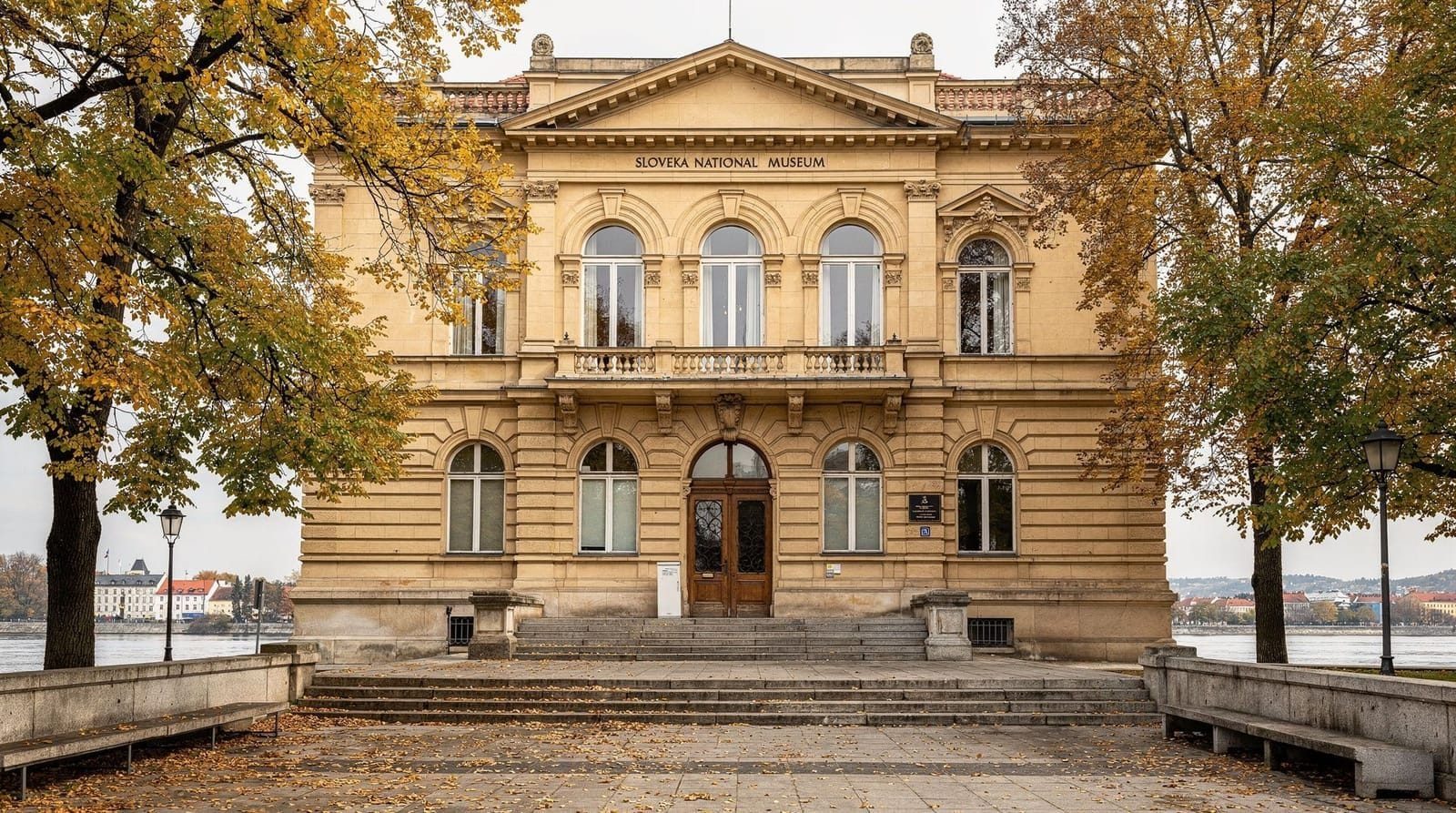
The museum is part of the Slovak National Museum network and covers Jewish history in Slovak territory from the earliest documented presence through to the present. The permanent exhibition is organised chronologically and thematically, moving through medieval settlement patterns, the growth of communities in the 17th and 18th centuries, the intellectual flowering of the Pressburg Yeshiva period, the turbulent emancipation debates of the 19th century, the catastrophe of the Holocaust in Slovakia (where the collaborationist Slovak state actively participated in deportations from 1942), and the postwar remnants.
The exhibition gives serious attention to religious practice, with displays of Torah scrolls, menorahs, Kiddush cups, and other ceremonial objects. It also deals honestly with Slovak complicity in the deportations — a subject that has not always been discussed openly in the country’s official memory culture.
The Pálffy Palace building is beautiful in its own right, a well-preserved example of Bratislava’s Baroque heritage, and it sits on a street that rewards slow walking. Take time before or after your visit to walk the full length of Žydovská ulica toward the castle.
Practical information:
- Address: Židovská 17, Bratislava Old Town
- Hours: Monday to Friday 11:00-17:00, Sunday 11:00-17:00; closed Saturday
- Entry: €7 adults, €5 concessions (students, seniors)
- Language: exhibition texts in Slovak and English
- Nearest tram stop: Župné námestie or Nám. SNP
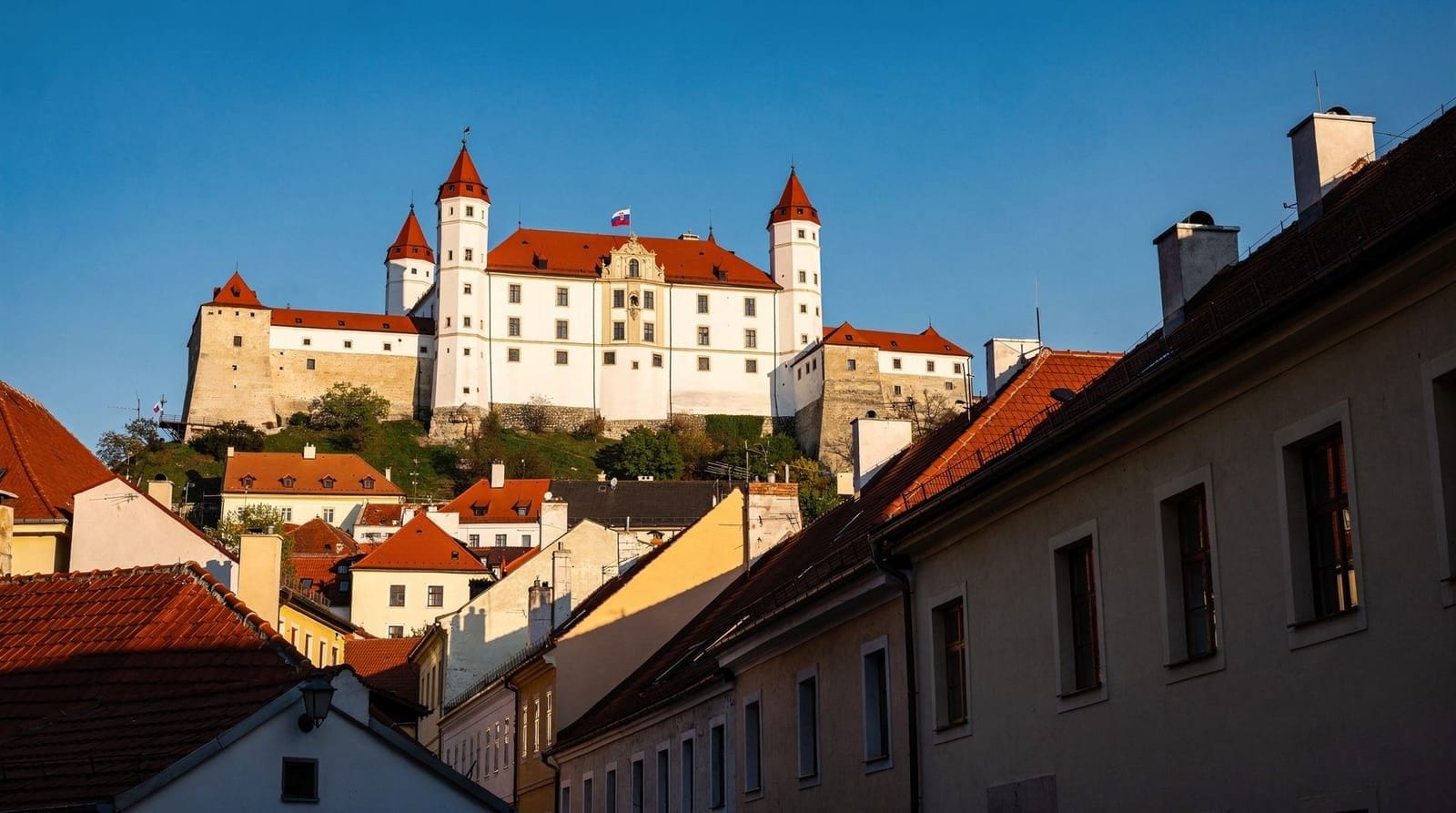
The museum connects naturally to a broader visit to Bratislava Castle, which overlooks this entire neighbourhood from above and whose history intersects with the Jewish community at several points.
GetYourGuideOld Town and history walking tourCheck availability →Heydukova Synagogue
Of the synagogues that once served Bratislava’s Jewish community, only one building survives in the city centre: the Heydukova Synagogue, now officially known simply as Synagóga, at Heydukova 11-13.
Built between 1923 and 1926 for the Orthodox congregation, the building has a distinctive Moorish-influenced facade that makes it stand out from the surrounding streetscape. After World War II and the effective end of Bratislava’s Jewish communal life as a functioning entity, the building lost its congregational function. It was eventually transferred and is now used by the City Museum as an exhibition space for temporary shows, some of which address Jewish history and others which are more general cultural exhibitions.
The exterior is freely visible and worth seeing; it is one of the few architectural traces of what the community built. Entry to exhibitions inside is free or carries a small fee depending on what is showing. Check the City Museum website before your visit if you want to see a specific exhibition.
The loss of the other synagogues — particularly the large Neolog synagogue that once stood near the Danube — is one of the persistent absences that a walk through this area makes palpable. Historic photographs in the Museum of Jewish Culture show what the neighbourhood looked like before the bridge was built, and the contrast with what stands there now is stark.
A self-guided walking route
A logical walking route connects these sites in about two to two-and-a-half hours, not counting time inside the Museum of Jewish Culture (allow an additional 60-90 minutes for that).
Begin at the Museum of Jewish Culture on Židovská 17. Walk the length of Žydovská ulica toward the Danube, noting how the street transitions from old urban fabric near the castle hill to postwar construction as you approach the river. At the bottom of the street, cross toward Rybné námestie and look for the entrance to the Chatam Sofer Mausoleum in the retaining wall near the SNP Bridge western ramp. After your visit to the mausoleum, walk the Holocaust Memorial nearby.
From here, cross back into the old town and walk northeast to Heydukova Street, roughly a ten-minute walk. The synagogue building at number 11-13 is visible from the street. This route can be extended by continuing on to St. Martin’s Cathedral, which was the coronation church of the Hungarian Kingdom and stands a short distance from the Jewish quarter — the two communities occupied adjacent parts of the medieval city.
A full old town walking guide integrates these sites into a broader exploration of the historic centre, and this route pairs well with the morning hours when the museum and mausoleum are open.
GetYourGuideBratislava culture and history tourCheck availability →The Holocaust in Slovakia and Bratislava
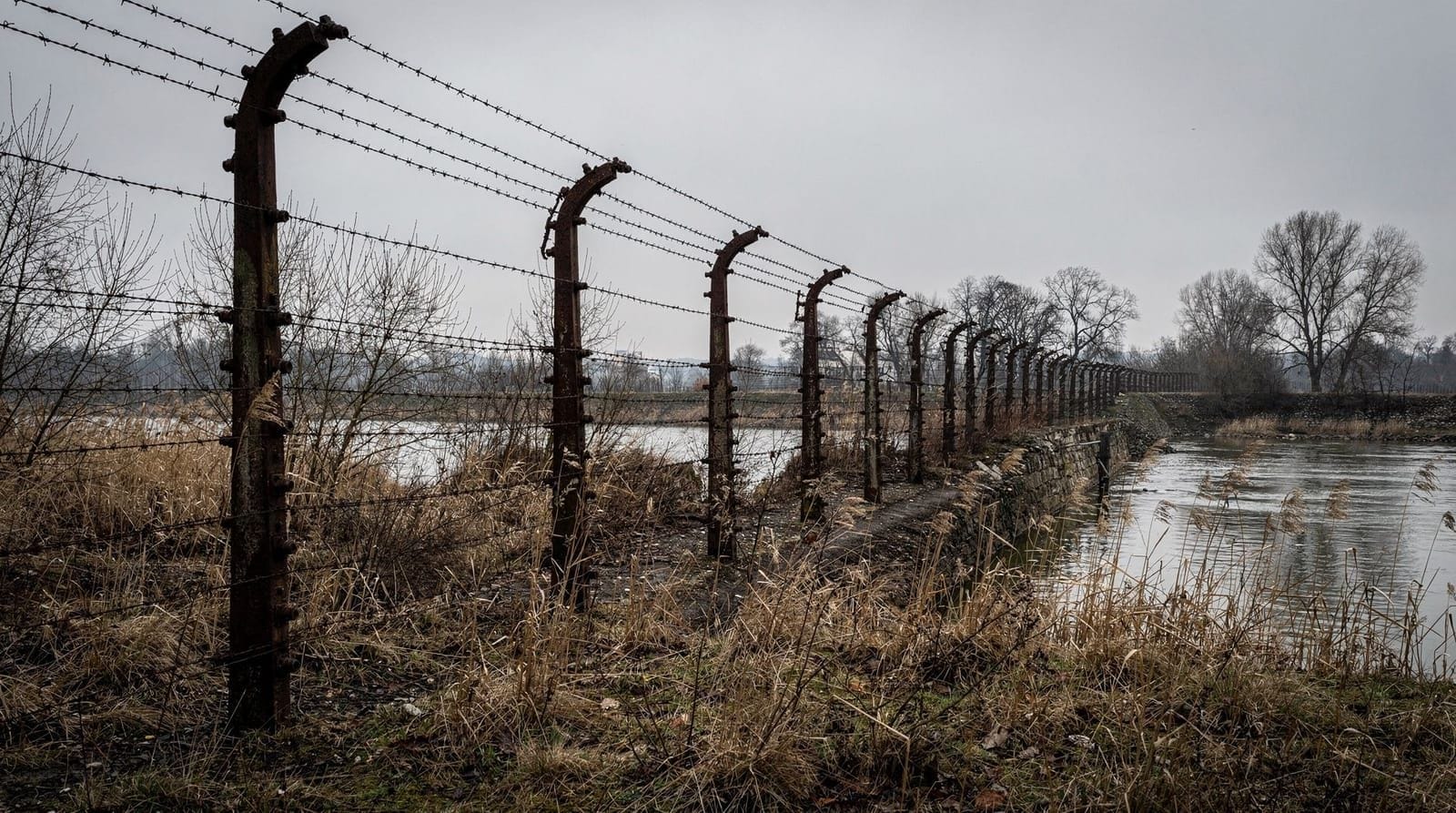
The deportation of Slovak Jews began in March 1942 — earlier than in many other occupied territories — and was carried out with the active cooperation of the Hlinka Guard, the paramilitary force of the collaborationist Slovak state. Bratislava’s Jews were among those deported, primarily to Auschwitz-Birkenau, Majdanek, and other camps in occupied Poland.
By the end of the war, approximately 70,000 of Slovakia’s 90,000 Jews had been murdered. Bratislava’s community of roughly 15,000 was devastated. A small number survived in hiding, some escaped abroad earlier in the war, and a handful returned from the camps. Most survivors subsequently emigrated — to Israel, the United States, the United Kingdom, and elsewhere — in the years immediately following liberation and again after the communist takeover in 1948.
The postwar Jewish community in Bratislava is now estimated at 600-800 people, a fraction of a percent of its prewar size. The community maintains an active Jewish organisation and cultural life despite its small numbers. The Museum of Jewish Culture is in part a product of this community’s effort to document and preserve what was lost.
Understanding this history enriches a visit to many parts of Bratislava. The SNP Bridge observation deck offers a view directly over the area where the Jewish quarter stood; seen from above, the postwar urban fabric makes more sense when you know what it replaced. The broader communist history of Bratislava places the 1970s demolitions in political context.
Chatam Sofer’s legacy and ongoing pilgrimage
For visitors with no prior knowledge of Orthodox Jewish history, Chatam Sofer’s significance can be difficult to grasp from a museum panel alone. A useful frame: he was, and remains, to Orthodox Jewry what a major Church Father is to Catholic or Orthodox Christianity — a foundational authority whose writings continue to shape daily religious practice nearly two centuries after his death.
His yeshiva in Pressburg produced some of the most important rabbinical figures of the 19th century. The model he established — rigorous textual scholarship combined with fierce resistance to religious reform — spread through his students to communities across the world. Bratislava is therefore not just a local Jewish heritage site but a pilgrimage destination of global significance for observant Jews, comparable in its own sphere to major rabbinic burial sites in Poland, Ukraine, and elsewhere.
The annual pilgrimage on 25 Tevet brings visitors from Israel, the United States, and across Europe. If your visit coincides with this date, you will encounter a site that feels far more alive than its physical appearance — a underground chamber in a postwar motorway junction — might suggest. At other times of year, individual pilgrims visit regularly; the caretaker is accustomed to international visitors.
Practical tips for your visit
Plan for a half day. The Museum of Jewish Culture alone warrants an hour to ninety minutes. Add travel time between sites and the mausoleum visit, and a thorough exploration of all three main sites takes three to four hours.
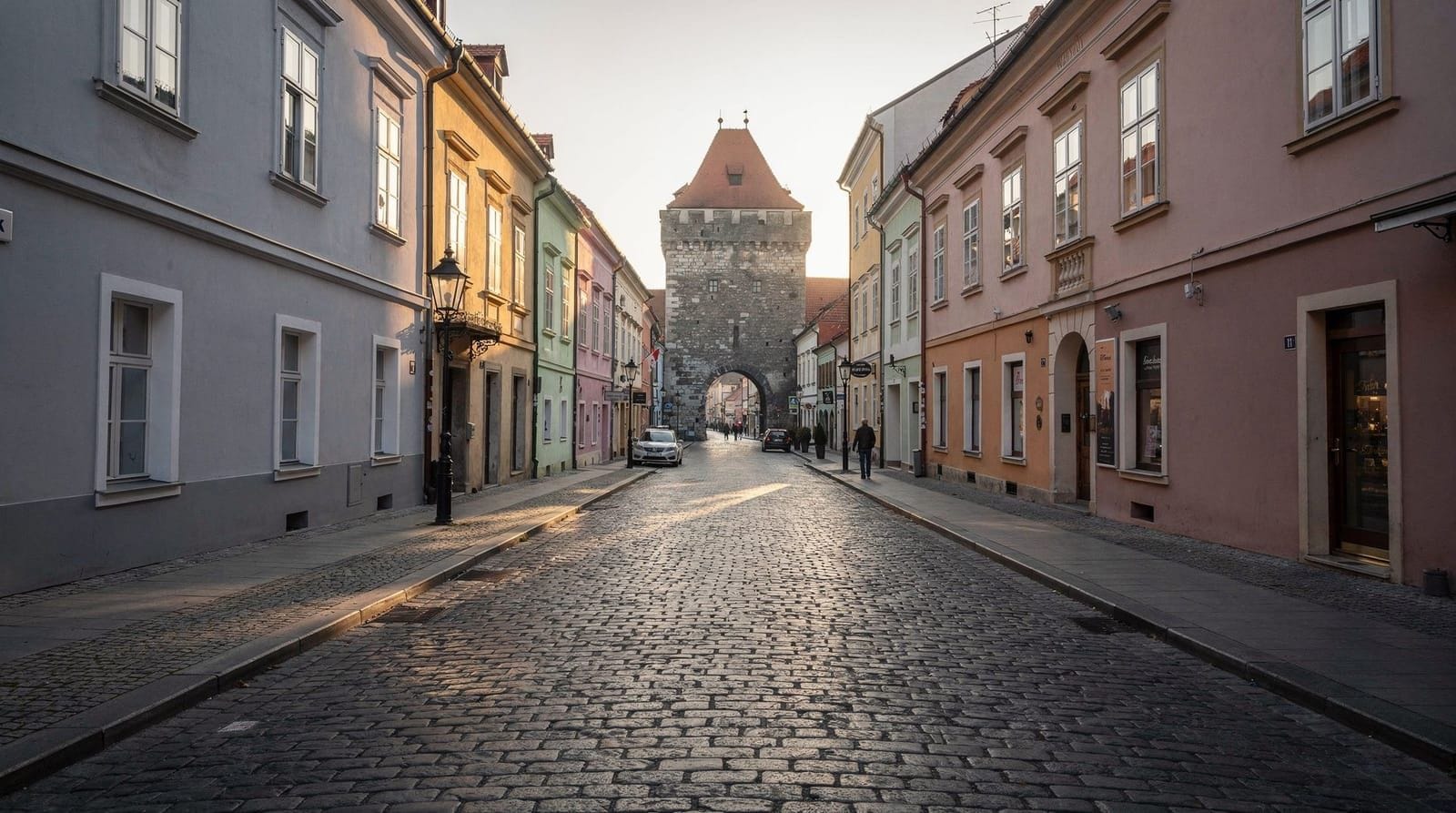
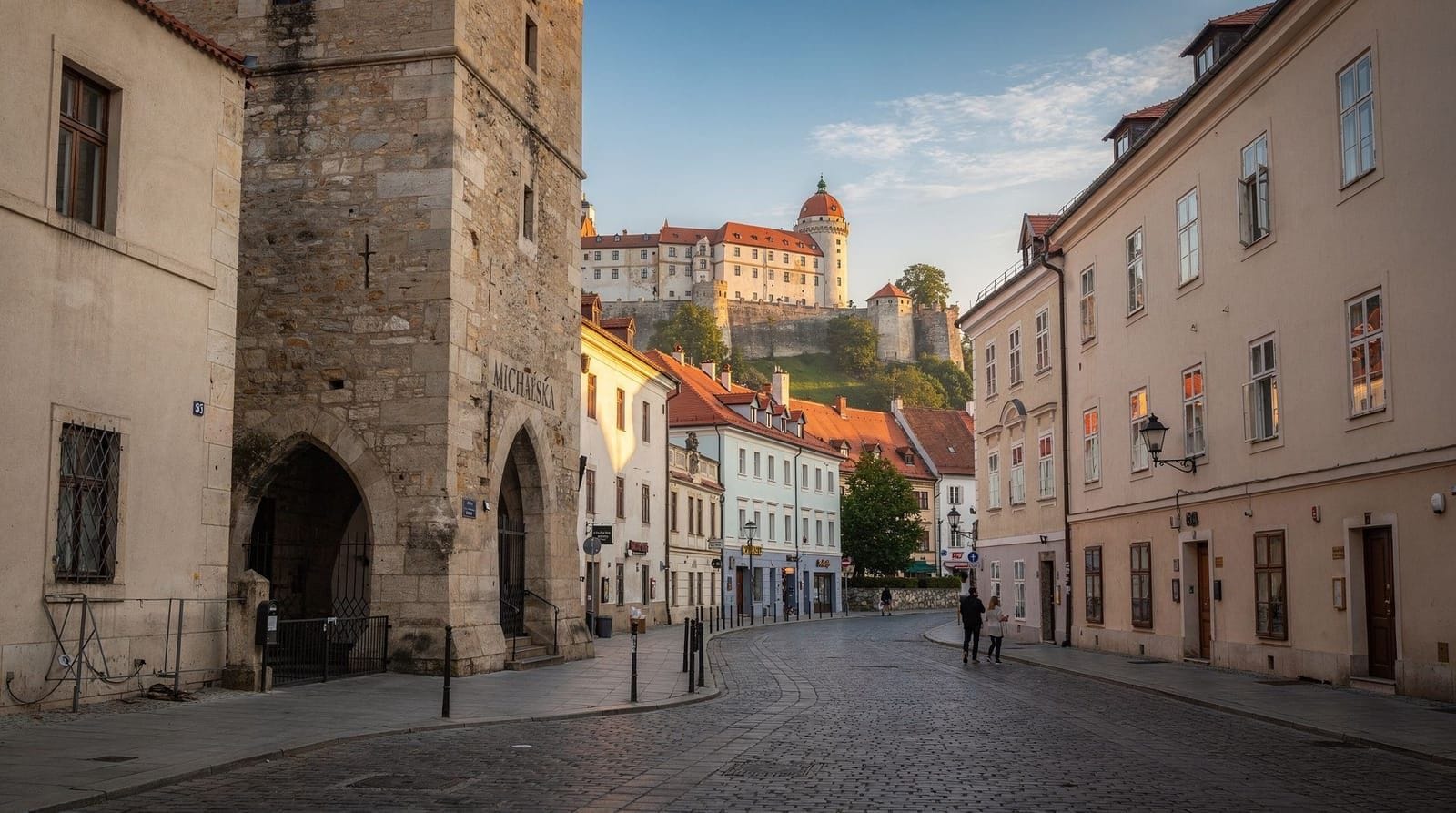
Combine with the old town. All three sites are within fifteen minutes’ walk of Bratislava’s main old town square. A morning at the Jewish heritage sites pairs naturally with an afternoon exploring Michaels Gate, the old town’s best-preserved medieval gate, or walking up to Bratislava Castle for the view over the Danube and the Slovak National Museum’s history collections.
Mausoleum timing matters. The mausoleum closes at noon on Fridays and is shut all day Saturday. If you’re visiting over a weekend, plan your mausoleum visit for Sunday through Thursday. The museum and synagogue are also closed Saturday.
Consider a guided tour. The sites are all accessible independently, but the connections between them — why the bridge was built where it was, what was demolished to build it, how Soviet urban planning interacted with anti-Semitic legacy — are much clearer with a knowledgeable local guide who can draw these threads together.
For deeper research. The Museum of Jewish Culture has a research library and can direct serious researchers toward archival resources. The Jewish community organisation in Bratislava also maintains records and may be able to assist those tracing family connections to the Pressburg community.
Those planning a broader visit to Slovak history might extend the Jewish heritage theme to Trnava, a well-preserved old town 45 kilometres northeast of Bratislava that also has a documented Jewish history, or Červený Kameň Castle in the Small Carpathians, whose estate records include references to the rural Jewish communities of the region.
Combining the visit with the rest of the Old Town
The Jewish heritage sites sit at the edge of the historic centre, which makes them easy to fold into a broader day. A natural pairing is a morning at the museum and mausoleum followed by an afternoon on the old town walking guide route, or the reverse if you prefer to start with the castle views before descending into this quieter, more contemplative part of the city. Travellers building a full one-day itinerary should budget the extra two to three hours these sites deserve rather than rushing them at the end of the day.
Frequently asked questions about Jewish heritage in Bratislava
Where is the Chatam Sofer Mausoleum and how do I find it?
The mausoleum is located near Rybné námestie, at the western end of the SNP Bridge approach ramp. Look for a small entrance passage set into the retaining wall on the north side of the ramp. It can be easy to miss on a first visit; if in doubt, search for it by name on Google Maps and follow walking directions from Nám. SNP, which takes about five minutes on foot. The entrance is marked with a small sign.
Is there still an active Jewish community in Bratislava?
Yes, though it is small. The Jewish community of Bratislava today numbers approximately 600-800 people, compared to around 15,000 before World War II. The community maintains a cultural centre and organises events, including periodic Jewish culture festivals. The Museum of Jewish Culture is closely connected to this ongoing community.
Can non-Jewish visitors enter the Chatam Sofer Mausoleum?
Yes. The mausoleum welcomes visitors of all backgrounds. Modest dress is expected, and head coverings for men are required; kippot are available at the entrance if you do not have one. Visitors are asked to be respectful and quiet, particularly if a prayer service or pilgrimage group is present. The suggested donation of €2 is appreciated.
Why was so much of the old Jewish quarter demolished?
The demolition happened in two phases. The first wave came in the 1960s as part of general communist-era urban renewal that cleared old neighbourhoods considered substandard. The second and most dramatic wave came in the early 1970s when the SNP Bridge was built, requiring the clearance of the remaining buildings between the castle hill and the Danube riverbank. The decision to route the bridge through this area effectively destroyed what remained of the historic Jewish quarter, including two synagogues. This history is covered in more depth in the communist and Iron Curtain history guide.
How long does the Jewish heritage walking route take?
Allow approximately two to two-and-a-half hours for the self-guided walk linking the Museum of Jewish Culture, the Chatam Sofer Mausoleum, and the Heydukova Synagogue, not including time spent inside the museum. If you include a thorough visit to the museum’s permanent exhibition, add another sixty to ninety minutes. The entire circuit, done carefully, takes a half day.
What is the best way to visit if I have only a few hours in Bratislava?
If time is very short, prioritise the Chatam Sofer Mausoleum — it is the most singular site, impossible to find anywhere else in the world, and the visit takes only twenty to thirty minutes including walking there and back from the old town. The Museum of Jewish Culture is the best choice if you want historical depth and context. The Heydukova Synagogue exterior can be seen in passing on a walk through that part of the centre.
Are there guided tours that specifically focus on Jewish heritage?
Bratislava’s Jewish community and some local tour operators offer specialist Jewish heritage tours, particularly around Chatam Sofer’s yahrtzeit in late December or early January. Year-round, most of the broader history and culture walking tours in the city include the main Jewish heritage sites as part of a wider narrative. Booking through a reputable tour platform connects you with guides who can tailor the depth of Jewish history coverage to your interest.
Is the Heydukova Synagogue still used for Jewish worship?
No. The building has not functioned as a synagogue for many decades and is now used by the City Museum as an exhibition gallery. With the community now numbering only a few hundred people, congregational life takes place at the Jewish community centre rather than at this historic building. However, the exterior and the occasional exhibitions inside make it worth visiting as an architectural and historical survival.
How does the Jewish heritage route fit with a first-time visit to Bratislava?
It fits well as a half-day addition to a standard first visit. Pair it with the old town walking guide or the Bratislava Castle visit, since all three areas are within easy walking distance of each other.
For a broader introduction to Bratislava’s layered history, the one-day itinerary integrates the key historical districts, and the hidden gems guide covers lesser-known corners of the city that reward slow exploration. Those arriving from Vienna can find transport options in the Vienna to Bratislava guide.
Culture & heritage tours
Verified deep-linked GetYourGuide tours. Book through these links and we earn a small commission at no cost to you.