Hidden gems in Bratislava: off the beaten path in Slovakia's capital
| At a glance | |
|---|---|
| Where | Mostly reachable by tram, bus, or bike from the Old Town; a few (Červený Kameň, Svätý Jur) need a regional bus |
| Cost | Free to around 10 € depending on the site; wine villages are pay-as-you-taste |
| Time needed | A half-day each, or combine two in one day if they’re on the same side of the city |
| Getting there | Public tram/bus for most; a bike is genuinely the best way to reach Danubiana |
| Best time | Spring and autumn for the forest park and wine villages; any season for Petržalka and the museums |
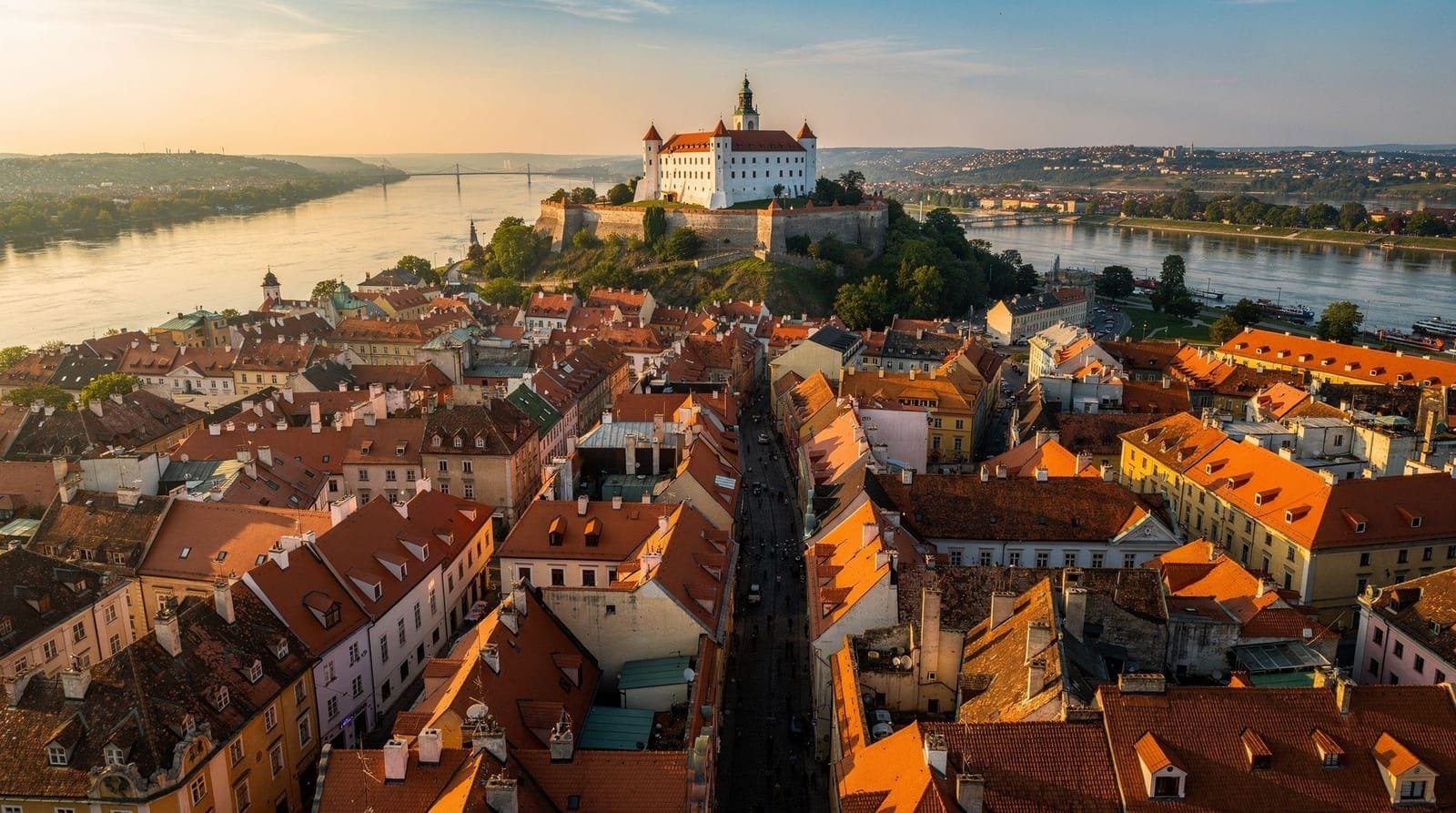
The old town is genuinely lovely — compact, walkable, full of decent coffee and Baroque facades — but if you spend all your time there, you will miss what makes Bratislava unusual. This is a city with a Soviet housing estate of 130,000 people visible from the castle. A modern art museum on a peninsula in the Danube. Renaissance castles 40 minutes away with almost no queues. Wine villages technically inside the city limits. A forest park where locals walk on Sunday mornings while tourists photograph the main square.
This guide goes to those other places.
Červený Kameň castle
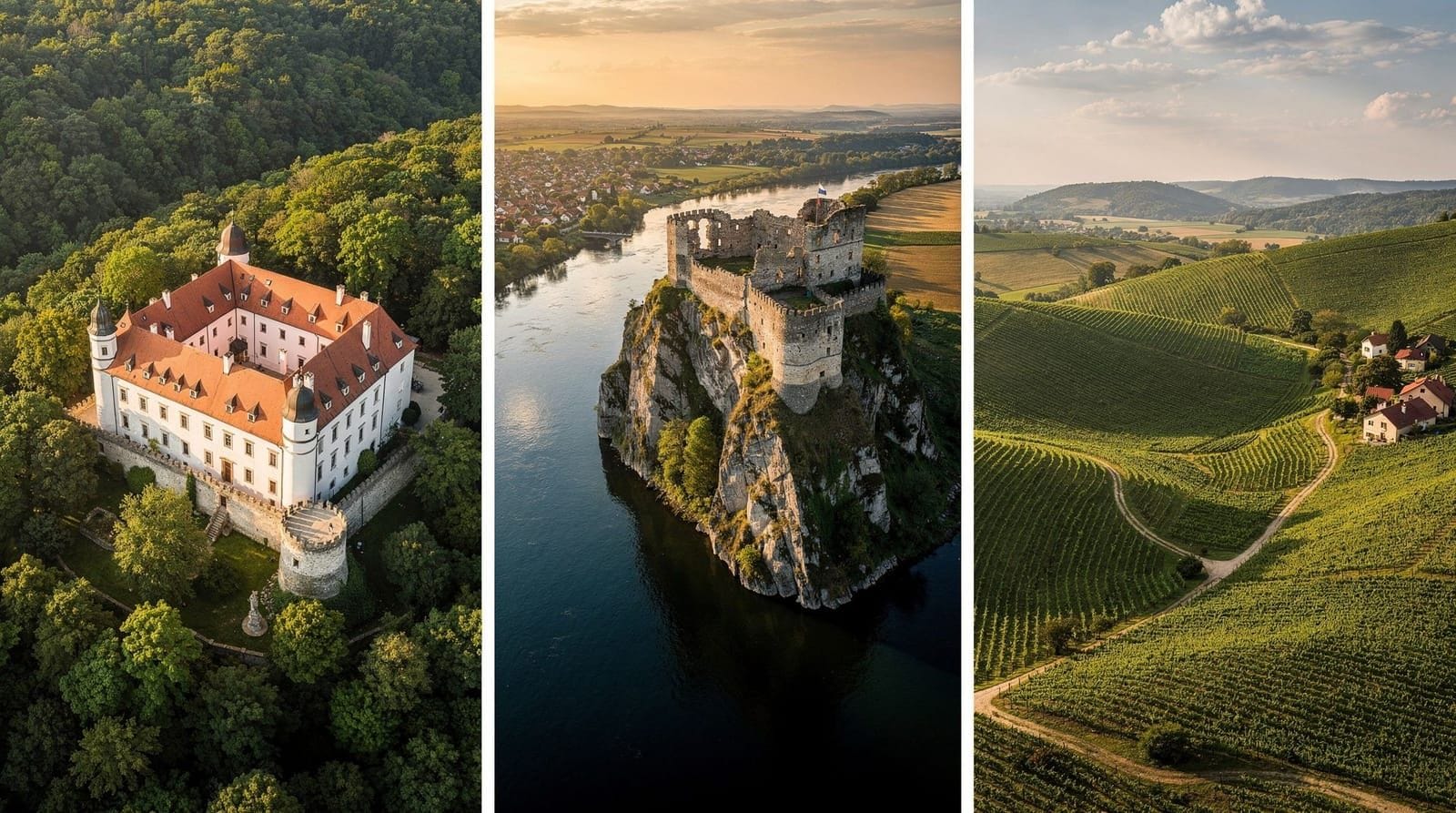
Forty minutes from Bratislava by bus or car, Červený Kameň (Red Stone Castle) is one of the best-preserved Renaissance fortifications in Central Europe — and, puzzlingly, one of the least visited. While Bratislava Castle gets the tour groups, Červený Kameň sits quietly among the vineyards of the Small Carpathians, drawing mostly Slovak school groups and the occasional weekend family.
The castle was built in the 16th century as a weapons arsenal by the Fugger banking family — wealthy enough to build fortifications for an empire — and later acquired by the Pálffy dynasty, who kept it until the 20th century. The result is a castle with genuinely intact interiors: not a ruin, not a reconstruction, but rooms with period furniture and armour still in something close to their original arrangement. The Pálffy family portrait gallery alone is worth the trip.
Entry is around 10 € for the full tour (guided, in Slovak or with an audio guide). The exterior grounds are accessible for less.
The castle sits in the village of Častá, accessible by bus from Bratislava’s Most SNP terminal — services run roughly hourly on weekends. Alternatively, cycling the Small Carpathians route takes you past the castle and through wine-producing villages. The whole area is covered in the Červený Kameň Castle destinations page.
The Small Carpathians day trip guide gives logistics for combining Červený Kameň with wine villages like Pezinok or Modra in a single day.
Danubiana Meulensteen Art Museum at Čunovo
Danubiana should not work as well as it does. A modern art museum on a narrow peninsula jutting into the Danube, 20km south of Bratislava, accessible by bicycle along the river path or by car on a road that feels like it leads nowhere — this is not an obvious cultural destination. And yet it is one of the most memorable places near the city.
The museum opened in 2000, built on a plot of land that was essentially reclaimed from the river. The architecture responds to its setting: the building is horizontal and minimal, designed to read as a long white boat from across the water. The outdoor sculpture park that extends around the peninsula is particularly good — large-scale works that work with the Danube landscape rather than against it.
The collection inside focuses on contemporary Slovak and international art, with rotating exhibitions alongside permanent works. Entry is around 8 €. It is closed on Mondays.
The cycling route to Danubiana from Bratislava is part of the Danube riverside cycling route — a flat, pleasant 20km each way along the riverbank through Petržalka and Čunovo. By car it takes 30 minutes. There is no practical public transport option; it is a cycling trip or a car trip.
The Danubiana and Čunovo destinations page covers access and opening hours in detail.
GetYourGuideBratislava grand city tour with Devín CastleCheck availability →Železná Studienka forest park
The Bratislava hills begin practically at the edge of the city’s northern residential neighbourhoods. Železná Studienka is the forest park and recreation area in those hills — a network of walking and cycling paths around a small reservoir, popular with joggers, families, and dog walkers, almost entirely off the tourist radar.
The area sits within the Small Carpathians mountain range, and the trails from Železná Studienka connect to longer routes into the hills — including paths toward Červený Kameň and the wine villages further north. But even a short circuit around the reservoir, through the mixed forest, is a satisfying few hours that costs nothing.
Getting there from the city centre takes about 20–30 minutes on tram or bus, followed by a short uphill walk. In winter it snows reliably and locals come for sledding. In summer it is a relief from city heat. In autumn the foliage is spectacular.
Almost no one from outside Slovakia knows this place exists. That is, honestly, most of its charm.
Petržalka: the other side of the Danube
Petržalka is visible from the castle. You can see it from the UFO deck on the Most SNP bridge. It is the largest housing estate in Central Europe — a grid of Soviet-era prefabricated apartment blocks (paneláky) housing roughly 130,000 people, occupying the flat land south of the Danube across from the old town.
Most tourists ignore Petržalka entirely, which is a shame, because it is one of the most interesting urban environments in the city. This is where Bratislava actually lives — it is not a fringe neighbourhood but a fully functioning district with its own supermarkets, schools, parks, and increasingly, coffee shops and restaurants run by people in their twenties who grew up here and chose to stay.
Walking Petržalka is not a conventional tourist activity, and the experience is not conventionally photogenic. But if you are interested in urban planning, socialist architecture, or just in understanding what the majority of a Central European city actually looks like, an afternoon here is worthwhile. The murals that have appeared on the concrete facades over the past decade have turned some blocks into something approaching an open-air gallery.
Cross the river via the Most SNP bridge (the UFO bridge) or the Starý Most (Old Bridge) footway. It is a 10-minute walk from the old town.
The communist and iron curtain history guide gives important context for what you see in Petržalka — the estate was built partly on land that had been a buffer zone between the Iron Curtain and the city.
Rača wine village
Rača is technically within the administrative boundaries of Bratislava city — it has a Bratislava postal code and a tram connection to the centre — but it does not feel like a capital city neighbourhood. It feels like a Slovak wine village, because that is what it has been for several centuries.
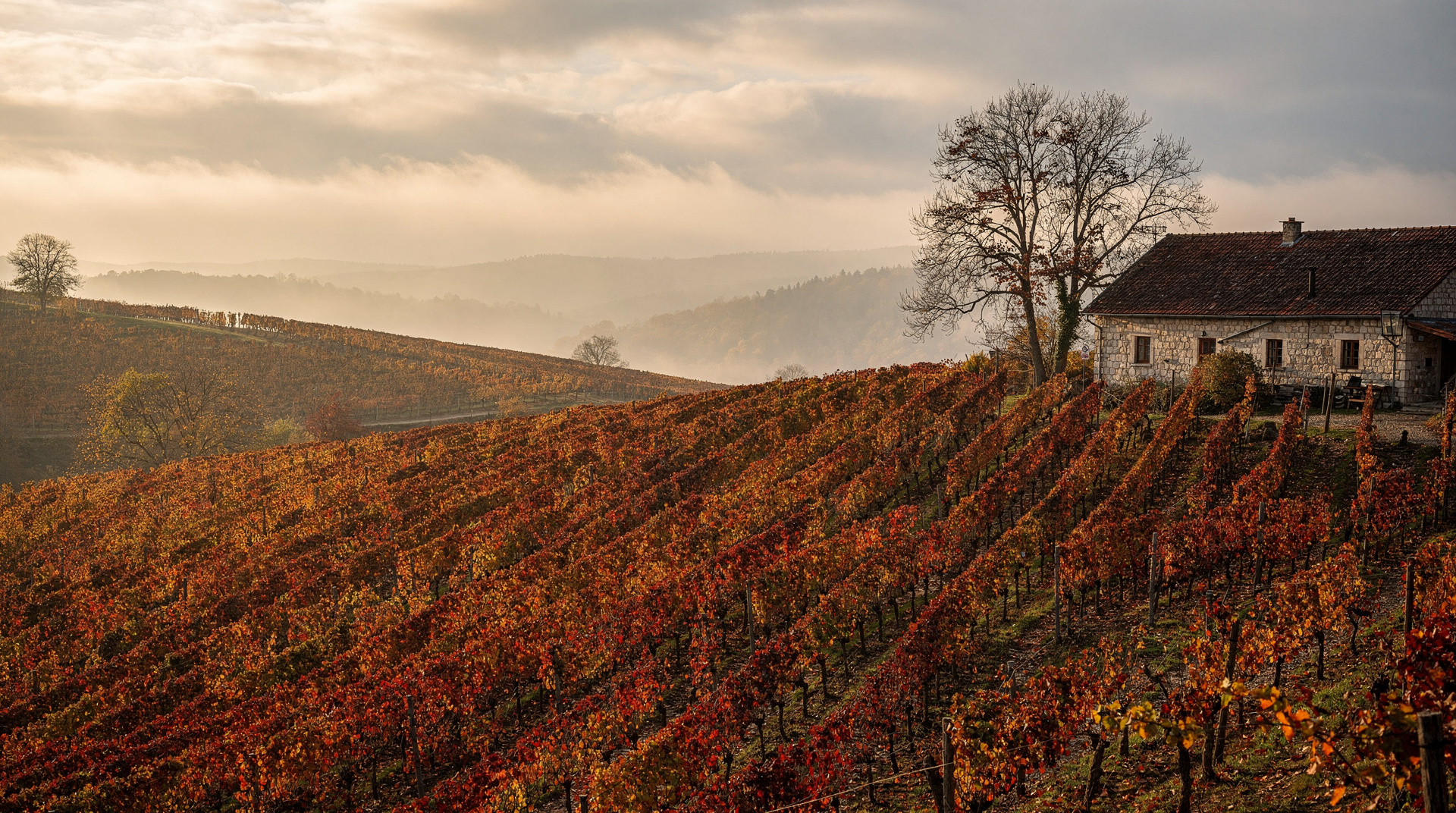
The village sits on the lower slopes of the Small Carpathians, north of the city centre, surrounded by vineyards. The main agricultural product is wine — particularly white wines from Welschriesling and Grüner Veltliner grapes — and the village has a tradition of vínne pivnice (wine cellars) open to visitors, especially around the autumn harvest festivals.
The St Martin’s Vinohrady festival, usually held in September, is one of the best events in the Bratislava calendar: a wine harvest celebration in Rača with tastings, traditional food, and live music, drawing both locals and visitors. It connects to the broader St Martin’s Wine Harvest celebration.
A tram from the city centre (tram 3 or 9 from the old town area) reaches Rača in 20–30 minutes. Walk from the tram stop into the older part of the village, past the church, and up toward the vineyard paths. Many of the wine cellars are open informally at weekends in summer and autumn — look for the hand-written signs.
For the wider wine region context, the Small Carpathians wine guide and Pezinok and Modra wineries guide give more detail on producers and tasting opportunities.
GetYourGuideBratislava riverside, castle or complete city segway tourCheck availability →Communist-era architecture: a self-guided tour
Beyond Petržalka, Bratislava has a remarkable concentration of communist-era architecture that is largely overlooked by visitors focused on the Baroque old town. If you are interested in 20th-century design — in the genuine ambitions and failures of socialist urbanism — there is a coherent half-day itinerary here.
Slavín memorial. The Soviet war memorial on the hill northwest of the old town is the most imposing communist monument in the city — a 37-metre obelisk with a bronze soldier, surrounded by the graves of Soviet troops who died in 1945. The views are excellent; the atmosphere is genuinely strange. Free.
Most SNP (New Bridge / UFO Bridge). The bridge itself is a piece of 1970s engineering bravado: an asymmetric pylon supporting a restaurant in the shape of a flying saucer. It required demolishing a significant part of the old Jewish neighbourhood to build. That context — the trade-off between modernist ambition and urban erasure — is worth understanding.
Slovak Radio building. An inverted pyramid of copper-clad concrete on Mýtna ulica, built in the 1970s. It should not be structurally possible. From the outside it reads as a science-fiction building that happened to be built in the wrong decade; from the inside (accessible occasionally for open days) the acoustic design is remarkable.
The city tunnel system. Parts of Bratislava’s under-old-town tunnel network, built for civil defence purposes, occasionally open for tours. Check locally for current access.
The communist and iron curtain history guide ties these together with the broader political history.
Jewish heritage quarter
This is not a hidden gem in the sense of being unknown — it is a significant and sobering part of Bratislava’s history — but it is systematically undervisited by tourists who focus on the castle and old town.
The area between the castle hill and the riverfront was once one of the most densely populated Jewish neighbourhoods in Central Europe. The community was destroyed during the Holocaust — around 12,000 of Bratislava’s Jews were deported between 1942 and 1944, most of them murdered. After the war, much of the physical neighbourhood was demolished during the construction of the Most SNP bridge and the associated road infrastructure, erasing the built evidence of a community that had lived here for centuries.
What remains is partial but important: a Holocaust memorial on the riverfront, remnants of the synagogue that was not demolished, the old Jewish cemetery near the castle walls, and the silence of streets that were once full.
The Jewish heritage guide walks through the full history and the physical sites that remain. It is one of the more thoughtful guides on the site and worth reading before you go.
Svätý Jur: the quiet wine village to the north
Svätý Jur (Saint George) sits 15km north of Bratislava, tucked into the eastern edge of the Small Carpathians. It is an old market town with medieval walls still partially standing, a Gothic church, and a quiet main street that feels essentially unchanged since the Habsburg era.
The vineyards begin immediately at the edge of the village. Svätý Jur wine was historically well-regarded enough to be served at the Habsburg court; the winemaking tradition continues with a small number of producers, mostly accessible informally at weekends.
Getting there from Bratislava takes 30–40 minutes on the regional bus from the Mlynské Nivy bus terminal. Unlike Pezinok or Modra — the more commercially developed wine villages — Svätý Jur has almost no tourist infrastructure. There is no wine shop on the main square, no tasting room signage designed for visitors. You need to approach it as a local destination: ask at the village square, walk the vineyard paths, find the small restaurant that does weekend lunches.
This is both the challenge and the appeal. For an introduction to the broader wine region, the Small Carpathians wine region destination page gives context.
Trnava: the “little Rome” 45 minutes away
Trnava is technically outside Bratislava proper, but it belongs on this list because almost no first-time visitor to the capital adds it to their plans, and it’s an easy half-day trip. Nicknamed “little Rome” for its concentration of churches within the old town walls, Trnava has a genuinely well-preserved historic core with far fewer visitors than Bratislava’s own Old Town.
Trains from Bratislava’s main station take around 30–40 minutes and run frequently throughout the day. Once there, the walled old town is compact enough to see in two to three hours: the Trinity Column on the main square, the Baroque interiors of St Nicholas’s Basilica, and the remaining sections of the medieval fortifications. The Trnava destinations page has the practical details for a day trip.
Which of these actually deserve a half-day of a short trip
If you only have one extra afternoon beyond the Old Town essentials, prioritise Petržalka or Danubiana — both are quick to reach and give you a genuinely different side of the city. Červený Kameň and Rača reward a full half-day and suit travellers with a second or third day. Svätý Jur and Trnava are best saved for a longer stay or a return visit, since neither has much tourist infrastructure to fall back on if plans change.
The old town is worth your time — the Bratislava in one day guide shows how to cover it well without feeling rushed. But the places described above are where you start to understand what Bratislava actually is: a small capital sitting at the intersection of several histories, with a communist estate visible from a medieval castle, wine villages reachable by city tram, and a modern art museum you can cycle to along the Danube.
If you are planning two or three days and want to work some of these spots into a structured itinerary, the Bratislava in 3 days itinerary gives a logical sequence. The day trips ranked guide assesses all the day trip options — including Červený Kameň, Vienna, and Budapest — by accessibility and value.
The autumn is particularly good for the wine villages and the forest parks: the autumn wine harvest guide gives the timing and logistics for the harvest festival season.
Culture & heritage tours
Verified deep-linked GetYourGuide tours. Book through these links and we earn a small commission at no cost to you.