Slovakia’s wine country begins at Bratislava’s doorstep
If you think Slovak wine and draw a blank, you are not alone — but you are missing one of central Europe’s most underrated wine regions. The Small Carpathians (Malé Karpaty in Slovak) form a forested ridge that runs northeast from Bratislava for about 100 km, and the slopes facing south and southwest towards the Danube plain have been producing wine since the Roman occupation of this territory nearly 2,000 years ago.
The two main towns are Pezinok, about 25 km from Bratislava, and Modra, 30 km away. Both are old wine towns with baroque centres, active winery cellars beneath their streets, and a culture of wine-making that survived Habsburg rule, collectivisation under communism, and the transition to private ownership after 1989. Today the region has around 40 registered producers, from large co-operatives to single-family cellars with just a few hectares.
For travellers based in Bratislava, this is the most distinctly Slovak experience you can reach without a long journey. Vienna is wine country too, but a different, more international kind. Here, the vineyards are tended by Slovak families who have been doing it for generations, the cellar visits are informal, and a glass of Grüner Veltliner costs €3.
If you are still building your trip, start with the Bratislava destination page for the city itself, then come back here once you know how many days you can spare. The Small Carpathians wine guide goes deeper on grapes and styles, and the Pezinok and Modra wineries guide helps you choose cellars in the two main towns.
GetYourGuideBratislava 6.5-hour Carpathian wine tour and tastingCheck availability →The wines of the Small Carpathians
The region is classified as one of Slovakia’s six wine regions and is by far the largest in terms of output and international recognition. The dominant grape styles are:
Grüner Veltliner (Veltlínske zelené): The region’s signature white. Dry, with notes of white pepper, herbs, and citrus. The style is lighter than Austrian Grüner Veltliner and drinks well young. Some producers are now ageing it in oak, producing wines with more body.
Welschriesling (Rizling vlašský): Not related to German Riesling despite the name. A workhorse variety in central Europe — fresh, crisp, and often the entry-level wine at tastings. At its best in the Small Carpathians, it has floral aromas and clean acidity.
Müller-Thurgau: Common in the region and often blended or used for semi-dry styles. Less interesting to serious wine enthusiasts but widely available.
Frankovka modrá (Blaufränkisch): The main red grape. Medium-bodied, with cherry and spice, and noticeably better than it was a decade ago. The best examples come from Pezinok.
Alibernet and Cabernet Sauvignon: A handful of producers have experimented with international varieties with decent results on the warmer south-facing slopes.
Sparkling wine (šumivé víno): A growing number of producers make sparkling wine using traditional or tank methods. Worth trying if you see it on a tasting menu.
Nové víno (new wine): The freshly pressed, lightly fermented wine released each year on St. Martin’s Day (11 November) is a tradition in Slovakia similar to Beaujolais nouveau in France. Pezinok’s Martinská sviatočná (St. Martin’s Festival) is the biggest celebration.
Pezinok: the wine capital of Slovakia
Pezinok is a town of about 25,000 people that functions as the informal capital of Slovak wine culture. The baroque main square — Radničné námestie — is lined with wine bars and cellars, some of which have been operating continuously since the 17th century. The town’s Small Carpathian Wine Route formally begins here.
The Museum of Small Carpathian Winemaking (Malokarpatské vinárske múzeum) on the main square occupies a building that has served the wine trade since 1762. Entry costs about €4 and covers the history of viticulture in the region, including exhibits on traditional winemaking tools, grape varieties, and the social history of wine-making villages. It is small but well-curated and worth an hour.
The harvest festival — Vinobranie — takes place in Pezinok in September, usually over a long weekend. It is the largest wine harvest festival in Slovakia, with folk music, food stalls, vine-pressing demonstrations, and unlimited tasting glasses. Tickets cost around €10–15 and include a tasting glass. The town is crowded but the atmosphere is festive rather than frantic. Book accommodation well in advance if you plan to visit during Vinobranie.
Key producers to look for in Pezinok:
- Víno Mrva and Stanko: One of Slovakia’s best-regarded larger wineries, with wines distributed internationally. Tastings available in their historic cellar.
- Château Modra: Despite the name, based in the Pezinok area and produces some of the region’s finest Frankovka modrá.
- Pivnica Paták: A small family producer known for clean, honest wines at fair prices.
Modra: ceramics, wine, and Ľudovít Štúr
Modra is slightly smaller than Pezinok and less obviously touristic, which makes it a better choice if you want an unhurried afternoon. It is known for two things: wine and pottery. The distinctive blue-and-white majolica ceramics of Modra have been produced since the 18th century and are still made by hand in local workshops — you will see them in every shop window.
The town is also the birthplace (and burial place) of Ľudovít Štúr, the 19th-century linguist who standardised the Slovak language in 1843. His tomb is in the town cemetery, and the small Ľudovít Štúr Museum on the main square covers his life and the broader cultural movement he led. Entry is around €3.
For wine, Modra’s cellar street — Horná and Dolná ulica — has a cluster of small producers offering tastings. Winery Pavelka & syn is one of the best-known, producing age-worthy whites and a solid Frankovka modrá. Most cellars in Modra operate on a booking basis — arriving without a reservation means you may find the cellar closed. Send an email or call a day ahead.
The vineyards around Modra rise quickly towards the forested ridge of the Small Carpathians. The view from the vineyard slopes in September — vines in full colour, the Danube plain stretching south — is as close to a wine-country cliché as Slovakia gets, and it is genuinely beautiful.
Modra pairs naturally with a slow lunch and a wander through the lanes, so treat it as an afternoon rather than a checklist. If you would rather have someone else organise the cellars, the wine tasting tours guide compares the guided options.
Svätý Jur: the wine village between Bratislava and Pezinok
Halfway between Bratislava and Pezinok, Svätý Jur (Saint George) is a protected heritage village with a well-preserved medieval core and several wineries. It is smaller and quieter than either Pezinok or Modra and receives far fewer visitors. The central square and surrounding vine-lined lanes are photogenic in a way that is hard to find when crowds are absent.
Winery Frajkúš is based here and produces some of the region’s more interesting whites, including a Pinot Blanc and a barrel-aged Grüner Veltliner. Tastings are by arrangement.
Svätý Jur is not easily reached by bus; it is most convenient by car as a stop between Bratislava and Pezinok, or as part of a Small Carpathians day trip combining two or three villages.
Hiking the Small Carpathians ridge
The forested ridge above the wine villages offers some of the best hiking accessible from Bratislava without a car. The Slovak Long-Distance Trail (Slovenská diaľková trasa, coded with red trail markers) runs along the top of the Small Carpathians for its entire length.
The most popular access points from Pezinok and Modra involve a 45–60 minute climb from the town centres to the ridge, then walking south along the crest back towards Bratislava via Marianka (Slovakia’s oldest pilgrimage site, a 14th-century monastery in a valley on the southern slopes). The full route from Modra to Marianka and then down to the Bratislava suburb of Záhorská Bystrica takes about 5–6 hours for a moderate hiker.
Shorter options: the trail from Pezinok to the Pezinok castle ruins (Pezinský hrad, a small ruin on the ridge) takes about 2 hours return and offers a view over the wine town and the Danube plain.
The Small Carpathians hiking guide covers the main routes with trail descriptions, difficulty ratings, and public transport access points.
Hikers who want a gentler outing can also look at the Železná studnička forest park guide, which covers the wooded hills on the Bratislava side of the same range.
Červený Kameň Castle
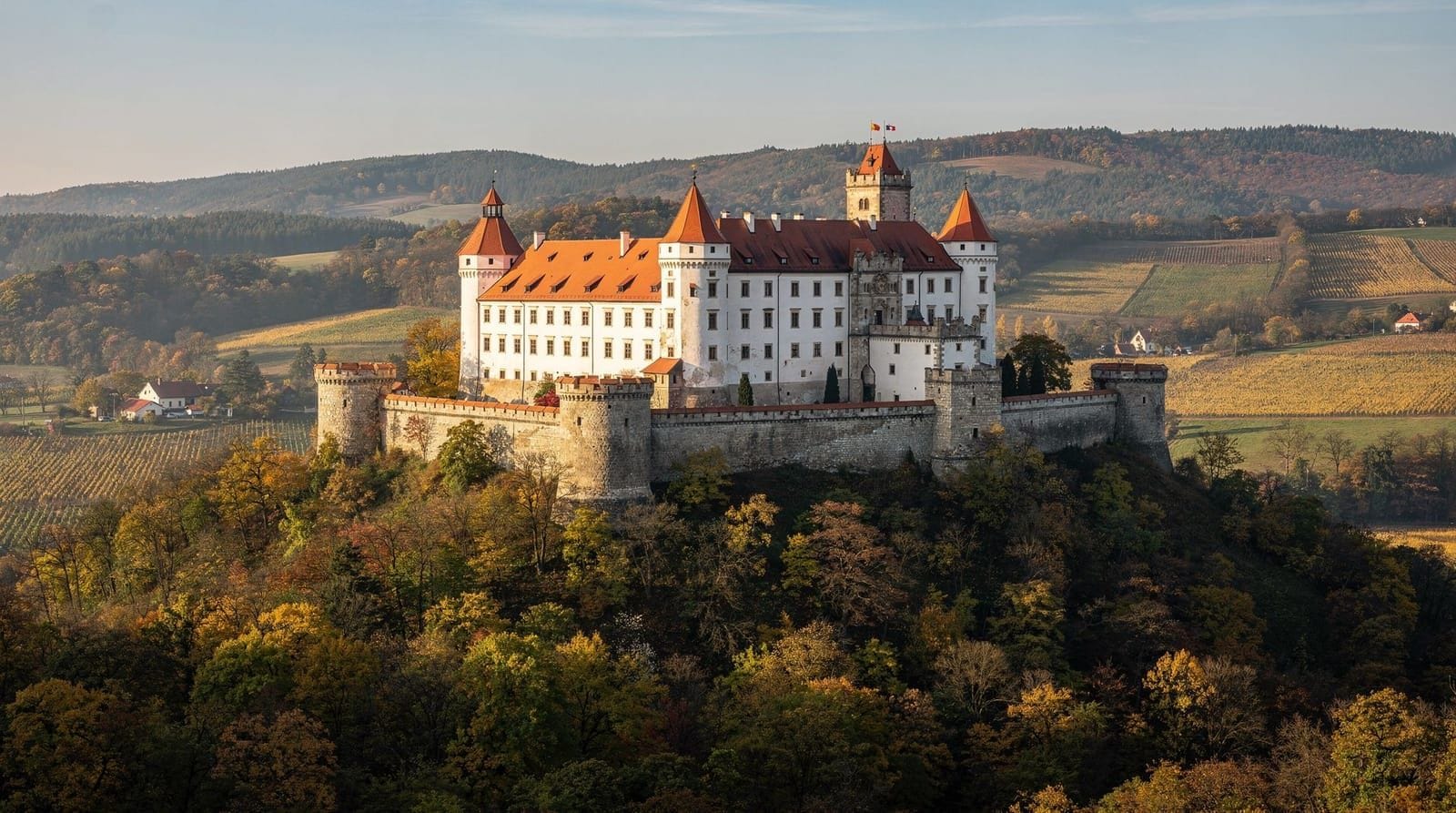
The most impressive historic site in the Small Carpathians is Červený Kameň (Red Stone) Castle, near the village of Častá, about 35 km from Bratislava. The castle dates to the 13th century but was substantially rebuilt in the 16th century by the Fugger banking family as a warehouse-fortress for protecting their trade goods. It is one of the best-preserved Renaissance fortresses in central Europe and has a museum interior with period furnishings, a treasury, and exhibitions on merchant trade in the 16th–17th centuries.
Entry costs around €10 for adults. Guided tours run on the hour. Červený Kameň requires a car or a bus to Častá (change at Modra). See the dedicated Červený Kameň Castle guide.
GetYourGuideModra private wine tasting at a family-operated wineryCheck availability →Wine tasting: practical guide
Booking: Most family producers in the Small Carpathians require advance booking for tastings, especially outside Pezinok’s main tasting rooms. Send an email or call the day before. Larger operations like Mrva and Stanko in Pezinok accept walk-ins during opening hours.
What a tasting costs: A guided tasting of 4–6 wines typically costs €10–20 and usually includes bread, cheese, and charcuterie. Larger format tastings with a meal can run €30–50 per person.
What to buy: Wines are significantly cheaper bought directly from the producer than in Bratislava shops. Expect to pay €8–15 for a quality bottle of Grüner Veltliner or Frankovka modrá. Transport rules apply if you are carrying bottles on public transport or flying; check airline restrictions.
Wine tours from Bratislava: Organised wine tours that include transport from Bratislava, a guide, and visits to two or three producers are the most convenient option if you do not have a car. They typically cost €60–90 per person and run on weekends.
Self-driving: If you have a car, a half-day loop from Bratislava can cover Svätý Jur, Pezinok, and Modra with time for tastings (designate a driver or use a tasting caddy — most producers offer spittoons and non-alcoholic tastings on request). The roads are straightforward and well-signposted.
St. Martin’s Day and the new wine
The most Slovak wine tradition worth planning around is nové víno — new wine — released on 11 November, St. Martin’s Day (Deň svätého Martina). According to tradition, St. Martin arrives on a white horse and turns the must into wine. In practice, it means every winery releases its first-pressed, lightly fermented wine of the harvest season on or around 11 November.
In Pezinok, the Martinská sviatočná festival fills the main square with stalls, music, and tasting glasses. In Modra and the smaller villages, restaurants and cellars offer the new wine alongside seasonal food — roast goose (husacina) is the traditional accompaniment. Restaurants around Bratislava participate too; a goose with new wine lunch on 11 November is one of Slovakia’s more enjoyable annual food rituals.
The broader harvest context — September and October in the vineyards — is covered in the autumn wine harvest guide and the St. Martin’s wine harvest guide.
Making it a weekend
Wine country rewards a slower pace. If a single day feels too short, the Small Carpathians wine weekend itinerary links the towns, cellars and ridge walks into a relaxed two-day plan. For the seasonal side of the story, the blog post on the autumn wine harvest in 2026 shows what the vineyards look like when the picking starts. And if you want to pair the vineyards with the capital, the Bratislava weekend itinerary leaves room for one wine afternoon.
Getting there: transport options
By bus: From Bratislava Main Bus Station (Autobusová stanica), buses run to Pezinok every 20–30 minutes (fare about €2, journey time 30–35 min) and to Modra slightly less frequently (€2.50, 35–40 min). From Pezinok to Modra, local buses connect the two towns in 15 minutes.
By car: The D61 road from Bratislava to Pezinok is fast and well-maintained. Parking in both towns is straightforward. A car lets you visit Svätý Jur, Červený Kameň, and a producer or two in a single day.
On a guided tour from Bratislava: The most convenient way to combine multiple producers without designating a driver. Tours depart from the old town.
For the bus and rail basics inside the city before you set off, see the getting around Bratislava guide and the public transport guide. Where you sleep also matters; the where to stay guide shows which neighbourhoods suit an early start for the vineyards.
Bratislava–Vienna combination: Wine country is also reachable from Vienna — a handful of operators run day trips from Vienna to the Slovak wine region, combining the border crossing, Bratislava’s old town, and a vineyard visit.
Frequently asked questions about the Small Carpathians wine region
Do I need to speak Slovak to visit wineries in the Small Carpathians?
Not usually. Most producers who accept tourist visits speak at least basic English. In Pezinok, where wine tourism is more developed, English is common. In smaller villages, a bit of German also helps. It is worth confirming in advance when booking a tasting.
What grape varieties should I try in the Small Carpathians?
Start with Grüner Veltliner (Veltlínske zelené) and Welschriesling (Rizling vlašský) for whites. For reds, Frankovka modrá is the most distinctive local variety. If you see a traditional-method sparkling wine (sekt), try it — the region’s sparkling wine has improved significantly.
When is the harvest festival in Pezinok?
Pezinok’s Vinobranie festival is held in September, usually the third or fourth weekend of the month. The exact dates vary by year — check the town’s official website in summer for confirmation. Accommodation in Pezinok books out fast; Bratislava is a practical base.
Can I visit the Small Carpathians wine region without a car?
Yes. Pezinok and Modra are reachable by bus from Bratislava. Once there, the town centres and most accessible wineries are walkable. For reaching Červený Kameň or smaller villages like Svätý Jur, a car or organised tour is more practical.
How does Slovak wine compare to Austrian wine from the same region?
The varieties overlap significantly — Grüner Veltliner, Welschriesling, and Blaufränkisch (Frankovka) are grown on both sides of the border. Slovak wines tend to be priced lower and are less internationally known, but quality at the top end is comparable. The style is generally a little lighter and fresher than Austrian equivalents, with less oak influence.
Is the Small Carpathians wine region worth visiting in winter?
Less so. Many smaller producers close from November to March, and hiking on the ridge involves snow at altitude from January onwards. The exception is St. Martin’s Day (11 November) and the pre-Christmas period, when new wine events and seasonal menus make the towns lively.
Should I visit Pezinok or Modra if I only have time for one?
Pezinok if you want more tasting rooms, the wine museum, and a livelier square with more walk-in options. Modra if you prefer a quieter afternoon, want to see the majolica ceramics workshops, and don’t mind booking a cellar visit in advance. Both are reachable from Bratislava in under 40 minutes, and a fit traveller can walk between the two in about an hour if time allows for both.
Where to go next
Once the vineyards are done, other easy trips from the city include Devín Castle, the Renaissance streets of Trnava, and the lakes at Senec. To decide when to go overall, the best time to visit guide puts the wine season in the context of the whole year.
Best time to visit, month by month
| Period | Conditions | Notes |
|---|---|---|
| May–June | Vineyards green, mild weather | Good for hiking and outdoor tastings, fewer crowds |
| July–August | Warm, some cellars open extended hours | Tastings still require booking; hiking on the ridge is hot midday |
| September–October | Harvest, Vinobranie festival, colour on the vines | Peak season — book accommodation and tastings well ahead |
| November | St. Martin’s Day, new wine release | Distinct one-off event around 11 November; goose and new wine tradition |
| December–March | Many small producers closed | Larger wineries and Pezinok’s main tasting rooms often still open; check ahead |