Small Carpathians day trip: wine villages, castles, and vineyards
What can I do on a day trip to the Small Carpathians from Bratislava?
In a day you can visit Pezinok or Modra wineries (30–40 min from Bratislava), hike to Červený Kameň castle, and sample local wine — most easily by car or with a guided wine tour.
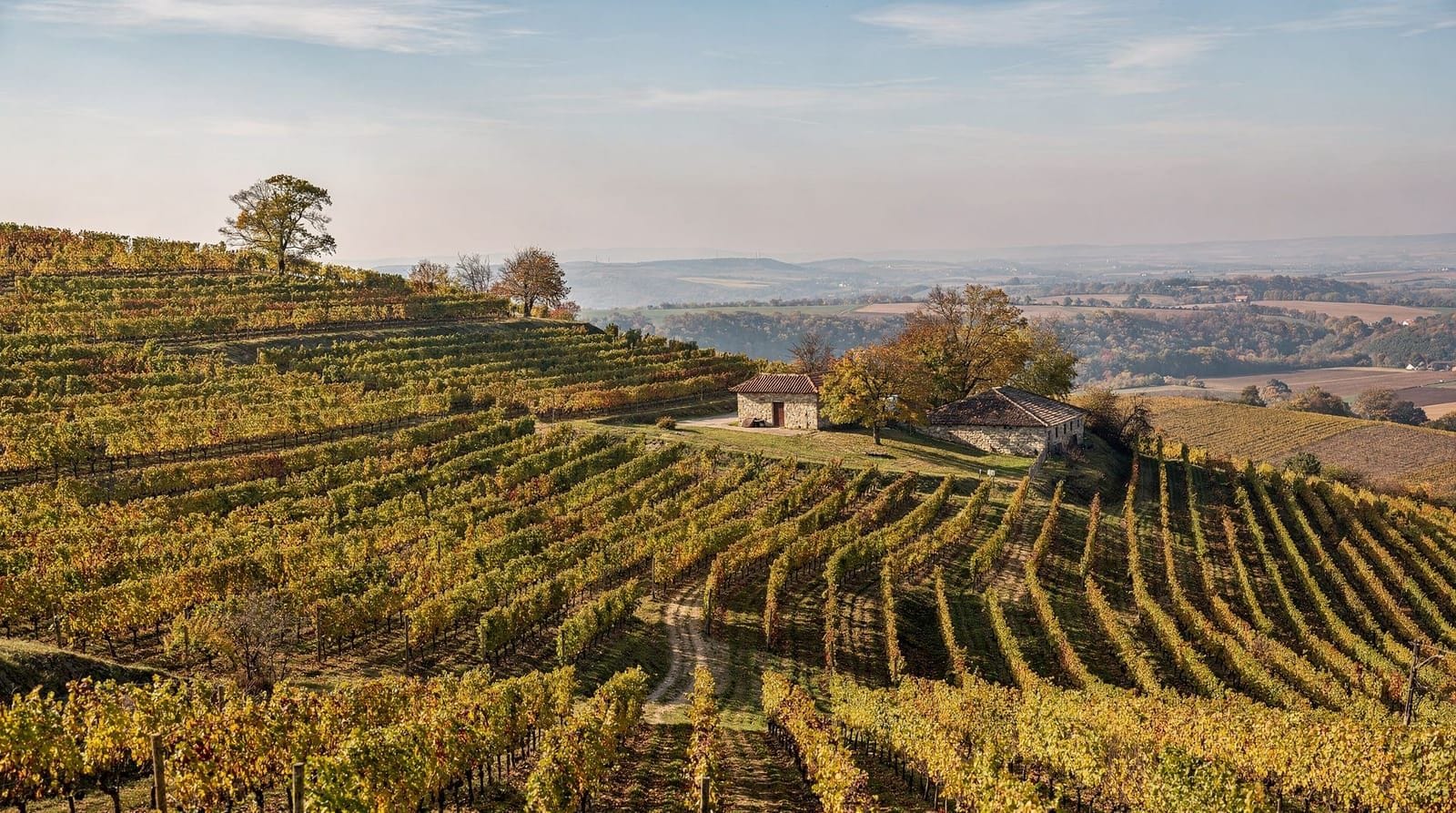
The Small Carpathians (Malé Karpaty) rise directly from Bratislava’s northern edge — a chain of wooded hills and vine-covered slopes that stretches for about 100 kilometres northeast toward Trnava. This is Slovakia’s oldest and most celebrated wine region, home to more than 50 grape varieties and dozens of family-run wineries producing Welschriesling, Grüner Veltliner, Frankovka Modrá, and the local Devín variety that exists almost nowhere else in the world. Between the vineyards, medieval castles crown the ridge, market towns preserve their historic squares, and forest trails wind through oak and beech woodland thick enough to feel genuinely remote despite being 30 minutes from a capital city.
A day trip to the Small Carpathians from Bratislava is one of the region’s most rewarding and least-hyped experiences. It does not require a car, though a car makes it considerably easier. It does not require wine expertise, though you will probably develop some by the end of the day. And it does not require more than a day, though most people who go once come back for a longer stay.
| At a glance | |
|---|---|
| Where | Pezinok, Modra, Svätý Jur, Červený Kameň castle — roughly 25–45 km north of Bratislava |
| Cost | Around €60–110 per person for tastings, lunch and castle entry; guided tours run roughly €45–70 (half-day) |
| Time needed | A full day (around 9am–6pm); a half-day covers one wine village only |
| Getting there | Car (30–45 min) or a guided minibus tour; regional bus is workable for Pezinok alone |
| Best time | September–October for harvest, May–June for quiet vineyards and hiking |
The Small Carpathians wine route
The Small Carpathians wine route (Malokarpatská vínna cesta) is a designated driving and cycling route connecting the wine villages and cellar-door tastings of the region. It runs north from Bratislava through Svätý Jur, Pezinok, Modra, and Čachtice before looping back south past Červený Kameň. For a day trip, focusing on two or three stops rather than attempting the full route is the right approach.
Svätý Jur — the closest wine village
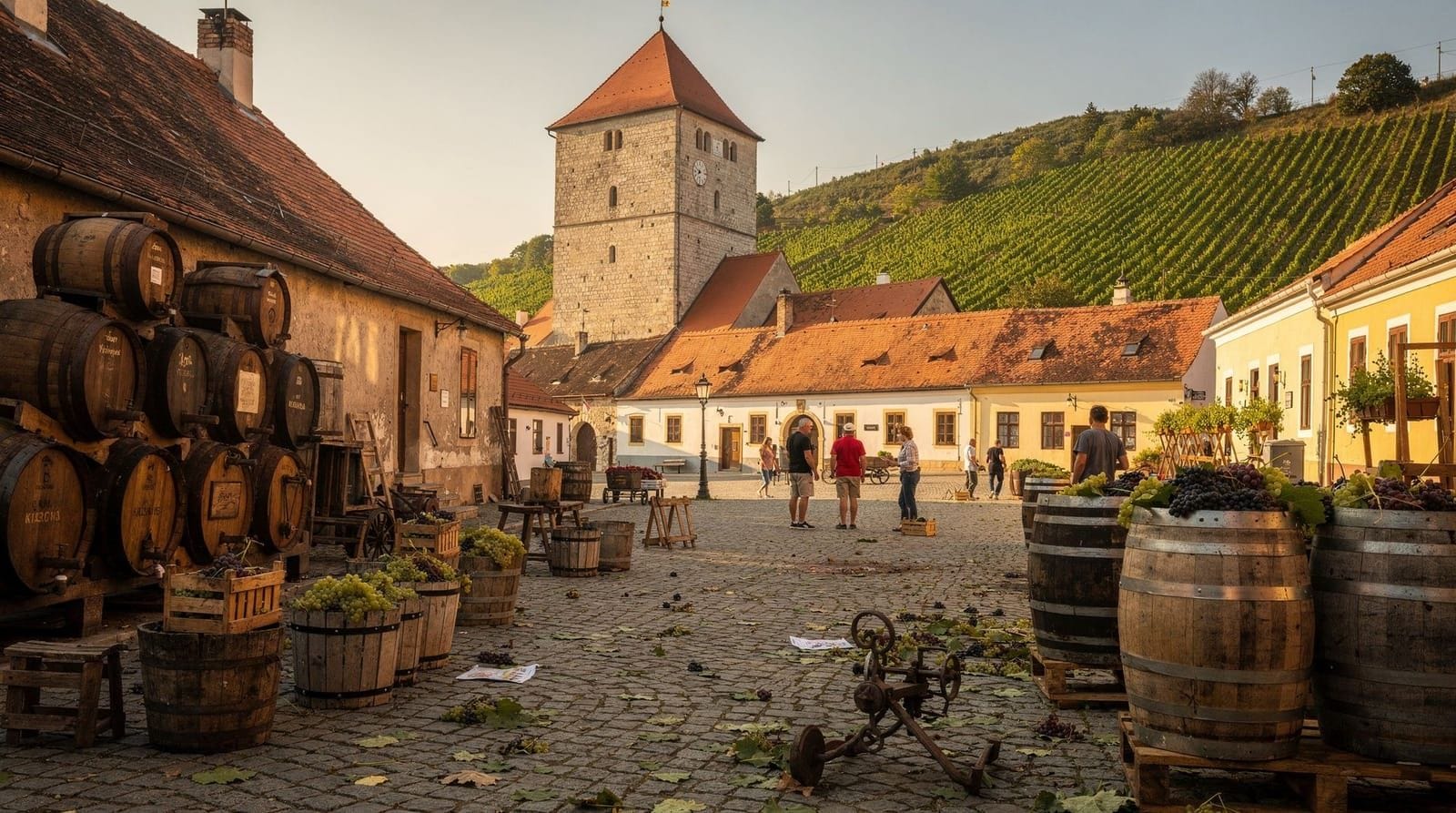
Svätý Jur (Saint George) is the nearest wine village to Bratislava, just 15 kilometres north of the city via the E75 motorway and easily reachable in 15–20 minutes by car. It is a small, well-preserved town with a medieval square, a ruined fortified church tower, and several family wineries that operate cellar-door tastings without requiring advance booking for small groups.
The village character is quieter and more authentically local than Pezinok or Modra. The winery Víno Majer Štefanovic (in the nearby village of Malinovo, accessible from the Svätý Jur area) is one of the better-known family producers in the region, specialising in Svätovavrinecké (Saint Laurent) red and a range of whites. Svätý Jur is a good first stop if you are making an early start and want to open with a gentle introduction to the region before moving north to more substantial wine villages.
Pezinok — the capital of the wine route
Pezinok sits 25 kilometres north of Bratislava, about 30 minutes by car. It is the de facto capital of the Small Carpathians wine region and the largest town on the route, with a historic old town, a castle (private, not open to tours), and a significant concentration of winery operations ranging from large-scale producers to small family cellars.
The Malokarpatské múzeum (Small Carpathians Museum) in the old town square covers the history of wine production in the region from Roman and Celtic times to the present, with a permanent exhibition that is surprisingly engaging and a small tasting room where regional wines are available to buy. Entry is around €3.
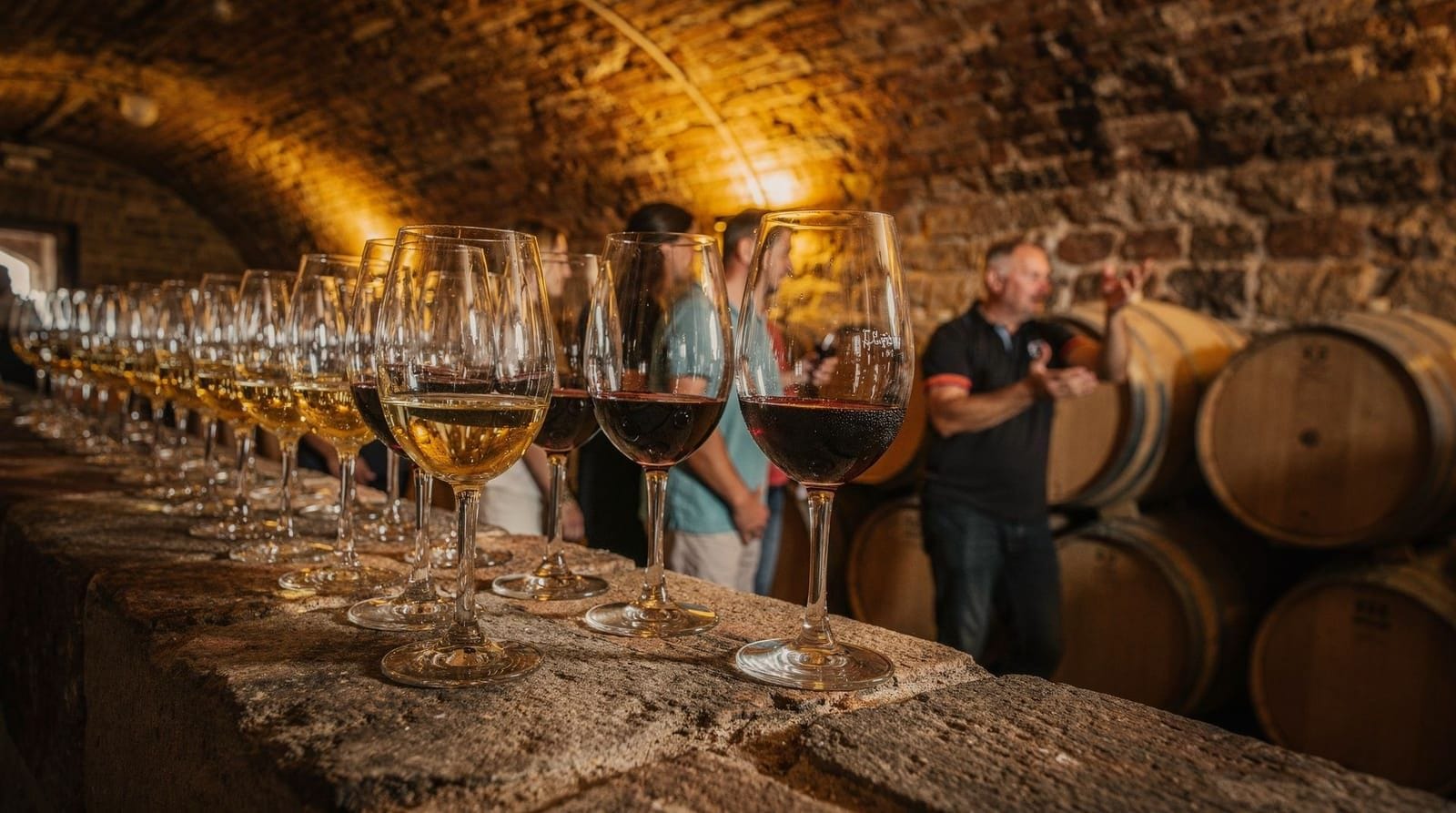
Winery visits in Pezinok can be done informally (many cellars on the old town streets welcome walk-in visitors during opening hours in season) or formally by advance booking. Chateau Modra has a winery and cellar in Pezinok (separate from their main Modra facility); Vino Nichta and Elesko Wine Park are larger-scale operations with proper tasting rooms and visitor facilities. Elesko, just outside Pezinok, is perhaps the most visitor-friendly of the larger wineries — it has an art gallery, a restaurant, and a structured tasting experience that does not require any prior wine knowledge.
The Pezinok wine market, held each spring and again at harvest time in October, is a major regional event worth checking dates for.
GetYourGuideBratislava 6.5-hour Carpathian wine tour and tastingCheck availability → GetYourGuideNorthern Slovakia guided day tourCheck availability →Modra — ceramics, wine, and the best cellars
Modra is 30 kilometres from Bratislava, about 35–40 minutes by car. It is slightly smaller than Pezinok but equally important in wine terms, and additionally famous for its traditional blue-and-white Modranská keramika (Modra ceramics), a distinct folk art tradition that has been produced here continuously since the 17th century. The main street has several workshops and shops selling the ceramics; the factory and museum at the edge of town shows the full production process.
For wine, Modra’s strength is in its density of small producers. The white-wine cellars along Horná and Dolná street in the old town have been cut into the hillside for centuries; many of the families who run them today have been doing so for four or five generations. Chateau Modra is the prestige name in the village, producing limited-edition varietals and offering formal tastings in a restored historic cellar. Winery Frtus is another well-regarded small producer with a particular focus on Devín, the local white grape variety developed here in the 1990s from a cross between Gewürztraminer and Veltliner.
Tasting arrangements in Modra vary: some cellars require advance booking, others welcome walk-ins during open hours. In season (May through October), the village tourism office on the main square can point you to which cellars are open on any given day. Outside season (November through April), availability drops significantly and advance booking is essential.
Svätý Jur to Modra by the wine road
If you are driving the full wine road through these villages in sequence, the route from Svätý Jur through Pezinok to Modra is a pleasant 45-minute drive through vineyards and village streets. Plan your tastings to keep one person as the designated driver, or book with a guided wine tour operator that includes transport (see below). Do not attempt this route if you plan to taste seriously at every stop — the wine volumes add up.
Červený Kameň Castle
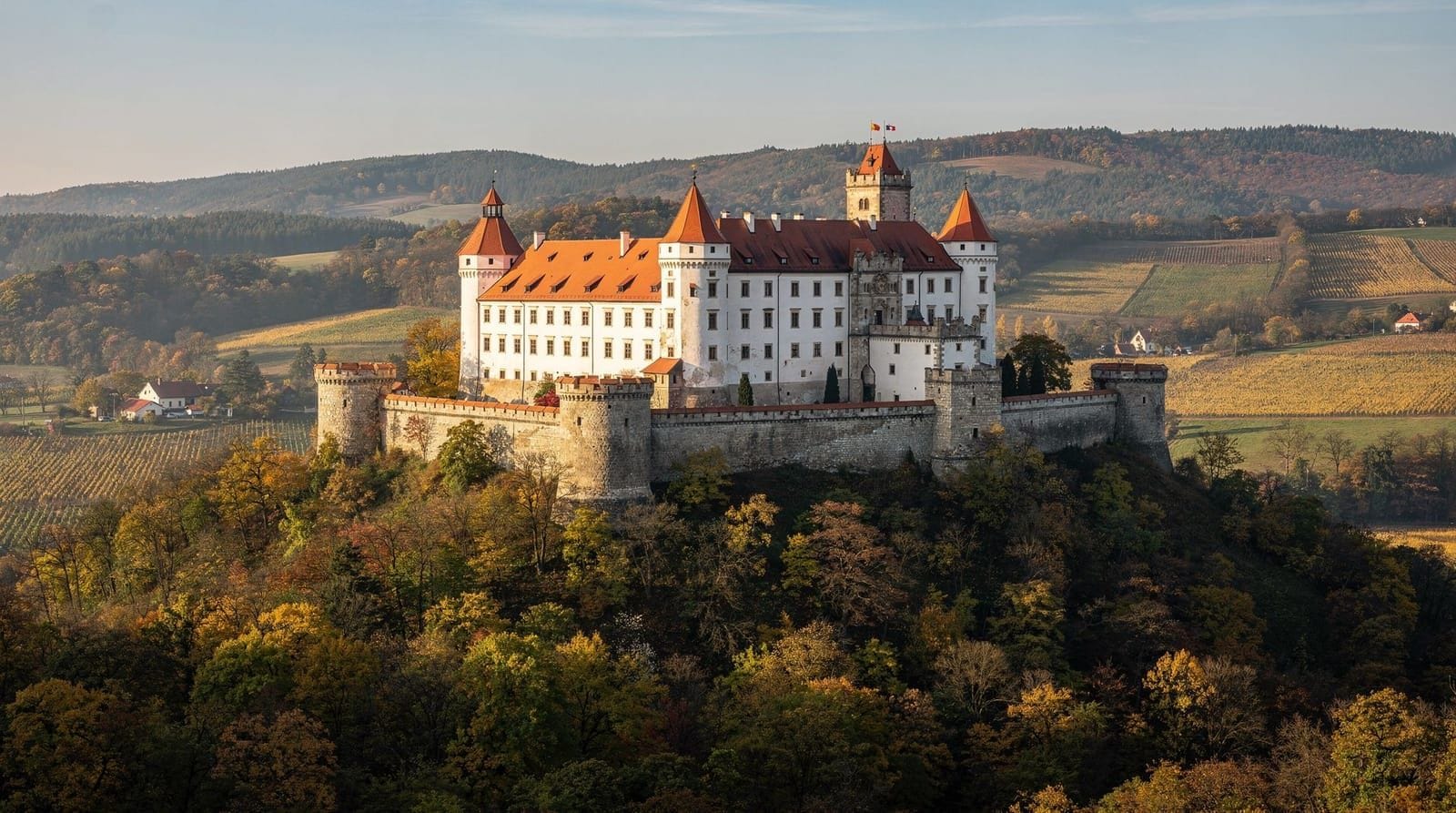
Červený Kameň (Red Stone Castle) is the other great reason to make the Small Carpathians day trip. The castle sits 45 kilometres northeast of Bratislava, roughly 15 kilometres above Modra in the foothills of the main ridge, and it is the best-preserved Renaissance castle complex in Slovakia. Unlike many Slovak castles that exist as ruins perched on hilltops, Červený Kameň is largely intact — most of its defensive walls, courtyard buildings, living quarters, and cellars survive, and the interior is furnished with period pieces that give a genuine sense of what aristocratic life in a 16th-century fortified palace looked like.
History of Červený Kameň
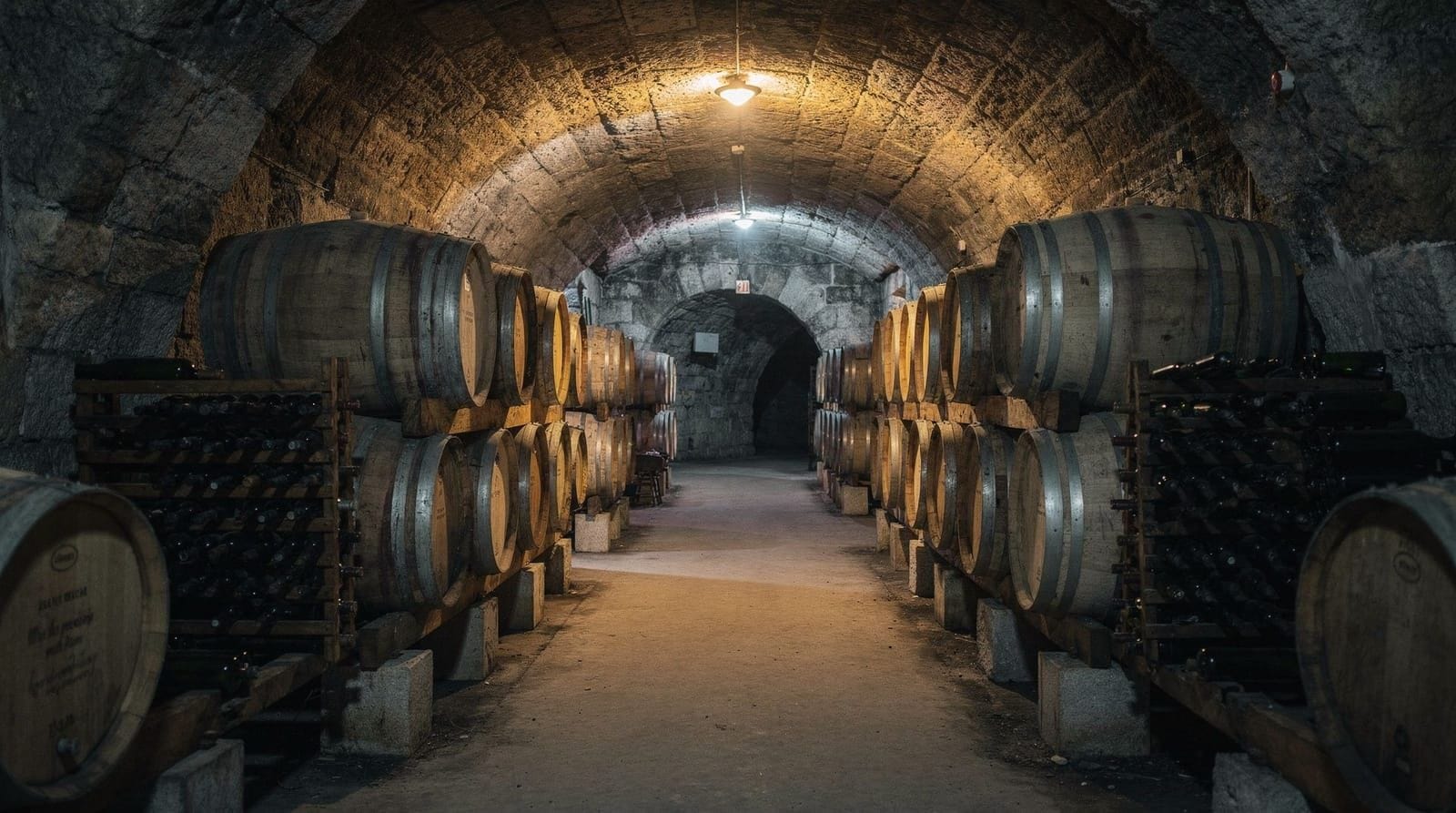
The castle was built in the 1530s on an earlier fortification by the Fugger banking family of Augsburg, the wealthiest private family in 16th-century Europe, who used it as a storehouse and administrative centre for their vast Central European mining and trading operations. The remarkable original cellars — carved deep into the rock of the hillside — were designed specifically to store the Fuggers’ silver, copper, and other metals extracted from the mines of central Slovakia. The cellars are among the largest and best-preserved medieval storage systems in the country.
The Pálffy family, Hungarian-Slovak nobility who became one of the most powerful dynasties in Habsburg Central Europe, acquired the castle in the 17th century and held it for nearly 300 years. The furnishings, artwork, and documents preserved at Červený Kameň are largely from the Pálffy era; the family donated the castle to the state after the Second World War.
GetYourGuideCarpathian wine tasting tour + Red Stone CastleCheck availability →Visiting the castle
Entry to Červený Kameň is via guided tour only — self-guided visiting is not permitted in the interior. Tours in Slovak run roughly every 30–45 minutes throughout the day during opening season; English-language tours are available if requested in advance or on days with sufficient English-speaking visitors. Check availability when you arrive at the ticket office or pre-book via the castle website.
The standard tour (Route A) takes approximately 50 minutes and covers the main rooms, the historic portrait gallery, the armoury, and the remarkable underground cellars. A shorter tour (Route B, the cellar tour) focuses specifically on the fortification and storage systems. A third route, the “treasure” route, covers the family apartments and jewellery collection. Most visitors do Route A; the cellar route (Route B) is particularly recommended for its scale and engineering.
Entry for the standard tour is approximately €8 for adults, €5 for children aged 6–14, and free for under-6s. Guided tours in languages other than Slovak cost slightly more.
Opening hours: the castle is open Tuesday to Sunday from April through October, typically 10am to 5pm (last tour starting at 4pm). It is closed on Mondays and throughout the winter (November to March). Occasional special events (Medieval Days in summer, Christmas craft markets in December) open the castle outside regular season — check the website for these.
The castle is surrounded by a small arboretum with walking paths; the views over the Small Carpathians ridge from the castle terrace are excellent. Allow 15–20 minutes to walk the grounds after your tour.
Getting to the Small Carpathians without a car
Bus connections — limited but functional
Bus connections from Bratislava to the main wine villages exist but are not as frequent or convenient as the train connections to Vienna or the bus to Devín. From Bratislava’s Mlynské Nivy bus station, regional buses run to Pezinok (approximately every 30–60 minutes, journey time 45–60 minutes depending on the service) and to Modra (less frequently, 60–75 minutes). The journey is not unpleasant but the timetable limits what you can do once you arrive — getting between villages by bus is difficult, and getting to Červený Kameň by public transport is essentially impossible.
For Pezinok specifically, it is possible to do a half-day bus excursion, visit one or two wineries in the town, and return. This is the most realistic public-transport option if you do not have a car. Modra is possible by bus but requires checking the current timetable carefully, as afternoon return services can be infrequent.
Guided wine tours — the best option without a car
Guided wine tours from Bratislava to the Small Carpathians are the recommended solution if you want to visit multiple villages, taste wine properly, and not worry about driving. Several Bratislava operators run half-day and full-day wine excursions that include transport (usually a minibus), an English-speaking guide with wine knowledge, tastings at two or three wineries, and often a meal or wine-paired food element.
Half-day tours typically focus on Pezinok or Modra and one or two wineries, running 4–5 hours. Full-day tours often include Červený Kameň as well, making for a comprehensive day that combines wine culture and castle history. These are the best option for solo travellers and couples who cannot justify a car rental for a single day.
GetYourGuideModra private wine tasting at a family-operated wineryCheck availability →A suggested day-trip itinerary
The following assumes access to a car. A guided tour provides an equivalent itinerary without the driving.
9am: Depart Bratislava north via the E75. Stop briefly in Svätý Jur for coffee and a look at the medieval square (20 minutes).
10am: Arrive in Pezinok. Visit the Small Carpathians Museum (1 hour) and walk the old town wine cellar street.
11:30am: Tasting at Elesko Wine Park or Chateau Modra’s Pezinok facility (1–1.5 hours including a small selection of 4–6 wines with bread and local charcuterie).
1pm: Drive to Modra (15 minutes). Lunch at one of the restaurants on the main square — try Reštaurácia u Barona or the Modra tourist café. Budget €12–18 for a set lunch.
2:30pm: Drive up to Červený Kameň (15–20 minutes on forest road). Join the 3pm guided tour of the castle (Route A, approximately 1 hour).
4:30pm: Walk the castle grounds, buy a ceramic piece in the castle gift shop, and head back toward Bratislava (50 minutes drive).
6pm: Return to Bratislava for dinner in the Old Town.
This schedule is achievable in a full day and covers the best of what the region offers: wine culture, a working winery visit with tasting, lunch in a local town, and a well-preserved historic castle.
Best time of year to visit
May to June: The vineyards are beginning their active growth season, the weather is warm without being hot, and the crowds are thin. Late spring is ideal for hiking in the hills above the wine villages — wildflowers are exceptional in the Small Carpathians in May. Most wineries are open and operating at full capacity, including cellar-door tastings.
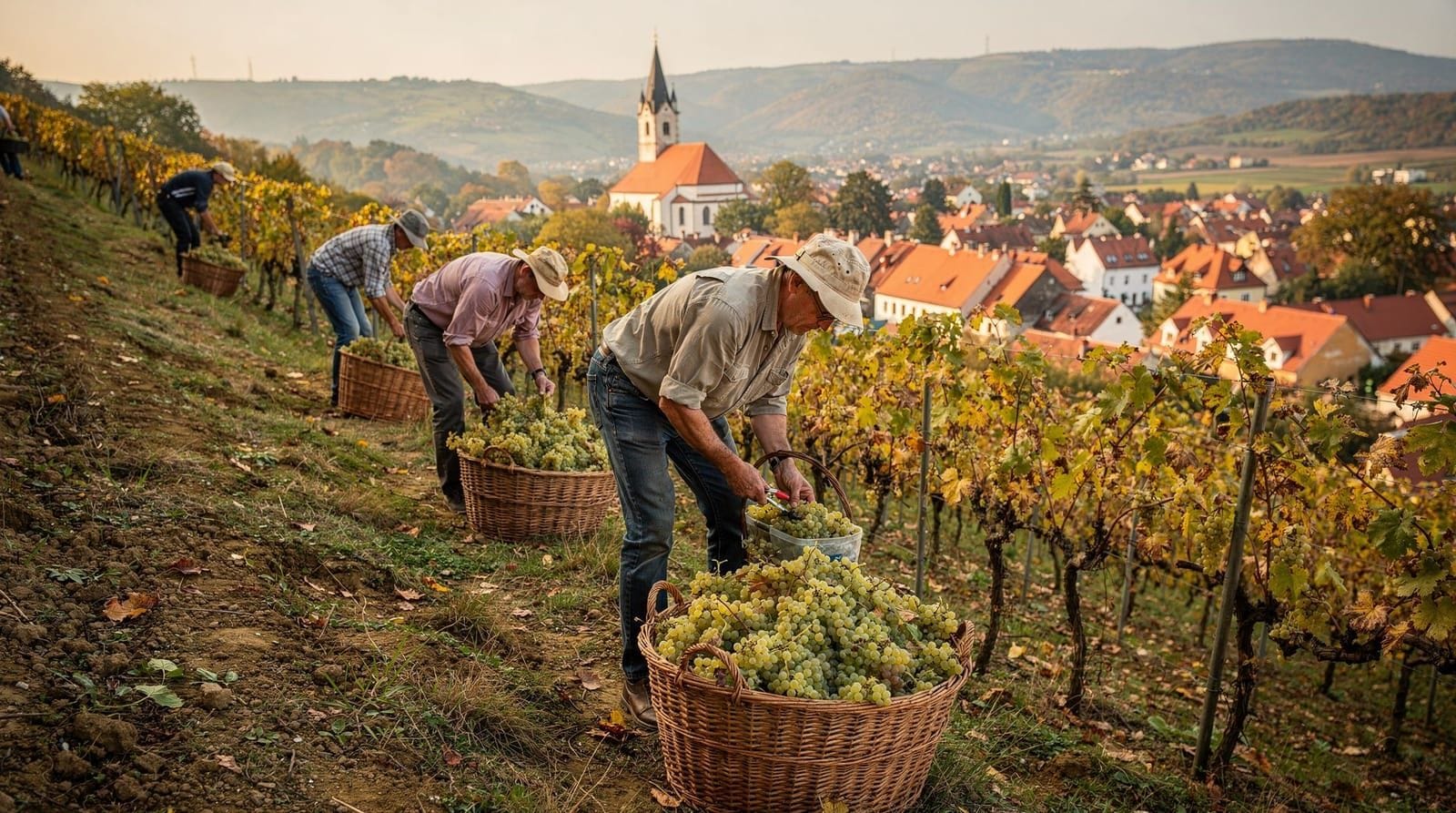
September to October (harvest season): The most exciting time to visit the wine region. The grape harvest (vinobrane) happens in September and early October; most villages hold festival weekends, and the wineries operate extended hours with barrel tastings and must (unfermented grape juice). The St. Martin’s Day wine celebrations on 11 November mark the official opening of the new vintage and draw large crowds to the region’s main towns. See the St. Martin wine harvest guide for details.
July to August: Hot, occasionally very hot. The vineyard landscape is lush green but the hills can be uncomfortably warm for hiking. Winery tastings are fully operational. The main downside is crowds at Červený Kameň on summer weekends — arrive before 11am to avoid the longest tour queues.
November to April: Most winery cellar doors are closed or operating by appointment only. Červený Kameň castle is closed. The forest hiking is pleasant but the wine region itself offers less to see. Only recommended for travellers specifically interested in dormant-season wine tourism or forest walks.
What things cost
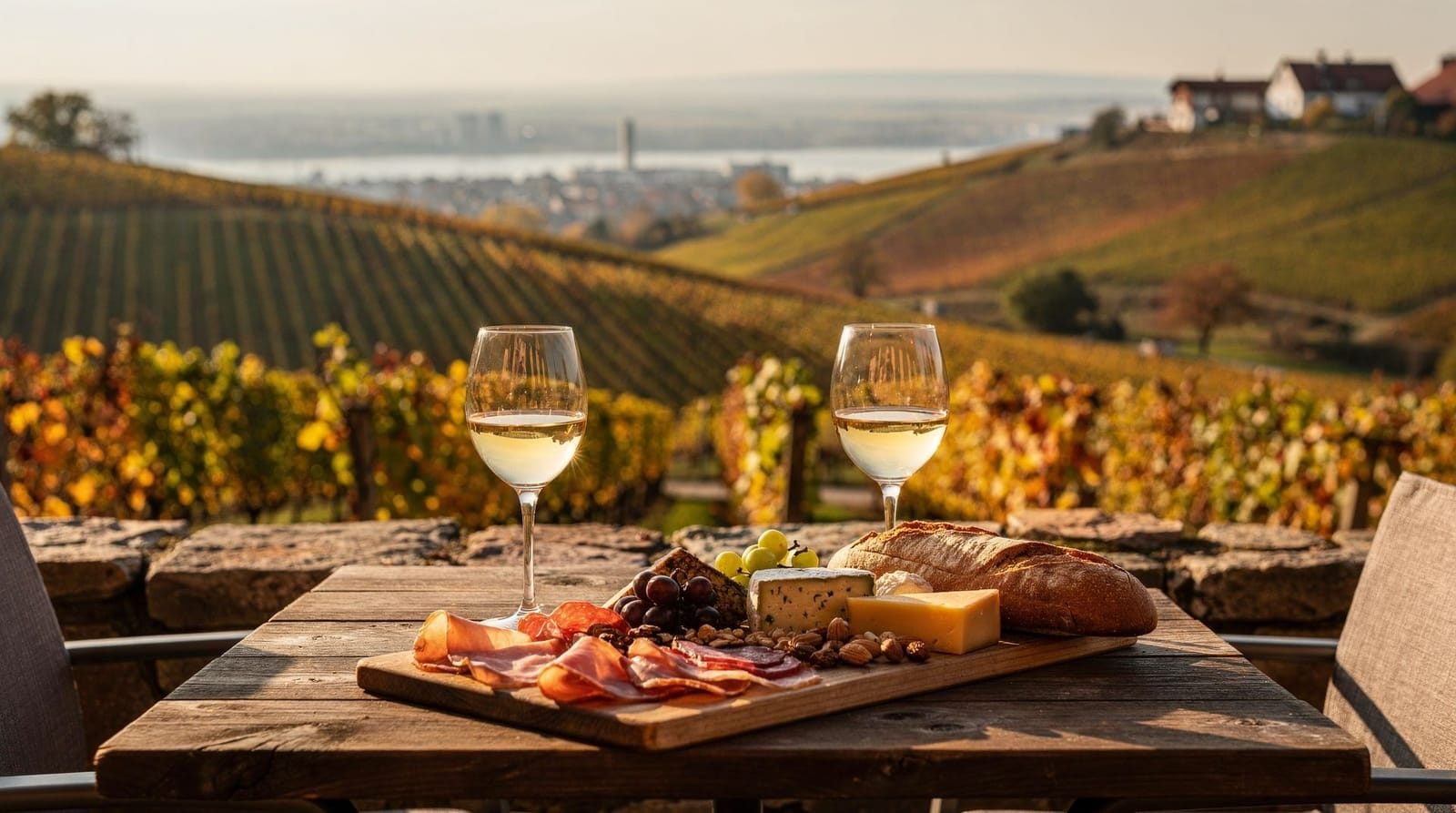
Wine tasting at a cellar door in Pezinok or Modra: €8–15 per person for a 4–6 wine flight, usually with bread and charcuterie.
Lunch in a village restaurant: €10–18 for a main course and drink.
Červený Kameň entry: €8 per adult.
Car rental from Bratislava (one day): €40–70 depending on vehicle and advance booking.
Guided wine tour (half-day, from Bratislava): €45–70 per person including transport, guide, and tastings.
Fuel from Bratislava to Modra and back: approximately 7–8 litres of petrol (€10–12 at current prices).
Combining with Trnava
The historic town of Trnava — sometimes called the “Slovak Rome” for its concentration of baroque churches — sits at the northeastern end of the Small Carpathians wine route, about 50 kilometres from Bratislava. If you have a car and are making the full-day Small Carpathians excursion, adding a 1-hour stop in Trnava for the old town and cathedral is realistic. Trnava is also easily reachable by direct train from Bratislava in 40 minutes, making it an alternative day trip in its own right. See the Trnava destination guide for details.
Frequently asked questions about the Small Carpathians day trip
Do I need to book wine tastings in advance?
It depends on the winery. Large visitor-orientated operations like Elesko and Chateau Modra have drop-in tasting hours and do not require advance booking (though booking on busy summer weekends is sensible). Small family producers and cellar-door operations in Modra and Svätý Jur generally do require advance contact — many list email and phone contact on their websites, or the local tourism office can arrange introductions. For a guided wine tour, the operator handles all bookings on your behalf.
Can I take wine on the train back to Bratislava?
Yes, there is no restriction on carrying wine on Slovak trains or buses. A robust wine bag or box is the practical solution — several wineries in Pezinok and Modra sell their wines in carry-friendly six-bottle boxes. If flying onward from Vienna airport, note EU liquids regulations for carry-on luggage; check-in luggage has no wine restriction.
Which village is better to visit, Pezinok or Modra?
They complement each other rather than compete. Pezinok is larger, more varied, and has better public transport connections. Modra is more atmospheric, more concentrated in wine character, and also has the ceramics tradition as a second layer of interest. If you can only do one, Modra is slightly more distinctive; if you can do both, spend more time in Modra and use Pezinok for its museum and one larger winery.
Is Červený Kameň worth visiting if I am not interested in history?
The castle is interesting beyond its historical content — the underground cellars are architecturally extraordinary, the views from the ramparts are excellent, and the arboretum makes for a pleasant walk. It is worth a 2-hour stop even for visitors with limited interest in Renaissance history. The main reasons to skip it are if you are focused purely on wine and want to stay in the valley, or if time constraints make the drive up and back impractical.
Are there hiking trails in the Small Carpathians accessible from the wine villages?
Yes. The ridge above Modra and Pezinok has a well-maintained network of marked hiking trails — red, blue, and yellow routes in the standard Slovak trail marking system. The main ridge path runs northeast from Záruby peak (above Modra, 768m) and can be accessed from a trailhead near the Chateau Modra winery. Day hikes of 3–5 hours through beech forest with periodic Danube views are possible. The Small Carpathians hiking guide covers the main routes in detail.
What wine varieties should I look for?
The Small Carpathians is primarily a white wine region. Welschriesling (Rizling vlašský) is the most widely planted variety and produces wines ranging from crisp and lean to rich and oaked. Grüner Veltliner (Veltlínske zelené) is excellent here, often more structured than Austrian examples. Devín — a local crossing only grown in this region — produces aromatic, spicy whites that have no direct equivalent elsewhere. For reds, Frankovka Modrá (Blaufränkisch) and Svätovavrinecké (Saint Laurent) are the main varieties, producing medium-bodied, food-friendly wines that are rarely seen outside the region.
The Small Carpathians beyond a single day
A day trip to the Small Carpathians is an excellent introduction, but the region rewards a longer stay. The Small Carpathians wine weekend itinerary covers a two-day programme that includes a harvest festival, an overnight stay in a vineyard guesthouse, and a full tasting tour of three winery styles. For a deeper exploration of the wine culture, the Small Carpathians wine guide and the Pezinok and Modra wineries guide provide the comprehensive background.
The autumn wine harvest season, from September through November’s St. Martin’s celebrations, is the best time to see the region at its most alive — and the autumn wine harvest guide explains exactly how to plan around it.
Should you rent a car or book a guided tour?
This is the real fork in the road for planning a Small Carpathians day trip, and the answer depends mostly on whether you want to taste wine seriously.
A rental car (around €40–70 for the day) gives full flexibility to hop between Svätý Jur, Pezinok, Modra and Červený Kameň on your own schedule, and it is the cheaper option for a group of three or four splitting the cost. The catch is the designated-driver problem: someone in the car cannot taste properly, and Slovakia’s drink-drive limit is effectively zero.
A guided wine tour (around €45–70 half-day, €80–120 full day) removes that problem entirely, bundles transport with a knowledgeable guide, and usually gets you into cellars that do not take casual walk-ins. It is the better choice for solo travellers, couples, and anyone who wants to taste without watching the clock. See the wine tasting tours guide for what operators typically include.
Is it possible to visit without any wine tasting at all?
Yes. Červený Kameň castle, the hiking trails above Pezinok and Modra, and the historic squares of Svätý Jur and Pezinok are all worthwhile on their own. A non-drinking visitor can still have a full day built around the castle tour, a walk through the old town wine cellar streets, and lunch in Modra — the Small Carpathians hiking guide covers trail options that connect directly to these villages.
Slovak wine experiences on GetYourGuide
Verified deep-linked GetYourGuide tours. Book through these links and we earn a small commission at no cost to you.