Day trips from Bratislava ranked: Vienna, Budapest, Devín and more
Bratislava sits at an almost ridiculous geographical crossroads. Within two and a half hours you can be standing in front of the Schönbrunn Palace in Vienna, wandering the ruin bars of Budapest, or poking around a 13th-century hilltop fortress overlooking the Iron Curtain border. Most visitors don’t realise quite how much territory falls within a single day’s reach.
I’ve made all of these trips — some multiple times — and what follows is my honest attempt to rank them. Not by the prestige of the destination, but by the combination of ease, value for money, and the actual quality of the experience you get in a single day. A few will surprise you.
At a glance
| Easiest day trip | Devín Castle, 20–25 minutes by bus |
| Furthest option | Budapest, around 2h30 by RegioJet bus |
| Cheapest | Devín or Trnava, around 2–4 € one-way transport |
| No car needed | All except Schloss Hof (seasonal bus or taxi) |
| Best for a half-day | Devín Castle or Trnava |
| Best time to go | Spring and autumn for comfortable walking weather; see the best time to visit guide |
How I ranked these trips
Each destination was evaluated on four factors: how long it actually takes door-to-door, how much a realistic day costs, how much there is to do without a car, and whether the trip feels worthwhile for the effort. The ranking runs from best overall value down to most niche. None of these trips is bad — they suit different travellers.
1. Devín Castle — the easiest win from Bratislava
Travel time: 20–25 minutes by Bus 29 from Nový Most
Cost: ~2 € bus fare each way, 7 € castle entry
Best for: history lovers, walkers, anyone with half a day to spare
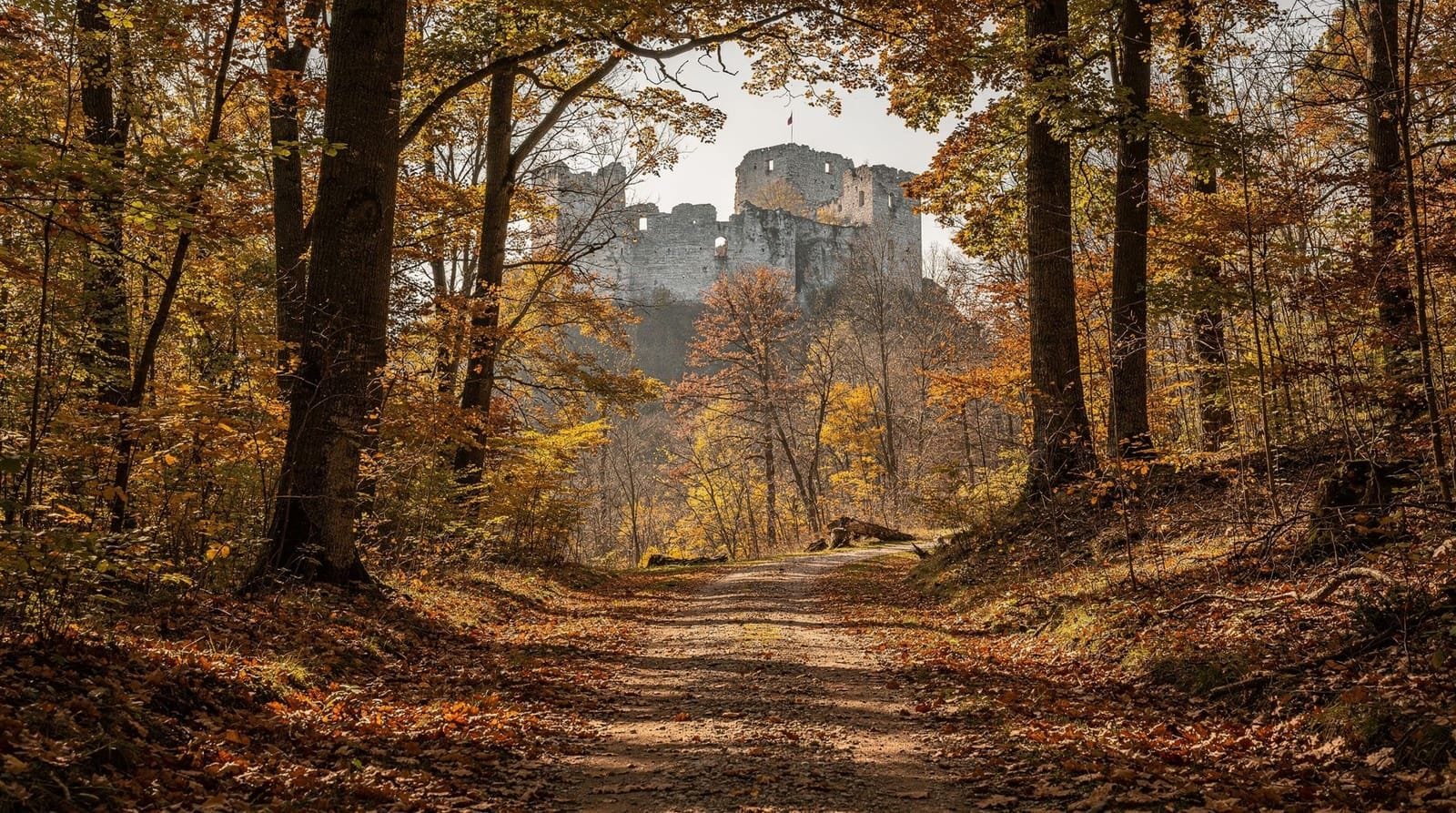
Devín is absurdly close, absurdly atmospheric, and almost completely overlooked by visitors who spend all their time in the Old Town. The ruined castle sits on a steep cliff at the confluence of the Danube and the Morava — that same river once formed the actual Iron Curtain border between Czechoslovakia and Austria. On a clear day you can see across into Austria from the ramparts.
The ruins themselves are substantial: a keep, a Romanesque chapel, a Roman-era military camp below, and layered fortifications going back to the 9th century. The museum inside is small but well done. Below the castle, there’s a short riverside walk to Devín village, with a couple of decent restaurants serving traditional Slovak food. Lunch with a beer runs about 12–15 €.
What makes Devín rank first isn’t that it’s the most spectacular destination on this list — it’s that the effort-to-reward ratio is unbeatable. You can be there and back before noon and still have a full afternoon in Bratislava’s Old Town. No border, no booking, no planning required.
For more detail on what to see and how to get there, read the full Devín Castle day trip guide.
GetYourGuideBratislava grand city tour with Devín CastleCheck availability →2. Vienna — the capital next door
Travel time: 55–70 minutes by train (RegioJet or ÖBB), 1h15 by bus
Cost: Train from ~10 €, day budget 60–100 €
Best for: First-timers, culture enthusiasts, anyone who wants to be genuinely astonished
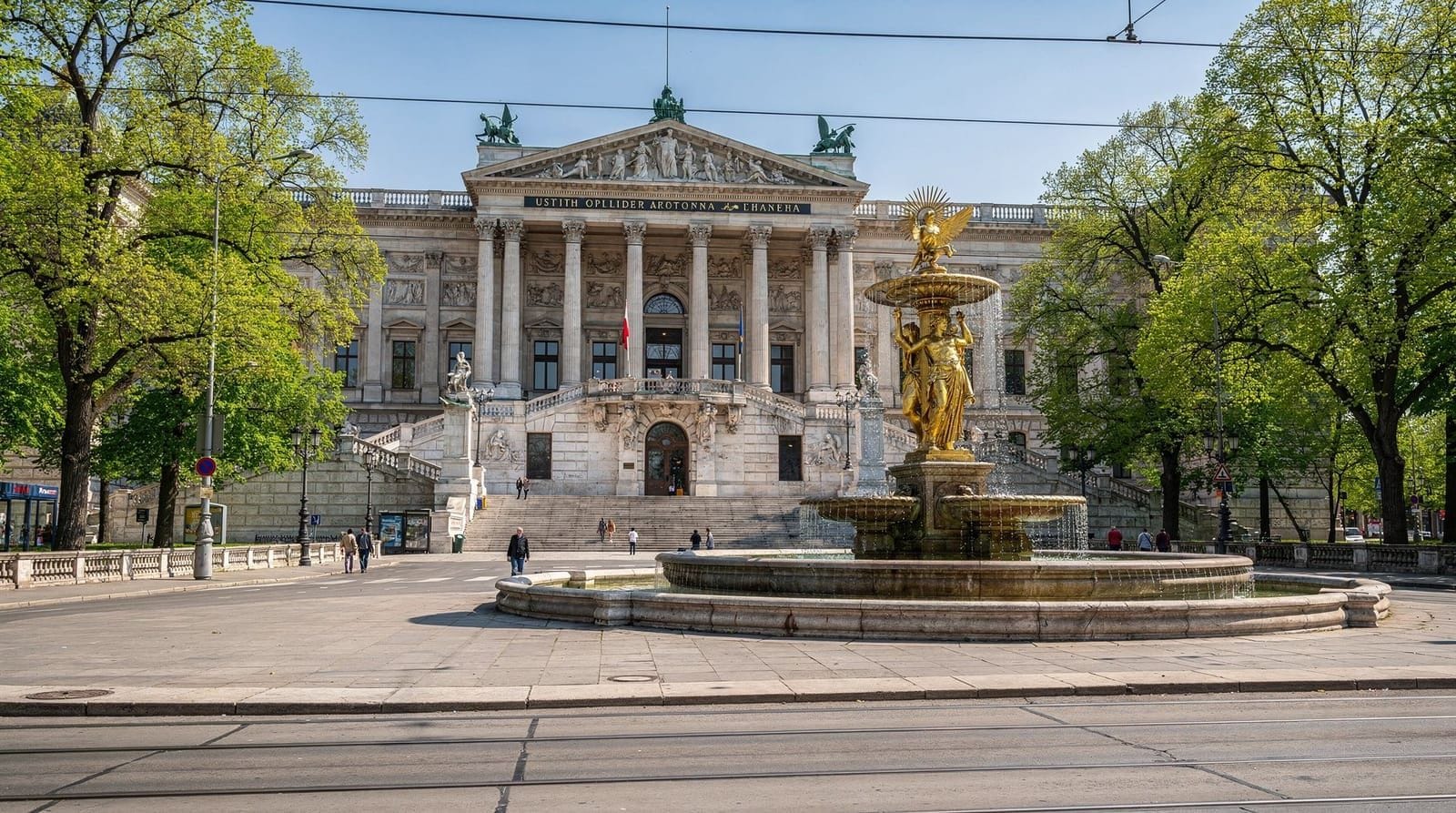
Vienna sits less than 70 km from Bratislava, which makes these two capitals the closest pair in Europe. The train journey is smooth, frequent (roughly hourly), and drops you at Vienna Hauptbahnhof with easy U-Bahn connections everywhere.
The question isn’t whether Vienna is worth it — it obviously is — but whether a day is enough. The honest answer is: no, not really. But you can still have an outstanding day. Pick one or two anchors and don’t try to do everything. Schönbrunn Palace plus the Naschmarkt makes a satisfying combination. The Kunsthistorisches Museum plus the Innere Stadt works equally well. Trying to see Schönbrunn, the Belvedere, the Ring, and the museums in a single day just leaves you exhausted and rushed.
Food and drink in Vienna runs noticeably more expensive than Bratislava. A sit-down lunch in a decent restaurant is typically 18–25 €; coffee in a traditional Kaffeehaus, 4–5 €. Factor that into your budget — a comfortable day including transport, two meals, and one museum entrance will cost around 80–100 €.
If you want a structured introduction to both cities, the Bratislava–Vienna combo itinerary is worth reading before you go. There’s also more practical detail in the Vienna day trip guide.
GetYourGuideBratislava: Devín Castle, Carnuntum & Vienna day tripCheck availability →3. Červený Kameň Castle — Slovakia’s most complete fortress
Travel time: 45–55 minutes by bus from Mlynské Nivy, or a combination of train to Modra and local bus
Cost: ~4 € bus fare each way, 12 € castle entry
Best for: Castle enthusiasts, families, wine region explorers
Červený Kameň (“Red Stone”) is, in my view, the most impressive castle in western Slovakia. Unlike the dramatic but skeletal ruins at Devín, this is a fully preserved Renaissance fortress with intact towers, a moat, and one of the largest surviving castle archives in Central Europe. The interior tour takes about 90 minutes and covers rooms that have remained almost unchanged since the 16th century.
The surrounding Small Carpathian wine country adds another layer. The castle sits in the middle of vineyard slopes; the village of Častá below has a small wine shop and a restaurant. You can pair a castle visit with a wine tasting in Pezinok or Modra on the same day if you have a car, but without one, it’s easier to keep them separate.
Getting there without a car requires a little planning — buses aren’t as frequent as to other destinations on this list — but it’s entirely doable. Check the Červený Kameň Castle destination page for current bus schedules and combined wine-region options.
4. Pezinok and Modra — wine region without a car
Travel time: 35–40 minutes by direct bus from Mlynské Nivy
Cost: ~3 € bus fare each way, wine tastings from 8–15 € per winery
Best for: Wine drinkers, anyone wanting a relaxed half-day
The Small Carpathians wine region starts almost at Bratislava’s doorstep. Pezinok is the most accessible wine town by public transport, with several good family wineries within walking distance of the bus station. Modra, the traditional centre of Slovak majolica pottery, is another 15 minutes further and has a charming historic centre.
A typical day here looks like this: bus to Pezinok, walk to one or two wineries (call ahead or check opening times, as many require reservations), lunch in the town centre (10–14 €), then either explore Modra’s old town or take an afternoon wine tasting at one of the cooperatives.
This isn’t a big-attraction day trip. It’s a slow, pleasant, genuinely local experience. The wines are mostly white — Riesling, Welschriesling, Grüner Veltliner — and the quality at the better small producers is consistently good. Prices are far lower than comparable wine regions in Austria or France.
The Small Carpathians wine guide and the Pezinok and Modra wineries page cover specific producers and what to taste.
For a longer itinerary combining wine and the castle, see the Small Carpathians wine weekend.
5. Trnava — the little Rome of Slovakia
Travel time: 40–50 minutes by train from Bratislava Hlavná stanica, trains roughly every 30 minutes
Cost: ~4 € train fare each way, very low cost once there
Best for: Architecture fans, people who want a Slovak city experience without the tourist crowds
Trnava is one of Slovakia’s oldest towns and was the country’s ecclesiastical capital for centuries — hence the nickname “little Rome,” which refers to the density of churches rather than any physical resemblance to Italy. The old town is compact and genuinely attractive: medieval walls, Baroque churches, a good cathedral, and a central square that sees almost no foreign tourists.
What you won’t find in Trnava is an extensive day’s worth of activities. The city repays a half-day visit beautifully — the cathedral, the walls, a coffee and a stroll — but it doesn’t have the museums or restaurants to fill a full day unless you’re deeply interested in Slovak history and religious architecture. That said, at roughly 4 € return by train, the value-for-money is hard to beat.
Trnava also has a good food scene relative to its size. A lunch in the old town centre costs 8–12 €. The Trnava destination page has a short walking route and restaurant suggestions.
6. Budapest — worth the distance
Travel time: 2h30–2h45 by RegioJet bus, slightly longer by train
Cost: Bus from ~12 €, day budget 55–85 €
Best for: Anyone with a full day and a genuine interest in Hungary’s capital
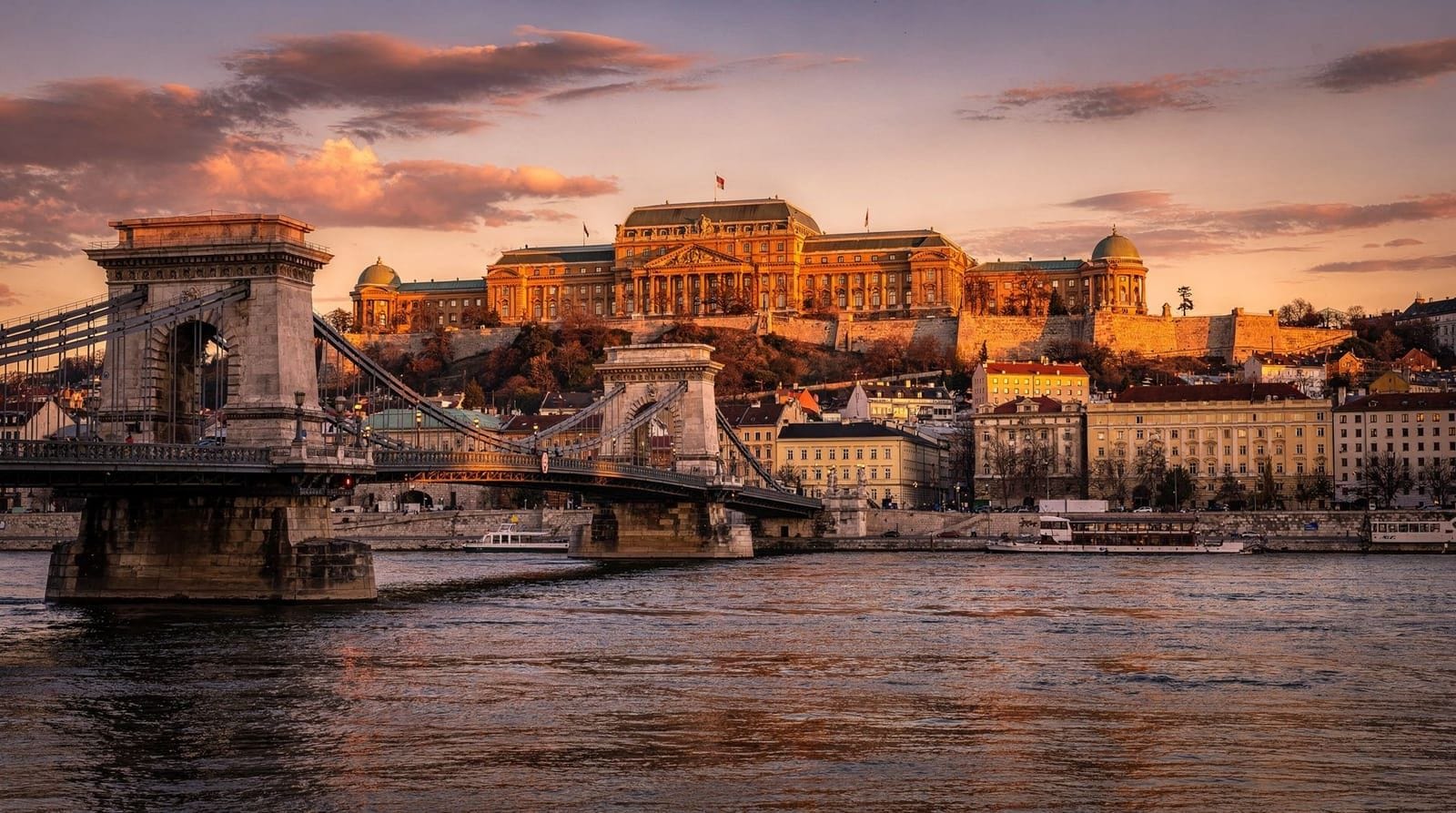
Budapest is the longest trip on this list and the one that most benefits from an overnight stay rather than a day return. That said, it’s absolutely doable as a day trip if you’re efficient. The RegioJet buses are comfortable, punctual, and frequent; the journey is relaxed enough to read or sleep.
The calculus changes compared to Vienna: Budapest is slightly less overwhelming to navigate, English is widely spoken, and prices are meaningfully lower than both Vienna and Bratislava. A sit-down lunch in a good restaurant costs 10–15 €; a beer in a ruin bar, 2–3 €. Your money goes further here than anywhere else on this list.
For a day trip, the Pest side is more efficient than trying to cover both banks. Váci utca to the Great Market Hall, then north to St Stephen’s Basilica and the Jewish Quarter — that’s a full, varied day without rushing. Buda Castle is spectacular but adds a lot of ground; save it for a second visit or an overnight.
See the Budapest day trip guide for routing, timing, and what to prioritise depending on your interests.
GetYourGuideDay trips from Vienna: Bratislava and Budapest with guideCheck availability →7. Schloss Hof — Baroque palace in the Austrian countryside
Travel time: 45–50 minutes by bus (seasonal direct service) or taxi-share
Cost: ~18 € entry, transport varies
Best for: Garden and palace enthusiasts, families with children
Schloss Hof is a lesser-known Habsburg palace in Lower Austria, roughly halfway between Bratislava and Vienna. It was a favourite residence of Prince Eugene of Savoy and later Empress Maria Theresa, and the formal Baroque gardens are among the best-preserved in Central Europe — genuinely impressive, not just historically significant.
The reason it ranks seventh isn’t quality — the palace and gardens are excellent — but logistics. Unlike Vienna or Devín, getting there without a car requires either a seasonal direct bus (check current schedules; the service has varied year to year) or a taxi from Bratislava. That adds cost and planning overhead. For travellers with a car or those happy to pay for a transfer, it’s a very worthwhile half-day that pairs naturally with a Vienna visit.
The Schloss Hof guide has up-to-date transport options.
Practical overview: costs and timings at a glance
| Destination | Travel time | One-way transport | Entry cost | Ideal duration |
|---|---|---|---|---|
| Devín Castle | 20–25 min | ~2 € (bus) | 7 € | Half day |
| Vienna | 55–70 min | from 10 € (train) | varies | Full day |
| Červený Kameň | 45–55 min | ~4 € (bus) | 12 € | Half–full day |
| Pezinok/Modra | 35–40 min | ~3 € (bus) | 8–15 € (wine) | Half day |
| Trnava | 40–50 min | ~4 € (train) | mostly free | Half day |
| Budapest | 2h30 | from 12 € (bus) | varies | Full day |
| Schloss Hof | 45–50 min | varies | ~18 € | Half day |
A few things worth knowing before you go
Transport cards and rail passes may or may not help here. The Slovak rail network is cheap enough that point-to-point tickets make more sense than passes for most day trips. For Vienna and Budapest, check RegioJet’s current fares — they run promotional prices regularly and are often cheaper than ÖBB or MÁV for the same journey.
Timings matter more than you’d think. The Devín and Červený Kameň buses don’t run every 20 minutes; missing the bus back adds an hour to your day. Check the timetable before you leave. Slovak bus schedules are on cp.sk (national journey planner).
Combining trips is sometimes possible. Pezinok and Červený Kameň are close enough to combine in a day with your own transport. Vienna and Schloss Hof work together by car. Trnava and Pezinok can be done back-to-back by bus if you’re efficient. Without a car, most combinations are impractical — they’d eat into the time you actually want to spend at each place.
Language is a non-issue. English is spoken at all tourist sites, restaurants, and transport terminals on this list. German helps in Vienna; Hungarian is appreciated in Budapest but not required. At Devín, Červený Kameň, and Trnava, English signage and staff are standard.
Frequently asked questions about day trips from Bratislava
How easy is it to do day trips from Bratislava without a car?
Very easy for most destinations on this list. Devín, Vienna, Budapest, and Trnava are all well-served by public transport. Červený Kameň and Pezinok require a bit more planning — buses are less frequent — but both are manageable. Schloss Hof is the one destination where having a car genuinely makes a meaningful difference. For general advice on getting around, the getting around Bratislava guide covers transport options including buses to suburban destinations.
Which day trip offers the best value for money?
Devín Castle, without question. The bus costs under 2 € each way, entry is 7 €, and the experience — a dramatically sited ruined castle at the confluence of two rivers, with genuine historical depth — far exceeds what the price suggests. After Devín, Trnava and the Pezinok wine region both offer strong value for very low transport costs.
Is a day trip to Vienna worth it from Bratislava?
Yes, but be realistic about what one day covers. Vienna is one of the world’s great cities; you won’t exhaust it in a day, and you shouldn’t try. Pick a neighbourhood or two anchors, and accept that you’re getting a taste rather than a full picture. If budget allows, an overnight stay makes the experience considerably more rewarding. The Vienna day trip guide has suggestions for how to structure a one-day visit efficiently.
How long does it take to reach Budapest from Bratislava?
The RegioJet bus takes approximately 2 hours 30 minutes to 2 hours 45 minutes, depending on border and traffic conditions. Trains run slightly longer and involve a connection. The bus is the most practical option for a day trip; book in advance, especially on weekends and in summer, when it fills up. Read more in the Budapest day trip guide.
Can I do multiple day trips on the same day?
Realistically, no — not without a car and very long days. The distances work on a map but the combination of travel, actual sightseeing time, and meals adds up fast. Devín is the one exception: because it’s only 20 minutes away, you can do Devín in a morning and still have a full afternoon in Bratislava’s Old Town or on the Danube riverfront. Everything else warrants a dedicated day.
What’s the best day trip if I only have a half-day?
Devín Castle is the obvious answer — you can be there and back in under three hours, including an hour at the ruins and a short walk. Trnava works well as a half-day too: the train is quick and the old town is compact. For a completely different experience, the Danubiana Čunovo art museum — a contemporary art museum on a Danube peninsula — is accessible by bike or a short drive and makes a surprising half-day excursion.
Should I book day trip transport in advance?
For Devín, Pezinok, Trnava and Červený Kameň, no — buses and trains run frequently enough that you can turn up and buy a ticket at the station. For Vienna and especially Budapest, booking a day or two ahead on RegioJet is worth it in summer weekends, when fares rise and popular departures sell out. Check current fares directly with RegioJet rather than assuming a fixed price.
Bratislava’s best characteristic as a base is exactly this: you don’t have to stay put. The city is small enough to see thoroughly in two or three days, which leaves plenty of time for the surrounding region. Start with Devín if you want a quick win. Save Vienna or Budapest for when you have a full day and genuine energy. And don’t underestimate Červený Kameň — it’s the day trip that most visitors miss entirely, and it’s one of the most impressive things in the entire region.
For more on planning your time, the Bratislava in 3 days itinerary builds in one structured day trip alongside the city highlights.
tours.day-trips
Verified deep-linked GetYourGuide tours. Book through these links and we earn a small commission at no cost to you.