Art on the Danube: an unlikely masterpiece
Danubiana Meulensteen Art Museum occupies one of the stranger addresses in central Europe: a purpose-built contemporary art museum on a narrow peninsula between the Danube and the Čunovo reservoir, 20 km south of Bratislava. The building — long, low, and white, with glass walls that look directly onto the river — was designed by Slovak architect Marián Janák and opened in 1999 after a partnership between Dutch art collector Gerard Meulensteen and the Slovak sculptor Vincent Poništiak.
The setting alone justifies the trip. The peninsula narrows to a point at its southern end, where the Danube curves wide and slow, and Austria is on the far bank. The outdoor sculpture garden wraps around the building on three sides, with works by Slovak and international artists positioned against the river and the sky. On a clear day in May or September, with the Danube low and blue and the willows brushing the embankment, it is genuinely beautiful.
The art itself is engaging rather than spectacular — a mix of Slovak contemporary sculpture, painting, and installation that reflects 25 years of collecting and commission. The permanent collection focuses on Slovak artists and is supplemented by changing international exhibitions. For travellers who have not encountered Slovak contemporary art before, it is a useful and often surprising introduction.
| At a glance | Detail |
|---|---|
| Where | Čunovo peninsula, around 20 km south of Bratislava |
| Cost | Around €8 adults, €4 reduced |
| Time needed | Around 1.5–2 hours, more if cycling there and back |
| Getting there | Cycle path from Bratislava (EuroVelo 6), or car; bus needs a walk from the stop |
| Best time | May–September for the outdoor sculpture garden and Danube light |
Getting to Danubiana
By car: From Bratislava, drive south towards the Čunovo water sports area. Follow signs to the Čunovo reservoir (Vodné dielo Čunovo) and then to Danubiana. The drive takes about 25–30 minutes. Parking is free at the museum.
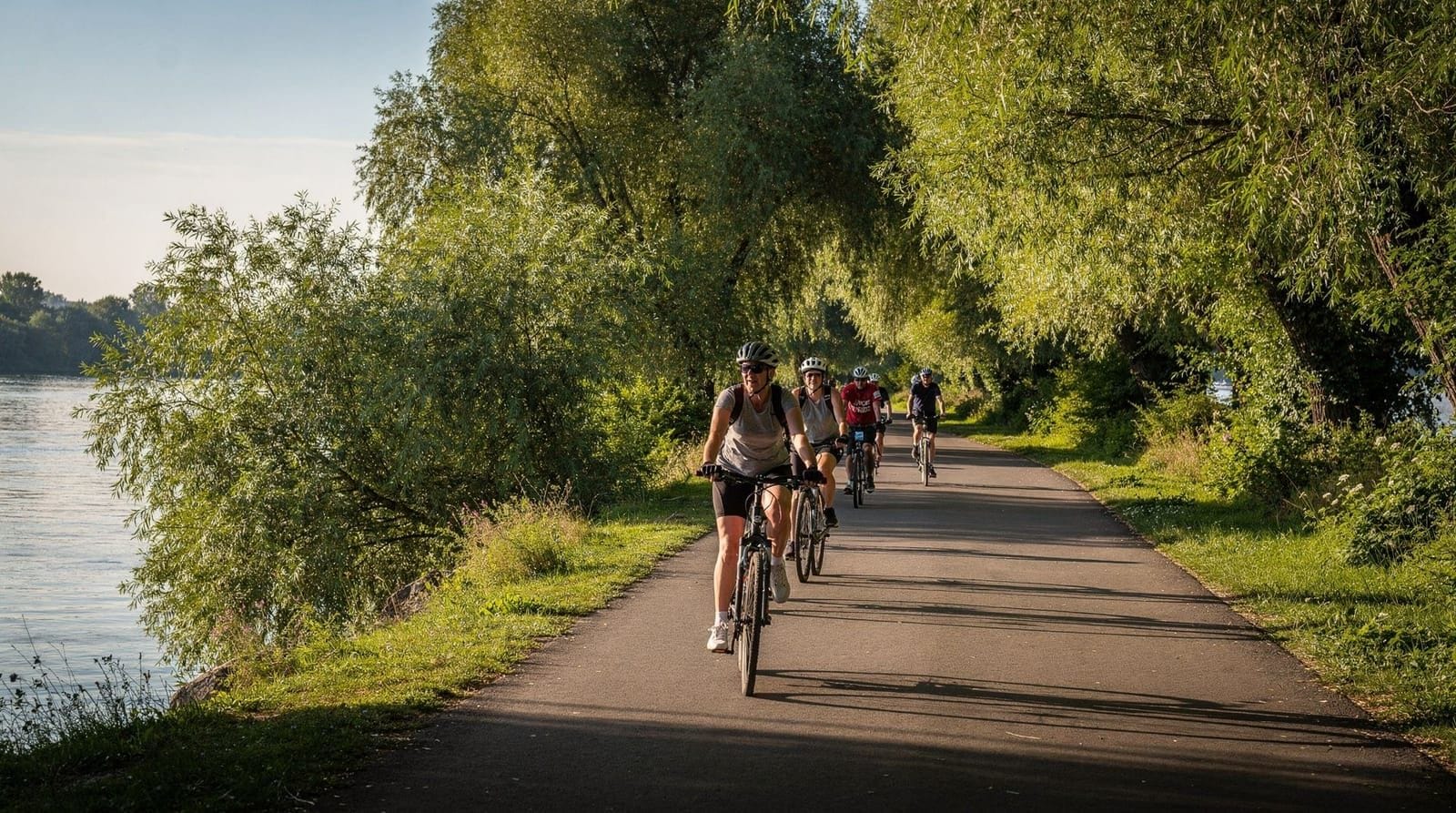
By public transport and cycling: This is the most popular combination. Cycle from Bratislava along the Danube cycling path (EuroVelo 6) south through Petržalka and along the river embankment. The route to Čunovo is about 20 km and takes 1–1.5 hours for a moderately fit cyclist on a flat, well-surfaced path. Bicycles can be rented in Bratislava city centre. The cycling path passes through the Petržalka riverside park before reaching the open Danube embankment south of the city.
Bus with walk: Bus routes run from Bratislava towards Čunovo and the nearby water sports area, but the connection to the museum involves a walk of about 1–2 km along the embankment from the bus stop. Check the Slovak transport planner (imhd.sk) for current routes to Čunovo.
The Danube riverside cycling guide covers the cycling route from Bratislava to Čunovo in detail.
The collection and exhibitions
The permanent collection focuses primarily on Slovak contemporary sculpture, with significant works by prominent Slovak artists from the post-1989 generation as well as older figures. Vincent Poništiak himself, one of the museum’s founders, has works in the collection. Sculpture is displayed both in the gallery interior and in the outdoor garden.
Indoor galleries: The main gallery space follows the line of the building, with large windows looking out onto the river. Rotating exhibitions change two or three times per year. The permanent collection in storage is periodically rotated into the galleries, so the mix of works on display varies by visit.
Outdoor sculpture park: The most memorable part of the museum for many visitors. Sculptures are placed along the peninsula’s walking paths, among the willows and reeds, with the Danube as the backdrop. The park is accessible as part of the museum entry ticket. Pieces range from large-scale abstract metal works to figurative bronze sculptures, with the setting doing significant work for each of them.
Special exhibitions: Danubiana has hosted major international exhibitions over its 25-year history, bringing in work from artists across Europe and beyond. The exhibition programme for the current year is listed on the museum’s website.
The Čunovo area
The Danubiana museum sits within a broader recreational area centred on the Čunovo reservoir, a large artificial lake formed by the Gabčíkovo dam project in the early 1990s. The reservoir and surrounding wetlands are now a significant nature reserve and water sports area.
White-water canal at Čunovo: The man-made white-water slalom canal at Čunovo has been used for international kayak and canoe competitions, including World Cup events. The canal operates year-round and is open to experienced paddlers with their own equipment; spectators can watch from the bank for free.
Čunovo water sports area: The calm water of the reservoir is used for rowing, windsurfing, and recreational boating. The area has a café and a small beach.
Wetland walk: The islands and channels of the Danube south of Bratislava form a mosaic of willow forest and river backwaters — part of the Dunajské luhy (Danube floodplain) nature reserve. Short walking paths access the wetland from the Čunovo embankment road.
When to go: a season-by-season view
| Season | Weather / setting | Crowds | Notes |
|---|---|---|---|
| Spring (Apr–May) | Fresh green, mild | Low–moderate | Comfortable cycling, sculpture garden greening up |
| Summer (Jun–Aug) | Warm, best light on the water | Higher, especially weekends | Longest opening hours; combine with Čunovo water sports area |
| Autumn (Sep–Oct) | Golden light, willows turning | Low–moderate | Arguably the best photography window |
| Winter (Nov–Mar) | Cold, reduced hours | Very low | Confirm opening days before travelling; the outdoor park is bleaker but still walkable |
Combining Danubiana with a Bratislava day
The most natural combination is a morning in Bratislava’s old town or castle, then an afternoon cycle to Čunovo and Danubiana with a return along the river. The outward journey takes 1–1.5 hours by bike; the museum 1.5–2 hours; the return 1–1.5 hours. You are back in Bratislava for dinner.
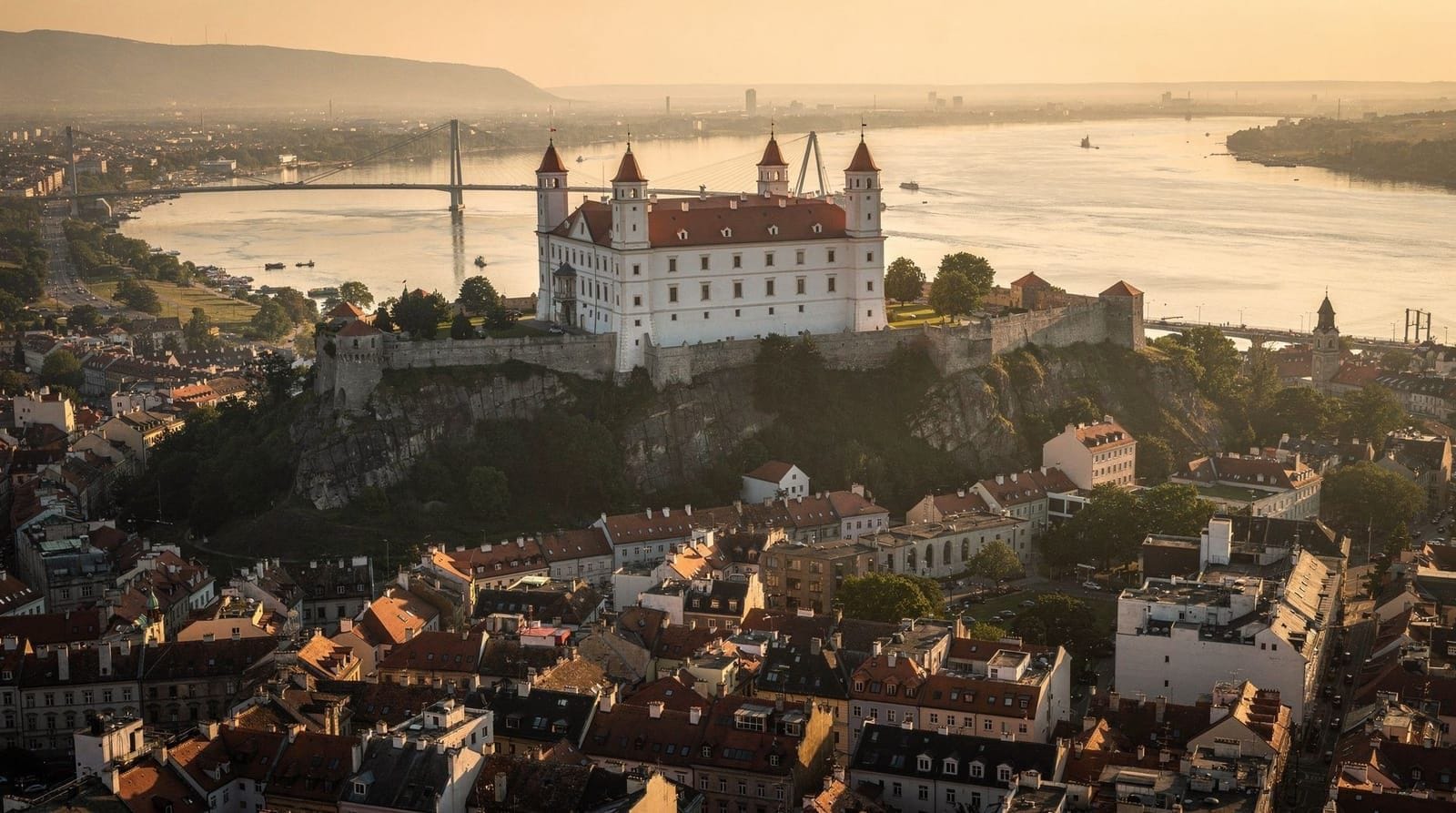
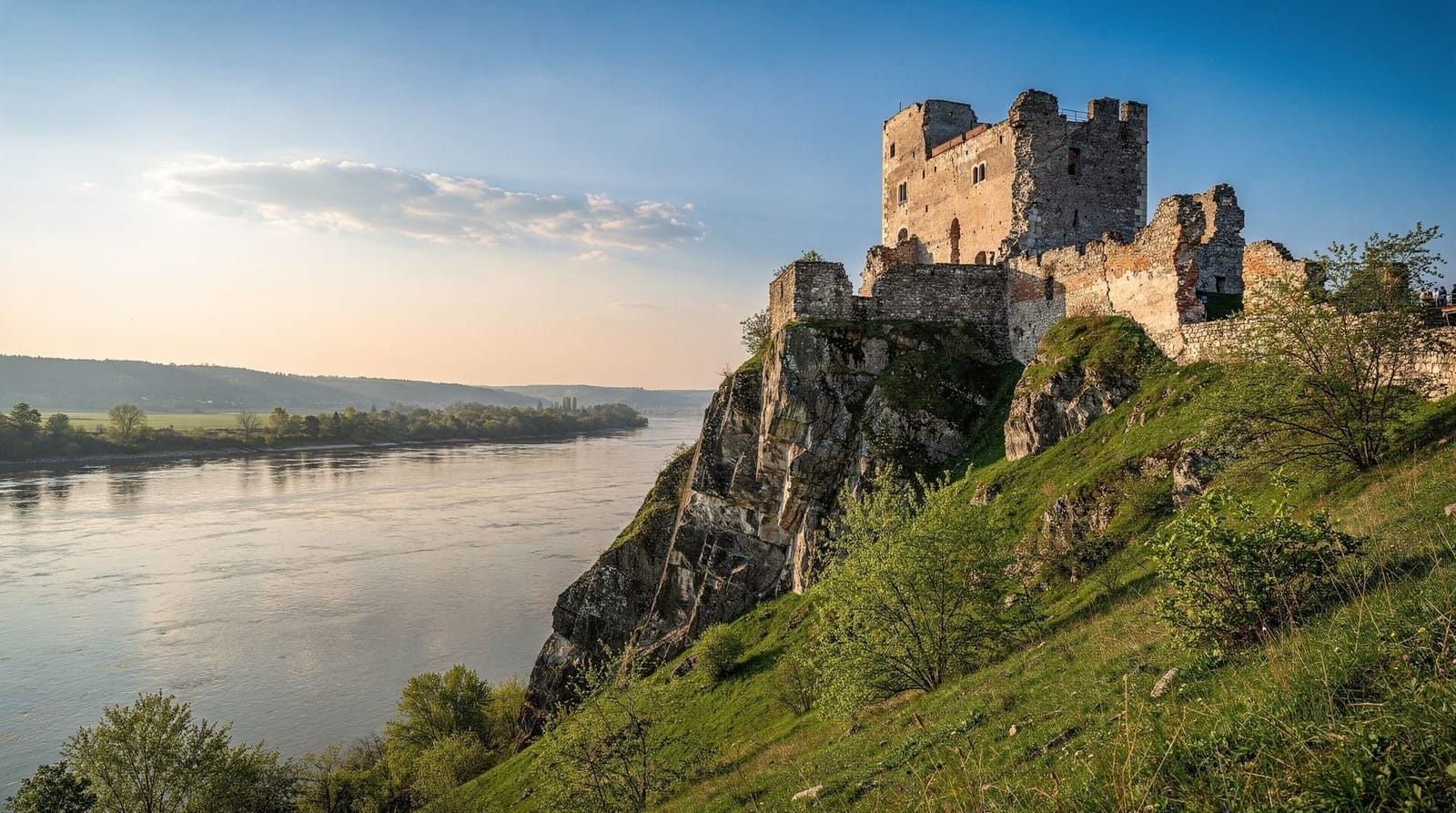
Alternatively, a car visit to Čunovo can be combined with a morning at Devín Castle to the west, making a half-loop of Bratislava’s Danube sites in a single day. See Devín Castle.
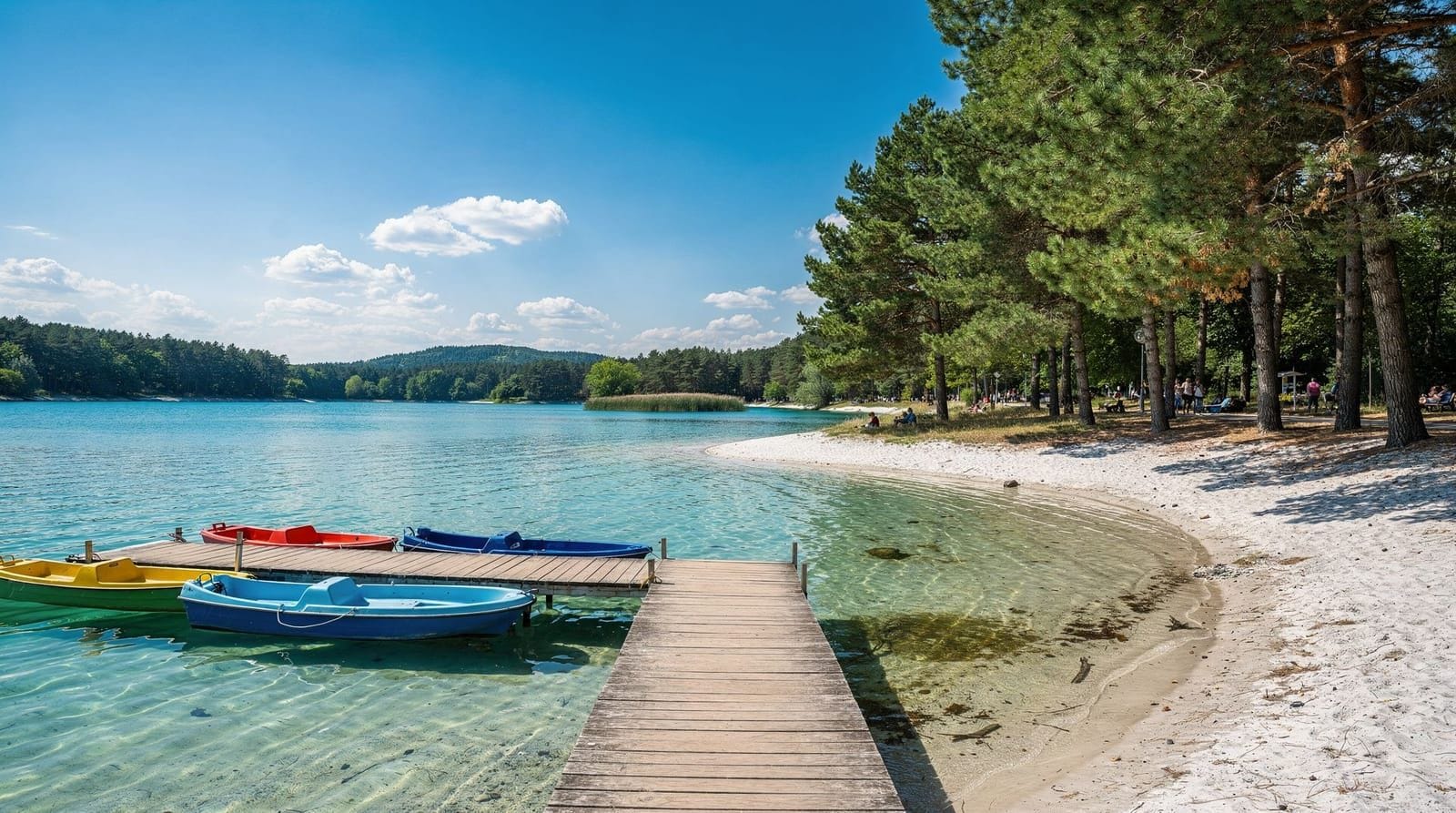
For river-focused visitors, the Danube cruises overview covers water-based options in the region. If you would rather stay in the city and swim, the Senec sunny lakes are a car-free alternative for a warm-weather afternoon, and the family activities guide covers other half-day options if travelling with children. A panorama cruise from the city centre is another way to see the river on a day when you stay in Bratislava.
GetYourGuideBratislava panorama cruise on the Danube RiverCheck availability →How to pace your visit
Danubiana rewards an unhurried approach. Start inside, while your attention is fresh, and let the glass walls do their work: the river is always in view, so even the quieter rooms never feel closed in. Then step out into the sculpture garden and follow the peninsula paths slowly, stopping wherever a piece lines up with the water or the sky. Many visitors find that the same sculpture reads differently from three or four angles, and the changing light on the river adds another layer.
If you have come by bike, treat the museum as the midpoint of your day rather than a destination to tick off. Arrive with enough energy left to sit on the terrace, look at the river, and rest before the ride back. Those who rush in and out tend to remember the cycling more than the art; those who linger tend to remember the peninsula.
Who will enjoy it most
Danubiana suits curious travellers who like places with a distinct character. Art lovers will appreciate the way the collection is tied to its setting. Photographers will find plenty of compositions that combine metal, stone, reeds and water. Couples and solo visitors who want a calm, spacious change from the crowded old town will find it restful, especially outside peak weekends.
It is less suited to travellers who want a dense list of famous sights. If that is you, the Bratislava in one day guide or the old town walking guide will give you more landmarks per hour, and the is Bratislava worth visiting guide helps you decide how to balance the city against excursions like this one.
Fitting Danubiana into a longer trip
On a slower itinerary, Danubiana works well as a relaxed half day between busier ones. The weekend in Bratislava itinerary and the three days in Bratislava itinerary both leave room for an out-of-town afternoon, and this is a natural candidate. Travellers who like wine and countryside as well as art can pair the river with the vineyards described in the Small Carpathians wine region page on another day, so that the two excursions do not compete with each other.
If you are thinking about getting around more generally, the getting around Bratislava guide explains the options for reaching sights beyond the centre, which is useful before you decide between bike, bus or car for Čunovo.
Practical information
Entry: Adults pay around €8, reduced tickets for students and seniors around €4. Children under 15 are free with a paying adult. Entry includes both the indoor galleries and the outdoor sculpture park.
Opening hours: Tuesday to Sunday, approximately 10:00–18:00 in summer (May–September). Hours shorten in autumn and winter; the museum may operate weekend-only opening in January–February. Confirm on the official website before visiting in the off-season.
Café: A small café operates within the museum building, serving coffee, soft drinks, and light snacks. On fine days there are tables on the terrace overlooking the Danube.
Shop: The museum shop stocks catalogues of past exhibitions, art books, and limited-edition prints by Slovak artists. A reasonable place to find something more distinctive than a standard tourist souvenir.
Photography: Permitted throughout, including in the outdoor sculpture park. The best light for photographing the outdoor sculptures is in early morning or late afternoon.
GetYourGuideBratislava riverside, castle or complete city segway tourCheck availability →Frequently asked questions about Danubiana art museum
How do I get to Danubiana from Bratislava without a car?
The most popular option is cycling along the Danube path (EuroVelo 6). The route from Bratislava city centre to Čunovo is about 20 km on a flat, well-surfaced cycle path. Bicycle rental is available in the city centre. The trip takes 1–1.5 hours each way. Alternatively, a public bus to the Čunovo area followed by a 1–2 km walk along the embankment is possible — check current routes on imhd.sk.
What kind of art does Danubiana show?
Contemporary Slovak and international sculpture, painting, and installation. The permanent collection emphasises Slovak artists from the post-1989 period. The outdoor sculpture park is a particular strength, with large-scale pieces set against the Danube and the surrounding wetland landscape. Changing exhibitions bring in international contemporary work two or three times per year.
Is Danubiana worth visiting if I am not particularly interested in art?
The setting and the outdoor sculpture walk along the Danube peninsula are worth the trip regardless of your interest in art. The cycling route down from Bratislava through the riverside park is pleasant in itself. If contemporary art is not your primary interest, spending 45 minutes at the museum and the rest of the time at the outdoor sculptures and the riverside is perfectly satisfying.
Is there anywhere to eat at Čunovo?
The museum has a café for coffee and light snacks. The Čunovo water sports area has a café-restaurant. For a proper meal, bring a picnic or plan to eat in Bratislava before or after.
Can I combine Danubiana with Devín Castle in one day?
Yes, by car. Devín is west of Bratislava, Čunovo is south — a half-loop drive taking in both adds up to about 60–70 km of driving with stops at both sites and a lunch break. By public transport, combining both in one day requires more planning and is easier with a full day. See Devín Castle for travel details.
Is Danubiana suitable for a family day out?
Yes, reasonably. The outdoor sculpture park gives children space to walk and look at large-scale, often playful works without the quiet-gallery pressure of an indoor museum. The riverside setting and the nearby Čunovo water sports area make it easy to combine art with time outdoors. See the family activities guide for other options in the same vein.