Budapest day trip from Bratislava: everything you need to know
How long does it take to get from Bratislava to Budapest?
Approximately 2.5 hours by train or bus. Direct trains run several times daily from Bratislava Hlavná stanica to Budapest Keleti station.
Budapest is about 200 kilometres from Bratislava — farther than Vienna but still within straightforward day-trip range. The journey takes roughly 2.5 hours each way by direct train, which gives you five to six hours in the Hungarian capital if you leave early and return on the last evening service. That is enough time to walk across the Chain Bridge, see Parliament from both sides of the river, soak in one of the great thermal baths, and eat well. It is not enough to do justice to Buda Castle and all the Pest museums too — but it is a satisfying taster, and for many travellers it settles the question of whether Budapest deserves a longer stay (it does).
This guide covers every transport option, a realistic itinerary, what things cost in Budapest, and the practical considerations that make the difference between a smooth day trip and a frustrating one.
| At a glance | |
|---|---|
| Distance | Around 200 km from Bratislava |
| Time needed | About 2.5 hours each way by train or bus |
| Cost | Around €9–25 return transport, plus €50–90 for the day |
| Currency | Hungarian forint (HUF), not euro |
| Best time | April–May or September–October for baths without the crowds |
| Getting there | Direct train, Bratislava Hlavná stanica to Budapest Keleti |
Getting from Bratislava to Budapest
By train — direct and comfortable
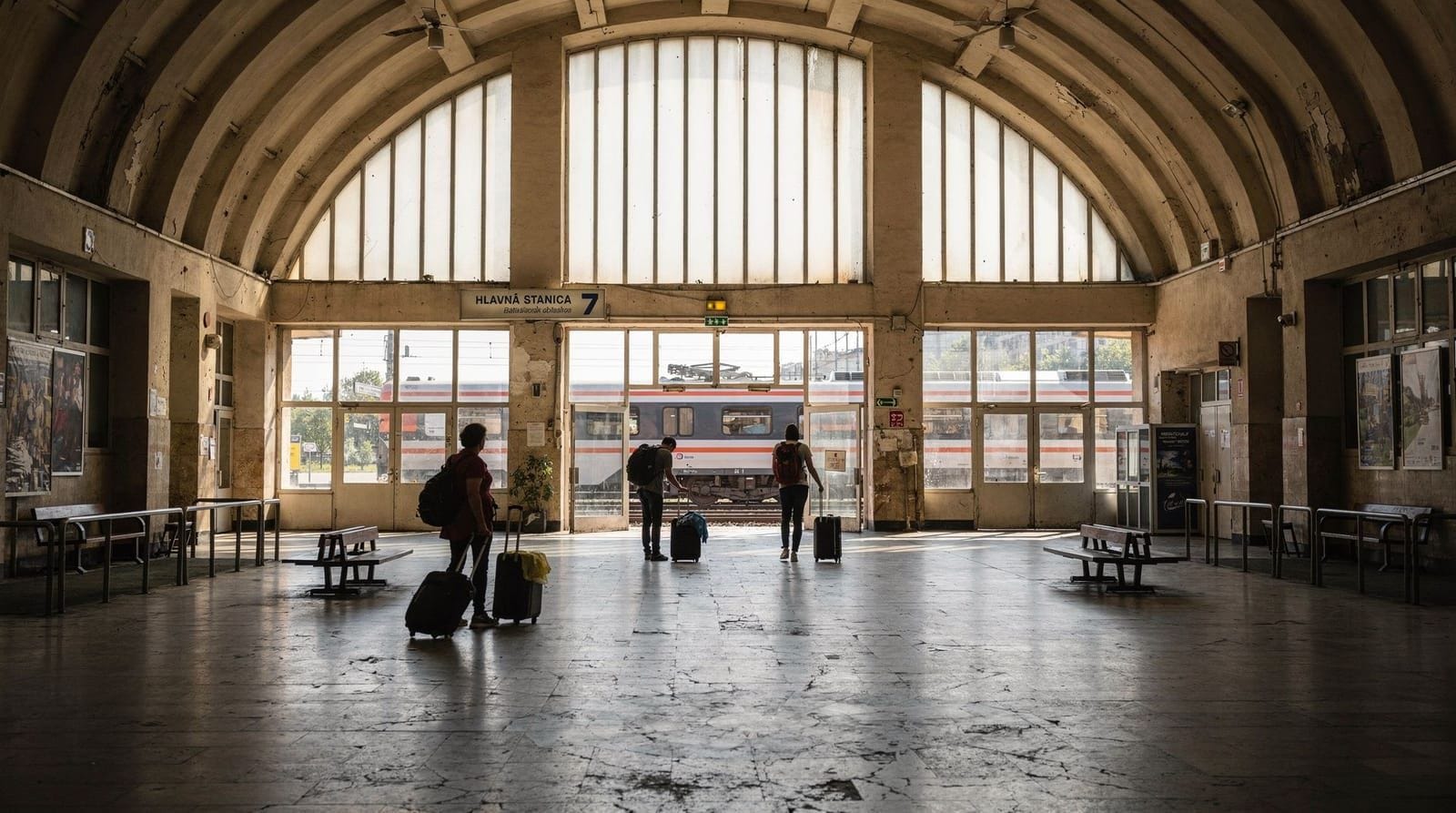
Direct trains run several times daily between Bratislava Hlavná stanica and Budapest Keleti station. The journey takes approximately 2 hours 20 minutes to 2 hours 45 minutes depending on the service. RegioJet, the Czech-Slovak private rail operator, runs the most frequent and competitively-priced services on this route, with fares starting around €9–15 booked in advance. ÖBB EuroCity trains also cover the route; standard fares are typically €18–25 for a second-class seat.
Budapest Keleti (Eastern Station) is well-connected to the city centre: the M2 metro line runs from Keleti directly to Deák Ferenc tér at the heart of Pest in about 10 minutes. Buy a Budapest transit day pass (around €6) at the station and you have unlimited metro, tram, and bus travel for 24 hours.
The first usable departure from Bratislava for a day trip typically leaves between 7am and 8am, arriving in Budapest by 10am or 10:30am. The last return trains to Bratislava leave Budapest Keleti in the early evening — check exact timetables, as services thin out after 7pm. Booking in advance is strongly recommended in summer, when trains fill quickly.
By bus — cheaper but slower
RegioJet also operates coaches between Bratislava and Budapest, as does FlixBus. Journey times are typically 2.5 to 3.5 hours depending on border crossing queues at Rajka (the Hungarian-Slovak border point). In high summer, delays of 30–45 minutes at the border are not uncommon. Bus tickets start from around €8–12 booked in advance.
Bratislava’s Mlynské Nivy bus station is the departure point for most coaches. In Budapest, coaches typically arrive at Kelenföld or Népliget bus terminal; Népliget is on the M3 metro line, making onward connections easy. The bus is most useful if trains are booked out or if you are on a very tight budget.
Organised day tours
For travellers who prefer not to navigate transport and the city independently, guided day tours from Bratislava to Budapest are available. These typically include return transport, a guide for the main sights, and sometimes entrance to one major attraction. They cost €60–90 per person and are a practical choice if this is your first visit to Budapest or if you have limited time to research logistics.
GetYourGuideDay trips from Vienna: Bratislava and Budapest with guideCheck availability → GetYourGuideFrom Vienna: Bratislava and Budapest guided day tripCheck availability →Before you commit to a transport option, it helps to see the whole picture of rail connections from the Slovak capital; the trains to Vienna, Budapest and Prague guide compares them side by side. Getting to the station itself is simple, and the getting around Bratislava guide explains how to reach the station and bus terminal from wherever you are staying, while the public transport guide covers tickets for the local network.
What to see in Budapest in one day
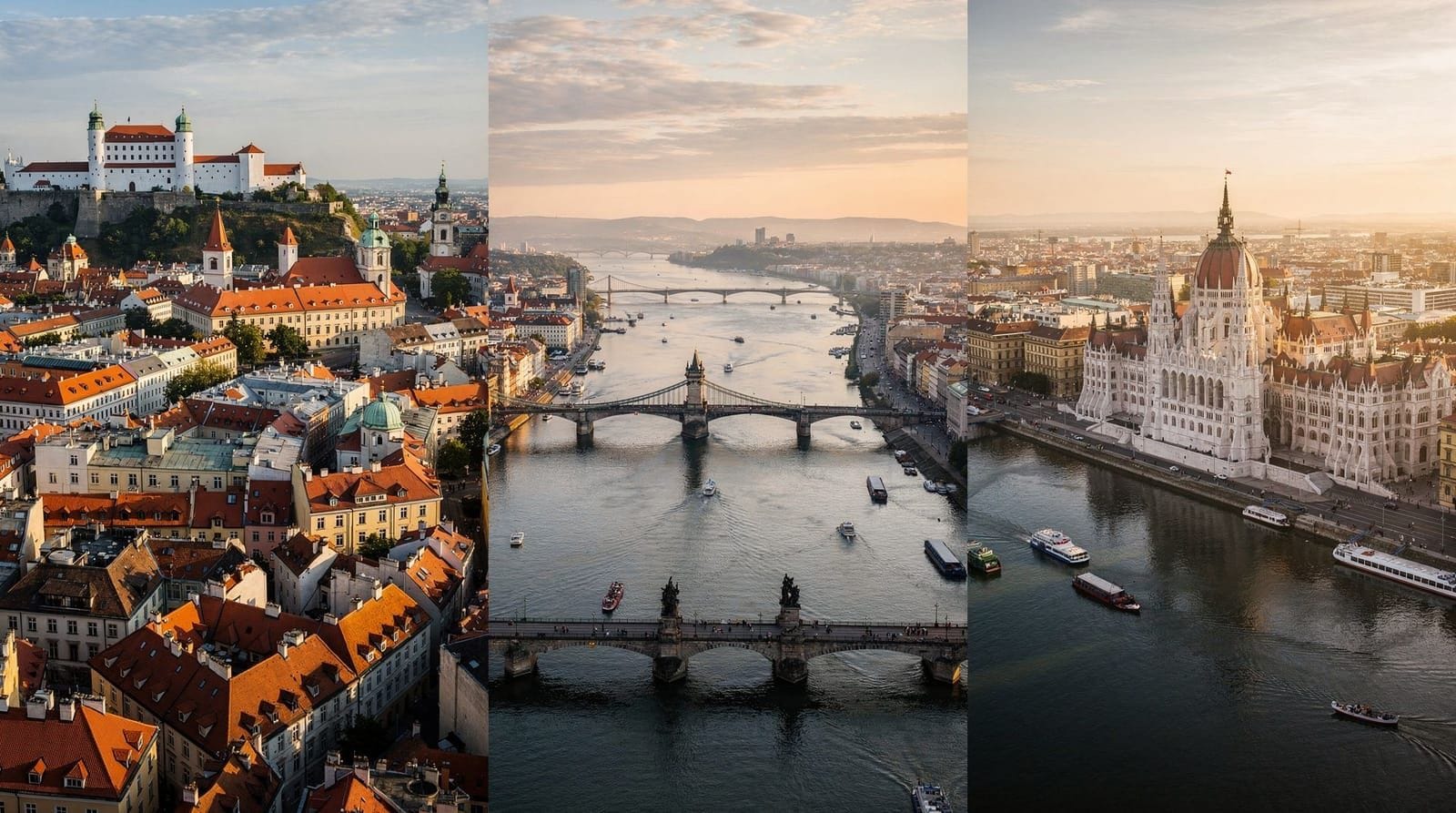
Budapest is divided by the Danube into two distinct halves: Buda on the west bank (hilly, historic, castle-dominated) and Pest on the east bank (flat, grid-planned, parliament-fronted). Trying to do justice to both in a single day is ambitious; the itinerary below is structured to focus on the Pest riverfront in the morning and one major Buda landmark in the afternoon, with a thermal bath experience in between.
Morning: the Pest riverfront and Parliament
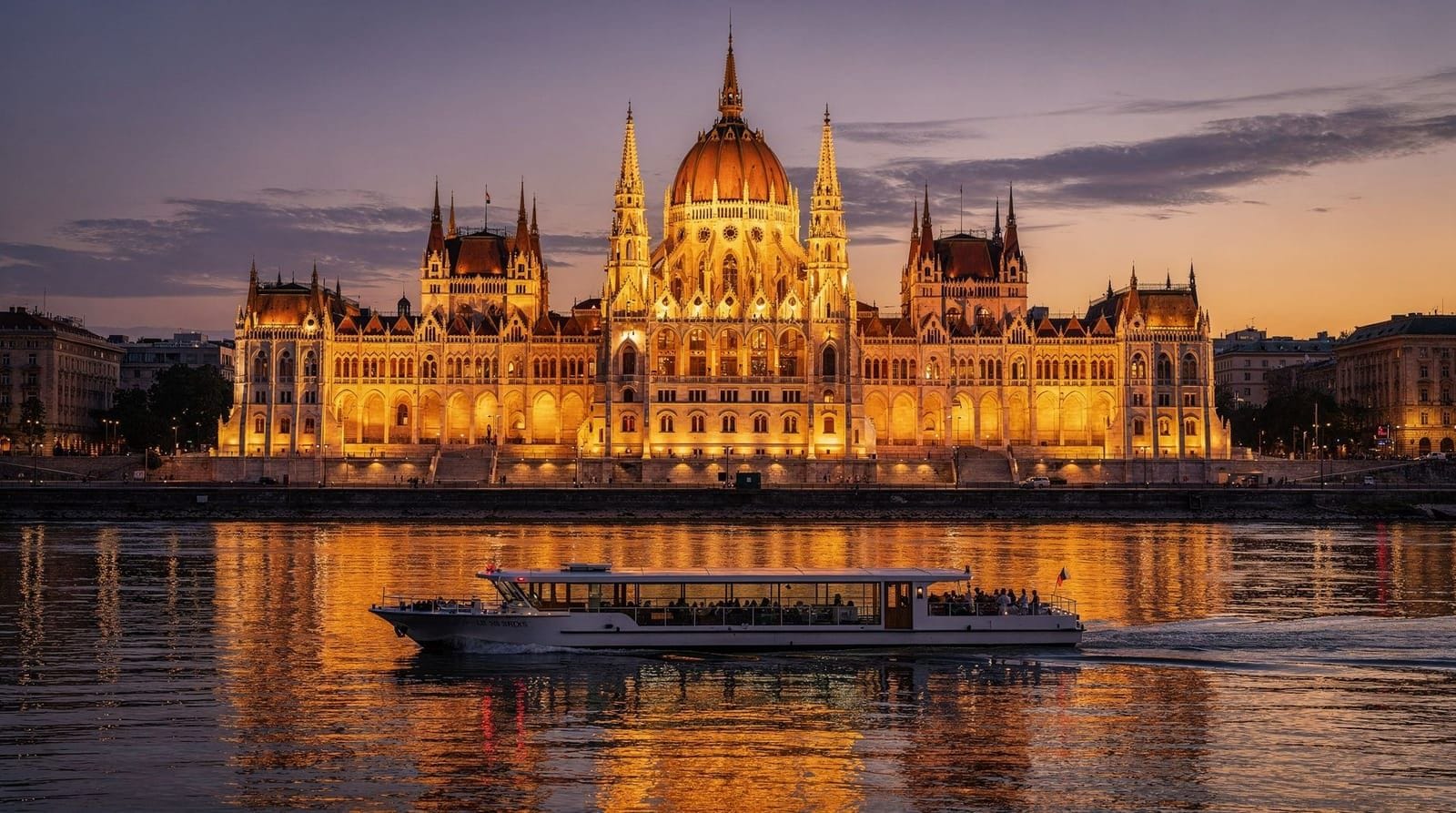
Walk from Keleti station to the Danube (about 20 minutes on foot through the city centre, or take the M2 to Kossuth Lajos tér). The Hungarian Parliament building on the Pest bank of the Danube is one of the most extraordinary pieces of Gothic Revival architecture in the world — its 96-metre dome and 691 rooms make it the third-largest parliament building on the planet. Exterior views from the riverside are free; interior guided tours cost around €25 per adult and must be booked in advance, running several times daily in English.
The riverfront promenade (the Danube Promenade or Duna-korzó) between Vigadó tér and Fővám tér is one of the great urban walks in Central Europe. The Chain Bridge (Széchenyi Lánchíd), which stretches from Pest to Buda across the Danube, is a defining Budapesti image — walking across it costs nothing and takes about 10 minutes. From the Buda end, the Castle Funicular (Budavári Sikló) lifts you to Buda Castle in 2 minutes for around €6 each way, or you can walk up via the staircase paths.
Fisherman’s Bastion (Halászbástya) on the Buda side offers arguably the finest view in the city — Parliament and the Pest skyline framed perfectly across the Danube. The bastion’s viewing terraces are free to access (the interior gallery charges a small fee); the best photographs are had in the morning before the tour groups concentrate there.
Midday: lunch in the Great Market Hall
Return to Pest via the Chain Bridge and head south along the riverfront to the Great Market Hall (Nagyvásárcsarnok) at Fővám tér, a massive 19th-century covered market that is genuinely still used by Budapest residents for everyday shopping. The upper gallery is lined with food stalls serving langos (deep-fried dough topped with sour cream and cheese, around €3–5), goulash soup, and stuffed peppers. It is a reliable, atmospheric, and affordable lunch — tourist-facing but not tourist-trap. Budget €8–12 for a filling lunch here.
GetYourGuideFrom Vienna: Bratislava & Budapest day tour with photographerCheck availability →Afternoon: Széchenyi thermal baths
Budapest sits on 118 natural thermal springs, and the thermal bath culture is one of the defining experiences of the city. The Széchenyi Baths in City Park (Városliget) are the most famous — a magnificent yellow neo-baroque complex built in 1913, with outdoor pools, indoor thermal halls, and a genuinely social atmosphere where locals play chess while soaking in 38-degree water. Entry costs approximately €22 per adult for basic pool access (prices have risen in recent years; check current rates before going). Towel and locker rental add €5–8.
Allow 2 to 2.5 hours at Széchenyi; it is too good to rush. Take the M1 (the world’s second-oldest metro line, which itself is a minor attraction) to Széchenyi fürdő station.
If Széchenyi feels too large and touristic, the Gellért Baths in the Buda-side art nouveau hotel of the same name are slightly more elegant, slightly less crowded, and slightly more expensive. Either is a genuine highlight of any Budapest visit.
Late afternoon: the ruin bars district and Andrássy Avenue
Budapest’s ruin bar scene — informal bars built in the derelict courtyards and abandoned buildings of the old Jewish Quarter in Pest — is one of the most distinctive nightlife cultures in Europe. Szimpla Kert, the original and most famous ruin bar, on Kazinczy utca, is worth seeing even in the afternoon: it is open from noon and its extraordinary eclectic decor (every surface covered in salvaged objects, plants, and street art) is best appreciated in daylight.
Andrássy Avenue, the grand Haussmanian boulevard connecting the city centre to City Park, is a UNESCO World Heritage Site worth a stroll. The Hungarian State Opera House on Andrássy (one of the most beautiful opera buildings in Europe) can be viewed from outside; guided tours run daily at specific times and are worth taking if schedule permits.
GetYourGuideFrom Budapest: Bratislava day tripCheck availability →Evening: dinner before the return train
Dinner options are excellent and considerably cheaper than Vienna or even Bratislava’s more upscale restaurants. A sit-down meal for two with wine at a mid-range Budapest restaurant runs €30–50 total — roughly half what the same quality meal would cost in Vienna. The area around Gozsdu Courtyard (Gozsdu Udvar) in the Jewish Quarter is packed with restaurants covering every style; traditional Hungarian goulash, fisherman’s soup (halászlé), and the paprika-rich stews typical of Magyar cooking are all worth seeking out. For a more modern take, the Belvárosi Piac food market near the central market area offers street-food style options at low prices.
Check your return train time carefully: the RegioJet and other services back to Bratislava typically run until early evening, with the last practical train leaving Budapest Keleti around 7–8pm. Miss it and the options home become significantly more complicated.
What things cost in Budapest
Budapest remains one of the most affordable capitals in Europe, which makes it a pleasant change from Vienna’s prices. Hungary uses the forint (HUF), not the euro, which means you will need to exchange money or withdraw forint from an ATM on arrival. The exchange rate fluctuates; as of mid-2026, approximately 390–400 HUF per euro is a rough guide, though check current rates. ATMs are plentiful at Keleti station and throughout the city centre. Avoid currency exchange booths in the tourist areas — their rates are poor.
Approximate prices:
- Coffee: €1.50–2.50 (in HUF)
- Beer at a bar: €2–3
- Restaurant lunch main course: €8–14
- Thermal bath entry: €20–25
- Metro day pass: €6
- Parliament guided tour: €25
- Langos at the market: €3–5
Card payments are widely accepted but cash is useful for markets, street food, and some smaller bars. Withdraw at least 10,000–15,000 HUF (roughly €25–40) on arrival.
Is a day trip to Budapest worth it, or should I stay overnight?
The honest answer is that Budapest is one of those cities that benefits dramatically from an extra night. The ruin bars, the evening light over the Danube from Buda Castle hill, the opera — these are experiences that reward a longer stay, and Budapest’s accommodation is affordable enough that an overnight is not a significant financial burden.
That said, a day trip absolutely works if Bratislava is your base and Budapest is one item on a longer itinerary. The key is to leave early, choose two or three experiences and do them properly, and accept that you will be coming back. Most travellers who do a one-day Budapest day trip from Bratislava leave with a strong desire to return for longer.
For a structured comparison of what to do with multiple days versus a single day, see the Bratislava vs Prague and Budapest guide.
Frequently asked questions about the Budapest day trip
Do I need Hungarian forint or can I use euros in Budapest?
Hungary is an EU member but has not adopted the euro — Budapest uses the Hungarian forint (HUF). Euros are accepted at some tourist-facing establishments but usually at poor exchange rates. Withdraw forint from an ATM at the station on arrival. The Euronet ATMs in tourist areas charge high fees; use bank-branded ATMs (OTP, K&H, CIB) where possible.
Do I need a visa to enter Hungary from Slovakia?
Both Slovakia and Hungary are EU and Schengen members. There are no passport controls at the border for EU/EEA citizens. Non-EU travellers with a valid Schengen visa can cross freely; check entry requirements if you hold a non-EU passport and are unsure.
Can I buy a day pass for Budapest public transport at the train station?
Yes. Budapest public transport day passes are available from the ticket machines at Budapest Keleti station and at major metro stations. A 24-hour pass costs around 2,100 HUF (approximately €5–6) and covers unlimited metro, tram, trolleybus, and bus travel within the city boundary. Buy it before leaving the station.
How far is Keleti station from the city centre?
Budapest Keleti is on the M2 metro line, two stops from Deák Ferenc tér — the central hub where the M1, M2, and M3 metro lines intersect. Journey time is about 4 minutes. The station is also walkable to the city centre in about 20–25 minutes if you prefer to explore on foot.
What is the best time of year for a Budapest day trip?
Budapest is enjoyable year-round but is particularly good in spring (April–May) and early autumn (September–October). Summer (July–August) is hot and very crowded, especially at the thermal baths. The thermal baths are actually more pleasant on a slightly overcast day in April than at the height of summer. Christmas markets run in late November and December and are excellent if atmospheric crowds appeal to you.
Should I book Széchenyi baths tickets in advance?
In summer, absolutely yes. Széchenyi can have queues of 30–60 minutes at the ticket desk on hot summer days. Online booking gives you a timed entry and usually saves on the ticket price. Outside peak summer season, walk-in is generally fine.
Is it possible to do Bratislava, Budapest, and Vienna in one trip?
Very much so — this is one of the most logical multi-city itineraries in Central Europe. A common structure is: arrive in Vienna, spend 2 nights there, take the train to Bratislava (1 hour), spend 2 nights in Bratislava, then take the train to Budapest (2.5 hours), spend 2 nights there, and fly home. Alternatively, using Bratislava as a cheap central base and doing Vienna and Budapest as day trips each gives you three capital experiences for the accommodation cost of one. The Danube capitals itinerary guide covers this approach in detail.
What Hungarian dishes should I try in Budapest?
Gulyás (goulash soup — different from the stew version known internationally), halászlé (fisherman’s soup, spicy and paprika-red), lángos (fried dough with toppings, the street food of choice), stuffed peppers (töltött paprika), and palacsinta (Hungarian crêpes with walnut or jam filling). For dessert, kürtőskalács (chimney cake) is ubiquitous in the market area. The Great Market Hall is the best single place to try several of these in one visit.
Day-by-day summary: making the most of one day
| Time | Activity |
|---|---|
| 7:00–8:00 | Depart Bratislava Hlavná stanica by direct train |
| 10:00–10:30 | Arrive Budapest Keleti, take the M2 towards the centre |
| Morning | Parliament riverfront, Chain Bridge, Fisherman’s Bastion |
| Midday | Lunch at the Great Market Hall |
| Afternoon | Széchenyi or Gellért thermal baths (2–2.5 hours) |
| Late afternoon | Ruin bars district, Andrássy Avenue |
| Evening | Dinner near Gozsdu Courtyard, then return train (last practical departure around 7–8pm) |
Planning the rest of your stay
A Budapest day trip works best when the days around it are planned with the same care. Staying close to the station makes the early start easier, and the where to stay neighborhoods guide helps you pick a base that suits an early departure and a relaxed return. If you are still deciding how long to spend in the city overall, the Bratislava in one day guide and the three-day itinerary show how a Budapest excursion can slot into a longer visit, and the Bratislava weekend itinerary suits shorter stays where you want to keep one day free.
Since you will come back tired from a long day, it is worth saving a slower evening in Bratislava itself. The best restaurants in the Old Town are a good place to wind down with local food, and the Vienna day trip guide is the natural next excursion if you want to add a second capital. For the full overview of the city, start from the Bratislava destination page, and compare this trip with the Budapest day trip destination page if you want a shorter summary.
Combining Budapest with other trips from Bratislava
If you are planning several days in Bratislava, Budapest pairs well with a different kind of day trip on the other days. The Small Carpathians wine region to Bratislava’s north is a complete contrast — quiet vineyard villages, castle ruins, and tastings at family-run wineries — while Devín Castle to the west provides a dose of Iron Curtain history and Danube river scenery in a compact 20-minute bus ride. Vienna, of course, remains the natural companion to the Budapest day trip for anyone building a Central European circuit.
tours.budapest
Verified deep-linked GetYourGuide tours. Book through these links and we earn a small commission at no cost to you.