Bratislava wine harvest 2026: your guide to autumn in the Small Carpathians
Most visitors to Bratislava know the Old Town, the castle, maybe the UFO observation deck. Fewer know that the city sits at the foot of the Small Carpathians, a low forested ridge running north-east from the city limits — and that a 30-minute bus ride puts you in the middle of one of Central Europe’s most underrated wine regions. In September and October, those hills turn amber and copper, the harvest is underway, and Pezinok and Modra hold festivals that have nothing to do with tourist infrastructure. They’re local events. You can walk in off the street.
This guide covers how to experience the Slovak wine harvest properly: what to drink, where to go, how to get there independently, when St Martin’s Day matters, and which wineries are worth your time.
At a glance
| Where | Pezinok and Modra (Small Carpathians), or Rača within Bratislava city limits |
| Cost | Festival entry a few euros with glass included; bottles roughly 5–15 € |
| Time needed | Half a day for Rača, a full day for Pezinok and Modra together |
| Getting there | Bus from Mlynské Nivy, ~30–40 min to Pezinok; car ~30–40 min |
| Best time | Third weekend of September for Vinobranie; 11 November for the new wine |
The Slovak wine harvest season: when it happens
The harvest in the Small Carpathians runs roughly from late August through October, depending on the variety and the year’s weather. Welschriesling and early whites are usually picked first, in late August or early September. Reds and late-harvest styles follow through October.
For visitors, the practical window is September and early October. The harvest festivals happen in September; the vineyards are still active; the foliage is starting to turn; temperatures are mild (typically 15–22 °C during the day, cooler in the evenings). It’s one of the best times of year to be in this corner of Slovakia.
The second key date is 11 November — St Martin’s Day (Sviatok sv. Martina). This is when the new wine, called mladé víno (young wine), is officially released. Every restaurant and wine bar in Bratislava starts serving the fresh vintage that evening. The tradition is to drink the new wine with a roast goose — husacina — and it’s taken seriously. Bars put signs in their windows; winemakers release limited bottles. If you’re here in mid-November, it’s worth knowing about.
The Pezinok Vinobranie festival
Pezinok is the main harvest festival destination. The Vinobranie (literally “wine harvest”) takes place on the third weekend of September — in 2026, that’s likely 19–20 September. The event fills the town’s main square and surrounding streets with wine stalls, food, folk music, and craft markets.
Entry costs a few euros and includes a wine glass that you use at all the stalls. Most producers from the region participate: you walk around sampling, buying bottles, talking to winemakers directly. It has a genuine local atmosphere — families, older couples, groups of friends — not primarily an international tourist event.
Pezinok itself is worth a look beyond the festival: the old town square has a 13th-century castle (now partially a wine house), and the town has a long winemaking history going back to the medieval German settlers who called it Bösing. The Slovak wine culture here is old and not manufactured.
See the Small Carpathians day trip guide for how to structure a full day in the region, and our Pezinok and Modra wineries guide for specific producer recommendations beyond the festival.
Rača: Bratislava’s own wine district
What many visitors don’t realise is that Bratislava has its own wine-producing district within city limits. Rača is a municipality that has been absorbed into greater Bratislava, sitting on the southern slopes of the Small Carpathians about 8 km north of the city centre. It has its own winery cellars, its own local wine festival (Račianske Vinobranie, usually held in late August or early September), and a walking trail through the vineyards.
Getting to Rača from the city centre takes about 20–25 minutes by tram and bus. The walking trail through the Rača vineyards takes around two hours and gives you views back over the city. In harvest season, you can smell the fermenting must from the cellars as you walk past.
This is the most accessible way to experience the harvest without leaving Bratislava proper — useful if you have only a day or if the Pezinok festival timing doesn’t work with your schedule. Combine a morning in the Old Town with an afternoon walk through Rača vineyards and a tasting at one of the small cellar doors.
Modra and what it produces
Modra sits about 35 km from Bratislava, slightly north of Pezinok. It’s smaller and quieter, with a well-preserved historic centre and a reputation for being the more craft-focused of the two wine towns — it’s also the main centre for Slovak majolica pottery, if that matters.
The wine produced around Modra tends to be slightly fuller-bodied than the Pezinok whites, partly due to microclimatic differences on the hillsides. Several of the region’s most respected producers have cellars here or between Modra and Pezinok.
If you’re driving, the road between Pezinok and Modra through the vineyards is genuinely beautiful in autumn — narrow, lined with vines, the Carpathian ridge visible above. Allow a full day to do justice to both towns.
GetYourGuideBratislava 6.5-hour Carpathian wine tour and tastingCheck availability →What wines to try
The Small Carpathians wine region produces mainly white wines, with some notable reds. Here’s what to look for:
Vlašský Rizling (Welschriesling): The most widely planted variety in the region. Slovak Welschriesling tends toward crisp acidity and stone fruit rather than the petrol notes of aged Austrian examples. Fresh, food-friendly, usually 8–12 € a bottle at the source.
Veltlínske Zelené (Grüner Veltliner): The Austrian-influenced style works well in the Small Carpathians. Look for peppery, leaner expressions rather than rich ones. Comparable in style to lower-end Wachau, at lower prices.
Devín: A Slovak grape variety developed in the 1970s by crossing Tramín červený (Gewürztraminer) with Veltlínske Zelené. Aromatic, with rose petal and lychee notes. It’s the wine most unique to this region — if you see it, try it.
Frankovka Modrá (Blaufränkisch): The main red of the Small Carpathians. Mid-bodied, with dark cherry and a hint of spice. Slovak versions are generally lighter than their Austrian counterparts from the Burgenland. Good with grilled meats.
Müller-Thurgau: Planted widely and not always exciting, but made well by the better producers — light, floral, good as a lunchtime pour.
At festival stalls, expect to pay 1–3 € per 1 dl (100 ml) pour. Bottles at cellar prices run 5–15 € for most everyday wines; premium or aged wines can reach 20–30 €.
Winery visits: who’s worth seeing
Elesko (Modra area): One of the most visited wineries in the region, with a proper tasting room and an associated restaurant. Produces a full range from everyday whites to premium single-vineyard wines. Can be visited independently; booking ahead recommended on weekends.
Mrva and Stanko (Trnava and Small Carpathians): One of the most respected names in Slovak winemaking. Their whites — particularly the Grüner Veltliner and Welschriesling — consistently win medals. The winery is in Trnava (see our Trnava destination guide), but their wines are available at Pezinok festival stalls and in Bratislava wine bars.
Pavelka and Syn (Pezinok): A family winery with a strong local following. Good Welschriesling and a well-regarded Frankovka Modrá. Smaller production, personal tastings if you book directly.
Château Topoľčianky: This is further from Bratislava — about 130 km in the Nitra region — and not technically Small Carpathians, but worth mentioning for anyone doing a longer wine itinerary through Slovakia. The largest and most historically significant Slovak winery.
For a guided approach to all of this, the wine tasting tours guide covers organised half-day and full-day options from Bratislava that handle transport.
Getting there independently
By bus (recommended): From Bratislava’s Most SNP or Mlynské Nivy bus station, buses run frequently to Pezinok (journey time approximately 40 minutes, fare around 1.50–2 €). Modra is a further 10–15 minutes on a connecting bus. Buses run hourly on weekends; check the Slovak bus timetable (cp.sk) for current schedules.
By train: A train from Bratislava hlavná stanica to Pezinok runs in about 35 minutes. Less frequent than the bus but more comfortable. Trains to Modra require a change.
By car: About 30–40 minutes from central Bratislava depending on traffic. Parking in Pezinok town centre is straightforward on weekdays; during the Vinobranie festival, expect to park on the outskirts and walk. Do not drive if you’re doing serious tasting — the roads back through the vineyards are narrow and the police do check.
By guided tour: If you want someone else to handle logistics and introductions to producers, guided wine tours from Bratislava typically cover both Pezinok and a winery visit in a half-day or full-day format. These are worth considering if you’re not a wine specialist and want context beyond just tasting.
GetYourGuideCarpathian wine tasting tour + Red Stone CastleCheck availability →What to eat during harvest season
The traditional pairing with Slovak harvest-season wine is straightforward and good.
Bryndzové halušky: Potato gnocchi with sheep’s bryndza cheese, topped with crispy smoked bacon. The Slovak national dish. Hearty, filling, good with a glass of cold Welschriesling. Available at most traditional restaurants in Pezinok and Modra.
Vývar (broth): A simple clear soup, often chicken, served at the start of meals. Good for warming up after a morning in the vineyards.
Husacina (roast goose): This becomes relevant in November around St Martin’s Day. The traditional pairing with mladé víno. Most Slovak restaurants outside Bratislava serve it for the whole of November; in Bratislava itself, restaurants on the Old Town restaurant list tend to offer it as a seasonal special.
Kapustnica: Sauerkraut soup with sausage. Appears on menus through autumn and winter. Good.
Sheep’s cheese variations: The hill villages above Pezinok produce good sheep’s milk cheese. At the festival, look for homemade bryndza and oštiepok (smoked sheep’s cheese, often round or shaped).
For a broader overview, traditional Slovak food covers the full range of what you’ll encounter.
The St Martin’s Day wine release
11 November is a bigger deal than most foreign visitors expect. In Slovakia, St Martin’s Day (Sviatok sv. Martina) is the official start of the new wine season. Winemakers bottle a portion of the harvest as mladé víno — fresh, slightly hazy, low-tannin, highly aromatic — for release on this date.
In Bratislava, you’ll see signs appearing in wine bars and restaurants from the first week of November: “Mladé víno tu bude 11.11.” (Young wine will be here on 11.11.) The protocol is that the wine cannot be officially served until St Martin’s evening.
The food pairing is roast goose with red cabbage and potato dumplings. It’s a full sit-down meal rather than a bar snack. Book a table in advance for 11 November — popular restaurants fill up.
For background on the Small Carpathians wine culture including St Martin’s history, see the St Martin wine harvest guide and the Small Carpathians wine guide.
Hiking in the vineyards
The harvest season overlaps with the best hiking conditions in the Small Carpathians: warm enough to be comfortable, cool enough to walk for hours, and the foliage is beginning to turn. The ridge above the vineyards is criss-crossed by marked trails, and several routes descend directly through the vines into Pezinok or Modra.
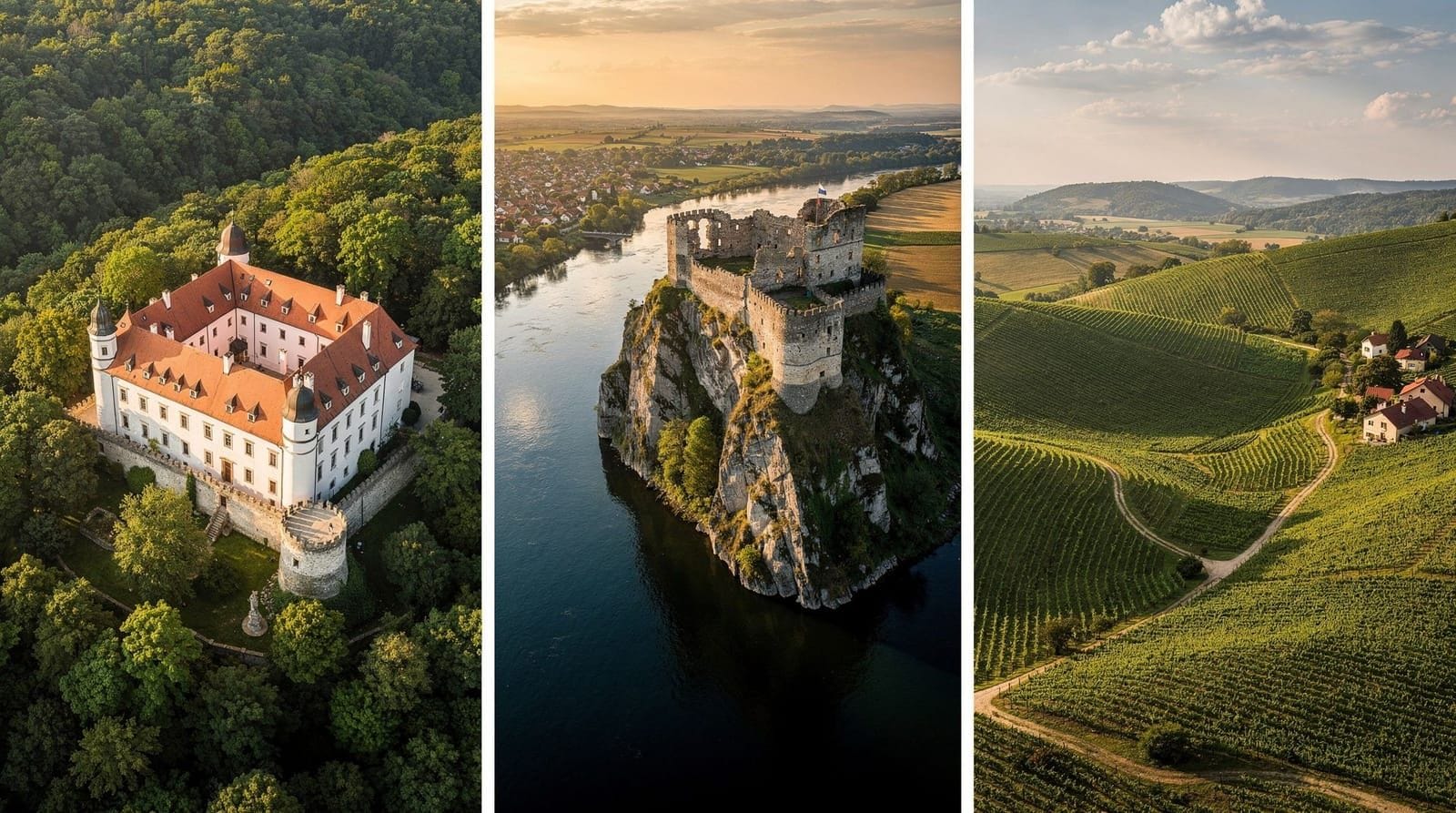
A popular route from Modra climbs through the vineyards to the ridge at Zochova chata (a mountain hut that serves basic food and beer), then descends the other side toward the Červený Kameň castle — a well-preserved medieval fortress with a wine cellar in its own right. See the Červený Kameň castle destination page for visiting details.
The Small Carpathians hiking guide has marked trail maps and route descriptions for various fitness levels.
Going independently vs. booking a tour
This is worth addressing directly. You can absolutely do the Small Carpathians wine region independently — the bus connections are good, English is spoken at most wineries, and the Pezinok festival requires no booking. If you’re comfortable navigating a new place and can read a bus timetable, go independently.
The case for a guided tour is: a) you want a driver so you can taste freely; b) you want a winemaker introduction rather than just a tasting room visit; c) you’re not confident navigating Slovak transit. Good tours from Bratislava handle all three and typically run 50–90 € per person including transport, multiple winery stops, and a meal.
The autumn wine harvest guide has more detail on what organised tours typically include and how to compare operators.
Frequently asked questions about the Slovak wine harvest
When is the best time to visit for the wine harvest in 2026?
The Pezinok Vinobranie festival — the main harvest event — falls on the third weekend of September, likely 19–20 September 2026. For active harvest (grapes being picked in the vineyards), aim for early to mid-September for whites, and mid-to-late September through October for reds. St Martin’s Day on 11 November is the date for the new wine release.
How far is Pezinok from Bratislava and how do I get there?
Pezinok is about 35 km from central Bratislava, roughly 30–40 minutes by bus from Mlynské Nivy station or the SNP bus stops. Buses run approximately every hour. The train from Bratislava hlavná stanica takes around 35 minutes. Driving is straightforward but not recommended if you plan to taste wine.
What wines is the Small Carpathians region known for?
The region is primarily a white wine area. The key varieties are Vlašský Rizling (Welschriesling), Veltlínske Zelené (Grüner Veltliner), and the indigenous Devín grape. For reds, Frankovka Modrá (Blaufränkisch) is the main variety. Devín is the most distinctively Slovak wine and worth trying specifically here.
What is mladé víno and when can I try it?
Mladé víno is the new-vintage young wine released each year on St Martin’s Day, 11 November. It’s fresh, lightly cloudy, aromatic, and low in tannins. Every wine bar and traditional restaurant in Bratislava serves it from 11 November onwards, traditionally paired with roast goose. It’s a Slovak tradition that has no real equivalent in other wine countries and is worth experiencing if your visit falls in November.
Can I visit Small Carpathians wineries without a guide?
Yes. Most wineries with public tasting rooms — including Elesko, and several family producers in Pezinok and Modra — can be visited independently. Book ahead for weekend visits. The Pezinok Vinobranie festival requires no booking at all. A guided tour makes sense primarily if you want a driver (so you can taste freely) or deeper access to smaller producers who don’t have public tasting rooms.
What is the weather like in the Small Carpathians during harvest season?
September is typically the most pleasant month: 18–24 °C during the day, dropping to 10–14 °C in the evenings. October is cooler and more variable — 10–18 °C days, with rain becoming more likely from mid-month. Both are good hiking conditions. Bring a light jacket for evenings and solid walking shoes for vineyard paths, which can be muddy after rain.
Slovak wine experiences on GetYourGuide
Verified deep-linked GetYourGuide tours. Book through these links and we earn a small commission at no cost to you.