Best restaurants in Bratislava old town: where locals and visitors eat
What are the best restaurants in Bratislava's old town?
For traditional Slovak food: Modrá Hviezda (near the castle) and Slovak Pub (Obchodná Street). For mid-range with atmosphere: Zylinder on Hviezdoslavovo námestie or Leberfinger near the waterfront. For a special occasion: Albrecht in the castle area. Avoid the restaurants directly on Hlavné námestie — quality rarely justifies the premium.
| At a glance | |
|---|---|
| Where | Old Town, Hviezdoslavovo námestie, castle district (Beblavého Street) |
| Cost | Budget under €15; mid-range €15–30; special occasion €30+ per person |
| Time needed | Kitchens close 21:30–22:00; sit down by 21:00 for a full dinner |
| Getting there | Everything within a 5–15 minute walk of Hlavné námestie |
| Best time | Lunchtime denné menu (12:00–14:00) for the best value; book ahead for weekend dinner |
Bratislava’s old town has more restaurants per square metre than almost anywhere in Slovakia, which makes the question of where to eat both easy (you will never walk far) and surprisingly complicated (not all of them are worth your time or money). The dining scene has changed noticeably since 2015: a generation of younger Slovak chefs has opened bistro-style restaurants with modern menus alongside the traditional Slovak pub kitchens that have always been there, and the result is a range that runs from honest budget canteens to genuinely ambitious cooking.
This guide separates the good from the merely convenient. If you are new to Slovak food generally, the traditional Slovak food guide explains what to order before you sit down. For the full lay of the city, where to stay by neighbourhood covers how dining options shift across districts.
How the old town dining scene is organised
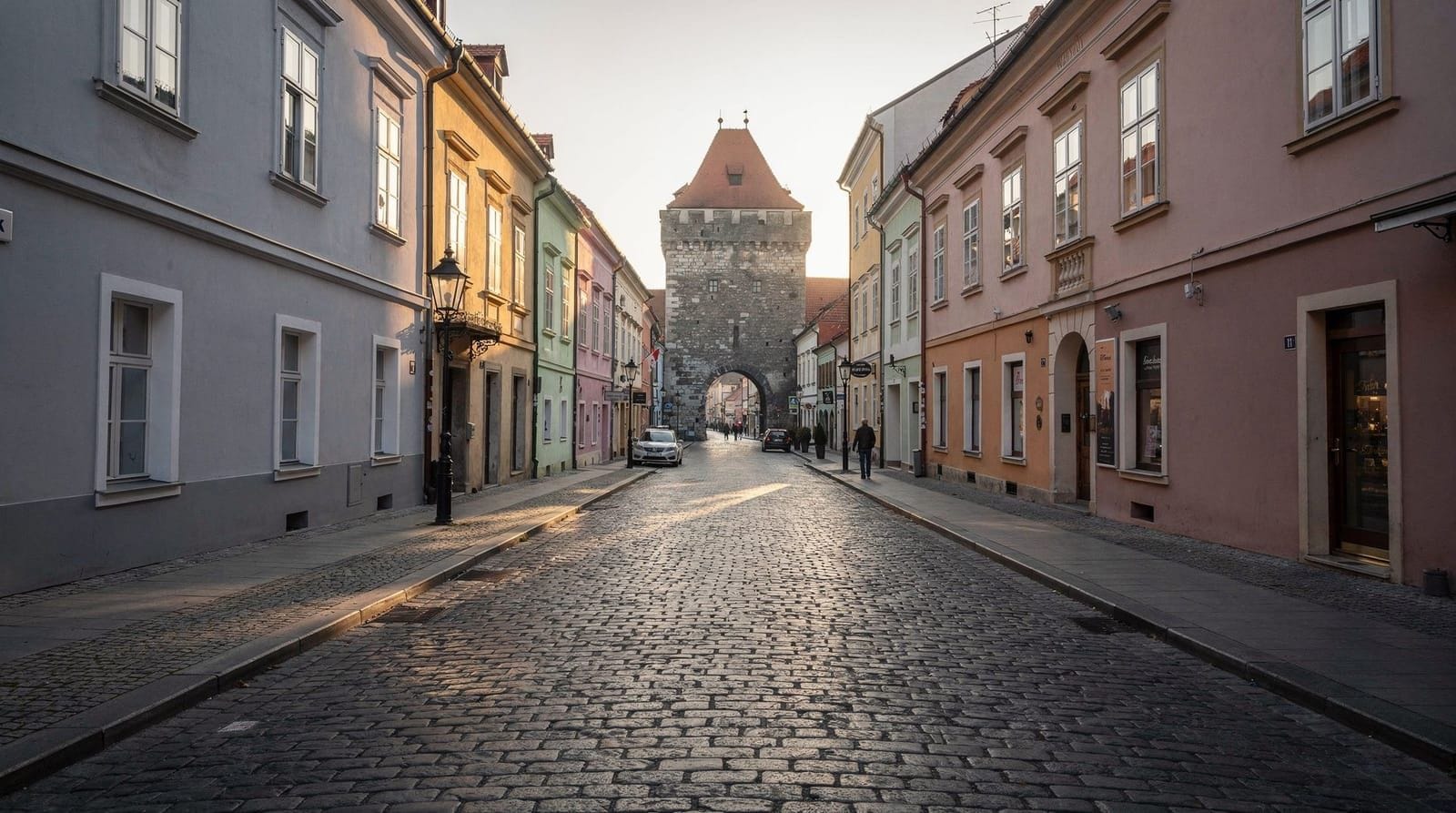
The geographical logic matters here. Hlavné námestie — the main square — is the tourist bullseye, and the restaurants directly on it reflect that: high footfall, prices inflated by rent and location, quality that is usually adequate but rarely more. The better restaurants are mostly within two to three blocks of the square in all directions, particularly along Laurinská Street, the lanes behind Rybárska brána, and the quieter streets running toward Franciscan Square (Františkánske námestie). The old town walking guide maps this area clearly and explains which streets are worth a slow wander versus which are purely pedestrian shortcuts.
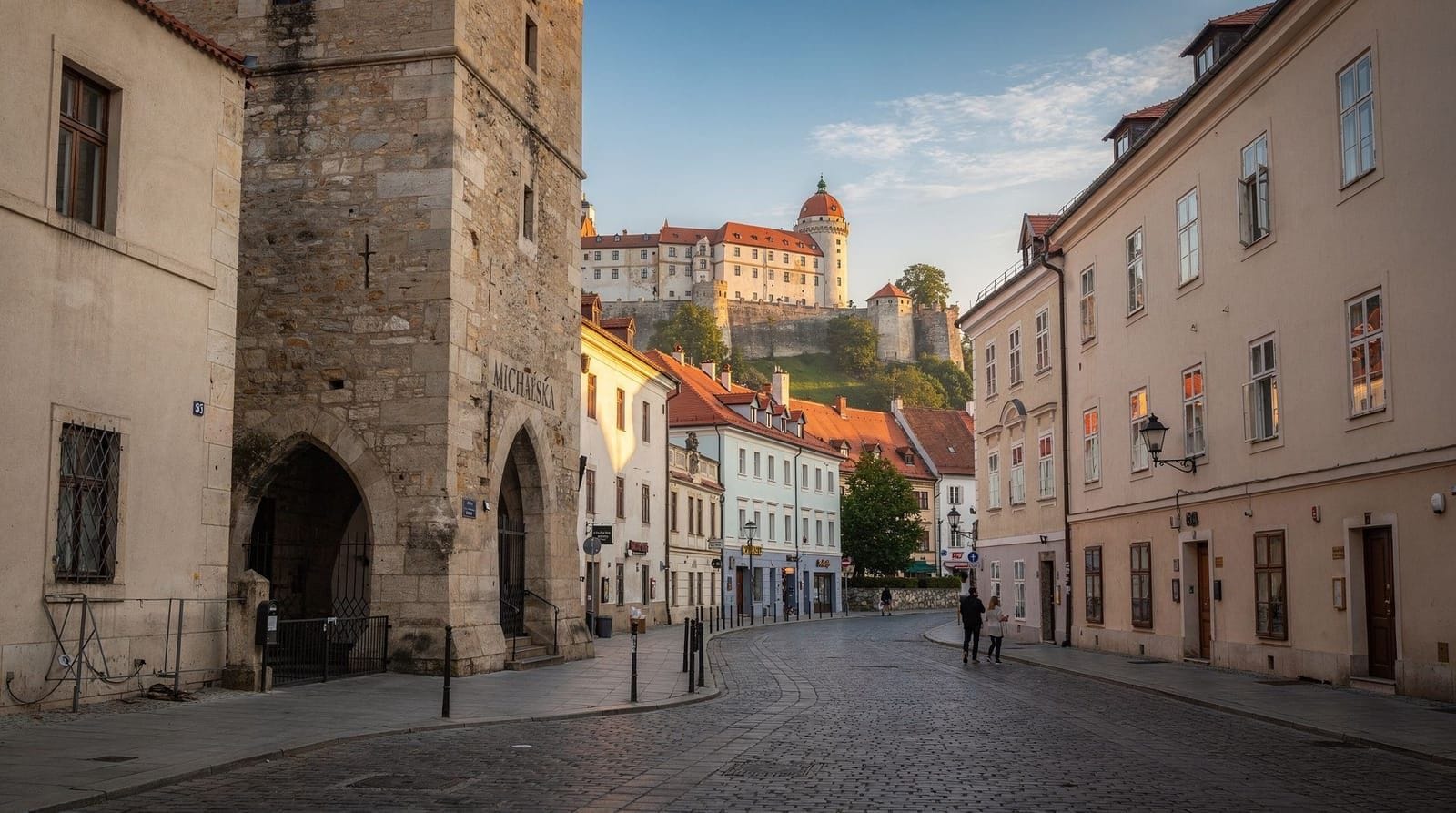
Hviezdoslavovo námestie — the long boulevard-style square running from the Slovak National Theatre to the SNP Bridge observation deck — has a different character: more polished, more visible to tourists walking between the old town and the Danube, and home to some of the city’s better mid-range and upscale restaurants. The area around Bratislava Castle on Bratislava Hill (reached via Beblavého Street) tends to be quieter and somewhat more local in its clientele, which usually reflects well in both quality and price.
A practical reality: most restaurant kitchens in Bratislava close between 21:30 and 22:00. If you want to eat a full dinner, aim to sit down by 21:00 at the latest. The exception is bars and pubs, which serve food later — but that is a different category.
Budget picks: eating well under €15 per person
Slovak Pub — Obchodná Street
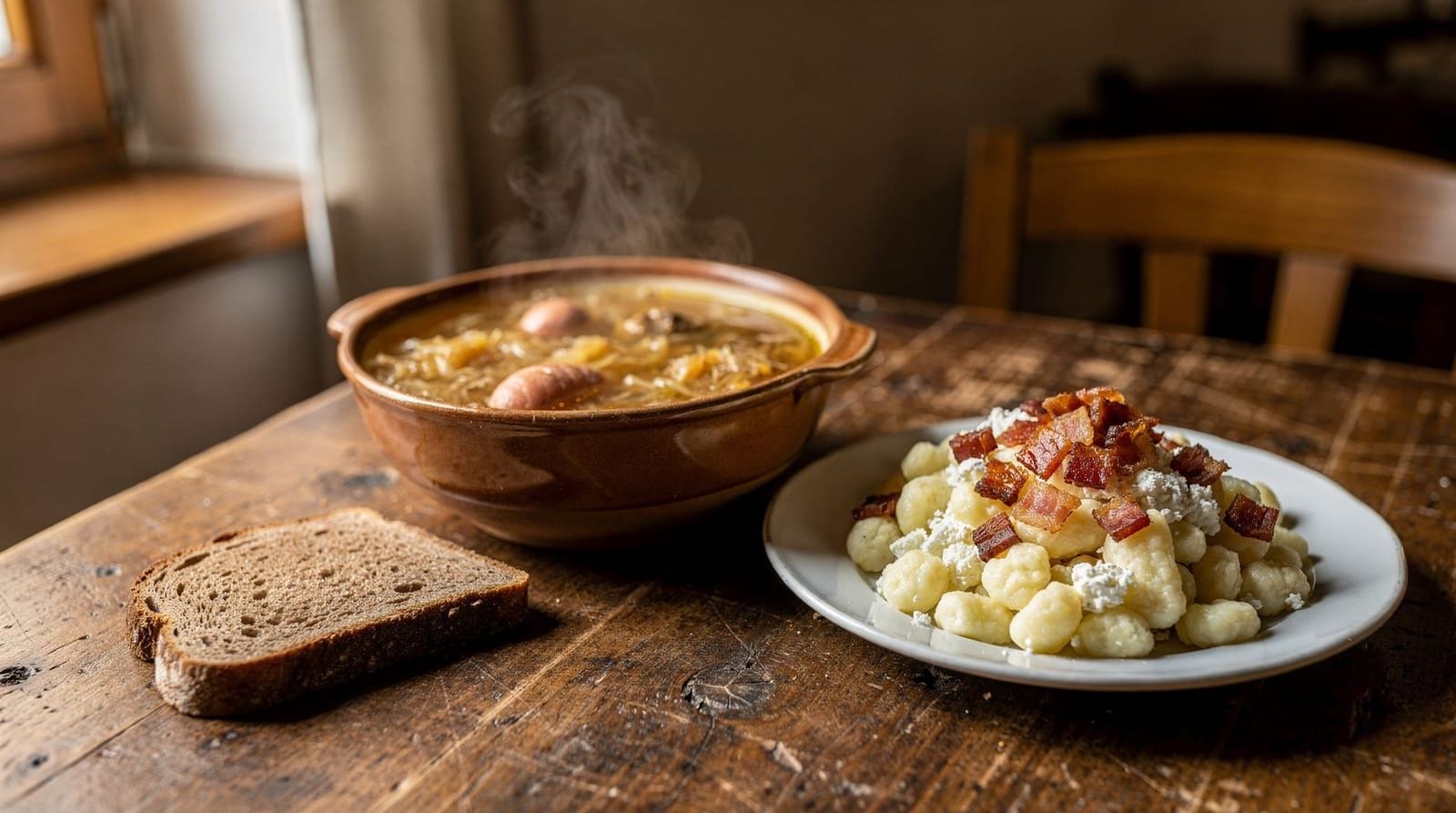
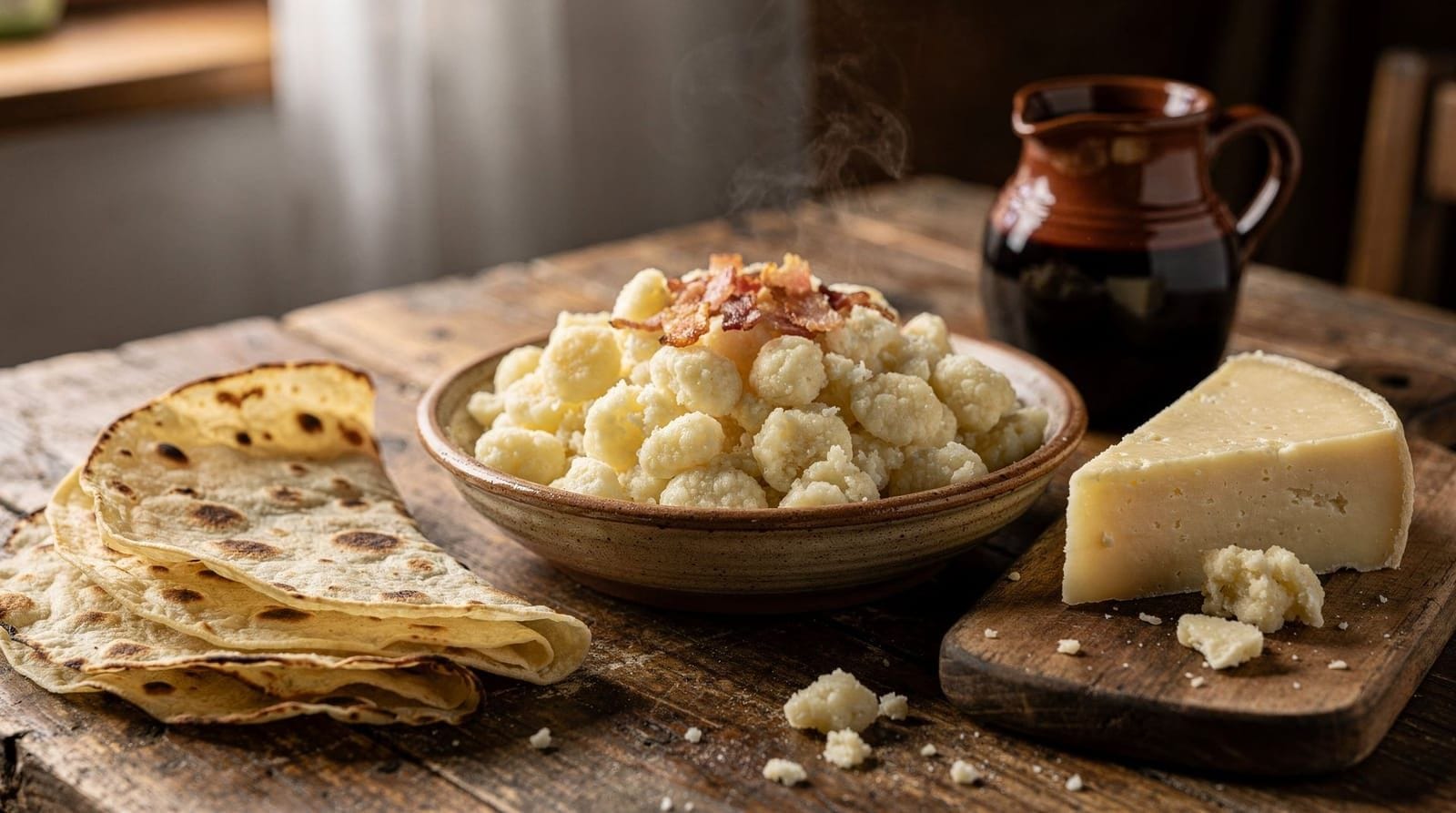
Slovak Pub is the most straightforward answer to “where do I eat Slovak food without spending much?” It sits on Obchodná Street, the pedestrianised shopping street north of the old town pedestrian zone, about a five-minute walk from Hlavné námestie. The interior is large, deliberately folksy — wooden beams, folk costumes behind glass, that kind of thing — and the menu is a thorough inventory of Slovak cooking: bryndzové halušky (potato dumplings with sheep cheese and bacon), kapustnica (sauerkraut soup), rezeň (schnitzel), holubky (stuffed cabbage), lokše (potato flatbreads). See the traditional Slovak food guide for details on what to order.
Prices are accessible: soups at €3–5, mains at €8–14. The lunchtime denné menu (11:00–14:30) offers soup plus a main for around €8. Portions are large. Quality is consistent — not exceptional, but this is reliable, honest cooking from a kitchen that knows the dishes well. The restaurant sources from Slovak producers and the menu says so, which is not universal in the old town area.
Slovak Pub fills up quickly at dinner and weekend lunch; booking is worthwhile. Credit cards accepted.
Bratislavský Meštiansky Pivovar (Bratislava Burgher Brewery) — Dunajská Street
The Burgher Brewery produces its own unfiltered lager on the premises, which already puts it in a different category from most restaurants. The food is built around what goes with beer: rezeň, pork knuckle (koleno), grilled sausages, goulash, hearty soups. It is not refined cooking but it is done with competence and the quality of the main ingredient — pork, carefully sourced — shows. The rezeň here is among the better versions available in the city: thin-pounded, properly crumbed, golden and crisp.
The brewery-restaurant setting suits certain meals more than others. It is an excellent choice for a solo lunch at the bar with a half litre of their lager and a plate of schnitzel, or for a group dinner where the emphasis is on drinking together and the food is generous background to the conversation. Mains run €9–15. The place fills rapidly after 18:00 — book if you are coming for dinner in a group.
Čajovňa u Zlatého Draka (Tea House at the Golden Dragon) — Old Town lanes
The Golden Dragon tea house occupies a quiet first-floor space in the old town and offers something quite different from the pub-and-schnitzel circuit: an extensive menu of teas from across Asia, light savoury foods (soups, rice dishes, noodles, spring rolls), and a calm, unhurried atmosphere. It is popular with students and younger Bratislavans and functions as much as a social space as a restaurant. A full light meal here costs €8–12 per person.
It is not a traditional Slovak restaurant, and it does not pretend to be. But it fills a genuine gap: a clean, affordable, relaxed option in the old town that does not feel like a tourist operation, and where you can spend an hour over tea without anyone rushing you to leave.
GetYourGuideBratislava guided culinary tourCheck availability →Mid-range: €15–30 per person
Zylinder — Hviezdoslavovo námestie
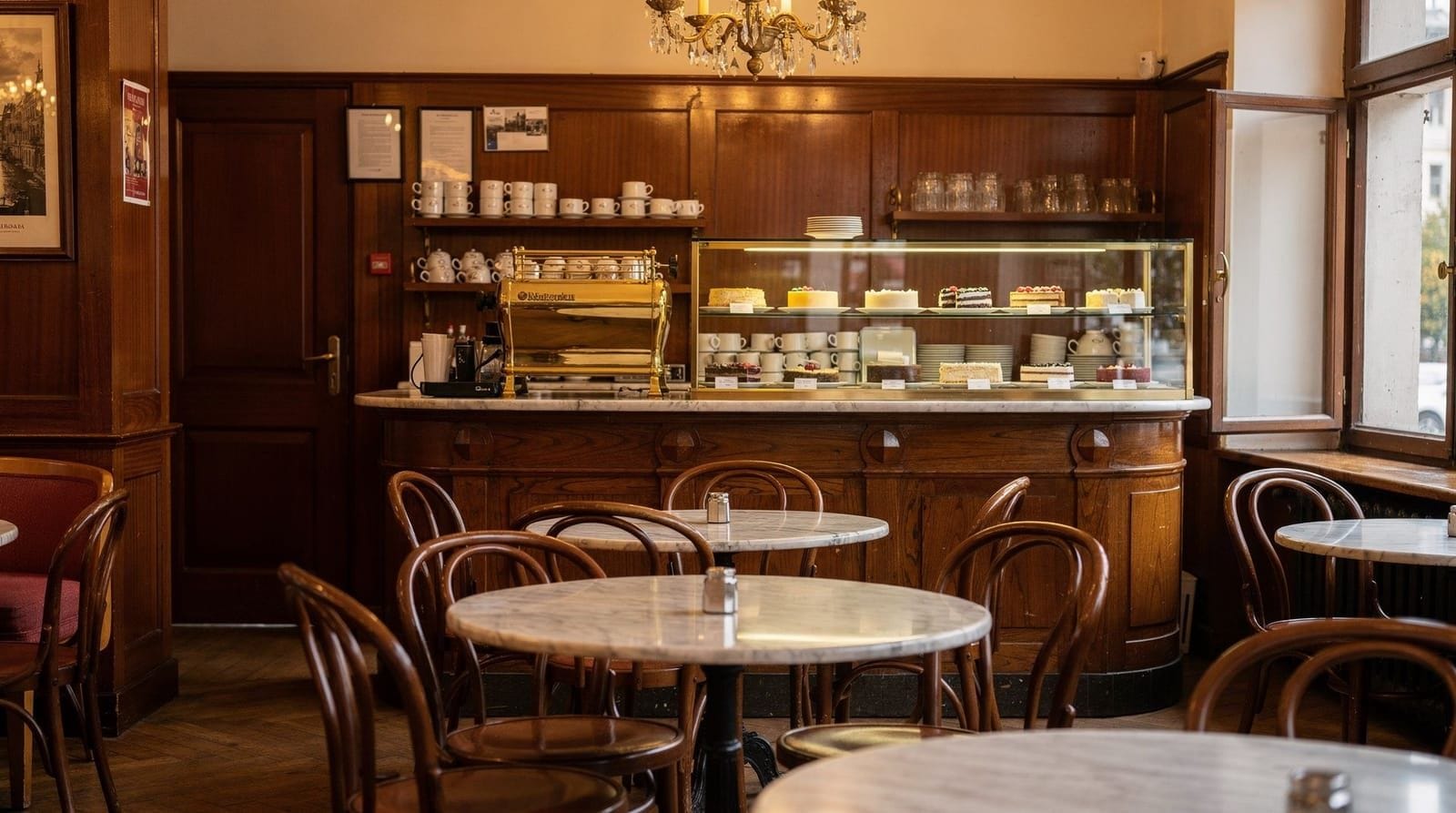
Zylinder is one of the most reliably good mid-range restaurants in Bratislava and one of the most atmospheric. The dining room occupies a high-ceilinged Art Nouveau interior on Hviezdoslavovo námestie, the theatrical square between the Slovak National Theatre and the SNP Bridge. The architecture — ornate plasterwork, tall arched windows, period furniture — is a genuine setting rather than a designed one, and it makes the meal feel like something worth dressing up for without actually requiring it.
The menu leans toward game and traditional Central European dishes at a slightly elevated level: venison goulash, roast duck, wild boar in various preparations, svíčková (beef sirloin in cream sauce with bread dumplings), and seasonal specials that shift through the year. The kitchen is clearly making an effort — sourcing is more deliberate than at most old town restaurants, and the execution is a step up from the standard pub kitchen. Mains run €15–25. The wine list covers both Slovak and Austrian producers, which makes sense given the proximity.
Book in advance for weekend dinner. The restaurant also does a lunch service that is significantly less busy than the evening and slightly lower priced.
Pálffy Palác restaurant — Zámočnícka Street
The restaurant inside Pálffy Palác is one of the quieter addresses in the old town — less visible from the main tourist circuit, and consequently less busy. The building is a genuine Baroque palace from the 18th century and the dining room reflects that history with vaulted ceilings, period artwork, and an overall sense of occasion that is more restrained than theatrical. The cooking is Slovak-European: traditional dishes given some contemporary polish, alongside several dishes that draw on the building’s Austro-Hungarian past.
Service is formal by Bratislava standards and the kitchen is reliable if not particularly adventurous. Mains run €14–22. It is a good choice for a business lunch or for visitors who want a more elegant setting than a pub without committing to a full special-occasion spend.
Leberfinger — Rybárska brána
Leberfinger occupies a spot on Rybárska brána, the short street that connects the old town pedestrian zone to the Danube waterfront near the SNP Bridge. The restaurant has been here in various forms for over a hundred years — the name appears in Bratislava records from the early 20th century — and the current kitchen cooks a menu of Slovak and Central European classics with somewhat more attention to presentation and sourcing than the average brewpub.
Duck with lokše (potato flatbreads) is one of the better versions available in the city. Grilled trout from Slovak mountain streams, venison steak, seasonal mushroom dishes in autumn. The riverside proximity makes the terrace attractive in summer. Mains €12–18. The restaurant also offers a good selection of Slovak wines, including bottles from the Small Carpathians producers that do not appear on every old town wine list. Booking advisable for dinner.
Francúzska reštaurácia — Old Town
The French restaurant in the old town works from a menu that draws on French technique applied to Central European ingredients: slow-cooked meats, cream-based sauces, careful attention to stock and reduction. It is not a rigidly French menu — Slovak ingredients and dishes appear throughout — but the culinary approach is clearly influenced by classical cooking in a way that distinguishes it from most of its neighbours.
The space is smaller and quieter than the larger restaurants on Hviezdoslavovo námestie, which suits certain meals well. Mains run €16–26. It is a reliable choice for a dinner where the food should be the centre of attention rather than background to the setting.
Kolkovna Bratislava — Kolárska Street
Kolkovna is a Czech chain that operates upscale Czech pub restaurants across Central Europe; the Bratislava branch on Kolárska Street is one of the better-executed locations. The focus is on Czech beer (Pilsner Urquell, Bernard, and others on draught) and the food that goes with it — svíčková, roast pork knee, duck with dumplings and sauerkraut, Moravian-style beef goulash. The kitchen is more careful than the setting suggests, and the quality of the ingredients is notably higher than at a standard pub.
It is not a specifically Slovak restaurant and does not claim to be, but the distinction matters less in practice than on paper: Bratislavans eat svíčková and Czech beer without a second thought, and the line between Czech and Slovak pub food has always been blurry. Mains €12–20. Good for a group dinner that covers varied tastes, as the menu is broad.
GetYourGuideBratislava taste of Slovakia private walking tourCheck availability →Special occasion: €30 and above per person
Albrecht — Mudroňova Street (castle area)
Albrecht is the restaurant to go to when the meal itself is the occasion. Located in a restored villa in the castle district above the old town, it operates at a level noticeably above anywhere else in central Bratislava: tasting menus, wine pairings, serious technique applied to seasonal Slovak ingredients. The space is elegant without being formal in an off-putting way, and the service is professional without being stiff.
The menu changes with the season and is not published far in advance — the kitchen works with whatever is genuinely good in Slovak produce markets at a given time of year, which means different visits produce different meals. A full tasting menu runs €60–90 per person before wine. Shorter options are available. Reservations are essential and should be made well ahead, particularly for weekends.
It is worth noting that Albrecht is a fifteen-minute walk uphill from the old town pedestrian area (or a short taxi ride). The detour is worthwhile for the right meal.
Maasman — Old Town
Maasman operates as a bistro rather than a formal restaurant, which in practice means a short, focused menu that changes frequently, informal service, and an atmosphere that is deliberately relaxed without sacrificing quality. The kitchen is small and makes careful choices about what it cooks — perhaps eight to ten mains on any given evening, based on what the sourcing allows. The cooking is modern European with clear Slovak influence.
It has developed a quiet local following among Bratislavans who take food seriously and are less interested in setting or ceremony than in what arrives on the plate. Mains €20–32. The wine list is short but well chosen and skews toward Slovak and Austrian natural producers. Booking required.
Cafés that also serve lunch
Kávičkáreň — Old Town
Kávičkáreň is primarily a coffee shop — one of the better ones in the old town — but it serves a daily lunch menu of soups and light mains that is worth knowing about if you are on a budget or want a lighter midday meal. The coffee is well made, the space is calm and unhurried, and the lunch prices (€6–9 for a main course) are among the lowest in the pedestrian zone. It functions as a straightforward neighbourhood café that happens to be in a tourist area.
Café Studio Club — Laurinská Street
Studio Club occupies the ground floor of an old town building on Laurinská Street and doubles as a gallery space and event venue. During the day it operates as a café with a lunch menu — salads, sandwiches, daily hot specials — and in the evenings shifts toward drinks and occasional cultural events. The food is simple but competent and the prices are reasonable (€7–12 for a lunch main). The atmosphere is informal and somewhat more local in feel than many spots in the same street.
GetYourGuideBratislava vegan food tourCheck availability →Practical information for eating in the old town
Reservations
The restaurants at the upper end of the market — Albrecht, Maasman, Zylinder for weekend evenings — require booking, often well in advance. Modrá Hviezda is reliably full by 19:30 on any evening from Thursday to Sunday. Slovak Pub is large enough that walk-ins usually work, but a booking is prudent for groups of more than four.
Most restaurants accept reservations by phone or email; an increasing number use online booking systems (Restu.sk covers many Bratislava restaurants). Do not count on booking a decent restaurant in the old town spontaneously on a Friday or Saturday evening.
Payment
Credit cards are widely accepted throughout the old town. Visa and Mastercard work everywhere; American Express is hit or miss at smaller places. Contactless payment is common. Cash is still useful for small purchases and market stalls but is not necessary for sit-down dining.
Tipping
A 10% tip is standard at Bratislava restaurants and is genuinely appreciated. It is not always included in the bill, though some higher-end restaurants add a service charge. The easiest approach is to round up to the nearest round number when paying — for a €27 bill, leaving €30 is entirely appropriate.
Vegetarian and vegan options
The situation for vegetarians has improved markedly over the past five years. Dedicated vegetarian options now appear on most mid-range menus. Slovak Pub has a small vegetarian section; Zylinder usually has two or three vegetarian mains. Cafés and modern bistros are generally better than traditional Slovak restaurants for vegetarian eating — the cafés and coffeehouses guide covers the café side of this in more detail. Vegan options are fewer but available in the more modern establishments — Maasman and similar bistro-style places tend to be more accommodating than pub kitchens.
Opening hours
Most restaurants in the old town open for lunch from 11:00 or 11:30. Kitchen closing times cluster around 21:30–22:00, with the dining room itself open until 22:30 or 23:00. Cafés typically open from 08:00 or 09:00. Sunday can be more restricted at some venues — it is worth checking ahead if Sunday lunch or dinner is the specific plan.
Which area of the old town to aim for
The practical geography of old town dining breaks down roughly as follows:
Hlavné námestie and immediate surroundings: the most visible and most tourist-facing. Prices are higher and quality is more variable. A few restaurants are genuinely good, but the ratio of mediocre-to-excellent is unfavourable compared to the streets one block away. If you are eating here, check online reviews specifically and recently before you sit down.
Laurinská Street and Rybárska brána: this north–south axis between the main square and the Danube waterfront holds several of the better mid-range restaurants (Leberfinger, several wine bars) and has more local foot traffic than the main square. The quality floor is higher.
Františkánske námestie (Franciscan Square): a quieter square east of the main pedestrian zone, with a slightly more residential feel and some reliable café options. Less tourist-focused.
Hviezdoslavovo námestie: the boulevard between the Slovak National Theatre and the SNP Bridge is restaurant-dense and includes some of the old town’s best mid-range options (Zylinder). In summer the terrace dining along this square is atmospheric.
Castle district (Beblavého Street area): the narrow street climbing toward Bratislava Castle holds Modrá Hviezda and a handful of quieter restaurants. Slightly more effort to reach from the main pedestrian zone but consistently worth it. If you are visiting the castle, combining it with lunch at Modrá Hviezda on the way up or down is a natural pairing. The Bratislava City Card covers castle entry and reduces the cost of the outing if you are visiting multiple attractions.
If you are planning a food tour of the old town that covers multiple stops, the logical walk starts near Slovak Pub on Obchodná, cuts through the pedestrian zone past Hlavné námestie, and works down through the Rybárska brána area toward the waterfront — covering the budget, mid-range, and wine-bar options in roughly an hour of walking.
GetYourGuideBratislava Miletichka market food tour with tastingsCheck availability →Frequently asked questions about restaurants in the Bratislava old town
Is it worth booking in advance or can I walk in?
For budget restaurants (Slovak Pub, Bratislavský Meštiansky Pivovar): walk-ins usually work, especially at lunch and on weekdays. For mid-range restaurants on weekends (Zylinder, Leberfinger, Pálffy Palác): booking is strongly advisable, particularly for dinner. For Albrecht and Maasman: always book, at least two to three days ahead and further for weekend evenings.
What is the best time of day to eat in the old town?
Lunchtime (12:00–14:00) offers the best value through the denné menu system — a two-course lunch at most mid-range restaurants costs €8–12, roughly half the evening price for similar food. It is also the least busy period, which makes walk-ins more feasible. Dinner at popular restaurants requires more planning but the atmosphere is generally better in the evenings. The budget guide has a full breakdown of what a day’s eating costs at different comfort levels.
Are there restaurants with views over the Danube?
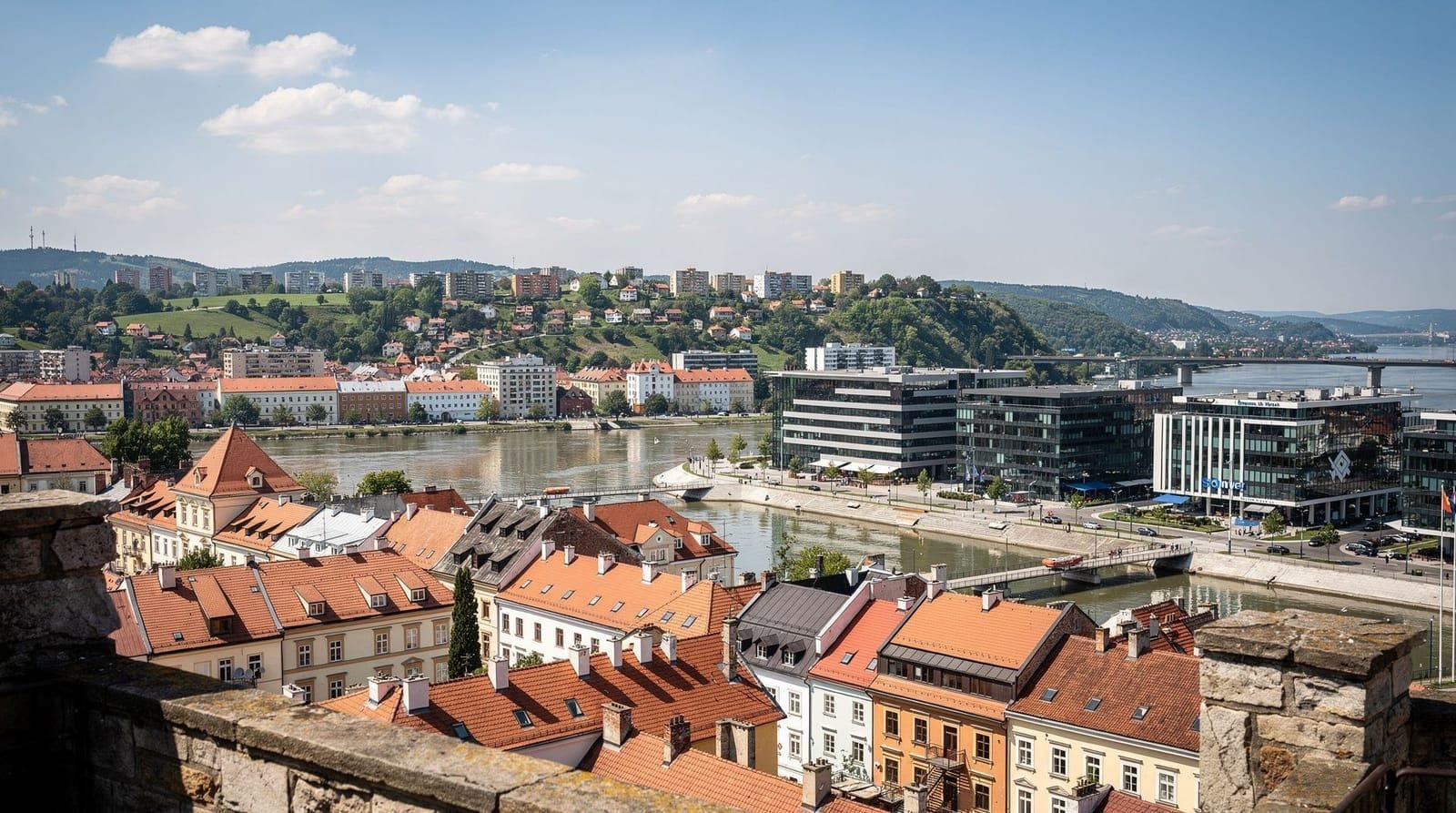
Leberfinger on Rybárska brána is close to the waterfront and has a terrace that faces toward the river in summer. The UFO restaurant on top of the SNP Bridge offers the highest position with river views from both directions, though the food is secondary to the location — see the UFO observation deck guide for details. Several rooftop terraces on hotels near the old town also offer evening river views.
What do locals actually eat in the old town?
Bratislavans who work in the old town eat the denné menu at whatever restaurant is nearby and affordable — Slovak Pub, the Burgher Brewery, and various canteen-style spots on the streets east of the pedestrian zone. For dinner, locals tend to avoid the main tourist strip and favour the streets behind it: Laurinská, Beblavého, the Franciscan Square area. The distinction between “tourist restaurant” and “local restaurant” is less about the name than about location and price point — anything on Hlavné námestie with a photo menu is probably not where the locals eat.
How does Bratislava’s restaurant quality compare to Vienna or Prague?
Honest answer: a step below Vienna at the top end and broadly comparable to Prague at the mid-range. The best restaurants in Bratislava (Albrecht, Maasman) are serious and would hold their own in a larger city, but the density of excellent options is lower than in either Vienna or Prague. What Bratislava offers that its neighbours do not is price: a meal that would cost €80 per person in Vienna costs €35–45 here for equivalent quality. The Bratislava vs Vienna and Bratislava vs Prague comparisons cover this in more detail.
What should I eat if this is my only meal in Bratislava?
If you have one meal, make it bryndzové halušky at a kitchen that takes it seriously — Modrá Hviezda on Beblavého Street is the most reliable choice. If you want a full Slovak meal with multiple courses, Slovak Pub on Obchodná Street is the most accessible option that covers the range. For a memorable meal at a special-occasion budget, Albrecht in the castle district is the benchmark. See the one-day Bratislava itinerary for a suggested food sequence that fits within a day visit.
Are the restaurants in the Christmas market period worth visiting?
The Christmas markets run from late November through December in the main squares, and the market food — lokše with duck fat, kapustnica soup served from large pots, mulled wine (varené víno), trdelník — is genuinely worth trying as street food. For sit-down dining during the market period, reservations are more important than at other times of year as the city fills with day visitors. Zylinder and Modrá Hviezda are both atmospheric in winter and worth booking if you are visiting in December.
Are there good restaurant options near the wine region for a day trip?
If you are combining old town dining with a trip to the Small Carpathians wine region, several wineries in Pezinok and Modra run their own restaurants — Elesko Winery near Pezinok pairs a design-led tasting room with a full kitchen. Back in the old town, Leberfinger and Pressburg Wine Bar both carry a strong selection of Small Carpathians producers if you want to taste the region without leaving the city.
Bratislava food experiences on GetYourGuide
Verified deep-linked GetYourGuide tours. Book through these links and we earn a small commission at no cost to you.