Bratislava Christmas markets 2026: the complete guide
Bratislava in December is not Prague. It’s not Vienna either. The markets are smaller, the queues shorter, and the mulled wine costs half as much. If you’ve come from a Western European capital expecting a Disney-grade light spectacular, you might feel the scale is modest. But if you arrive open to a genuinely Central European Christmas atmosphere — cobblestones, a medieval gate overhead, a glass of punč warming your hands — you’ll leave wondering why nobody talks about this place in November.
This guide covers everything you need to know to make the most of Bratislava’s Christmas markets in 2026: exact dates, locations, what to eat and drink, how to time your visit to avoid the weekend rush, and how to bolt on the Vienna markets if you want a comparison.
At a glance
| Where | Hlavné námestie and Hviezdoslavovo námestie, Old Town |
| Dates | Around late November to 6 January |
| Cost to enter | Free — pay only for food, drink and crafts |
| Time needed | 2–3 hours for both squares |
| Getting there | 15–20 minute walk from Bratislava hlavná stanica, or tram/bus |
| Best time to go | Weekday mornings, 10:00–12:30 |
Dates and opening times
The 2026 Christmas markets in Bratislava typically run from late November through early January — historically from around 27 November through 6 January (Epiphany). Exact 2026 dates will be confirmed by Bratislava city around October, but based on every previous year, opening at the end of the last full week of November is a safe assumption.
Opening hours are generally:
- Sunday to Thursday: 10:00–21:00
- Friday and Saturday: 10:00–22:00
The market on Hlavné námestie (Main Square) sometimes stays open a little later on weekends in early December, especially during the first two weekends when footfall is highest.
The two main locations
Hlavné námestie — the heart of it
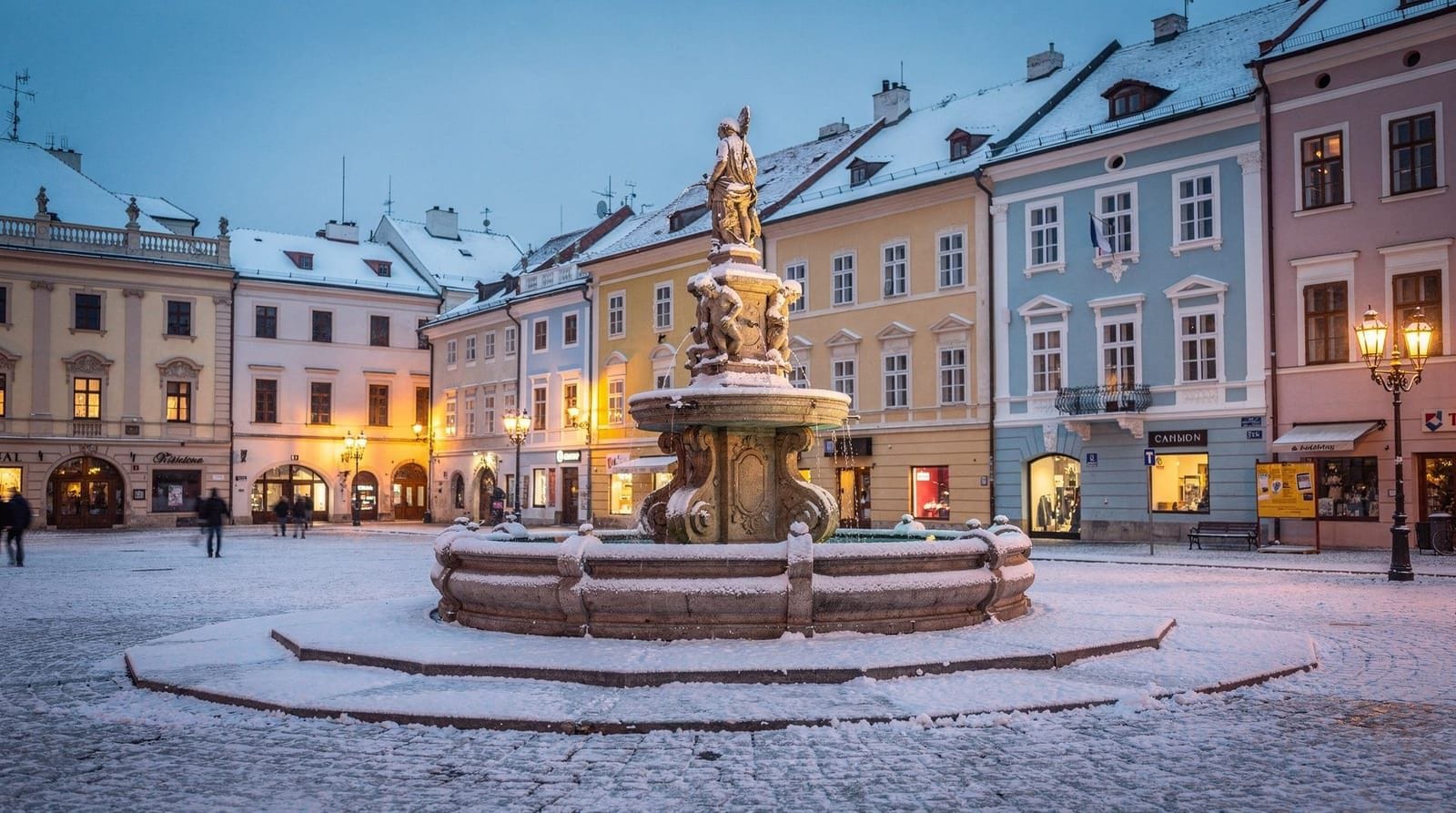
The primary market occupies Hlavné námestie, Bratislava’s Old Town main square. This is where you find the decorated Christmas tree, the nativity scene, and the densest cluster of wooden stalls. The square is compact — you can walk through it in ten minutes at a stroll — but that’s part of the charm. The Fontána Rolanda (Roland’s Fountain) in the centre gets a wreath of lights, and Stará radnica (the Old Town Hall) provides the stone backdrop.
Stall count is typically around 60–70. Most sell crafts: wooden ornaments, amber jewellery, hand-painted ceramics, linen tablecloths. A smaller number sell food and drink, which is where you want to spend your time and money.
Hviezdoslavovo námestie — the secondary square
About a five-minute walk from Hlavné námestie toward the SNP Bridge, Hviezdoslavovo námestie (usually shortened to Hviezdoslavo) runs a companion market that’s a little more relaxed and slightly less craft-heavy. This one sits beneath the Slovak National Theatre and has a prettier promenade feel. It’s also where you’re more likely to find a seat, which matters after an hour of standing in the cold.
For the full Old Town walking route that connects both squares and the surrounding landmarks, see our guide — it works just as well in December as in summer.
What to eat
Slovak Christmas market food is not Instagram-optimised. It’s honest, filling, and built for temperatures that drop to -3 °C or lower by January. Prices below are approximate 2026 estimates based on recent years.
Lokše (2–3 €): Thin potato pancakes, usually filled with sauerkraut or poppy seed paste, folded in paper. The savoury sauerkraut version is the classic. If you eat nothing else at the market, eat lokše.
Kapustnica (4–6 €): Traditional Slovak Christmas soup — sauerkraut broth with smoked sausage, dried mushrooms, and prunes. Hearty. Served in a bread bowl at some stalls.
Trdelník (3–4 €): This one is contested. Trdelník is actually a Czech and Hungarian pastry that has colonised Slovak markets by popular demand. Cinnamon-sugar tube of dough, cooked on a rotating spit. Worth trying once; skip the versions stuffed with ice cream or Nutella.
Langoš (3–4 €): Deep-fried flatbread with sour cream and cheese. Slovak fast food at its most unapologetic. Excellent when it comes straight off the oil.
Klobásy (4–5 €): Grilled sausages with mustard and a bread roll. Simple, good, exactly what you want at 19:00 on a cold Tuesday.
For a deeper look at Slovak food traditions, our guide to traditional Slovak food covers the full picture beyond market snacks.
What to drink
Punč / horúci punč (3–4 €): Hot fruit punch — typically a red wine base with spices and citrus. The Slovak version is a little sweeter and less alcoholic than Austrian Glühwein. Every stall has its own recipe; try a couple.
Mulled wine (3–4 €): Some stalls offer a more standard mulled wine alongside the punč. It’s rarely as spiced as the Austrian equivalent, which some people prefer.
Medovina (3–4 €): Hot honey wine. Sweeter and lower in alcohol. Good if you’re going slow or mixing it in between stronger pours.
Beer (2–3 €): Because Slovak culture does not stop drinking beer in winter. Several stalls serve it warm (horúce pivo, not always recommended) or cold (a very determined choice in December).
Compare this with Vienna: Glühwein at the Wiener Christkindlmarkt at Rathausplatz typically runs 4.50–6 €, and the deposit cup is extra. Bratislava is genuinely cheaper, and the atmosphere — while smaller — is less overwhelmed by tourist-to-stall ratios.
How Bratislava compares to Vienna and Prague
Bratislava’s markets are smaller and more local than either Vienna or Prague. That’s the honest summary.
Vienna has 20+ markets spread across the city, with Rathausplatz alone drawing hundreds of thousands of visitors and its own ice rink and stage. Prague’s Old Town Square market is relentlessly crowded by mid-December, with queues at every stall. Both are beautiful; neither is relaxed.
Bratislava has two main locations and a city of 500,000. On a weekday morning in early December, you can walk through Hlavné námestie and actually see the decorations rather than other people’s coats. The trade-off is obvious: you won’t find 200 varieties of ornament, and the craft quality is variable. But if you’re travelling partly to feel like a local rather than a tourist, Bratislava’s market wins on that criterion.
The most practical comparison is a combined visit — see below. Read our full Bratislava vs Vienna comparison for the broader picture beyond the markets.
GetYourGuideBratislava Christmas market tour with a local guideCheck availability →When to visit to avoid the crowds
Weekend afternoons from 14:00–19:00 are the busiest windows, particularly the first two weekends of the market and the weekend before Christmas. Avoid these if you’re sensitive to crowds.
Best times to visit:
- Weekday mornings, 10:00–12:30: the square is largely empty
- Weekday lunchtimes: quiet, good for eating without waiting
- Early evenings Sunday–Thursday: a pleasant buzz without being overwhelming
The single busiest day of the season is typically the last Saturday before Christmas. Do not go then unless you are specifically there for the atmosphere of a packed square.
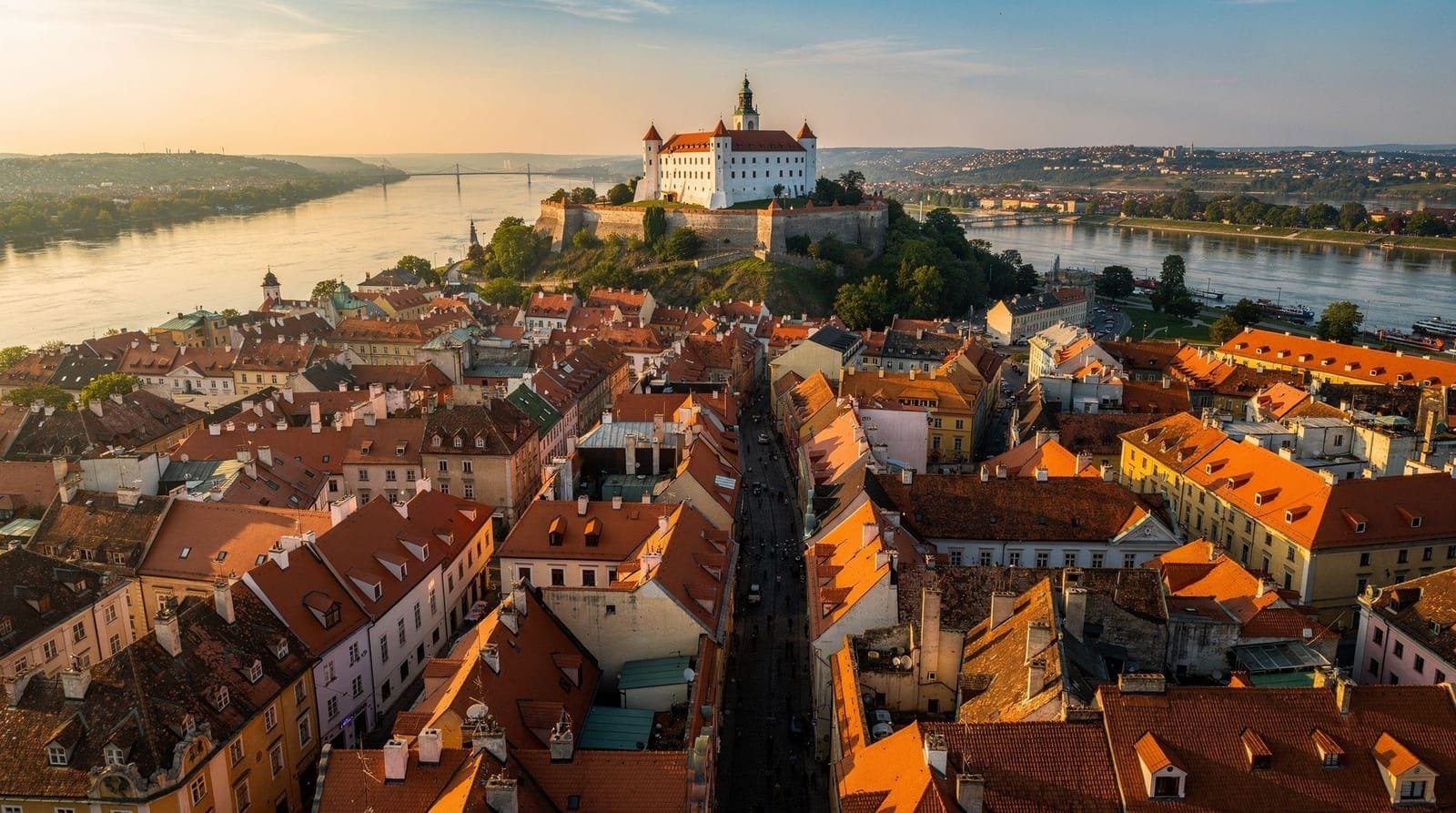
If you’re combining with a day in Bratislava on a tight schedule, mornings at the market followed by an afternoon visit to Bratislava Castle gives you a full and well-paced day.
Combining with the Vienna Christmas markets
This is one of the most natural combinations in Central Europe. Vienna is roughly 80 km away — about 1 hour by train from Bratislava hlavná stanica, or just over an hour by the Twin City Liner boat in summer (not running in December).
The typical two-day pattern:
- Day 1: Bratislava markets, Old Town, castle, dinner
- Day 2: train to Vienna, Rathausplatz market, back to Bratislava by evening (or stay overnight)
Alternatively, do it as a day trip from a Vienna base: Vienna in the morning, train to Bratislava for the afternoon and evening market, train back. This works well logistically and gives you a direct price comparison — you’ll immediately notice the Bratislava punč is about half the price.
Our Vienna day trip guide covers trains, logistics, and what to prioritise in a short visit. The Bratislava–Vienna combo itinerary also works well as a Christmas market version.
GetYourGuideVienna and Bratislava Christmas markets 3-day tourCheck availability →What to expect weather-wise
December in Bratislava is cold and sometimes grey. Average temperatures:
- Late November: 2–8 °C
- December: -2–5 °C
- Early January: -4–4 °C
Snow is not guaranteed but the city gets a dusting most years, usually in January. A snowy Hlavné námestie with the Christmas tree lit is genuinely beautiful and worth the extra layers.
Dress in real winter gear: thermal base layer, insulated mid-layer, waterproof outer, decent boots. Standing at a market stall for two hours in fashion shoes is a specific kind of misery.
Practical tips
Getting there: Most visitors arrive at Bratislava hlavná stanica by train from Vienna, Budapest, or Prague. From the station, the Old Town is a 15–20 minute walk or a short tram/bus ride. See our getting around Bratislava guide for transit options.
Bratislava City Card: If you’re spending more than a day, the city card covers public transport and offers discounts at museums — worth it if you plan to do the castle and a museum or two around the market visit.
Currency: Slovakia uses the euro. All stalls at the market accept cash; some accept card but don’t rely on it. Have small notes.
Photography: The markets are best photographed at dusk (around 16:00–17:00 in December, when it gets dark early). The transition from day to golden-hour to full dark takes about 45 minutes and the light at that window is genuinely lovely.
Budget: For a half-day at the market including a full meal and three drinks, budget around 20–30 € per person. Full daily travel budgets for Bratislava generally range 50–90 € depending on accommodation and dining choices — see our Bratislava budget guide for the full breakdown.
After the market: where to eat and drink nearby
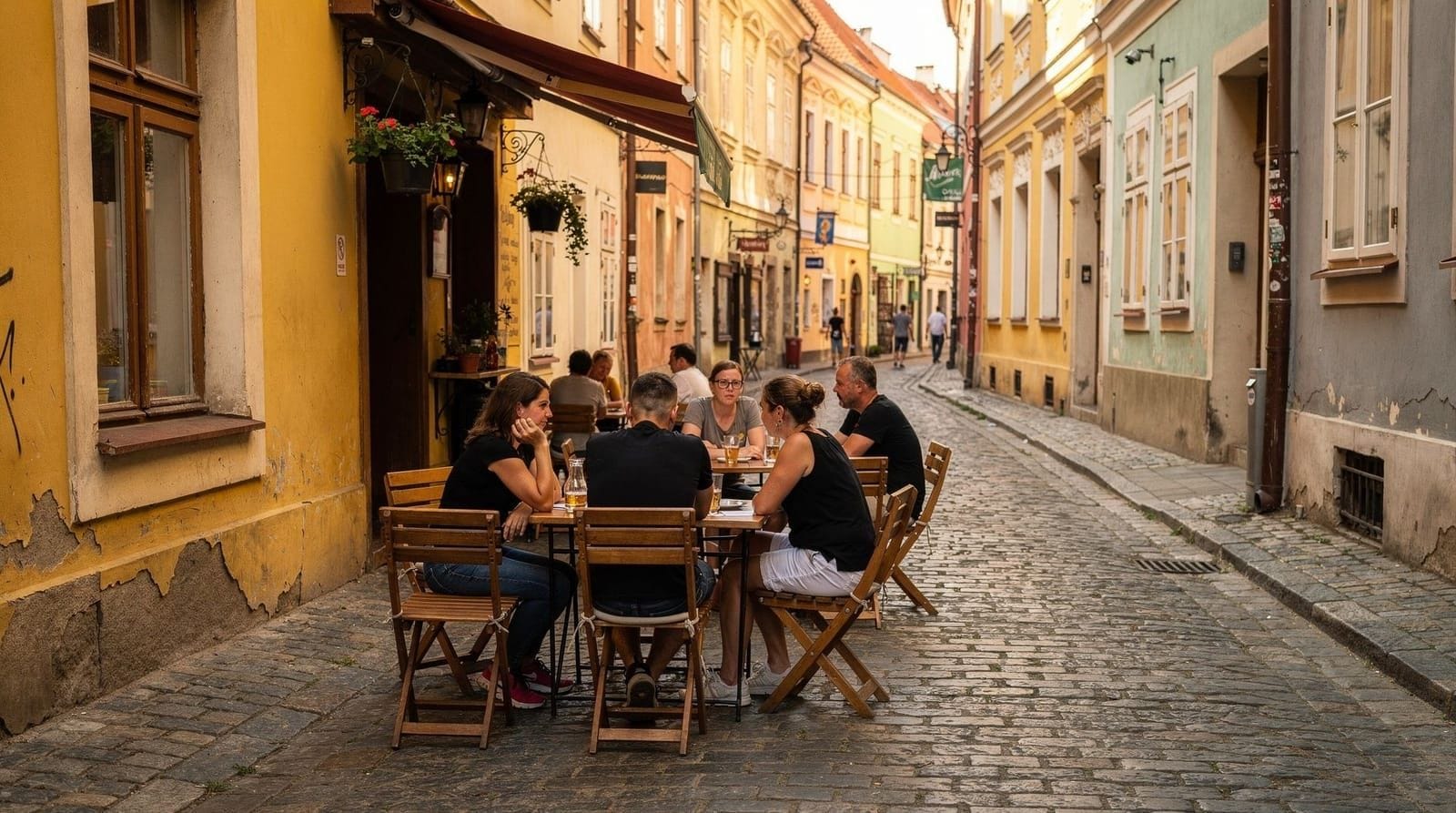
The Old Town has no shortage of good places to continue the evening after the market stalls close. A few honest recommendations:
Bratislavský Meštiansky Pivovar on Drevená ulica: a brewpub a short walk from Hlavné námestie, with house-brewed lagers and hearty Slovak food. Reliable and popular without being a tourist trap.
Modrá Hviezda (Blue Star): a restaurant near Michalská brána serving traditional Slovak food in a low-ceilinged, atmospheric setting. Book ahead in December.
Café Mayer on Hlavné námestie: the old-school Austro-Hungarian café on the square itself. Good coffee, cakes, and a seat by the window looking out at the market.
For more options, the best restaurants in the Old Town guide is updated seasonally.
Frequently asked questions about Bratislava Christmas markets 2026
When exactly do the Bratislava Christmas markets open in 2026?
The official 2026 dates will be announced by Bratislava city in autumn, but markets traditionally open in the last week of November — typically 27 or 28 November — and run through 6 January (Epiphany). Hlavné námestie and Hviezdoslavovo námestie both run for the full season.
Are the Bratislava Christmas markets worth it compared to Vienna or Prague?
Yes, for different reasons. If you want scale and spectacle, Vienna wins. If you want a relaxed, genuinely Central European experience with cheaper prices and shorter queues, Bratislava is the better choice. Many visitors combine both: train between the two cities takes about one hour. See the Bratislava vs Vienna guide for a fuller comparison.
How much does mulled wine cost at the Bratislava Christmas markets?
Hot punč (the Slovak version of mulled wine) costs 3–4 € per cup, usually including a small deposit on the cup. This is roughly half the price of Glühwein in Vienna. Standard mulled wine at some stalls is similar. Hot honey wine (medovina) is also typically 3–4 €.
What is the best time of day to visit the Bratislava Christmas markets to avoid crowds?
Weekday mornings from 10:00 to around 12:30 are the quietest. Early afternoon on weekdays is also calm. Weekend afternoons — particularly Saturday afternoons from 14:00 onwards — are the busiest. The last Saturday before Christmas is the single most crowded day of the season. Dusk (around 16:00) is the best time for photographs even if it’s slightly busier.
Can I visit both main market locations in one visit?
Yes easily. Hlavné námestie and Hviezdoslavovo námestie are about a five-minute walk apart through the Old Town. A relaxed visit to both, including food, drink, and a browse of the craft stalls, takes two to three hours. Combining this with a stop at Michalská brána and a walk toward Bratislava Castle makes a full half-day.
Is there an entrance fee for the Bratislava Christmas markets?
No. Entry is free. You pay only for what you eat and drink, and any crafts or gifts you buy. There is no ticketed zone or wristband system.
Is Bratislava cold enough to need serious winter gear at the markets?
Yes. December temperatures average -2 to 5 °C and drop lower by January, and standing outside browsing stalls means you feel the cold more than you would walking briskly. A proper insulated coat, hat, gloves and warm boots matter more than they would for a quick city visit. The Bratislava in winter guide covers what else to pack and what’s realistic to do in the cold beyond the markets.
What else to combine with a market visit
A Christmas market trip rarely fills a whole day on its own, so it pairs naturally with other short activities.
A castle visit. Bratislava Castle stays open through winter (shorter hours), and the terrace views over a snow-dusted Old Town are worth the walk up, even if you skip the museum interior.
A wine-and-food angle. If you’re travelling in late November just as the market opens, it can overlap with the tail end of the autumn wine harvest season in the Small Carpathians — a very different, quieter day trip if the market crowds aren’t your thing.
Budget planning. For the wider trip budget beyond the market itself, the Bratislava budget guide and the budget travel blog post cover realistic daily costs for accommodation and meals in December.
tours.seasonal
Verified deep-linked GetYourGuide tours. Book through these links and we earn a small commission at no cost to you.