Bratislava in winter: what to expect from November to February
Winter is nobody’s first instinct for Bratislava. The summer photos circulate — golden hour over the Danube, outdoor terraces packed with cold beer, river cruises in the heat. November through February, by contrast, gets filed under “maybe next time.”
That’s a mistake, and this guide is here to argue against it.
Bratislava in winter is a quieter, more atmospheric city. The Christmas markets draw crowds in December, yes, but once those wrap up, January and February belong almost entirely to you. Hotel prices drop significantly. The Old Town, compact enough to walk in twenty minutes, looks genuinely beautiful under frost or a thin layer of snow. The restaurants are warmer and more welcoming for it. And if you pick the right few days, the combination of empty cobblestone streets, Gothic spires, and steaming cups of svarené víno feels like something out of a Central European film you can’t quite name.
Here is what you actually need to know before you go.
At a glance
| Temperatures | Roughly -2 to 8°C November–February; colder in Dec/Jan |
| Christmas markets | Around 27 November to 6 January, Hlavné námestie and Hviezdoslavovo námestie |
| Accommodation | Noticeably cheaper outside the market period; cheapest in January/February |
| Daylight | As little as 6–7 hours in December; plan outdoors before 3–4pm |
| Best months | Early December for markets without peak crowds; January/February for value and quiet |
Month-by-month: what to expect
| Month | Typical daytime temp | Crowds | Notes |
|---|---|---|---|
| November | 3–8°C | Low | Mild but grey; markets begin late month |
| December | -2 to 5°C | High (markets) | Busiest and most festive; book ahead |
| January | -2 to 5°C | Very low | Cheapest month; markets over |
| February | -1 to 6°C | Very low | Similar to January, days lengthening |
Temperatures and daylight: the honest numbers
Bratislava winters are cold without being extreme. November is the mildest of the winter months, typically sitting between 3 and 8°C during the day. Expect overcast skies, some fog off the Danube, and the occasional crisp sunny day that makes everything look spectacular.
December and January are the coldest, with daytime highs between -2 and 5°C. Frost is common. Snow falls a few times each winter, though it rarely settles for long — Bratislava’s location in the Pannonian basin means it gets less snow than the Alps or the Tatras. February tends to mirror December but with slightly longer days and occasional early hints of spring.
Daylight is the bigger adjustment. In December, the sun sets around 4pm. That gives you roughly six to seven hours of useful light, depending on cloud cover. Plan accordingly: aim for outdoor sightseeing in the morning and early afternoon, then shift to museums, galleries, and restaurants as the afternoon darkens.
The cobblestones in the Old Town get icy when temperatures drop below zero. Waterproof boots with grip are not optional — they are essential. The streets are pretty, but a fall on wet stone is not part of anyone’s ideal trip.
The Christmas markets: what they are and when they run
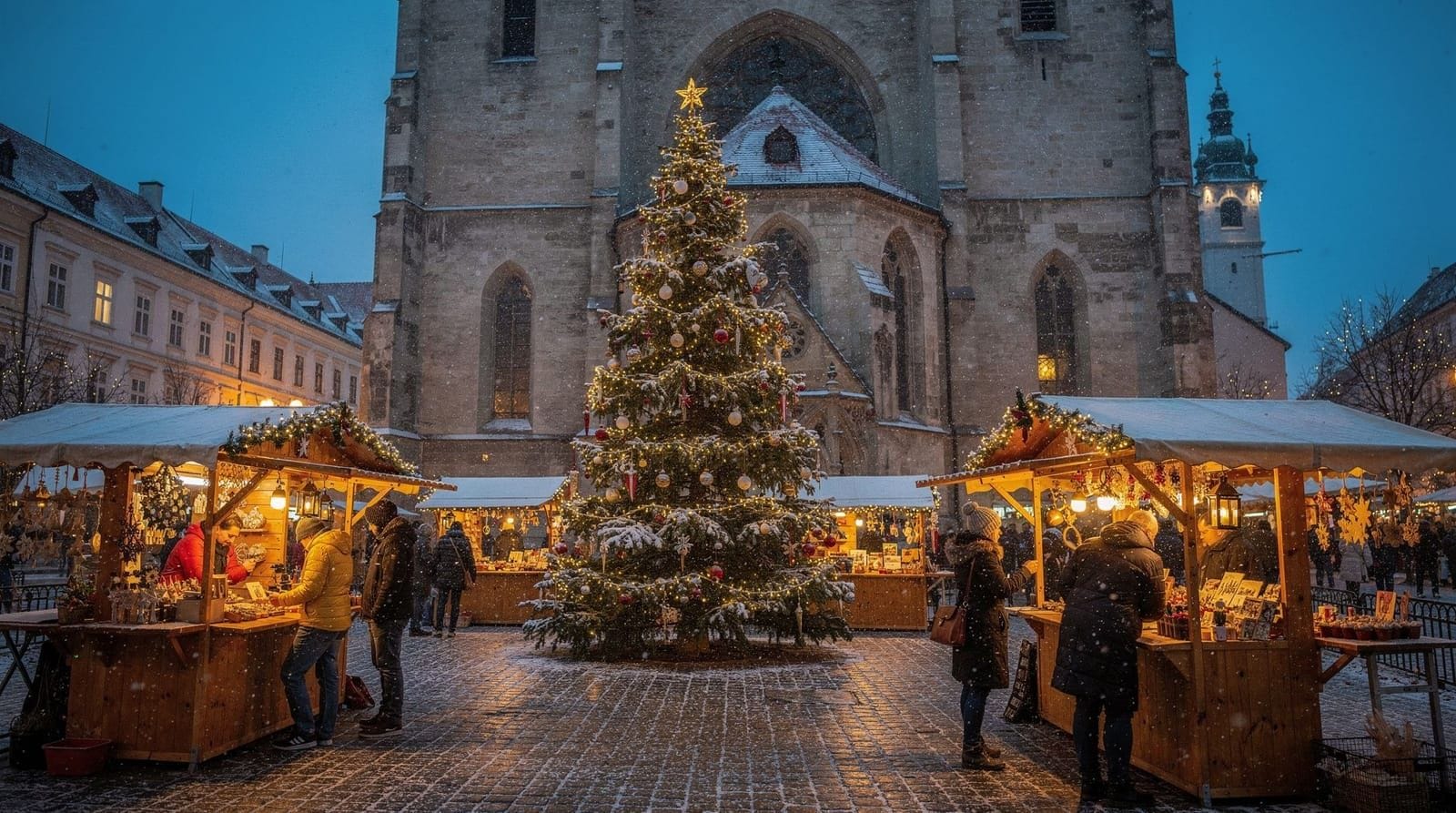
The Bratislava Christmas markets run from around 27 November to 6 January, give or take a few days depending on the year. The main market spreads across Hlavné námestie — the central square at the heart of the Old Town — and extends to Hviezdoslavovo námestie, the long tree-lined boulevard that runs toward the Slovak National Theatre.
The atmosphere is genuinely good. The markets are smaller and less polished than Vienna’s or Nuremberg’s, which is part of the appeal: you get wooden stalls selling local crafts, Slovak food, and mulled wine without the crushing crowds or the ten-euro admission tickets. Entry is free. You wander.
The food stalls are the highlight. Look for:
- Svarené víno — Slovak wine punch, essentially the same as Glühwein, spiced with cinnamon and cloves. Cost is around 2–3 € per cup, served in a ceramic mug you either return for a deposit or keep as a souvenir.
- Lokše — thin potato flatbreads, usually served filled with cabbage, duck, or poppy seed and jam. One of the quintessential Slovak street foods, and one of the better things you can eat standing up in the cold.
- Medovina — honey mead, served warm. Stronger than it tastes, sweeter than you expect.
- Trdelník — the chimney cake you’ll see everywhere. Originally Czech, now universal at Central European markets. Still warm and pleasant on a cold day.
If you want to visit the markets without the peak weekend crowds, aim for a Tuesday or Wednesday in early December. Weekends in late November and mid-December are the busiest periods.
For a deeper look at the markets themselves, see the dedicated Christmas markets guide.
GetYourGuideBratislava Christmas market tour with a local guideCheck availability →What stays open in winter
Most of what makes Bratislava worth visiting operates year-round. The major museums and galleries all maintain regular winter hours, which is good news: indoor attractions become more central to the experience.
Slovak National Gallery is one of the better art collections in Central Europe for its size. The permanent collection spans Slovak fine art from the Baroque period through the twentieth century, plus a decent international section. It’s a proper afternoon’s worth of looking, and one of the few places in the city where you can spend two or three hours without feeling rushed. The building, a converted water barracks by the Danube, is worth seeing in itself. See the Slovak National Museum and Gallery guide for what to prioritise.
Old Town Hall on Hlavné námestie houses the city museum. The Gothic tower is climable (elevator available) and gives one of the better elevated views of the Old Town. Combined ticket covers the museum floors and the tower — worth it on a clear day.
Bibiana — the international house of art for children — is tucked behind Hviezdoslavovo námestie. The exhibitions are thoughtfully designed and work for adults too. It is genuinely one of the most underrated cultural spaces in the city.
Michalská brána (Michael’s Gate) is Bratislava’s only surviving medieval city gate and the weapon museum inside it operates year-round. The gate tower is narrow and steep, but the views from the top over the rooftops of the Old Town are excellent. More on this at the Michalská brána guide.
Blue Church (Church of Saint Elisabeth) — the Art Nouveau landmark a short walk from the Old Town — keeps its standard visiting hours through winter. The pastel blue facade photographs especially well against a grey winter sky. See the Blue Church guide.
St Martin’s Cathedral, where Hungarian kings were historically crowned, is open through winter with slightly reduced afternoon hours. The interior is darker and more atmospheric in winter light. Details in the St Martin’s Cathedral guide.
The Old Town walking guide covers most of these on a single route that works equally well in cold weather.
What changes or reduces hours in winter
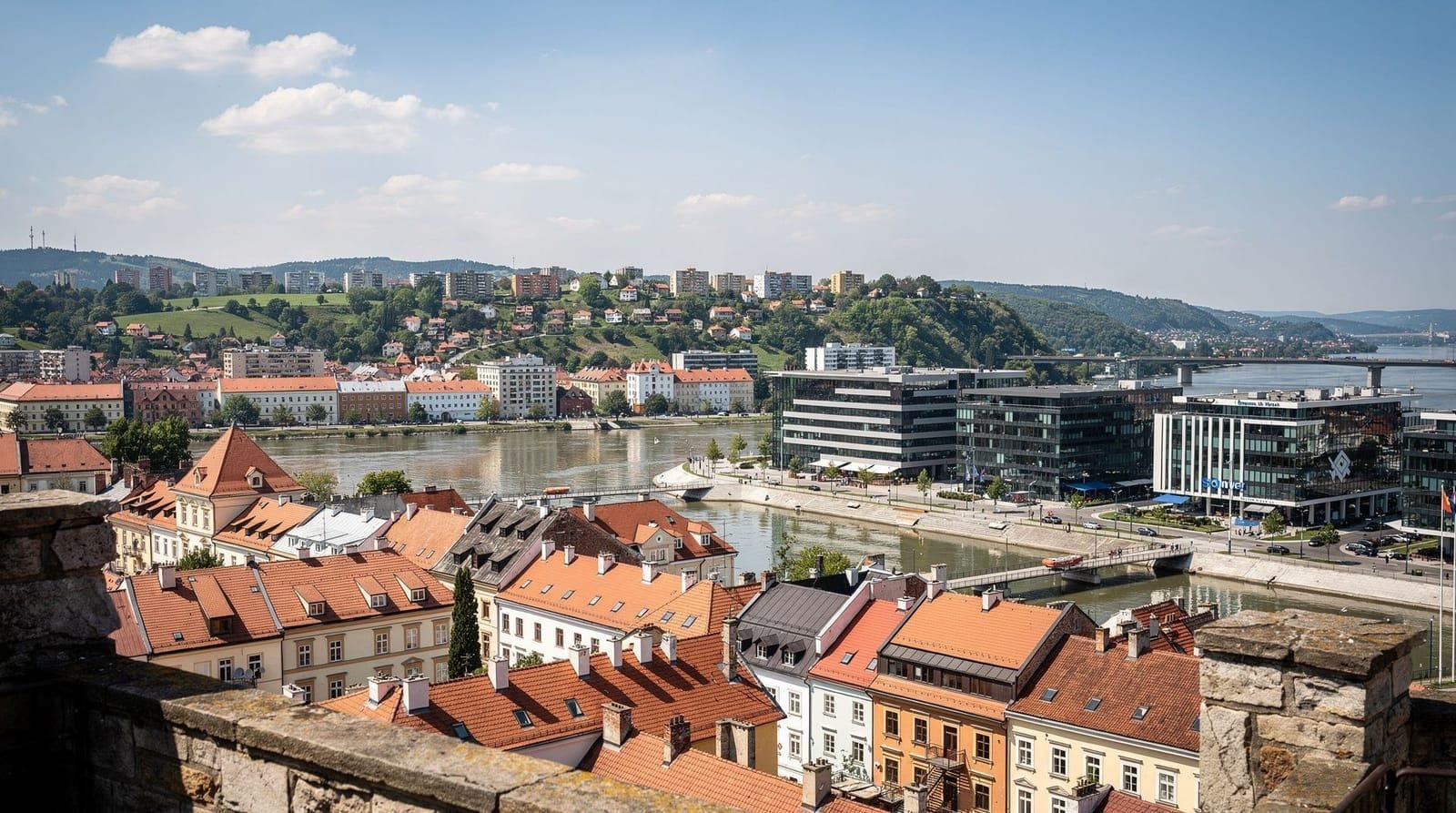
Devín Castle operates reduced winter hours. The outdoor areas of this dramatic clifftop ruin at the confluence of the Danube and Morava rivers are accessible, but check current opening times before you go — the castle typically shifts to a shorter schedule between November and March. The site itself is impressive even in grey weather, and the Danube views from the ramparts are striking. Travel time from Bratislava is around 20 minutes by bus or car. Full details at the Devín Castle guide and the Devín Castle day trip guide.
River cruises thin out considerably. Most standard tourist cruises on the Danube stop or switch to a very limited schedule after October. The Twin City Liner service to Vienna — the high-speed catamaran — does sometimes operate a reduced winter schedule, but verify before planning around it. For alternatives, check the Twin City Liner guide.
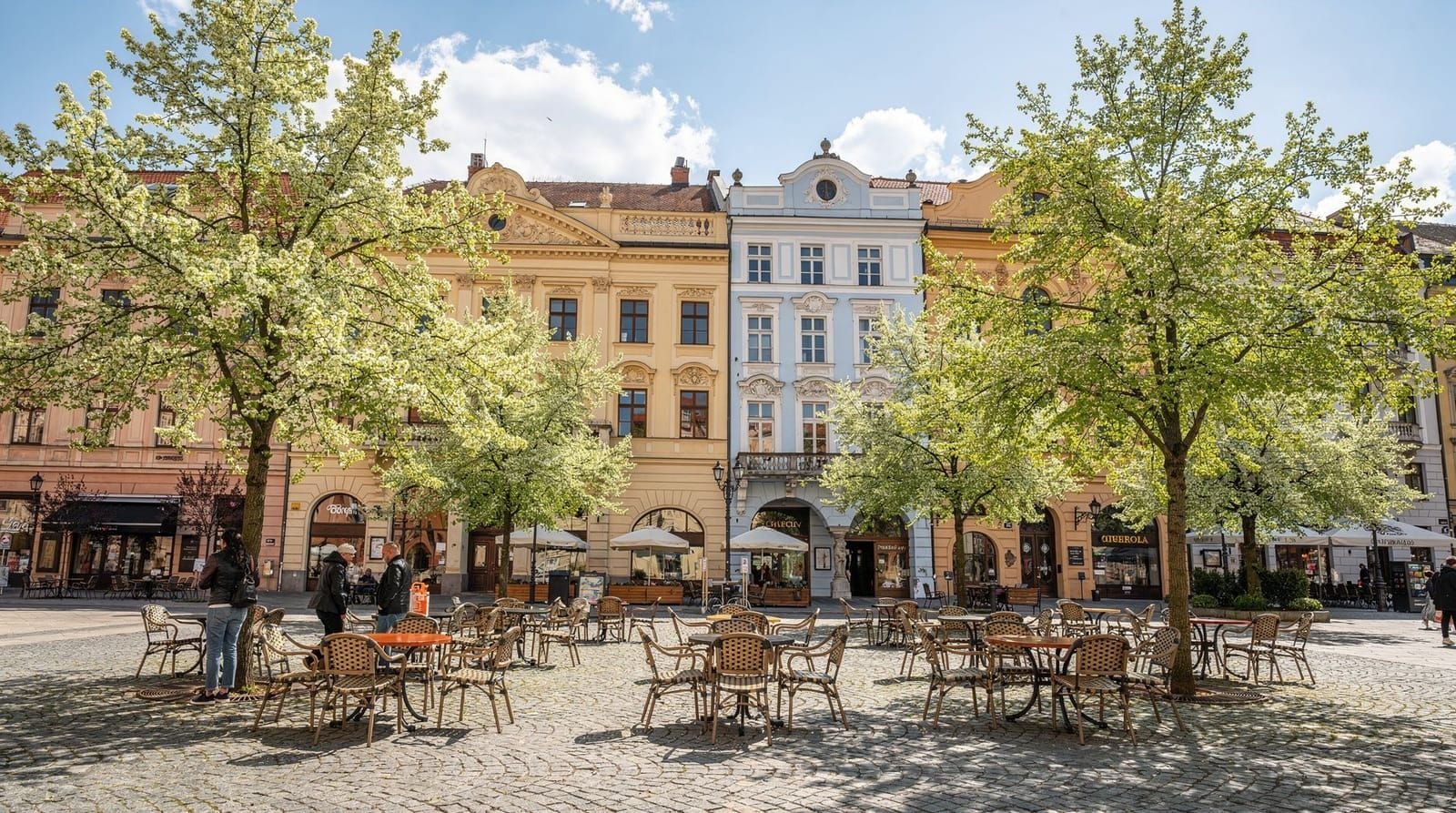
Outdoor terraces at bars and restaurants largely close, though a few maintain heated covered terraces. Most of the good restaurants remain fully operational — Bratislava has a strong local dining scene that does not depend on tourist-season foot traffic.
The Small Carpathians wine villages like Pezinok and Modra are quieter in winter, but the wine cellars and tasting rooms generally stay open. A winter day trip out there — roughly 30 to 40 minutes from central Bratislava — can be very pleasant, especially if you book a tasting in advance.
Winter food and drink beyond the markets
Winter is arguably the best time to eat in Bratislava. The traditional Slovak kitchen is built for cold weather, and some dishes are better in context.
Bryndzové halušky — potato dumplings with bryndza sheep’s cheese and fried bacon — is the Slovak national dish and one of the most satisfying things you can eat when it is five degrees outside. It appears on most traditional restaurant menus. The portion sizes are substantial.
Kapor na Vianoce — Christmas carp — is a Slovak Christmas Eve tradition. If you are in Bratislava around 24 December, carp in various preparations appears on menus across the city. It is worth trying at least once.
Horúca čokoláda (hot chocolate) is served at most cafés in the Old Town. Slovak café culture leans toward serious coffee, but the hot chocolate, particularly at the more traditional coffeehouses, is the thick, European style rather than the thin powder-and-hot-water version. The cafés and coffeehouses guide lists the better options.
Svarené víno is not just a market drink — many Old Town bars serve it through the winter months. The Slovak version uses local wine (often from the Small Carpathians) rather than the German red-wine base, which gives it a slightly different, lighter character.
For restaurant recommendations, see the best restaurants in the Old Town guide and the traditional Slovak food guide.
Accommodation prices and when to book
Winter is noticeably cheaper for accommodation than summer. A mid-range hotel in or near the Old Town that runs 90–120 € per night in July will often drop to 60–80 € in January. Budget options — hostels, smaller guesthouses — decrease proportionally.
The exception is the Christmas market period: late November through late December sees a bump in prices and occupancy. If you want the markets but not the premium pricing, the first week of December (before the main rush) tends to offer a reasonable middle ground.
January and February are the cheapest months. If you have flexibility, this is when Bratislava offers the best value. For context on budget expectations, the budget guide outlines what to expect for meals (8–15 € for a sit-down lunch), beer (2–3 €), and a reasonable daily spend of around 50–90 € covering accommodation, food, and entry fees.
The where to stay guide covers which neighbourhoods make sense depending on how you want to move around the city.
Day trips in winter
Vienna remains the easiest and most rewarding day trip from Bratislava at any time of year. The travel time is around one hour by train, and Vienna’s museums, galleries, and coffee houses are arguably best appreciated out of high season. The Vienna day trip guide covers logistics and what to prioritise. Vienna also makes sense as a combined trip — see the Bratislava-Vienna combo itinerary. Travellers based in Vienna during the market season can also visit Bratislava on a half-day guided trip.
GetYourGuideFrom Vienna: Bratislava Christmas market half-day tripCheck availability →Budapest takes around 2.5 hours by direct train and is worth considering for a longer two-day side trip if you have the time. Details at the Budapest day trip guide.
Devín Castle in winter has a particular atmosphere — the ruins against a winter sky, the Danube running grey and wide below, and very few other visitors. The 20-minute trip from central Bratislava makes it easy to fold into a day.
The Small Carpathians day trip is possible in winter, though hiking trails may be muddy or icy. The wine tasting element of a trip to Pezinok or Modra — 30 to 40 minutes from Bratislava — works well year-round.
Why winter is worth it
The straightforward case for visiting Bratislava between November and February is this: the city is more itself.
Summer Bratislava is a city partly performing for visitors. The terraces are full, the cruise groups move through the Old Town in clusters, and the better restaurants can be booked out. The essential character of the place — a compact, slightly scruffy, genuinely liveable Central European city with a long and complicated history — gets harder to see through the seasonal surface.
In winter, especially January and February, the Old Town belongs to the people who live there. The Saturday morning market at Hlavné námestie, the coffee shop on Panská that fills up at ten in the morning, the wine bar near Michalská brána where the regular customers know each other — these things are easier to access when you are not competing with the peak season crowd.
The city also looks different. Bratislava’s Old Town is photogenic in summer, but frost on the cobblestones, steam rising from a svarené víno stall, and the Bratislava Castle lit up against a dark winter sky at five in the afternoon are a different kind of beautiful. Less obvious, more interesting.
If you are trying to figure out whether Bratislava is worth visiting at all, the is Bratislava worth visiting guide tackles that question directly. The answer is yes, and winter makes the case more clearly than any other season.
Practical checklist before you go
- Footwear: waterproof, grippy-soled boots. Not optional.
- Layers: the Old Town is walkable but exposed. A base layer, mid-layer, and windproof outer shell will cover most conditions.
- Daylight: plan outdoor sightseeing for 10am–3pm. After 4pm, shift indoors.
- Check Devín Castle hours: confirm current winter opening times before making the trip.
- Book restaurants: not strictly necessary in January/February, but during the Christmas market period, popular Old Town spots fill up.
- City Card: if you plan to visit multiple museums, the Bratislava City Card may offer good value — check what’s currently included in the winter version.
- Transport: the public transport guide covers trams, buses, and getting around. The Old Town is very walkable, but the castle hill and some museums require a bit more movement.
For a first-time visit, the first-timer mistakes guide is worth reading regardless of season — several of the common errors apply year-round.
Frequently asked questions about Bratislava in winter
Is Bratislava worth visiting in winter?
Yes — outside the Christmas market period it’s quieter and noticeably cheaper than summer, and most major indoor attractions run full winter hours. See the is Bratislava worth visiting guide for the broader case.
What is the cheapest month to visit Bratislava?
January and February are the cheapest, with hotel prices dropping well below summer and Christmas-market-period rates. The budget guide has specific price expectations for meals, drinks, and daily spend.
tours.seasonal
Verified deep-linked GetYourGuide tours. Book through these links and we earn a small commission at no cost to you.