Devín Castle: the complete visitor guide
How do I get to Devín Castle from Bratislava?
Take bus 29 from the Nový Most bus stop near SNP Bridge. The ride takes about 20 minutes and tickets cost €1.20 (standard city bus fare). The castle is open Tuesday to Sunday from April to October.
| At a glance | |
|---|---|
| Where | 12 km west of Bratislava city centre, Muránska 10, 841 10 Devín |
| Cost | Adult ~6 EUR; reduced ~3 EUR; family ticket ~12 EUR |
| Time needed | 2–3 hrs for museum, ruins, and clifftop |
| Getting there | Bus 29 from Nový Most (~20 min), bike via EuroVelo 6 (~45–60 min), or seasonal boat |
| Best time | May–June or September–October; closed November–March |
Why Devín Castle belongs on every Bratislava itinerary
Perched on a rocky promontory 212 metres above the Danube, Devín Castle is one of Central Europe’s most dramatically situated ruins — and one of Slovakia’s most historically layered sites. Twelve kilometres west of the Bratislava city centre, it overlooks the exact point where the Morava River flows into the Danube, a confluence that has marked a strategic frontier for more than two thousand years. Romans built a border fortress here. Slavic tribes fortified it into a Great Moravian stronghold in the 9th century. Austro-Hungarian armies blew much of it up in 1809. Cold War border guards then fenced off the hilltop as an Iron Curtain checkpoint, and people died here trying to swim to freedom in Austria.
What remains is a ruin of extraordinary resonance: crumbling walls above a two-river panorama, an archaeological museum carved into the rock, and a slender tower — the iconic Dievčenská veža (Virgin Tower) — balanced on the cliff edge like a broken tooth. It is a half-day excursion that delivers more emotional and historical punch per euro than almost anything else in the region.
This guide covers every practical detail: how to get there, what the tickets cost, what to see inside, the best time to visit, and why a guided tour can transform the experience from a scenic walk into a genuinely moving history lesson.
Getting to Devín Castle from Bratislava
By bus — the easiest option
Bus 29 runs from the Nový Most bus stop (directly beside the SNP Bridge, just south of the old town) to the village of Devín, stopping a short walk from the castle entrance. The journey takes approximately 20 minutes. Services run every 20 to 30 minutes throughout the day. Buy your ticket at any tram/bus ticket machine or tap a contactless card — the fare is the standard Bratislava city bus price of €1.20 for a 60-minute ticket or use a day pass if you already have one. The stop for the castle is “Devín, Hrad” or “Devín, Kostolná” — check the timetable at bratislava.sk or Google Maps before you leave.
For a full guide to navigating the city’s public transport network, see our getting around Bratislava guide.
By bicycle along the Danube
The Danube cycle path (EuroVelo 6) runs from the city centre to Devín almost entirely flat and largely car-free. The distance is roughly 12 kilometres each way and the path is well-maintained — paved for most of the route. Allow 45 to 60 minutes each way at a comfortable pace. Hire a bike from one of Bratislava’s docking stations or from a private hire shop near the riverfront. Combining the cycle with the castle visit makes for an excellent active half-day, especially between May and September. Our Danube riverside cycling guide has route details and hire tips.
By boat in summer
During summer months a seasonal boat service sometimes runs from Bratislava’s passenger port to Devín. Check current availability locally, as the schedule changes year to year. When running, it is a pleasant 30- to 45-minute river journey and a very different arrival experience.
By car
Drive west along Devínska Nová Ves road toward the village of Devín. Parking is available near the castle entrance on Muránska street — address: Muránska 10, 841 10 Devín. Driving is the least recommended option given the reliable bus connection and the narrow village roads, but it works fine outside summer weekends.
Tickets and opening hours
Adult admission: €6 Reduced (students, seniors): €3 Children under 6: free Family ticket (2 adults + up to 3 children): €12
The castle is open Tuesday to Sunday (closed Monday) from April through October. Opening times are 10:00 to 17:00 in spring and autumn, extending to 18:00 in July and August. Last entry is 30 minutes before closing.
The castle ruins are closed from November through March. During the winter months the hilltop area around the ruins may be accessible on foot, but the archaeological museum and the main castle precinct are shut. If you are visiting Bratislava in winter, Bratislava Castle — a fully restored royal palace in the city itself — is the better castle option, with its national history museum open year-round.
Tickets are purchased at the castle entrance. As of 2026 there is no advance online booking for individual tickets, so arrive a few minutes early on busy summer weekends.
What to see inside Devín Castle
The archaeological museum
The museum is built into the rock beneath the castle ruins and is included in the entry ticket. It covers the full chronological arc of the site: prehistoric settlement, Roman military occupation, Great Moravian fortifications, and medieval castle development. Display panels are in Slovak and English. The Roman section is particularly strong — Devín sat on the Limes Romanus, the Roman Empire’s northeastern border, and the legions stationed here were watching Germanic tribes on the far bank of the Danube. The museum displays excavated Roman metalwork, coins, and pottery fragments.
The Great Moravian fortifications
The 9th-century Great Moravian Empire left its mark across Central Europe, and Devín was one of its principal strongholds. Prince Rastislav reportedly used the castle as a diplomatic base — it was from here that he sent the famous mission to Constantinople that eventually brought Saints Cyril and Methodius to Moravia in 863, giving the Slavic world its own alphabet. The Slavic fortifications visible today date from this period, though they were heavily rebuilt in later centuries.
Understanding this history in depth is where a guided tour pays dividends — a good guide will bring the political context of Great Moravia, Byzantine diplomacy, and the eventual Frankish conquest to life in a way that a museum panel cannot.
GetYourGuideDevín Castle guided tour from BratislavaCheck availability →The Virgin Tower (Dievčenská veža)
The single most photographed element of Devín is the Virgin Tower — a narrow cylindrical ruin balanced on the very tip of the cliff face above the Danube. It is the image that appears on postcards, travel guides, and Slovak cultural calendars. The tower dates from the medieval period and its name comes from a legend: a young woman supposedly threw herself from it rather than submit to an invader. Whether the story is true matters less than what the tower represents — the castle’s defiance and its precarious relationship with the river far below.
You can walk close to the tower on a fenced path, and the views from the cliff edge down to the Danube-Morava confluence are extraordinary. On a clear day you can see across to Austria. For the best photographs, visit in the late afternoon when the light falls directly on the cliff face. Our best photo spots in Bratislava guide includes the Virgin Tower and suggests the right angles.
The Danube-Morava confluence
From the upper castle ramparts, the confluence of the two rivers is clearly visible: the green-grey Morava flowing in from the north to join the wider, darker Danube. For centuries this junction marked the boundary between different political worlds — Roman and barbarian, Austro-Hungarian and Ottoman, and most recently Western and Eastern Europe. Standing here, the geography of European history suddenly makes intuitive sense in a way that maps cannot convey.
The Iron Curtain and Cold War history
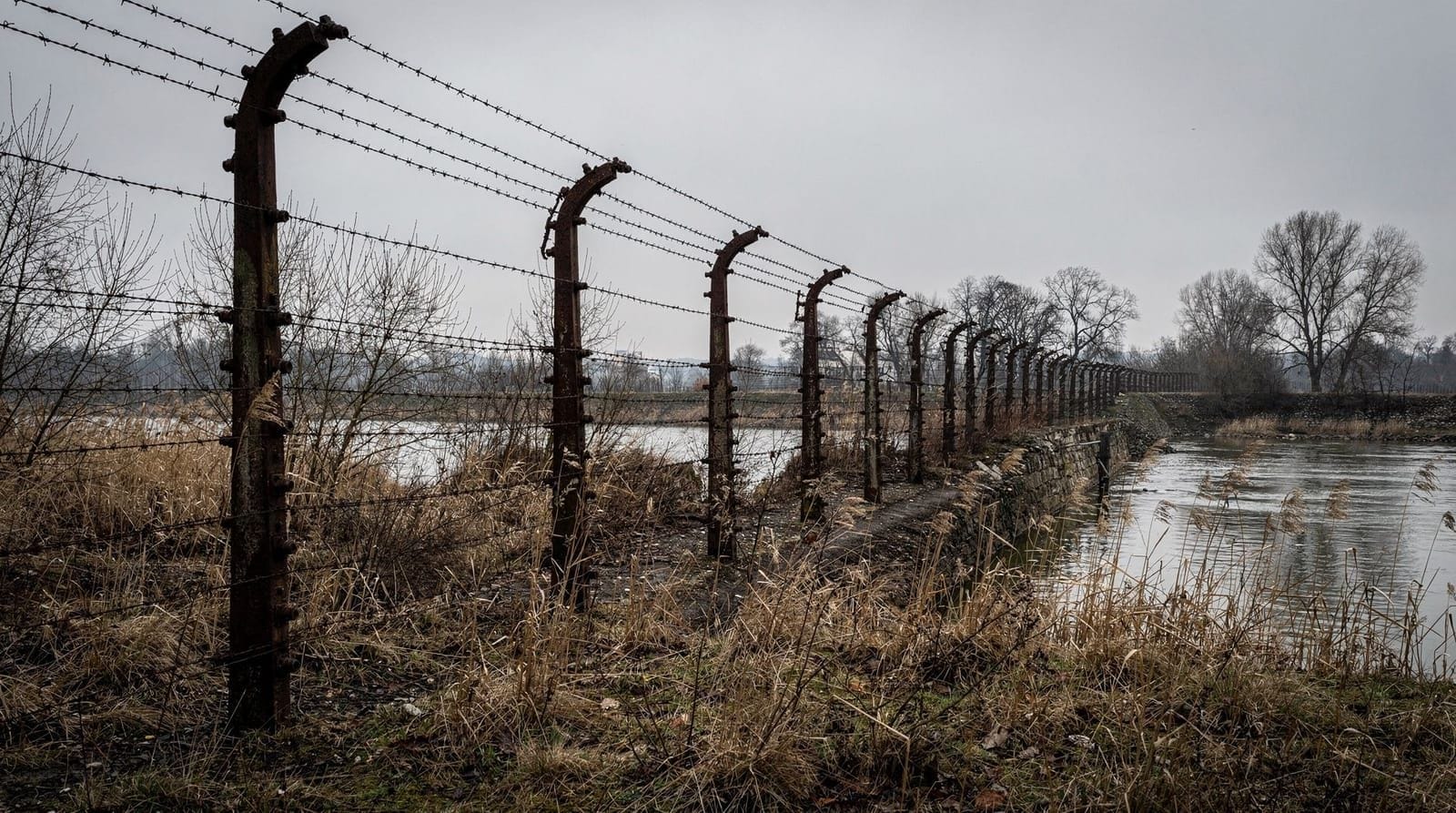
No visit to Devín is complete without understanding its Cold War significance. From 1948 to 1989, the Czechoslovak-Austrian border ran right along the Morava River, which is visible from the castle. The Communist regime erected watchtowers, barbed-wire fences, and ploughed death strips along the bank. Devín became one of the most heavily guarded border points in Europe — and one of the most deadly.
Hundreds of Czechoslovak citizens attempted to cross to Austria via the Morava or the Danube. Dozens were killed by border guards, drowned in the current, or caught and imprisoned. After the Velvet Revolution in November 1989, Devín became a symbol of the end of the Iron Curtain. In a moment of extraordinary symbolism, crowds gathered on this very hilltop on 8 December 1989 to celebrate the border opening.
The Iron Curtain Museum is located in the nearby area and tells this story through photographs, personal testimonies, and preserved border infrastructure. For deeper context on this chapter of Slovak history, our communist and Iron Curtain history guide is essential reading before or after your visit.
GetYourGuideBratislava communist history and Iron Curtain tourCheck availability →Devín village: beyond the castle walls
The village of Devín is worth half an hour of your time before or after the castle. It is a quiet, historically dense settlement with a Romanesque church, traditional wine taverns, and views of the Morava wetlands. Several wine taverns (vináreň) serve local Small Carpathian wines by the glass alongside Slovak cold platters — smoked meats, local cheese, pickled vegetables. It is an honest, unfussy lunch or afternoon snack in a village that feels genuinely unhurried.
The riverside walk along the Morava is flat, scenic, and popular with locals on summer evenings. Combining a castle visit with a riverside walk and a glass of wine in the village makes for an ideal half-day that costs very little.
Devín Castle versus Bratislava Castle: which should you visit?
Many first-time visitors ask whether to visit one or both castles. The short answer: they are complementary, not interchangeable, and if you have a full day in Bratislava plus an extra morning or afternoon, visit both.
Devín Castle is a ruin in nature — you visit it for the dramatic landscape, the two-river confluence, the layered history from Roman times to 1989, and the sense of standing at a genuine frontier. It requires a 20-minute bus journey from the city centre and is best appreciated with historical context.
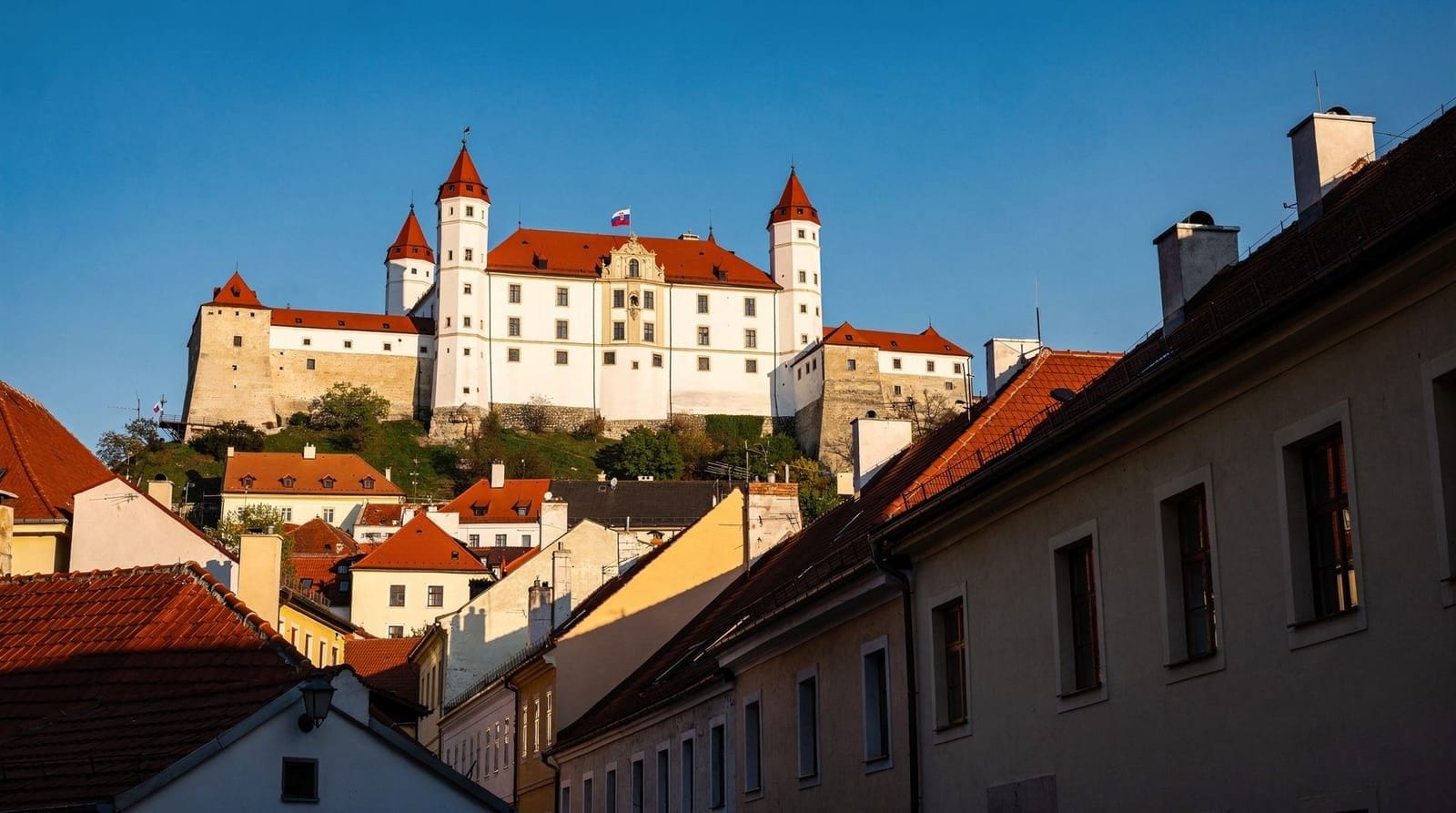
Bratislava Castle is a restored royal palace at the heart of the city, housing the Slovak National Museum’s history collection inside its white walls. It is above the old town and walkable from everywhere. It gives you Bratislava’s political history as a Habsburg royal seat and capital of the Kingdom of Hungary. Our full Bratislava Castle guide covers tickets, the museum, and the terrace views.
If you only have one full day, Bratislava Castle is the easier and more central choice. If you have a morning or afternoon to spare, Devín is the more emotionally powerful experience.
GetYourGuideBratislava and Devín Castle combined tourCheck availability →Day trips pairing Devín with other destinations
Devín plus the Small Carpathians wine region
Devín is at the southern tip of the Small Carpathians range — the low forested hills that stretch north of Bratislava and produce some of Slovakia’s best white wines. After the castle, hire a car or join a tour and continue into the wine villages of Pezinok and Modra for an afternoon tasting. Our Small Carpathians day trip guide maps out the route, and the Small Carpathians wine guide covers the wineries worth stopping at.
Devín as part of a Bratislava day trip from Vienna
Vienna is just 60 kilometres east, and Bratislava is an extremely popular day trip from the Austrian capital. If you are based in Vienna and spending a day in Bratislava, it is entirely feasible to see the old town in the morning and take bus 29 to Devín in the early afternoon. Our Vienna to Bratislava guide covers transport options and timing. The Twin City Liner boat is the most scenic way to cross between the two cities.
Červený Kameň Castle
If you are fascinated by Slovak castles and have an extra half-day, Červený Kameň Castle — a beautifully preserved Renaissance fortress in the Small Carpathians, about 35 kilometres north of Bratislava — offers a very different experience: intact interiors, a working winery in the cellar, and one of Slovakia’s best collections of historical furniture and weaponry. Contrasting its well-preserved rooms with Devín’s haunting ruins makes for a memorable castle-focused day.
Best time to visit Devín Castle
May and June are the optimal months: the castle is fully open, the hillside vegetation is lush without obscuring views, crowds are manageable, and the weather is reliably warm enough for the bike ride or the riverside walk. September and early October are equally good — the autumn colours on the vine-covered slopes are genuinely beautiful and wine harvest season in the Small Carpathians adds a festive atmosphere to the region.
July and August are peak season: the castle opens an hour later (until 18:00) and the extended evening light makes late afternoon visits magical, but weekend mornings can be busy. Arrive before 10:30 on summer Saturdays to get ahead of tour groups.
Winter: the castle ruins are closed. The hilltop may be accessible for a walk with good footwear, but the museum is shut and there is little to see beyond the bare cliffs. Save Devín for the warmer months and visit Bratislava Castle or the Slovak National Museum instead.
Our best time to visit Bratislava guide gives a broader seasonal overview of the city and region.
Should you take a guided tour?
If you visit Devín independently, you will see impressive ruins above an impressive confluence and come away with a pleasant memory of a scenic excursion. If you visit with a knowledgeable guide, you will understand why this specific cliff mattered enough for the Romans to station a permanent garrison here, why the Great Moravian princes chose Devín as their diplomatic stronghold, and why the Communist regime fenced off the hilltop with electrified wire and ordered guards to shoot on sight. The difference between those two experiences is enormous.
Guided tours from Bratislava city centre typically include transport to the castle, entry tickets, and 90 minutes to two hours of expert commentary. Half-day formats allow you to return to the city centre by early afternoon. Some tours combine Devín with the communist history of Bratislava itself — covering the UFO observation deck on SNP Bridge, the panelák housing blocks, and the Iron Curtain story — which provides a coherent narrative arc across a full morning.
GetYourGuideDevín Castle and Bratislava Iron Curtain history tourCheck availability →Practical tips before you go
Wear good shoes. The castle precinct involves uneven cobblestones, stone staircases, and some steep sections of path. Sandals are fine in dry weather but trainers or hiking shoes are more comfortable.
Bring water. There is a small refreshment point at the castle entrance, but no café inside the ruins. In hot weather, bring at least half a litre per person.
Allow two to three hours. The museum takes 30 to 45 minutes at a steady pace. The ruins and clifftop area another 45 minutes to an hour. If you walk down to the Morava riverside or through the village, add another 30 to 45 minutes.
Photography is unrestricted in the outdoor areas. The museum asks you not to use flash photography inside the display cases.
Accessibility. The upper castle area and the Virgin Tower cliff path are not wheelchair accessible due to historic cobblestones and steps. The lower courtyard and museum entrance are reachable, but full access to the ruin is limited.
Combination with a Bratislava city card. The Bratislava City Card includes free public transport (covering bus 29 to Devín) and discounts at selected attractions. Check current terms — Devín Castle entry may or may not be included depending on the card version.
Frequently asked questions about Devín Castle
How much does it cost to enter Devín Castle?
Adult admission is €6. Reduced tickets (students, seniors with ID) cost €3. Children under six enter free. A family ticket covering two adults and up to three children costs €12. Tickets are purchased at the castle entrance — there is no advance online booking for individuals.
What are Devín Castle’s opening hours?
The castle is open Tuesday to Sunday from April through October. Hours are 10:00 to 17:00 in April, May, June, September, and October, extending to 10:00 to 18:00 in July and August. The castle is closed on Mondays year-round and closed entirely from November through March.
How do I get from Bratislava city centre to Devín Castle?
Bus 29 from the Nový Most bus stop (next to the SNP Bridge) runs to Devín village every 20 to 30 minutes. The journey takes approximately 20 minutes. A standard 60-minute city bus ticket costs €1.20. The castle is then a short, clearly signposted walk from the bus stop.
Is Devín Castle worth visiting in winter?
No — the ruins and museum are closed from November through March. A walk to the hilltop is possible in good weather, but there is little to see. Visit in spring (April-June) or autumn (September-October) for the best combination of open access and comfortable conditions.
Can I cycle to Devín Castle from Bratislava?
Yes, and it is an excellent option. The Danube cycle path (EuroVelo 6) runs from the city centre to Devín in approximately 12 kilometres of mostly flat, well-paved cycling. Allow 45 to 60 minutes each way. The route passes through the Devínska Kobyla nature reserve and is popular with locals on weekends.
What is the Virgin Tower (Dievčenská veža) at Devín?
The Virgin Tower is the distinctive narrow cylindrical ruin balanced on the cliff edge above the Danube — the single most photographed element of the castle. It dates from the medieval period. According to legend, a young woman jumped from it rather than be captured, giving it the name. It is the iconic image associated with Devín and offers dramatic views of the Danube-Morava confluence directly below.
What is the connection between Devín Castle and the Iron Curtain?
From 1948 to 1989, the Communist Czechoslovak border with Austria ran along the Morava River, visible from Devín. The hilltop was fenced off with electrified wire and guard towers. Dozens of people were killed attempting to cross to Austria via the river. After the Velvet Revolution in November 1989, Devín became a symbol of liberation — crowds gathered here in December 1989 to celebrate the border opening. A small Iron Curtain museum in the nearby area commemorates this history. See our communist and Iron Curtain history guide for full context.
Is Devín Castle suitable for children?
Yes, with some caveats. Children find the ruins atmospheric and the clifftop exciting. The museum is manageable for children aged eight and above who have some interest in history. The cliff paths near the Virgin Tower have fencing, but require parental supervision. For younger children, combine the castle with the open grassy areas and the village walk rather than attempting the full museum circuit. Our Bratislava with kids guide has more family-specific recommendations.
Planning your visit: the essentials
Devín Castle sits 12 kilometres from Bratislava city centre at Muránska 10, 841 10 Devín. Take bus 29 from Nový Most, ride 20 minutes, and follow the signs. Admission is €6 for adults. The castle opens Tuesday to Sunday from April through October, 10:00 to 17:00 (18:00 in July and August). Bring comfortable shoes, water, and two to three hours. If you want the history to make full sense — and it is a layered, rich history spanning Roman, Slavic, medieval, and Cold War chapters — book a guided tour.
For wider trip planning, our Bratislava in 3 days itinerary fits Devín naturally into a full visit to the city and region. The day trips from Bratislava ranked guide will help you prioritize if you are choosing between Devín, the Small Carpathians wine villages, Vienna, and Budapest.
tours.devin
Verified deep-linked GetYourGuide tours. Book through these links and we earn a small commission at no cost to you.