Bratislava with kids: the best family-friendly things to do
Is Bratislava good for families with children?
Bratislava is excellent for families: the Old Town is compact and car-free, there are interactive museums, a well-maintained zoo, river beaches, and easy day trips to the Senec lakes and Devín Castle.
Bratislava rarely tops the list of cities people plan family holidays around, which is partly why it works so well for families who do come. The Old Town is compact enough that a six-year-old can walk its full circuit without complaint. The main sights are close together and mostly free or inexpensive. There are no six-lane roads to navigate through the historic centre.
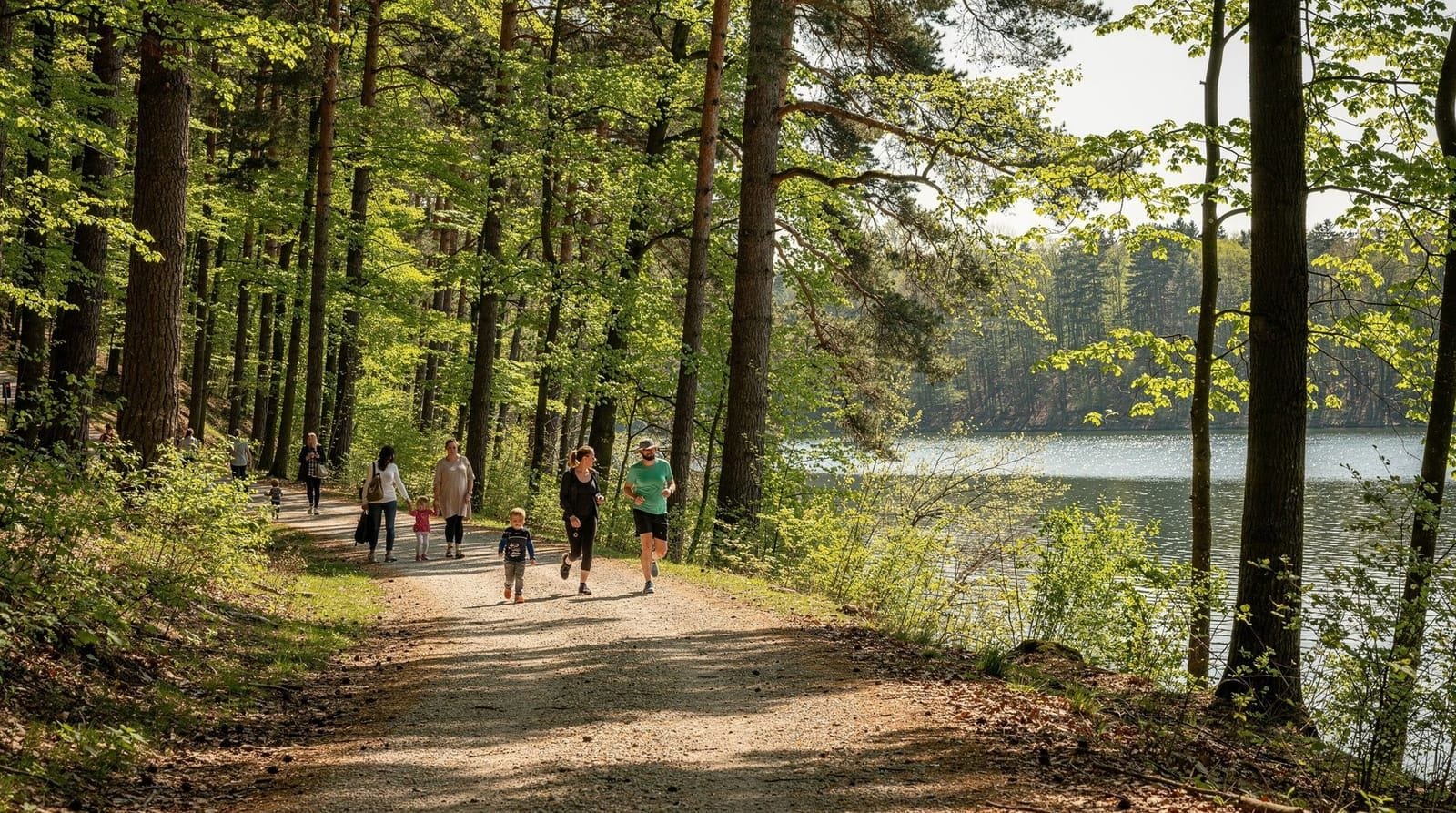
The Danube is right there, wide and moving, interesting to every age. The zoo is properly maintained. And within an hour by car or bus you can reach Devín Castle’s ruined medieval towers, the sandy beaches at Senec, or the beech forests of Železná studienka — all of which offer the kind of space and texture that holds children’s attention in a way that urban museums often cannot.
This guide covers the full range of family-friendly options in and around Bratislava, from the bronze statues children hunt through the Old Town on arrival to the water slides at the Aquapark Senec on a hot July afternoon. Prices are in euros and reflect 2026 levels; check current rates before visiting as they change seasonally.
| At a glance | |
|---|---|
| Where to base | Old Town or Nové Mesto (near the zoo and Kuchajda lake) |
| Best age range | Works from toddlers to teens; activities vary by age |
| Days needed | Around 2–4 days depending on pace |
| Getting around | Walkable Old Town core; buses/trams for the zoo, Senec, Devín |
| Best time | June–August for water activities; December for Christmas markets |
| Typical family day cost | Around €40–70 for two adults and two children, excluding accommodation |
The Old Town statue treasure hunt
The quickest way to reframe the Old Town for children is to turn it into a search game. Bratislava has a series of bronze statues and figures installed around the historic streets — most are quirky, unexpected, and placed at eye level, which means children encounter them differently from adults. Finding all four of the most famous is a natural half-day structure for families arriving for the first time.
Čumil, on the corner of Laurinská and Panská streets, is the most beloved and the one most children react to first. A man in workman’s clothes peers out from an open manhole cover, resting his arms on the rim, watching the street. The tradition is that touching his head brings luck — the hat has been worn smooth by years of hands. Children immediately want to crouch next to him and have their photo taken in the same position.
The Francúzsky vojak (the French soldier, informally Napoleon’s soldier) leans against a bench near the Primatial Palace with his arms folded and his hat pushed back, looking at you sideways. The figure is based on the French soldiers who occupied Bratislava after the Battle of Austerlitz in 1805. Children like that he looks slightly impertinent and that you can sit next to him on the bench.
The Paparazzi leans around a corner on Sedlárska street with a camera, apparently catching you by surprise. Older children — eight and above — tend to appreciate the joke more than toddlers, but the physical act of discovery as you walk down the street is satisfying at any age.
Schöne Náci stands near the corner of Rybárska brána, a formally dressed man in a top hat who tips his hat as you pass. The figure is based on a real Bratislava eccentric, Ignác Lamár, who was known for walking the streets in early twentieth-century finery and greeting every woman he passed with a tip of his hat. The backstory is worth telling children who are old enough to be interested in history — it is genuinely touching.
A printed or downloaded map of all four, turned into a checklist, keeps children focused and turns a walk through the Old Town into something with a clear structure and endpoint. There are more statues scattered around the city; these four are the core set most children will enjoy.
Bratislava Zoo
The ZOO Bratislava is a serious, well-maintained zoological park that consistently outperforms first-time visitors’ expectations. It sits in the Mlynská dolina valley in the western part of the city, reached by bus from the centre in approximately 20 to 25 minutes. The zoo covers a substantial area and keeps a genuinely wide range of animals: big cats including lions and tigers, Asian elephants, giraffes, bears, and a substantial primate section. There is also a Slovak fauna section dedicated to native animals — wolves, lynx, bison, and deer — which gives children who are Slovak-heritage or simply interested in local wildlife something specific to look for.
The children’s mini-farm near the entrance allows direct contact with domesticated animals — goats, sheep, rabbits, miniature pigs — and is reliably the most crowded section on weekend mornings. The playground within the zoo grounds is good and worth factoring in as a break mid-visit rather than a destination in itself.
Entry costs approximately €10 for adults and €8 for children aged 3 to 14; children under 3 enter free. A family ticket is available and represents better value for groups of two adults and two or more children. The zoo opens at 09:00 throughout the year. Morning visits are more rewarding: animals are more active before the heat of the day and before the largest crowds arrive. Allow three to four hours for a full visit.
The best age range for the zoo is broadly 3 to 12, with the mini-farm weighted toward younger children and the larger predator and elephant enclosures interesting to all ages. Teenagers who have been to larger zoos elsewhere may find it modest by comparison, but the quality of the enclosures and the relative absence of crowding compared to major European zoo destinations makes it a pleasant experience rather than a dispiriting one.
GetYourGuideBratislava history and mystery city discovery gameCheck availability →Slovak National Museum — natural history collection
The Slovak National Museum (Slovenské národné múzeum) on Vajanského nábrežie, the riverside promenade, houses a natural history collection with fossil and dinosaur exhibits that genuinely engage children. The building itself is imposing — a large late-nineteenth-century structure facing the Danube — and the collections inside cover geology, palaeontology, botany, and zoology. The fossil and prehistoric animal sections are the ones most children respond to, and the Slovak natural environment displays provide useful context for anyone planning time in the Small Carpathians or the Danube wetlands.
Entry fees are modest; the museum participates in the Bratislava City Card discount scheme if you are using one. The museum is not interactive in the hands-on way that purpose-built children’s science museums are, but the scale of the fossil specimens and the variety of the natural history displays hold attention reasonably well for children aged 6 and above. Under-6 visitors will need more active adult supervision to get much from it.
The UFO Tower and SNP Bridge
The SNP Bridge — officially the Most SNP, colloquially the UFO bridge for the disc-shaped structure that tops its single pylon — is one of Bratislava’s most distinctive sights and one that children respond to immediately when they first see it from the Old Town waterfront. The flying saucer shape is genuinely striking and the lift to the top moves fast enough to be exciting.
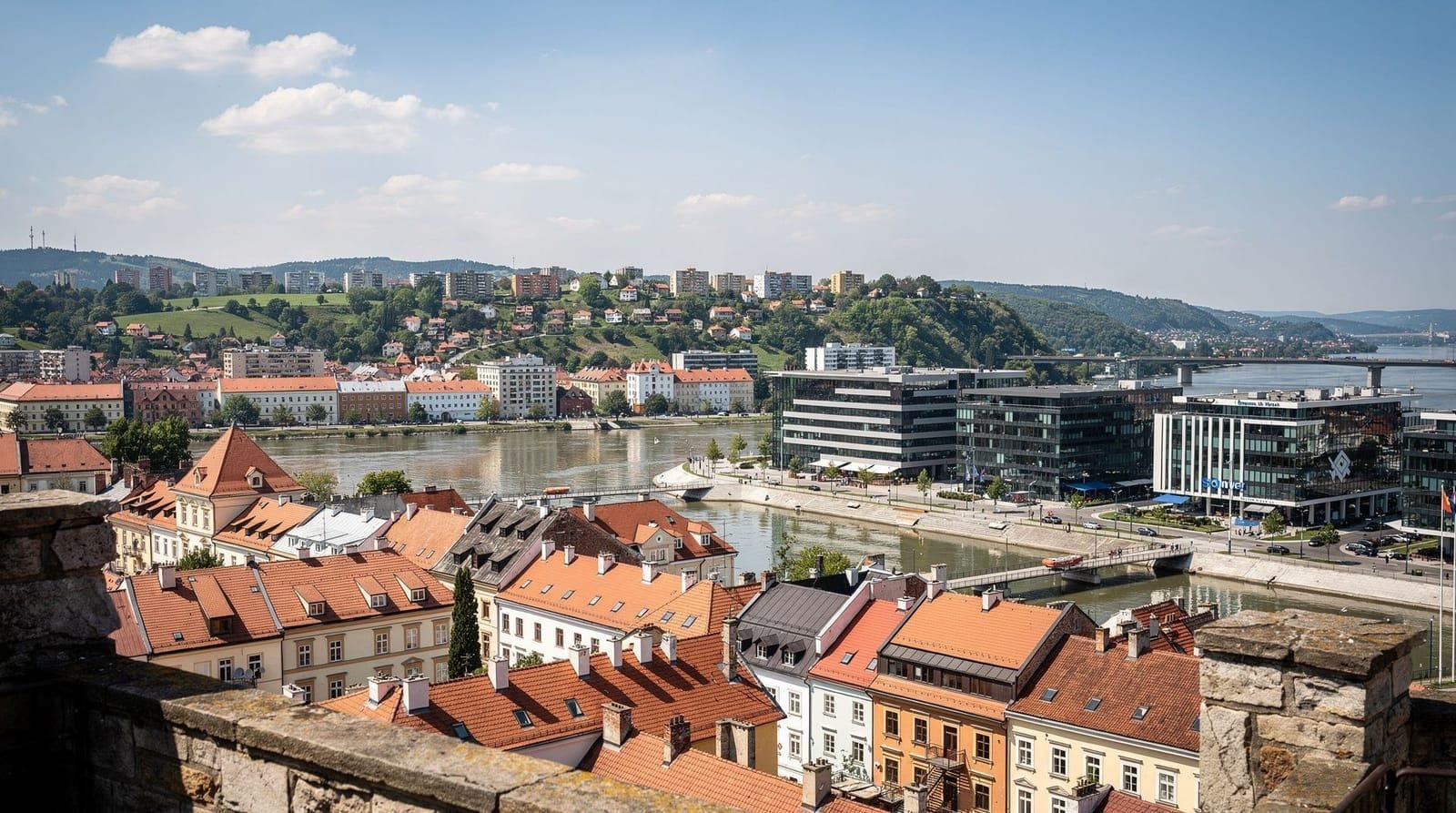
The UFO observation deck at the top offers 360-degree views over Bratislava, the Danube, and on clear days into Austria. The restaurant at the same level is expensive and adult-oriented; there is no obligation to eat there. Simply taking the lift up, spending 20 minutes on the viewing level, and descending gives children a memorable perspective on the city’s layout — they can identify the castle, the river, the Old Town roofline, and the flat plains stretching into Hungary. The lift ride itself has enough theatre to be part of the attraction.
The UFO observation deck guide covers practical details including current opening hours and prices.
Devín Castle as a half-day adventure
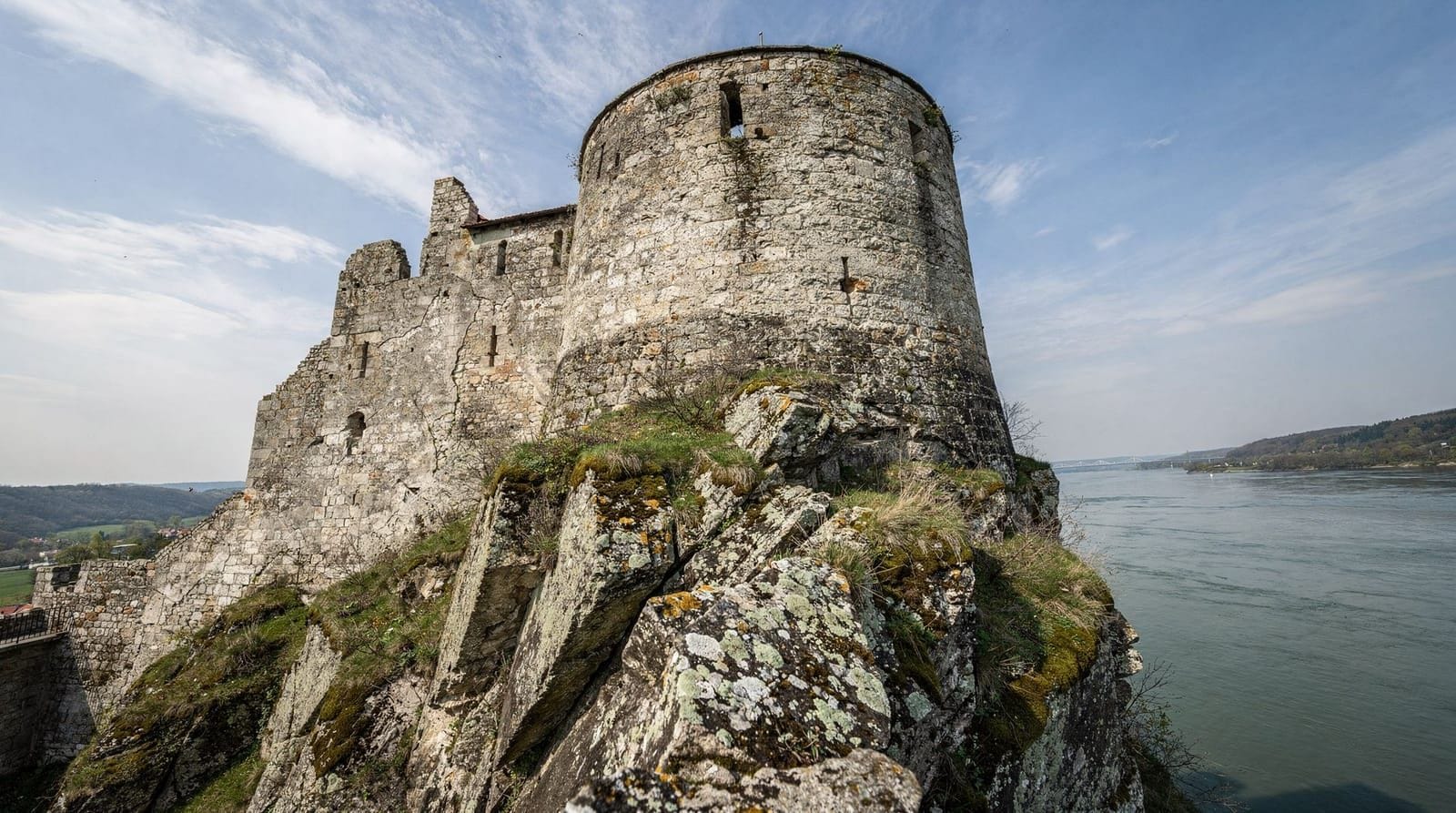
Devín Castle — properly Hrad Devín, a ruined medieval fortress at the confluence of the Danube and Morava rivers — is among the most evocative sites within easy reach of Bratislava and works particularly well for children who have any interest in history, stories, or simply clambering around ancient walls. The ruins are substantial: towers, ramparts, cellars, and a preserved round tower set on a dramatic cliff above the two rivers. The views from the top toward Austria and the Hungarian plain are extraordinary.
Bus 29 departs from Nový Most (the bus stop adjacent to the SNP Bridge) and takes approximately 20 minutes to reach Devín village; the castle entrance is a short walk from the bus stop. The route is well-signed. Entry costs are modest; children under 6 enter free at most Slovak state monuments.
The terrain at Devín is uneven — stone paths, occasional steep sections, and crumbling surfaces that require attention with younger children. The castle is most enjoyable for children aged 6 and above who can navigate the paths independently. Bring water and snacks; the café at the castle entrance is the only food option, and the Danube picnic area below the cliff is an excellent place to stop on the way back. The Devín Castle guide covers the history, trails, and practical logistics in full.
GetYourGuideBratislava interactive city discovery adventureCheck availability →Danube activities in summer
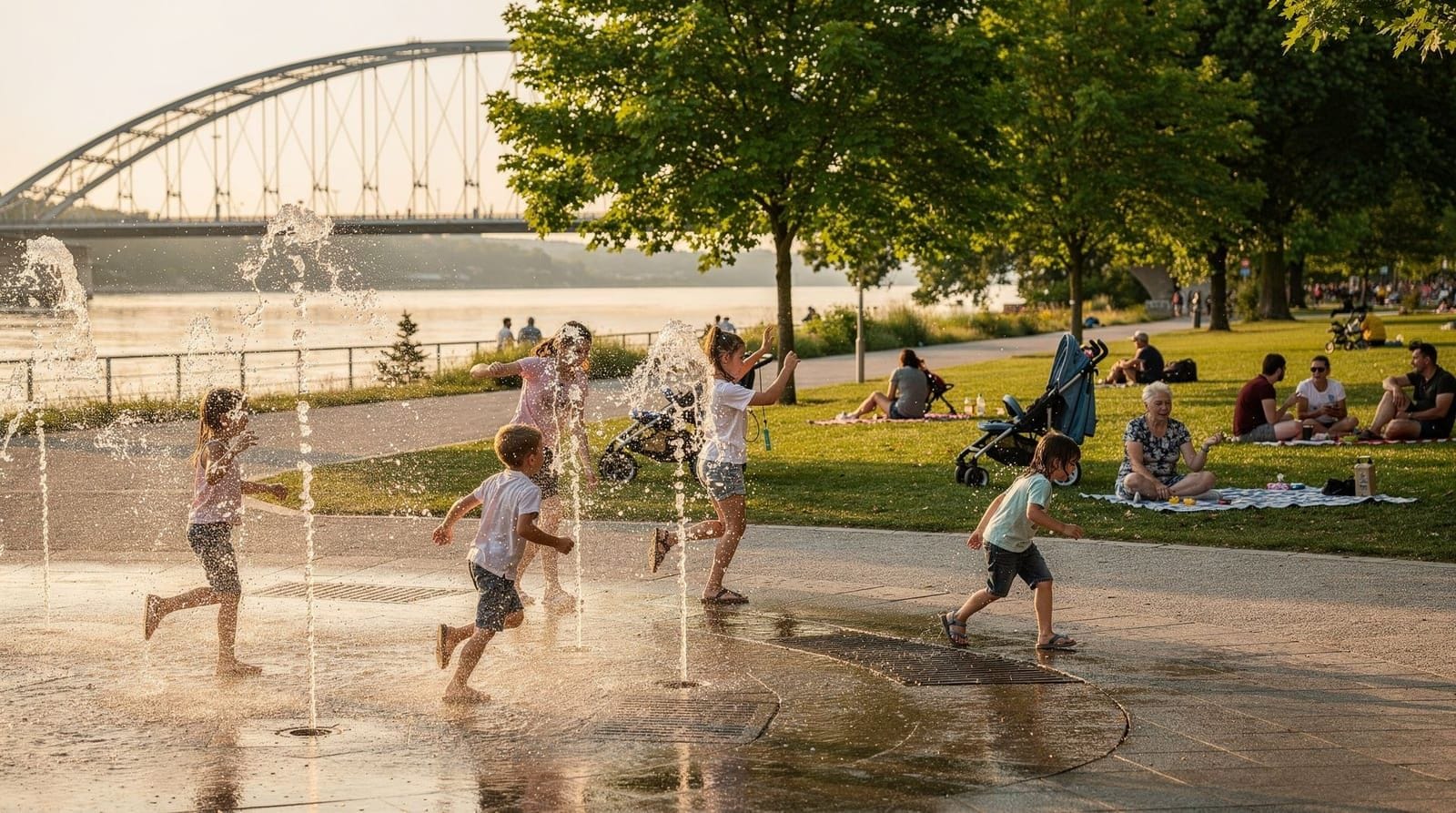
The Danube at Bratislava is not a background detail — it is genuinely part of how the city uses its summer. From June through August, river beaches appear along the Bratislava bank: these are informal seasonal facilities, some with changing rooms and basic services, others simply cleared sand or gravel with access to the water. Check current conditions and safety advisories before swimming; the river current is strong in places and not all sections are safe for children.
Short city boat tours operate on the Danube from the Bratislava waterfront throughout summer, lasting 45 to 90 minutes. These are well-suited to children who will not easily walk a museum circuit but will cheerfully watch the riverbanks pass for an hour with something to drink. The Danube cruises overview lists current operators and routes.
The Čunovo watersports centre, approximately 15 km south of Bratislava on an artificial Danube channel, offers kayaking and white-water facilities for older children and teenagers. The white-water course was built for the 1997 Canoe World Championships and remains a serious venue; junior instruction sessions are available seasonally. This is best for children aged 10 and above who are confident swimmers.
Kuchajda lake
Kuchajda is an artificial lake in the Nové Mesto district, roughly 15 minutes by bus from the city centre, and it offers a completely different character from the Danube or the forest parks. The lake is small enough to feel safe and contained, warm enough for toddlers by late June, and surrounded by a park with a playground and a lakeside café. Paddleboat rental is available. It is not a destination in itself for older children, but for families with toddlers or pre-schoolers looking for a half-morning near the water that does not require navigation or travel, Kuchajda is practical and pleasant.
Senec lakes and Aquapark Senec
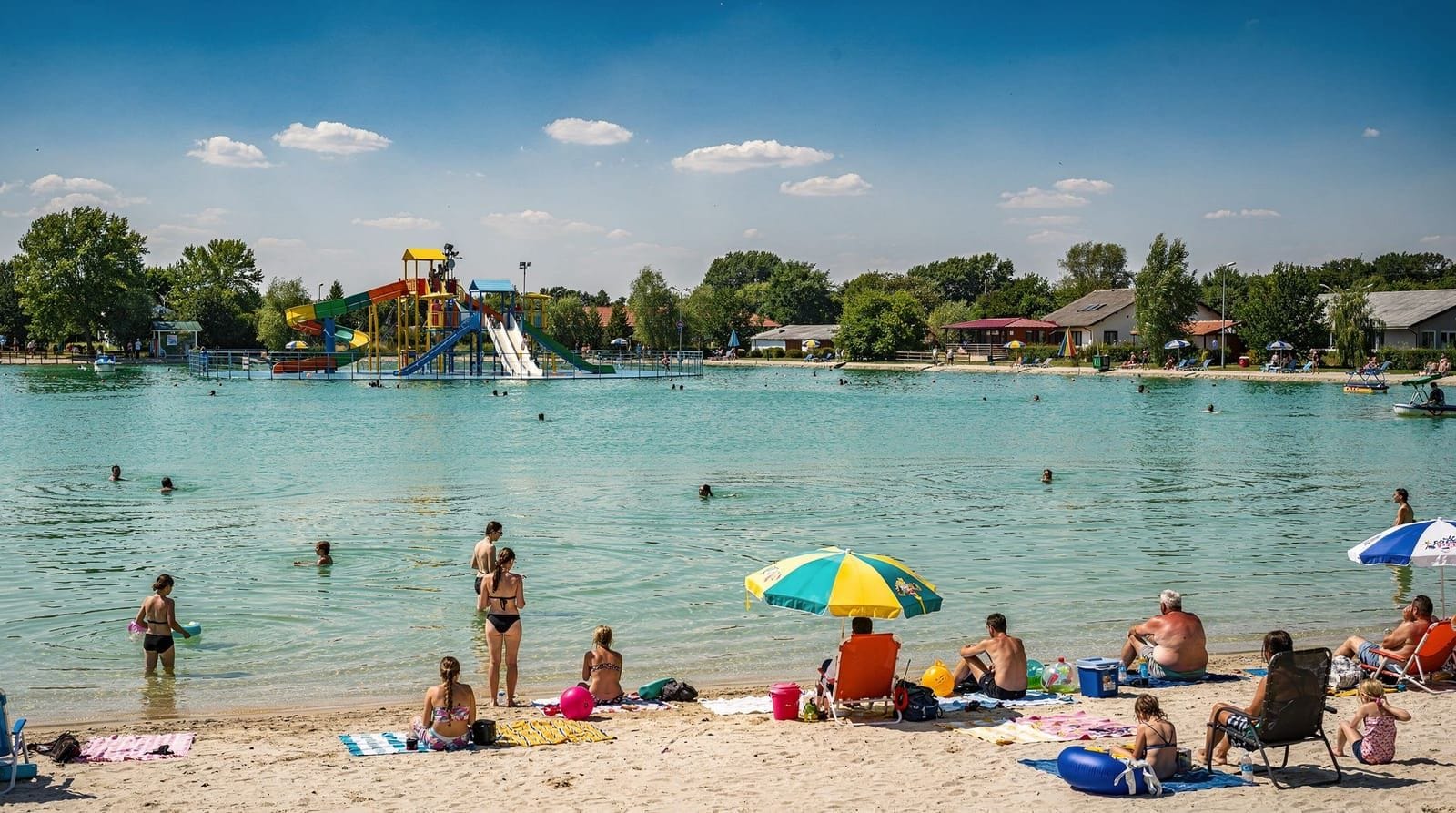
For a full summer day-trip, the Senec lakes — a cluster of natural swimming lakes 28 km east of Bratislava in the Sunny Lakes resort area — are the go-to destination for Bratislava families with children old enough to handle a water park. Sandy beaches on the lake edges, paddleboats, and the Aquapark Senec with multiple water slides, a lazy river, and a dedicated children’s splash zone make this the summer day-trip of choice when temperatures pass 30 degrees.
The drive from Bratislava takes 30 to 40 minutes; there is also a bus service. The Aquapark has its own entry fee separate from the lake beaches. Arrive early on hot weekends — it fills rapidly and the car park reaches capacity by midday in July and August. The Senec Aquapark and lakes guide covers transport, prices, and what to bring in detail.
GetYourGuideDiscovery game: the secrets of Bratislava's Old TownCheck availability →Museum of Transport
The Múzeum dopravy (Museum of Transport) on Štefánikova street is a specialist museum focused on historic trams, trains, automobiles, and other vehicles. For children aged 5 to 10 who have any interest in vehicles — particularly the older mechanical, pre-digital kind — it is a reliable hit. The collection includes historic Bratislava trams in working-order livery, steam and diesel locomotives, veteran cars, and motorcycles spanning roughly a century of Central European transport history. The exhibition spaces feel like a workshop rather than a formal gallery, which gives children more freedom to look closely at mechanical details.
Entry is free for children under 6; adult tickets are modestly priced. The museum is not large — allow 60 to 90 minutes for a family with interested children. It is best combined with something else in the morning or afternoon rather than treated as a full-day destination.
Puppet theatre
Slovakia has a deep tradition of puppet theatre (bábkové divadlo) that predates most of Central Europe’s formal theatrical traditions. The Bábkové divadlo na Rázcestí is Bratislava’s dedicated children’s puppet theatre and puts on a regular programme of productions that often rely more on visual storytelling, physical comedy, and music than on dialogue — which makes them accessible to children who do not speak Slovak. Not every production is language-agnostic, so check the programme notes in advance and look for productions described as visual or movement-based rather than verbally complex.
Tickets are inexpensive and the performances are typically short — 45 to 60 minutes — making this a practical option for younger children with limited sitting patience. Evening performances during school term time and Saturday afternoon matinees during holidays are the main scheduling patterns.
Ice cream, bakeries, and the practicalities of eating with children
Bratislava’s Old Town is well-stocked with ice cream. Koun operates several locations in and around the Old Town and produces craft ice cream in seasonal flavours — the quality is consistently higher than the tourist-oriented parlours on Hlavné námestie and the prices are fair. A zmrzlináreň selling tvaroh ice cream — tvaroh being a Slovak fresh cheese similar to quark, with a mild sourness — is worth seeking out for children adventurous enough to try something unfamiliar; the texture is different from conventional ice cream and the flavours tend toward the interesting.
Slovak bakeries (pekáreň) are reliable for a morning start. Fresh bread, small pastries, and rohlíky (bread rolls) are inexpensive and available everywhere; a bakery stop before heading to the forest or the zoo is a practical habit. For sit-down meals with children, restaurants two or three streets back from Hlavné námestie offer better value and less tourist-menu pressure. Zylinder on Hviezdoslavovo námestie welcomes families and offers portions that work for both adults and children. Pizza is universally available and universally acceptable as a failsafe.
Stroller and pushchair logistics
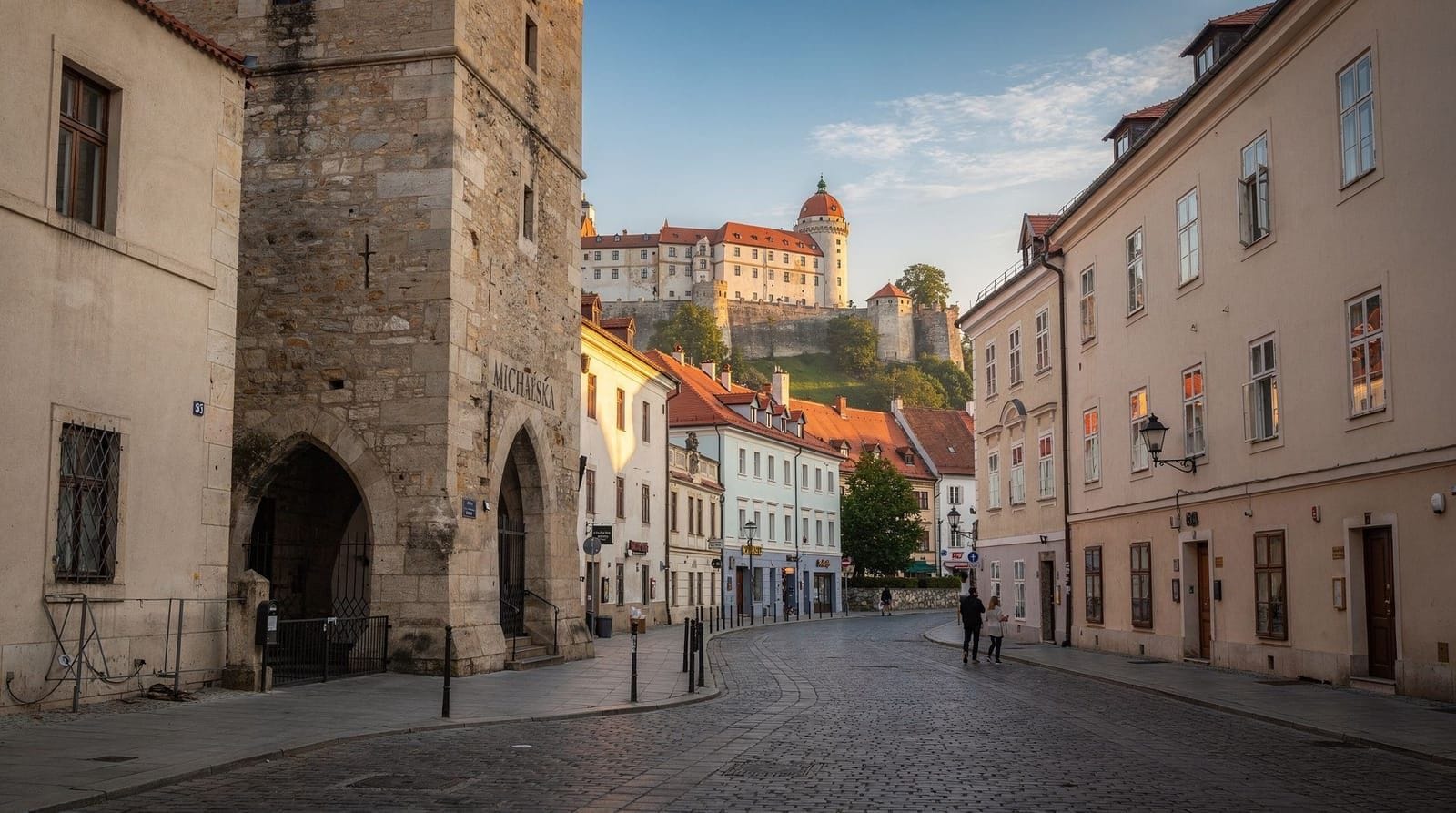
The Old Town’s main pedestrian streets — Obchodná, Michalská, Hlavné námestie and the streets immediately around it — are mostly flat and cobblestoned. The cobblestones are the challenge: some are large and irregular enough that lightweight strollers with small wheels manage them poorly. A compact but sturdy pushchair with reasonably sized wheels handles the Old Town comfortably; a very lightweight single-wheel travel stroller may struggle on rougher sections. The Castle Hill route involves a steep cobbled ramp that is manageable with effort but not easy.
Eurovea shopping centre (15 minutes on foot east of the Old Town along the Danube waterfront) and Aupark shopping centre (across the river in Petržalka) both have proper baby-changing facilities, nursing rooms, and family-oriented food courts — useful landmarks if you need reliable facilities mid-day.
Best time of year for a family visit
June through August offers the most obvious combination of outdoor activities, open lakes, and long daylight hours. December is excellent for families interested in Christmas markets — Bratislava’s Christmas market on Hlavné námestie and around the Old Town is compact, atmospheric, and genuinely well-suited to children who are old enough to appreciate the lights and the smell of trdelník and mulled wine (the adults’ version). April through May and September through October offer shoulder-season prices, shorter queues, and manageable weather for walking.
Avoiding tourist traps and making better choices
Restaurants directly on Hlavné námestie charge premiums of 30 to 50 percent over equivalent quality two streets away — this matters less for a couple but adds up noticeably for a family of four ordering three courses each. The horse-drawn carriage rides that circulate around the Old Town are not recommended on animal welfare grounds; children may ask, but they are easily redirected to the statue hunt or the boat trip. The souvenir shops on the main tourist strip have a standard Central European range of questionable quality; the shops on side streets offer considerably better craft and food products at lower prices.
The budget guide and the where to stay by neighbourhood guide both contain practical advice that applies specifically to families.
Building a family itinerary
For a first full day in Bratislava with children, the statue treasure hunt through the Old Town in the morning covers the historic centre in an engaging way, followed by lunch at a restaurant off the main square. The afternoon can go to the UFO Tower or a Danube boat trip depending on weather and energy levels. A second day suits a morning at the zoo, leaving the afternoon for Kuchajda lake or the Museum of Transport. A third day or a longer visit opens up the half-day options: Devín Castle for older children, Železná studienka forest park for all ages, Senec lakes for hot summer days.
The Bratislava in one day itinerary and the family weekend in Bratislava itineraries structure these options into full day-by-day plans.
Rainy day options
Bratislava’s weather is not always cooperative, and a wet morning does not have to derail a family day. The Slovak National Museum’s natural history collection and the Museum of Transport are both fully indoor and forgiving of poor weather. Eurovea and Aupark shopping centres, mentioned above for their baby facilities, also have indoor play areas and cinemas suitable for a rainy afternoon. The puppet theatre is an obvious rainy-day choice, since it is indoors and short enough not to test a child’s patience. For a rainy morning with toddlers, the covered galleries around Hlavné námestie and the arcaded streets near Michael’s Gate keep a stroller mostly dry while still allowing the statue hunt.
Table of typical family costs
| Activity | Approx. cost |
|---|---|
| Zoo entry (family of 4) | Around €36 |
| UFO Observation Deck (family of 4) | Around €24–28 |
| Devín Castle bus + entry (family of 4) | Around €15 |
| Aquapark Senec (family of 4) | Around €50–70 |
| Museum of Transport (family of 4) | Around €12–16 |
| Ice cream for the family | Around €10–14 |
Frequently asked questions about visiting Bratislava with children
At what age is Bratislava suitable for children?
Bratislava works at essentially any age, but the best experience depends on the child. Toddlers (2 to 4) enjoy the Old Town statues, Kuchajda lake, and the zoo mini-farm. Children aged 5 to 8 get the most from the zoo, the Museum of Transport, and the Old Town statue hunt. Older children (9 to 14) are better matched with Devín Castle, the UFO Tower, Železná studienka forest trails, and the Danube activities. Teenagers who are already interested in history will find the communist history sites and the castle more engaging than those coming without context.
Is the Old Town safe and walkable for children?
Yes. The historic centre is largely car-free, the main pedestrian streets are flat or gently sloped, and the distances between sights are short. Children can move relatively freely within the central zone. Traffic is present on some boundary streets — Obchodná street carries trams and limited car traffic — so the usual awareness applies at road crossings.
How many days do you need in Bratislava with kids?
Two full days covers the Old Town statue hunt, the zoo, one of the museums, and an afternoon activity. Three days allows you to add Devín Castle or a day trip to Senec without rushing anything. Four days gives space for Železná studienka, a Danube boat trip, and a slower pace throughout. Bratislava is also popular as a day trip from Vienna; it is possible but leaves very little time beyond the Old Town.
Is there a good children’s playground in the centre?
The main parks close to the Old Town — Medická záhrada and the Presidential Palace gardens — have basic playground equipment. The best playgrounds are in the Kuchajda lake area, within the Bratislava Zoo, and at the Železná studienka forest park entrance. For serious playground infrastructure, Aquapark Senec is the unambiguous leader in the wider region.
Are Bratislava’s museums accessible with a pushchair?
The Slovak National Museum and the Museum of Transport are both accessible at ground floor level; some sections involve stairs. The UFO Tower lift is pushchair-accessible. Devín Castle is not suitable for pushchairs — the terrain is too rough. Most of the Old Town can be navigated with a compact pushchair, though cobblestones make some sections uneven.
Where is the best area to stay in Bratislava with children?
The Old Town and the Nové Mesto district offer the best balance of proximity to sights and access to parks. Old Town apartments tend to be more expensive but put you within walking distance of almost everything. Nové Mesto has more space, better access to Kuchajda lake and the zoo, and generally lower prices. The where to stay by neighbourhood guide covers each district’s characteristics in detail.
Family-friendly tours
Verified deep-linked GetYourGuide tours. Book through these links and we earn a small commission at no cost to you.