Family activities in Bratislava: what to do with children of all ages
What are the best family activities in Bratislava?
Top family activities include the Bratislava Zoo, interactive museums, Devín Castle, river beaches, cycling along the Danube, and a 30-minute drive to Senec's sandy lakes for swimming.
Bratislava surprises families. It is compact enough that you are never far from the next thing, varied enough that a 4-year-old and a 14-year-old can both have a good day, and affordable enough that a family trip here costs a fraction of what you would pay in Vienna or Prague. The Old Town fits in a comfortable morning stroll with a pushchair; by afternoon you can be at a castle or a lakeside beach. On a rainy day, the museums are genuinely engaging rather than something to endure.
This guide is structured as a practical activity directory — by type and theme — rather than a narrative. Use it to build your own itinerary depending on your children’s ages, the weather, and how long you have. If you want a day-by-day plan, the bratislava-with-kids guide complements this one well. For beach days specifically, the Senec lakes guide has everything you need.
At a glance
| Where | Old Town base, with outings around the city and 30–40 min out to Senec, Devín, or the Small Carpathians |
| Cost | Museums/zoo around €4–20 per person; many outdoor spots (parks, squares, riverside) are free |
| Time needed | A weekend covers the core; a week lets you add day trips like Červený Kameň or Schloss Hof |
| Getting there | Trams/buses for city sights; bus 29 to Devín; a car or organised tour is easiest for Červený Kameň |
| Best time | Spring and autumn mornings for outdoor activities; summer for Senec and Zlaté piesky; year-round for museums |
Outdoor and active activities
Bratislava Zoo (Mlynská dolina)
The zoo sits in the Mlynská dolina valley on the western edge of the city, about 6 km from the Old Town and easily reached by bus. It is not the largest zoo in Central Europe, but it is well maintained, not overcrowded, and genuinely enjoyable for children under 12. The grounds are hilly — bring comfortable shoes and expect a decent amount of walking — but the terrain makes the experience feel more like an excursion than a stroll around a flat enclosure.
Highlights include the big cat area, the giraffe enclosure, primates, and a children’s petting section with domestic animals that young children find irresistible. The African savanna section is the most recent major development and has been well received. A miniature railway runs through part of the grounds — a favourite with toddlers and younger children. There is a picnic area near the entrance where you can bring your own food, and a café for those who prefer not to lug a cool bag. Opening hours vary by season; the zoo typically opens at 9:00 and closes at dusk. Entry is around €12 for adults and €8 for children aged 3-15; under-3s are free. The zoo’s own website and official Bratislava city information carry current pricing.
Best time to visit: spring and autumn mornings, when the animals are most active and the crowds thinnest. July afternoons can be hot and the big cats retreat to shade, making visits less rewarding. Allow two to three hours minimum.
Devín Castle — exploration for older children and teens
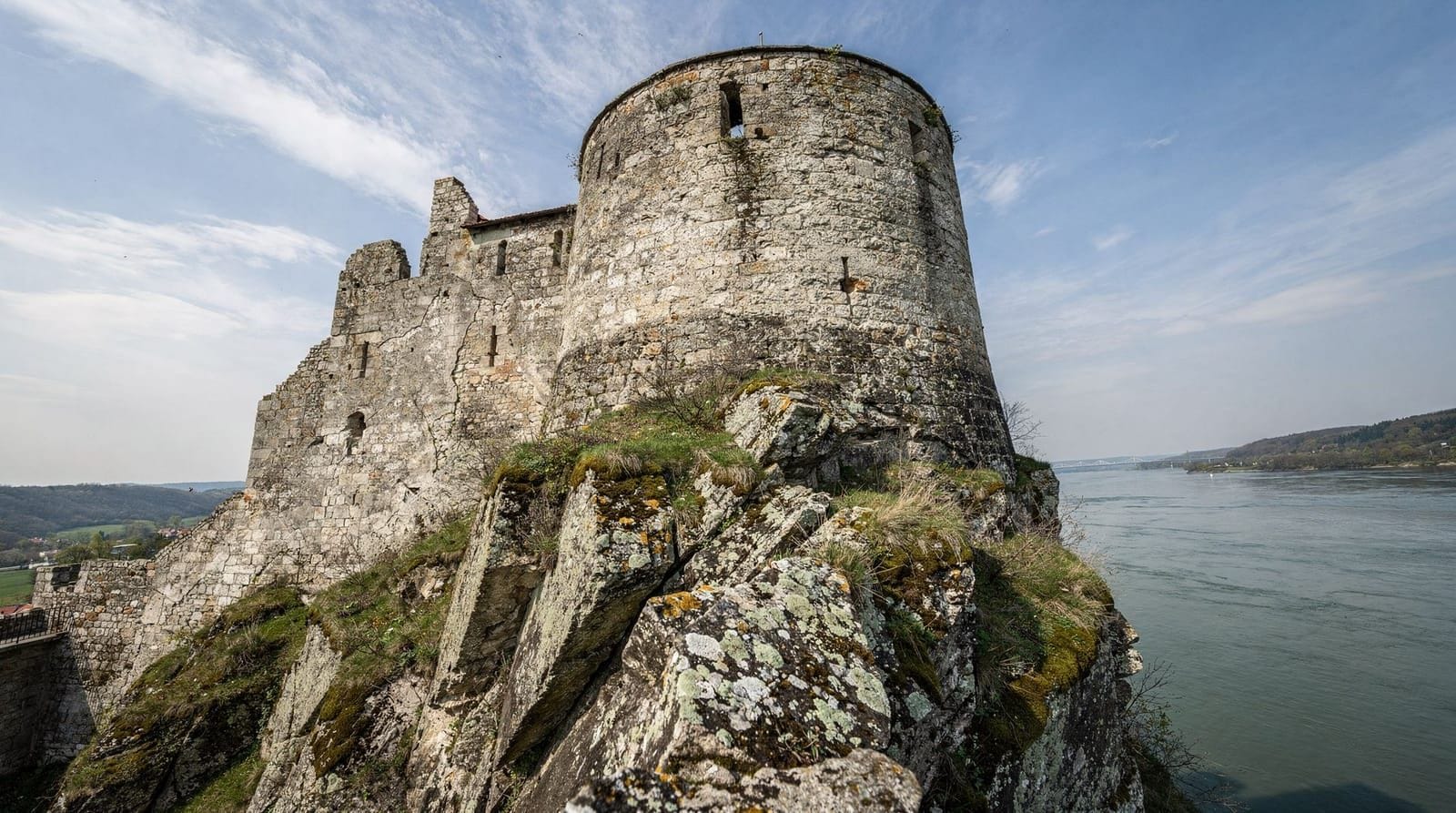
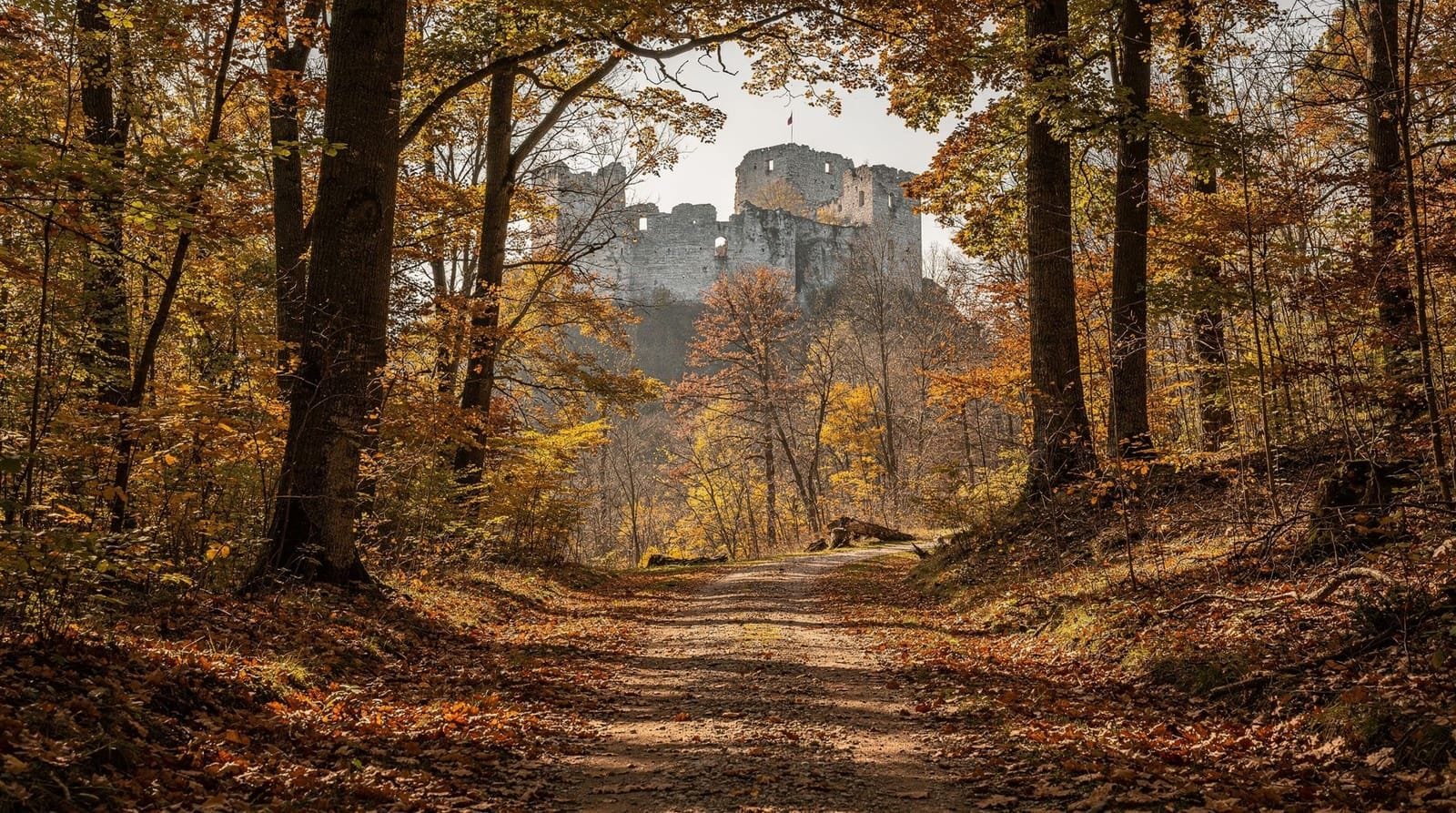
Devín Castle sits on a dramatic promontory at the confluence of the Danube and Morava rivers, 12 km west of Bratislava. For children aged 7 and up, particularly those with an adventurous streak, it is one of the best outings the region offers. The ruins are extensive rather than neatly restored, which means there is genuine scrambling over stone walls, peering down vertiginous drops (safely fenced at the worst points), and a sense of discovering something rather than being handed it.
For teenagers, the Iron Curtain history adds a genuinely compelling layer. The Morava river beside the castle marked the border between Czechoslovakia and Austria during the Cold War; the watchtower reconstruction and interpretive panels explain what that border meant in practice — and the stories of those who tried to cross it. It is the kind of history that lands differently when you are standing exactly where it happened.
The full Devín day-trip guide covers the options in detail: bus from the Old Town (25 minutes), bicycle along the Danube towpath (see below), or a guided tour.
GetYourGuideBratislava interactive city discovery adventureCheck availability →Cycling the Danube towpath with children
The riverside cycling path between Bratislava and Devín is one of the most family-friendly stretches of cycling in Slovakia. The route runs for approximately 12 km along a largely flat towpath — manageable for children aged 7 and up on their own bikes, and doable with a child seat or trailer for younger ones. The surface is good, the path is wide, and there are no serious road crossings once you leave the city outskirts.
Several bike hire operators in the Old Town offer children’s bicycles, tag-along bikes, and front/rear child seats. The outward journey has a slight headwind in summer afternoons (the Danube creates its own valley breeze), so it is worth cycling out in the morning and letting the wind push you back. The castle makes a natural destination for a picnic lunch before the return.
Kuchajda lake — an urban afternoon option
Kuchajda is a small lake in the Nové Mesto district, about 4 km northeast of the Old Town, reachable by tram. It is not dramatic — there are no sandy beaches or water slides — but it has a pleasant pedalboat hire, a small playground, a paddling area for very young children, and grass to spread a picnic blanket. It is the kind of place locals go on warm Wednesday afternoons rather than making a weekend expedition. For families staying in the Nové Mesto area, or who want a low-key hour or two near the city, it is genuinely useful.
Železná studienka forest park
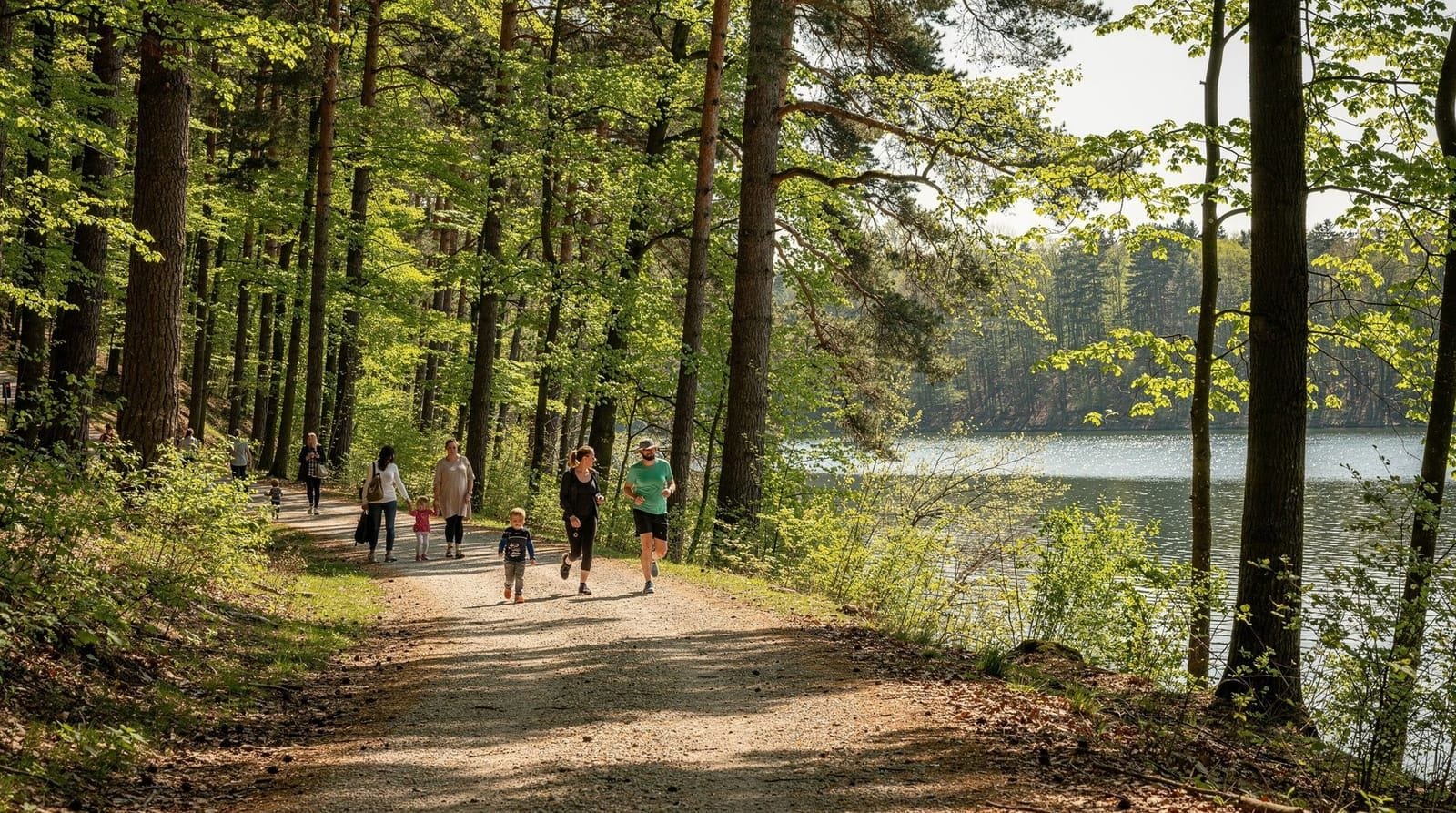
Železná studienka is a forested valley in the Small Carpathians foothills, within the city boundaries but feeling thoroughly rural once you are among the trees. The main trails are well maintained and signposted, and the easier loops are manageable for children aged 4 and up. In autumn, the forest becomes mushroom-picking territory — Slovak families treat mushrooming as a serious seasonal pastime, and children take to it enthusiastically. The mineral spring the park is named for (železná = iron, studienka = spring) gives the water a slight reddish tinge and a metallic taste that divides opinion but children generally find interesting. Basic refreshments are available at the valley bottom.
Čunovo — whitewater for older children and teens
Slovakia has a proud canoe slalom tradition — the country has produced multiple Olympic and world champions, and the artificial whitewater channel at Čunovo, in the southern suburbs of Bratislava, was built to Olympic specification and used for international competition. For children aged 10 and up who are reasonably confident in the water, the site offers guided kayaking and introductory whitewater sessions that are among the more memorable activities available in the region.
The adrenaline level is calibrated to ability, and the instructors — often former competitive paddlers — are excellent with young people. This is not a passive spectator activity; it requires commitment and some physical effort, but groups with teens consistently rate it as a highlight.
Indoor and rainy-day activities
Natural History Museum (Slovak National Museum, Vajanského nábrežie)
The natural history section of the Slovak National Museum on the Danube embankment covers Slovak ecosystems from the Carpathian forests to the Danube floodplain, with well-constructed dioramas, mineral collections, and fossil exhibits. The dinosaur section is modest by comparison with dedicated natural history museums in larger capitals, but it reliably engages children aged 5 to 10. The ecological diversity of Slovakia — a country that holds some of the most intact wildlife habitat in Central Europe — is the museum’s real selling point; brown bears, wolves, lynx, and bison all feature. Entry prices are modest, around €4-6 for adults and €2-3 for children.
Slovak National Gallery — children’s workshops
The Slovak National Gallery has two main buildings in Bratislava: the riverside Esterházy Palace wing and the modernist extension attached to it. The older Esterházy building is the more accessible for families — smaller rooms, accessible scale, and a collection spanning Slovak medieval art through to twentieth-century painting. On selected Saturdays during the school year, the gallery runs structured children’s workshops around specific artworks; check the gallery’s official website for the current programme before you visit, as availability varies by season.
GetYourGuideDiscovery game: the secrets of Bratislava's Old TownCheck availability →Museum of Transport (Múzeum dopravy)
The Museum of Transport on Štefánikova street is one of Bratislava’s most underrated family venues. The collection spans Slovak tramways and railways, with original rolling stock, steam locomotives, vintage cars, motorcycles, and period railway carriages you can walk through. The scale of the vehicles, combined with the ability to get closer to them than most transport museums allow, makes it particularly engaging for children aged 4-10. Entry is free for children under 6. The museum is not enormous, which means it is manageable without exhausting small legs; plan for ninety minutes.
City History Museum — the dungeon section
Housed inside the Old Town Hall on Hlavné námestie, the City History Museum is worth visiting primarily for its medieval chambers and, most compellingly for children aged 8 and up, the dungeon. The underground sections preserve the original prison and torture chamber spaces from the town’s medieval judicial history — not gratuitously presented, but atmospheric and informative in a way that tends to hold children’s attention better than conventional gallery displays. The museum also offers good views over the main square from its tower.
Cinema City at Eurovea or Aupark
Both of Bratislava’s main shopping centres have multiplex cinemas. International blockbusters are frequently screened in English with Slovak subtitles rather than dubbed — particularly at Eurovea, which caters partly to the international business community living nearby. Check the cinema listings online before you visit; Slovak-language screenings are common, but English-language screenings are reliable for major releases. Aupark is convenient if you are combining a cinema trip with lunch at the Danube-side shopping centre.
Active adventures and water
Aquapark Senec — the definitive family water day
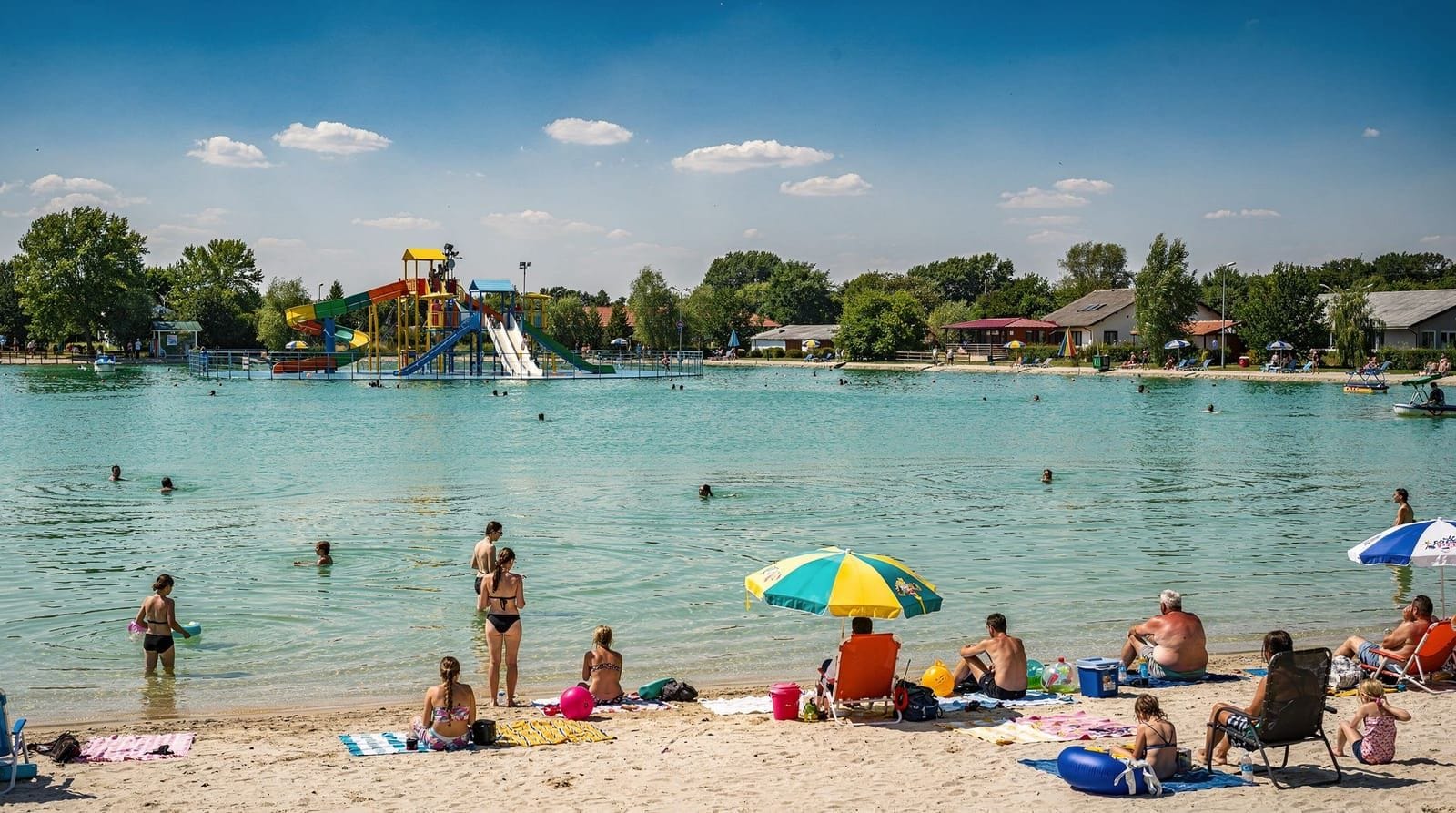
The Senec Sunny Lakes (Slnečné jazerá) are 28 km east of Bratislava — about 30 minutes by car — and the aquapark there is the first choice for families wanting a full day of water fun. Multiple slides (including high-speed and family-raft versions), a wave pool, a lazy river, a toddler splash zone, and extensive outdoor pools give every age group something to do. Entry is approximately €15-20 for adults and €10-15 for children; family tickets reduce the per-person cost. The full guide covers transport, facilities, tips for beating the queues, and how it compares to the more accessible but simpler Zlaté piesky lake within the city.
Zlaté piesky — a spontaneous city swim
For a shorter, less planned water outing, Zlaté piesky lake in northeastern Bratislava is reachable by tram and offers a free public beach, pedalboat hire, and basic food facilities. It is smaller and simpler than Senec, and the water quality should be checked against current monitoring before swimming (it has had occasional issues in past seasons), but for a spontaneous two-hour swim on a warm afternoon it is a useful option without the 30-minute drive.
Snowparadise Senec — skiing in summer
At the same Senec complex, an indoor ski slope and toboggan run operates year-round. For children who have never skied, the controlled environment is an ideal introduction: the slope is consistent, instructors are available for children’s lessons, and full rental equipment including helmets is available on site. In summer, the contrast between the outdoor beach and the indoor ski hall in the same visit is something children tend to find genuinely surreal and memorable.
GetYourGuideDiscovery game: hidden gems of alternative BratislavaCheck availability →Cultural and educational activities
Roman Gerulata at Rusovce
The southern Bratislava suburb of Rusovce contains the remains of Gerulata, a Roman auxiliary fort that formed part of the Limes Danubianus — the Roman Empire’s Danube frontier fortification system. The site is open to walk around freely, with the footprints of the fort’s walls marked in the grass and a small museum containing original finds: pottery, military equipment, coins, and inscriptions. For older children and teenagers with an interest in history, it is a genuinely evocative site — the sense of being at an actual Roman frontier post rather than a reconstructed one comes through clearly. The museum is modest in scale but seriously presented. Rusovce is reachable by bus from the city centre; the journey takes around 30-40 minutes.
Bratislava Castle — family visit
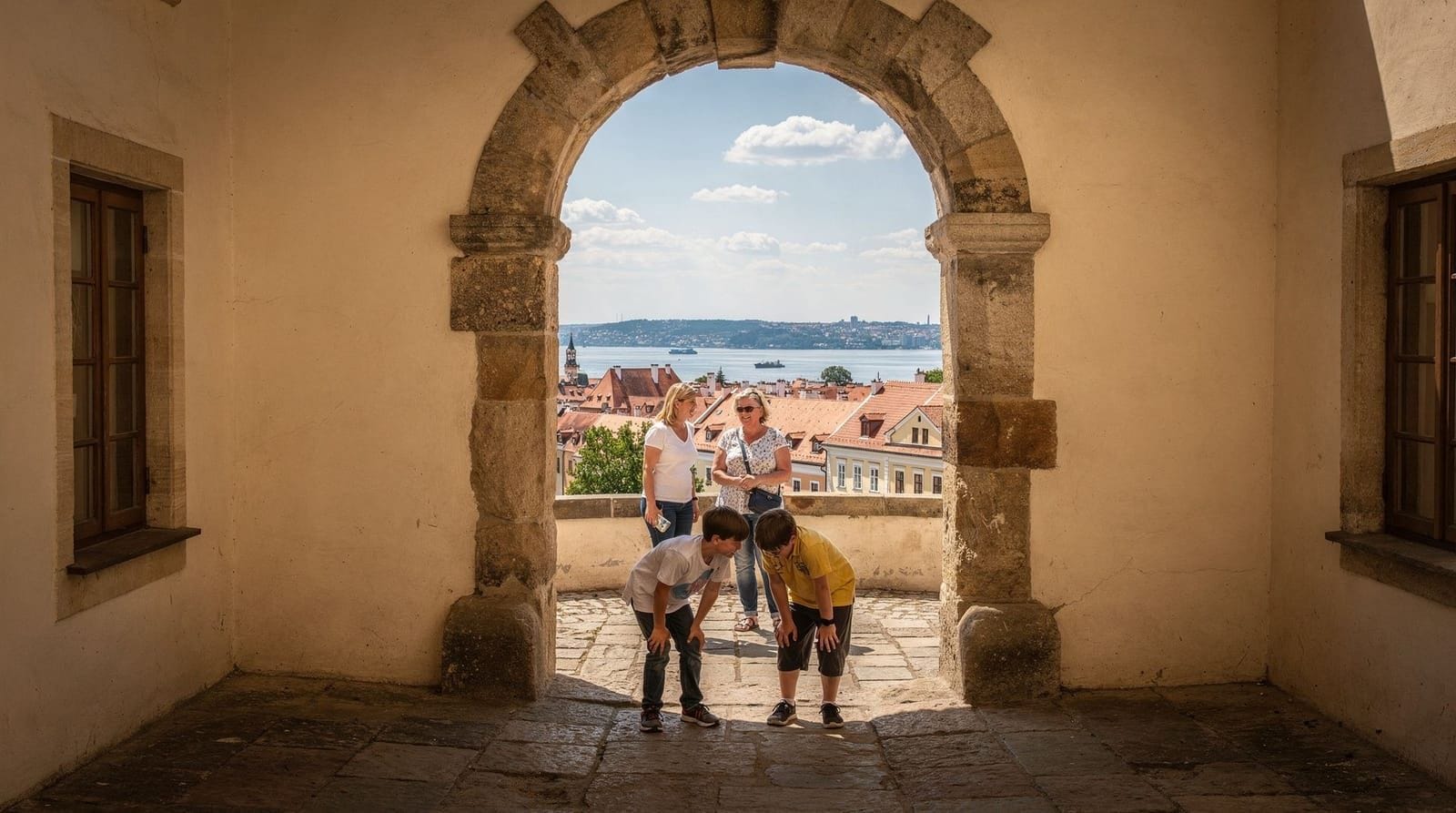
Bratislava Castle rewards families who visit both the free grounds and the museum inside. The grounds are free and the view from the western terrace — scanning over the Danube into Austria — tends to produce genuine wonder in children who have not seen this kind of panoramic view before. Inside, the Slovak National Museum collection covers Slovak history from the Bronze Age through the twentieth century; the Great Moravia jewellery and the replica Hungarian Crown are highlights. The museum has some dense text panels, but the material culture — weapons, ornaments, maps, ceremonial objects — holds children’s interest well. Children under 6 enter free.
Food experiences with children
Trying traditional Slovak food
Bratislava’s traditional Slovak food can be a genuine highlight for families rather than a logistical challenge. Children who like pasta almost always enjoy halušky — small potato dumplings served with bryndza (a sharp, creamy sheep’s milk cheese) and crispy bacon pieces; it is simultaneously comfort food and something completely unlike anything they have eaten at home. Lokše are thin potato flatbreads, served sweet (with jam or poppy seeds) or savoury (with duck), and make a good snack while walking. Syrečky are small rounds of grilled cheese available from market stalls — approachable for children who are cautious about unfamiliar food.
For a sit-down family meal with good Slovak food and a relaxed atmosphere, Reštaurácia Stará Sladovňa has a beer garden that works well for families in warmer months. Modrá Hviezda in the Old Town is a Slovak classics restaurant with high-quality cooking; quieter than the most tourist-oriented spots on Hlavné námestie and worth the slightly longer menu perusal. Both have children’s portions available on request.
Saturday morning market on Štefánikova
The covered market on Štefánikova — the Tržnica — runs through Saturday mornings and offers a chance to taste local produce in a lively setting. Fresh bread, cheese, cured meats, fruit, and seasonal vegetables are the staples, with occasional street food and coffee stalls. It is not a large or spectacular market by European standards, but it is genuinely local, and children who enjoy the sensory experience of food markets tend to respond well to it.
Ice cream culture — zmrzlina
Bratislava takes its ice cream seriously. Koun is one of the best-known artisan shops, with a range that changes by season. Traditional Italian-style gelateria-influenced shops can be found throughout the Old Town and along the Danube embankment. The Slovak term zmrzlina is worth learning for small children to deploy with confidence. In summer, stopping for ice cream becomes a natural rhythm during any afternoon in the Old Town — there is rarely a stretch longer than five minutes between options.
Day trips ideal for families
Červený Kameň castle
Červený Kameň (Red Stone Castle) is approximately 35 km north of Bratislava in the Small Carpathians foothills, and it is arguably the single best castle day trip for families in the wider region. Unlike Devín, which is a dramatic ruin, Červený Kameň is largely intact and offers guided tours through preserved interiors including armoury halls, knights’ rooms, Renaissance living quarters, and a wine cellar carved into the rock beneath the castle.
Children aged 6 and up consistently engage with the armour and weapon displays. The castle grounds include a vineyard picnic area that makes an excellent lunch stop in good weather. The guided tour takes around an hour and is available in English; timings vary by season, and pre-booking is recommended in peak summer.
Schloss Hof (Austria)
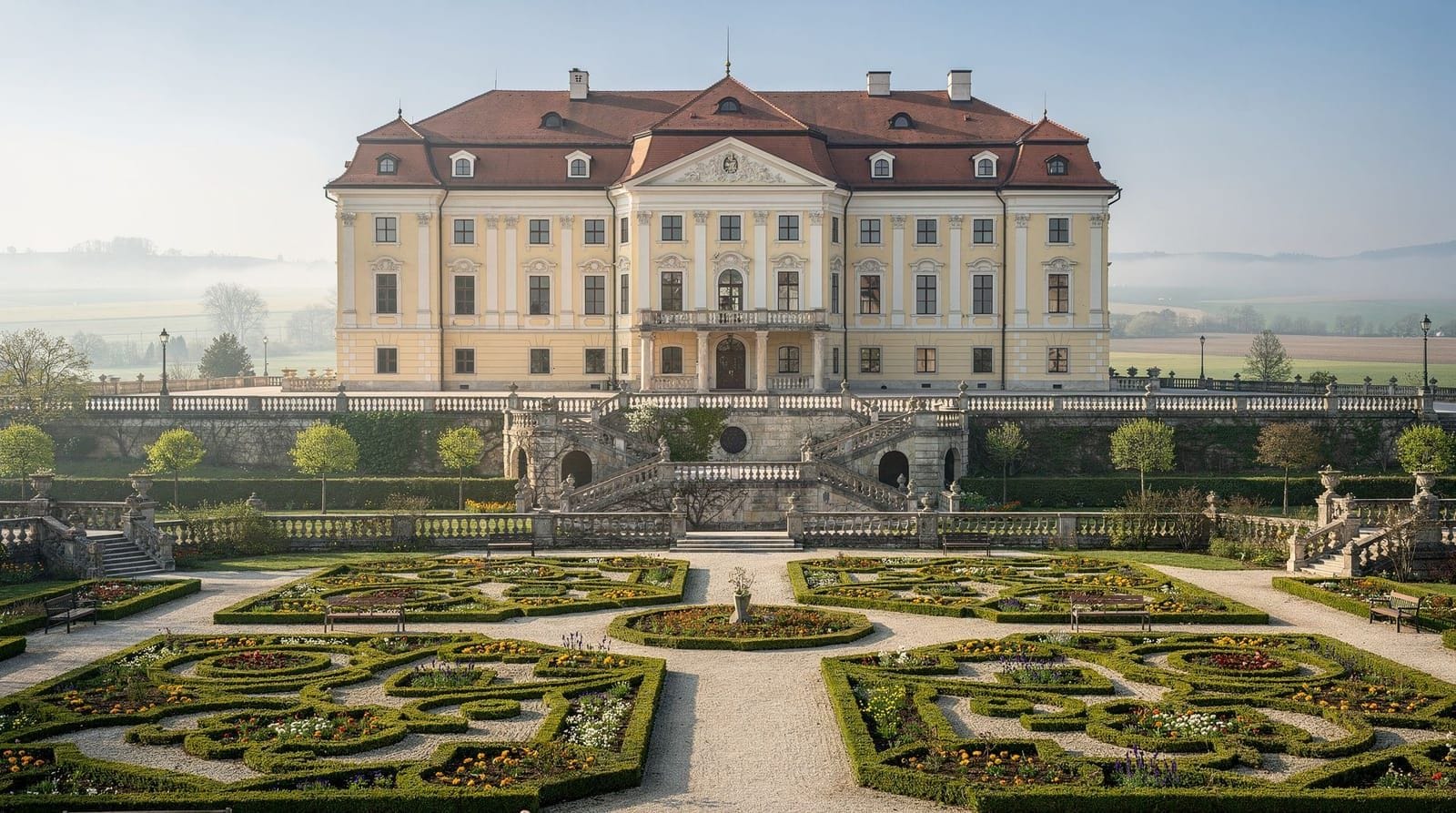
Schloss Hof is a Habsburg baroque palace roughly 30 km from Bratislava across the Austrian border — a short drive, or reachable by organised tour or bus. For families, its defining feature is the working farm on the palace grounds: donkeys, pigs, goats, horses, and rabbits in a well-maintained farmyard setting that engages children from toddler age upward. The baroque terraced gardens are beautiful and the palace interiors give older children a sense of how extraordinary the Habsburg court life was. Children’s workshops run on selected weekends. The combination of high culture and farm animals in one site is unusual enough to make Schloss Hof genuinely memorable — and Slovak children and adults both rate it highly.
Devín Castle half-day
For families who want a shorter outing than a full Schloss Hof or Červený Kameň day, Devín Castle works well as a half-day trip: the ruins are fascinating for older children, the riverside setting offers a picnic spot, and the return journey — by bus or bicycle — is straightforward. The castle is open year-round (closed Mondays), with reduced hours outside summer.
Practical information for families
Accessibility and pushchairs
The Old Town’s main squares — Hlavné námestie and Hviezdoslavovo námestie — are flat and manageable with a pushchair or pram. Side streets between them are cobbled; the cobbling is uneven in places, which can make pushchair navigation awkward on the narrowest lanes. The key museum buildings (Slovak National Museum, City History Museum) have step-free entry points, though internal circulation varies. Eurovea shopping centre on the Danube riverfront is fully accessible and has well-equipped baby changing rooms — useful as a practical base for a riverfront afternoon.
Transport within the city
Bratislava’s public transport network covers the city well. A day pass is economical for families and covers unlimited trams, buses, and trolleybuses. Children under 15 travel at a reduced rate; children under 6 travel free. The public transport guide covers ticketing in detail. For the zoo, tram lines from the city centre run directly to Mlynská dolina; for Kuchajda lake, trams to Nové Mesto are the simplest approach.
Where to stay with children
Families who want to minimise transport time and maximise spontaneous exploring should stay in or immediately adjacent to the Old Town. Apartments available through booking platforms in the Old Town offer more space than hotel rooms at competitive rates — particularly useful for families with young children who need a base with kitchen facilities. For hotels, the Sheraton on the Danube riverfront has a pool; for a boutique option, the Marrol’s Hotel is centrally located and family-friendly without being specifically child-focused. The where to stay guide covers the different district options.
Building a family itinerary by trip length
For a short weekend, keep it simple: one morning in the Old Town (flat, pushchair-friendly, and covered in the old town walking guide), one half-day outdoor activity such as the zoo or Kuchajda lake, and one meal built around trying traditional Slovak food. For a full week, add a day trip to Senec for swimming, a half-day at Devín, and — for families with older children — Červený Kameň or a Čunovo whitewater session. The family weekend itinerary lays out a ready-made two-day plan if you would rather follow a structured schedule than build your own from this directory.
Packing and timing notes
Bring comfortable shoes for the zoo and Devín (both involve real walking on uneven ground), a swimsuit and towel if there is any chance of a Senec or Zlaté piesky visit, and light layers — Bratislava’s weather can shift quickly between a sunny morning and a cooler, breezy riverside afternoon. Most museums and the zoo are considerably quieter on weekday mornings than on weekend afternoons, which matters if you are travelling with children who do not do well in crowds.
Frequently asked questions about family activities in Bratislava
Is Bratislava a good destination for families with young children?
Yes — particularly for families with children aged 4 and up. The Old Town is compact and walkable, public transport is reliable, and the mix of outdoor space, museums, and day-trip options suits most ages. Toddlers can enjoy the Zoo, Kuchajda lake, and the Saturday market; older children and teenagers have access to Devín, Čunovo watersports, and the castle day trips.
What is the best day trip for families near Bratislava?
Červený Kameň castle is the most consistently rewarding family day trip: the intact interiors with armour and knights’ rooms work brilliantly for children aged 6 and up, the setting in the Small Carpathians is scenic, and there are good picnic spots. Schloss Hof is the better choice if you have younger children (under 6) because the farm animals are engaging from toddler age. Senec lakes are the first choice if a beach day is the priority.
Is the Bratislava Zoo worth visiting?
For families with children under 12, yes. It is well maintained, not overcrowded by the standards of major European zoos, and has a miniature railway and petting area that young children love. The African savanna section is the most recent major addition. Plan two to three hours and visit on a weekday morning if possible.
Can children cycle the Danube path to Devín?
Yes, from around age 7 on a standard children’s bike. The towpath is flat and well surfaced, roughly 12 km each way. Bike hire in the Old Town includes children’s bikes, tag-along attachments, and child seats. The return leg is slightly easier in summer as the prevailing wind tends to push eastward in the afternoon.
What are the best indoor activities on a rainy day?
The Museum of Transport on Štefánikova is the first choice for children aged 4-10. The Natural History Museum at the Slovak National Museum is good for ages 5-12. The City History Museum’s dungeon section works well for children aged 8 and up. English-language films at Cinema City Eurovea are available for most major releases if you need a couple of hours with older children.
Are there Slovak food experiences suitable for children?
Yes. Halušky with bryndza is the signature dish and children who like pasta or dumplings almost always enjoy it. Lokše flatbreads with sweet fillings are a reliable option for cautious eaters. The Saturday market on Štefánikova is good for grazing with children. Several Old Town restaurants have children’s portions and relaxed atmospheres; Stará Sladovňa has a beer garden that works well for families in summer.
How easy is it to visit Bratislava as a family without a car?
Very easy for the city itself — public transport covers the main attractions well. For day trips, Devín is reachable by bus and the Senec lakes are reachable by bus from the Mlynské nivy bus station. Červený Kameň and Schloss Hof are more awkward without a car, though organised tours cover both destinations in summer.
How many days do you need for a good family trip to Bratislava?
A weekend (2 days) covers the Old Town and one bigger outing comfortably. A full week lets you add Senec, a castle day trip, and a slower pace with downtime between activities — genuinely useful with younger children who tire quickly. See the 3-day itinerary for a structure that works well for families too.
Family-friendly tours
Verified deep-linked GetYourGuide tours. Book through these links and we earn a small commission at no cost to you.