Danube cruise from Bratislava to Vienna: Twin City Liner guide
Is there a boat from Bratislava to Vienna?
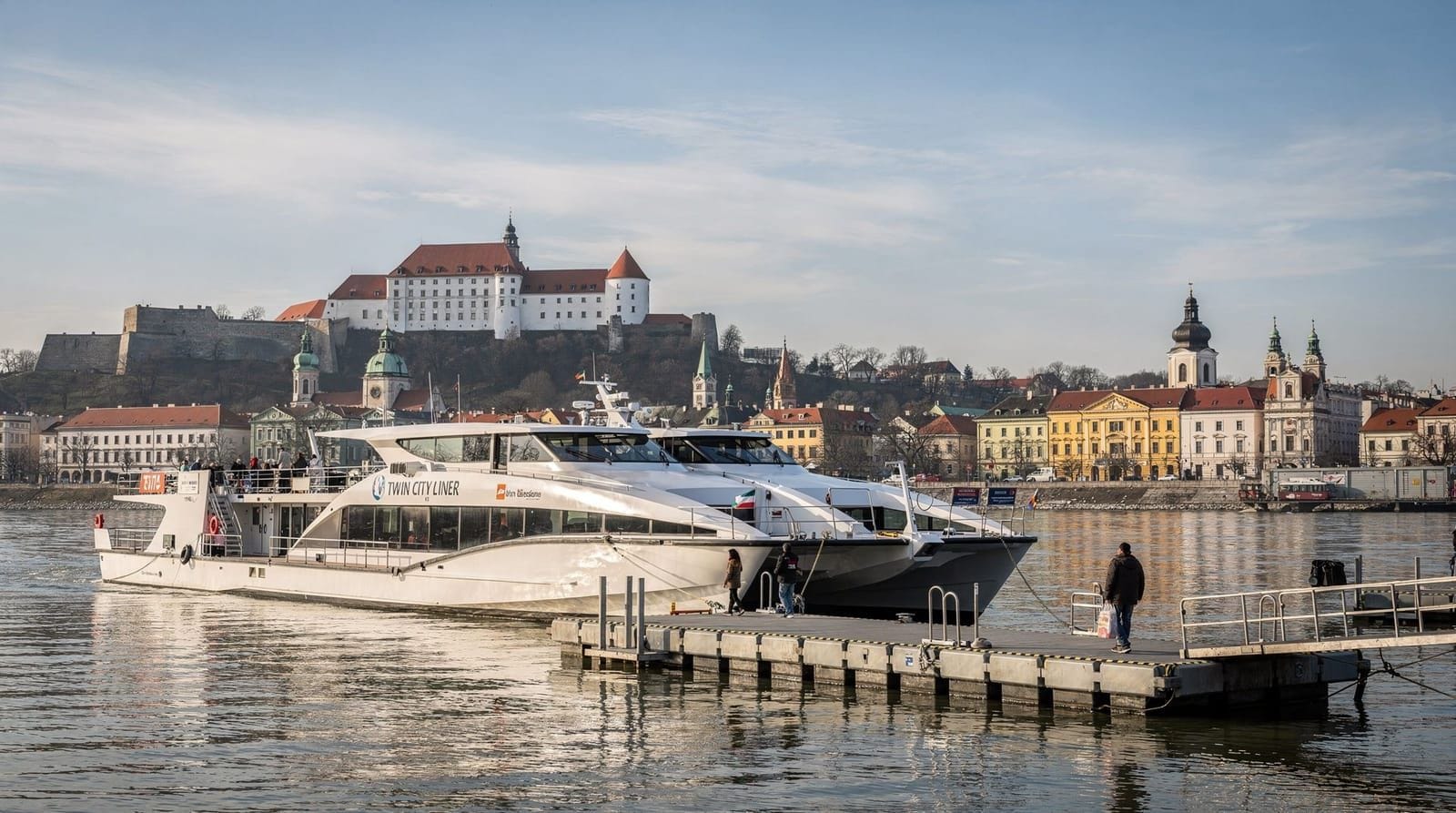
Yes — the Twin City Liner catamaran runs April to October, taking about 1h 45min. It departs from Bratislava's Passenger Port near the Old Town and arrives at Vienna's Schwedenplatz.
At a glance
| Where | Bratislava’s Fajnorovo nábrežie terminal to Vienna’s Schwedenplatz |
| Cost | Around €28–32 one-way, €46–52 return per adult; children 6–14 around €14–16 |
| Time needed | About 1h 45min downstream (Bratislava to Vienna), around 2h upstream |
| Season | April to October only — no winter service |
| Best time | Morning departure downstream for a full day in Vienna, afternoon return upstream |
Of all the ways to travel between Bratislava and Vienna, the Twin City Liner is the one that turns the journey into an event. The high-speed catamaran covers the 80-kilometre stretch of the Danube between the two capitals in approximately 1 hour 45 minutes, gliding past the Devín cliff and ruins, through the floodplain nature reserves of the March-Donauland, and along the Viennese Danube Canal to arrive at Schwedenplatz in the heart of the Austrian capital. It is slower than the train and considerably more expensive, but the experience of arriving in Vienna by river — watching the city’s waterfront emerge from the Danube bend — is unlike anything the rail approach offers.
This guide covers everything you need to know about the Twin City Liner: the operator, timetables, prices, how to book, what you see from the water, the boarding process at both ends, and practical tips for building the best possible day around the catamaran experience.
The Twin City Liner: operator and background
The Twin City Liner is operated by Central Danube GmbH (Centralschifffahrtsgesellschaft Donau), a Vienna-based company that has run the catamaran service since 2006. The vessel is a high-speed catamaran capable of speeds up to 85 km/h, which allows it to cover the Bratislava-Vienna route in under two hours despite the sinuous course of the Danube.
The service was conceived as a premium alternative to the train connection — not primarily as a tourist attraction but as a genuine intercity commuter and business route. In practice, the majority of passengers on any given crossing are tourists, but the infrastructure (passenger terminals, reliable scheduling, the catamaran itself) reflects the original intercity ambition. The service has evolved over its 20 years of operation and has become a signature experience of the Bratislava-Vienna corridor.
The catamaran carries approximately 200 passengers per crossing. The interior is clean, modern, and air-conditioned, with airline-style seating, large panoramic windows, and an onboard café serving coffee, wine, beer, sandwiches, and pastries. There is no freight capacity; the service is passengers and hand luggage only.
Timetables and season
The Twin City Liner operates seasonally from April through October. It does not run in winter. Within the season, schedules vary by month:
April and October: Typically one departure daily in each direction (one Bratislava→Vienna, one Vienna→Bratislava), operating on most days but with some days off each week.
May, June, and September: Generally two departures daily in each direction, on most or all days of the week.
July and August: The peak season, with two departures daily in each direction on all days.
Exact departure times vary year to year and are published on the Twin City Liner website (twincityliner.com) in advance of each season. As of recent seasons, the typical morning departure from Bratislava has been around 8:30am to 9am, arriving in Vienna around 10:30am. The afternoon departure from Vienna back to Bratislava has typically left around 4pm to 5pm. These times allow a comfortable day in Vienna using the catamaran.
The crossing from Vienna to Bratislava (upstream) takes approximately 2 hours, slightly longer than the downstream Bratislava-to-Vienna crossing (approximately 1h 45min). Factor this into your return planning if you are combining with a full day in Vienna.
GetYourGuideBratislava panorama cruise on the Danube RiverCheck availability →Prices and tickets
One-way fare: approximately €28–32 per adult for a standard seat. Prices have increased incrementally over recent seasons.
Return fare: approximately €46–52 per adult, typically representing a modest saving over two one-way tickets.
Children: Children between 6 and 14 travel at a reduced rate (approximately €14–16 one-way). Children under 6 travel free.
Concession rates: Students and seniors sometimes qualify for reduced fares — check the booking page for current eligibility.
What is included: The ticket price covers the crossing and your seat. Onboard food and drink are sold separately at the café.
Tickets can be booked directly on the Twin City Liner website, which is the most reliable and cheapest booking channel. Third-party booking platforms also sell the tickets, sometimes with a small markup. There is no significant advantage to booking at the terminal on the day unless the crossing is unlikely to be full — in July and August, popular dates sell out in advance, particularly the Friday afternoon return from Vienna.
Booking in advance is strongly recommended in peak season. The catamaran capacity is limited and the morning departures in summer regularly fill up weeks ahead. The return crossing on Friday and Sunday afternoons (Vienna to Bratislava) fills particularly quickly.
Boarding in Bratislava
The Bratislava terminal is at Fajnorovo nábrežie, on the Danube riverfront immediately below the Old Town, near the Most SNP (New Bridge). The address is Fajnorovo nábrežie 2, Bratislava. It is a pleasant 10-minute walk from the main Old Town square (Hlavné námestie) through the waterfront area.
The terminal itself is a modern glass-and-steel passenger building with a waiting area, small café, and ticket desk. Check-in opens approximately 30 minutes before departure. Passengers are asked to arrive at least 15 minutes before departure for boarding; the catamaran leaves promptly and does not wait for late arrivals.
Luggage is stored in a hold beneath the seating deck. Large suitcases can be taken on board but must be stored below. Backpacks and small bags can remain at your seat. There is no significant security screening — the boarding experience is more like a ferry than an airline.
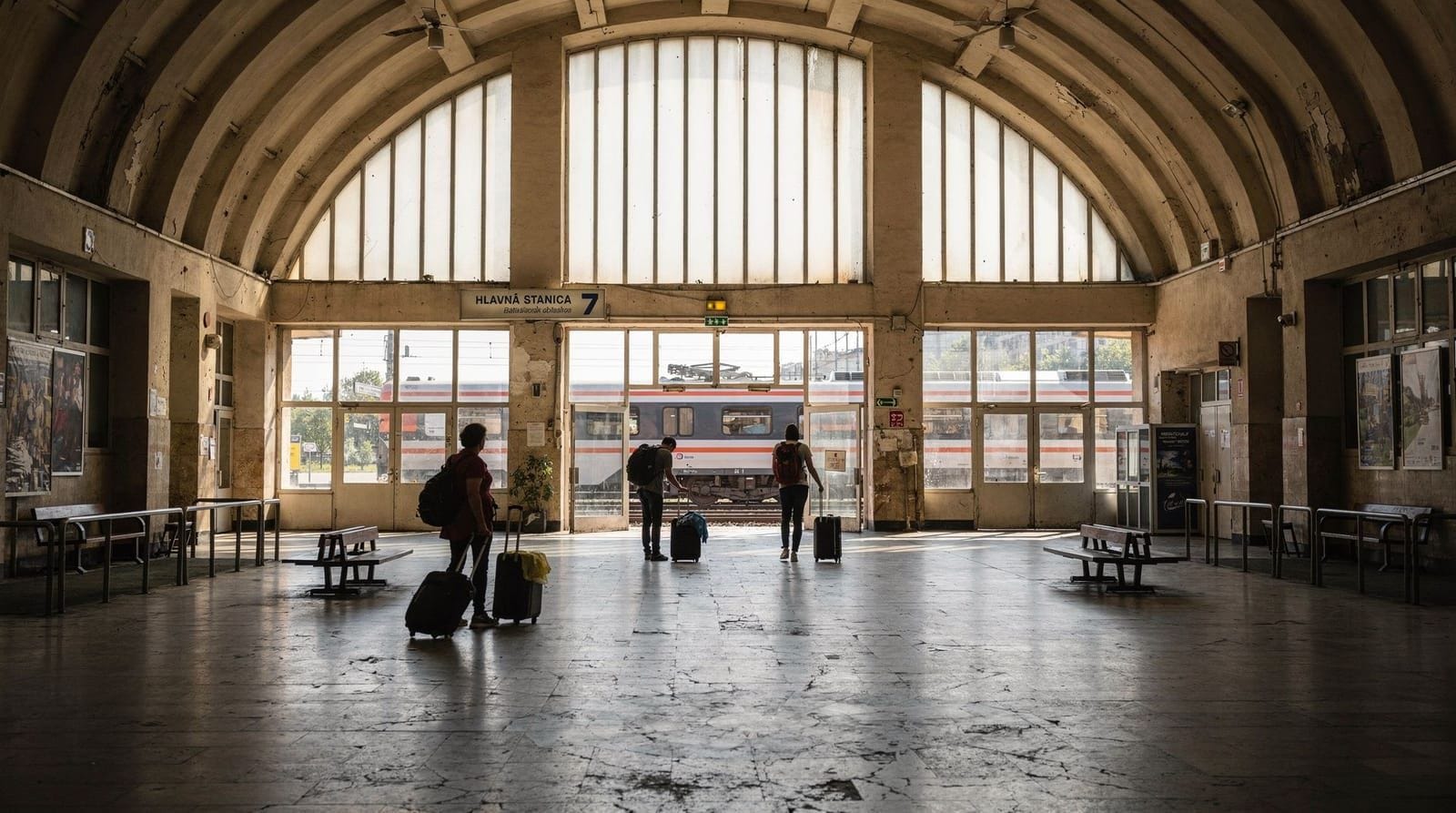
If you are combining the Twin City Liner with the morning train from Vienna, the sequence is: arrive at Bratislava Hlavná stanica by train, take tram or walk to Fajnorovo nábrežie (about 15–20 minutes), board the catamaran.
Boarding in Vienna
The Vienna terminal is at Schwedenplatz, in the First District, immediately adjacent to the Danube Canal and a short walk from Stephansdom and the historic city centre. Schwedenplatz is served by the U1 and U4 metro lines, making it an ideal arrival point: step off the catamaran and within 10 minutes you can be at Stephansplatz, the Ringstrasse, or the Naschmarkt, depending on which metro line you take.
The Vienna terminal is a smaller facility than the Bratislava one — essentially a passenger pier with a covered waiting area. Check-in procedures mirror those in Bratislava: arrive 15–20 minutes before departure, show your ticket (digital or printed), and board via the gangway.
GetYourGuideBratislava cruise — Devín Castle round tripCheck availability →What you see from the water
The river journey between Bratislava and Vienna is genuinely scenic and the views vary considerably along the route. Here is what to look out for on the downstream (Bratislava to Vienna) crossing:
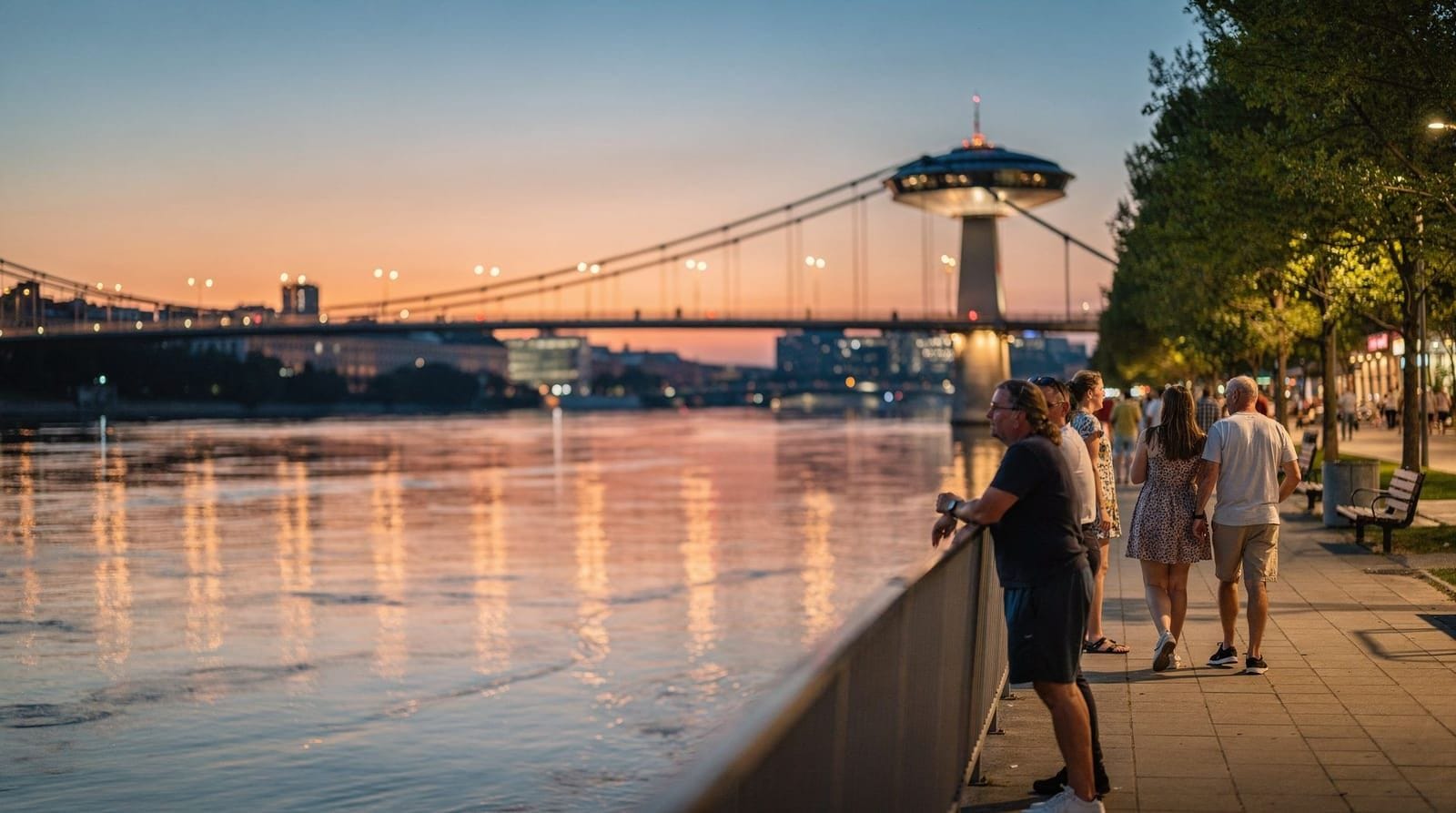
Leaving Bratislava: The Bratislava skyline — Bratislava Castle above, the UFO bridge tower, the Old Town waterfront — is best seen from the water as the catamaran pulls away. This backward view of the city is one of the better angles available.
Devín Castle: About 15 minutes out of Bratislava, the catamaran passes below the dramatic cliff of Devín, with the ruins of Devín Castle visible on the promontory above. The confluence of the Danube and the Morava river is just visible; this marks the point where Bratislava’s western edge meets the Austrian border. The views are brief but striking.
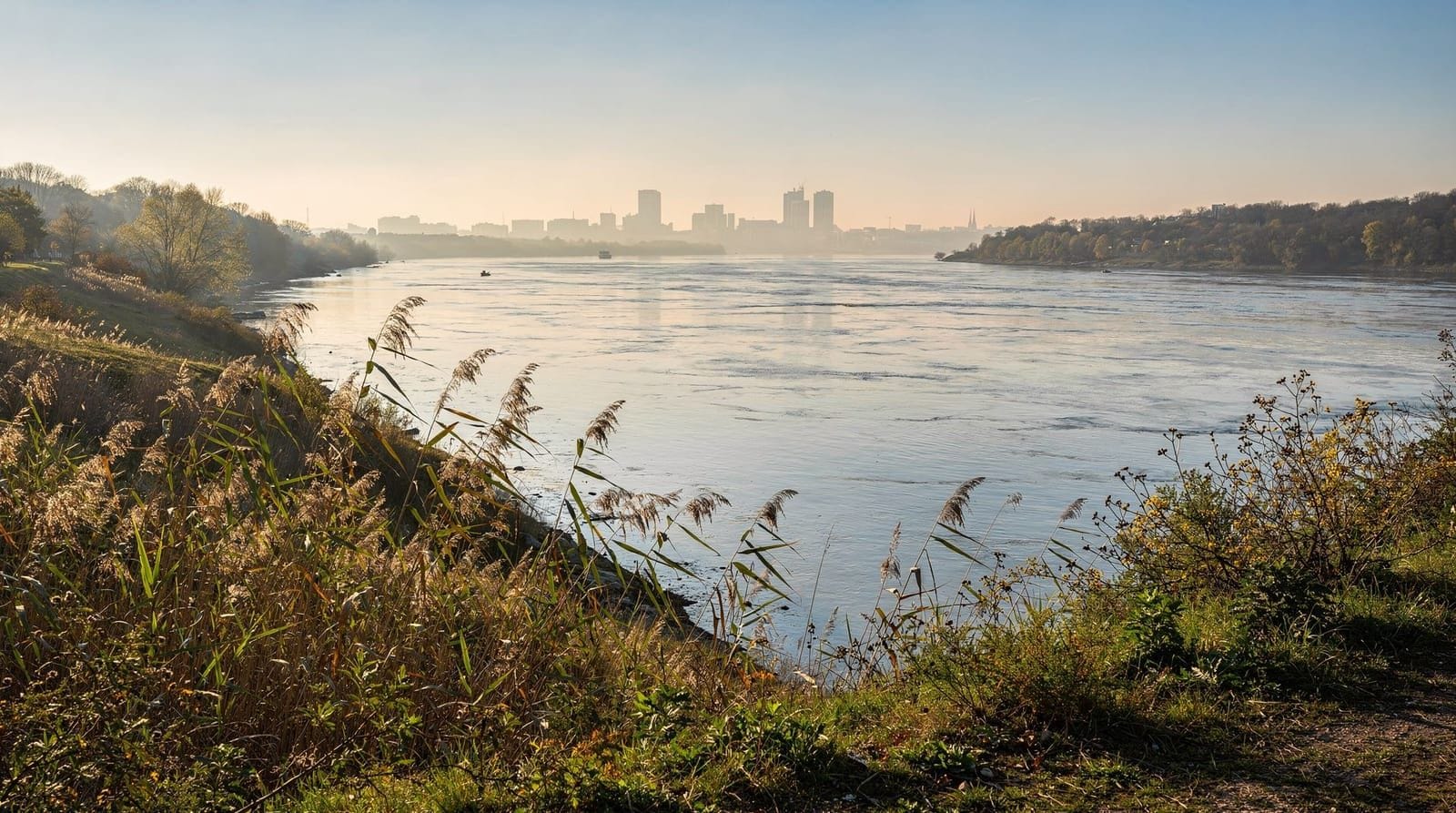
The March-Donauland nature reserve: The Danube widens and the landscape becomes flat and wild — floodplain forest, wetland meadows, and gravel islands. This UNESCO Biosphere Reserve on both the Austrian and Slovak sides is one of the last significant Danube floodplain ecosystems in Central Europe. Great white egrets, cormorants, and various herons are regularly visible from the deck in season.
Hainburg: The Austrian town of Hainburg an der Donau, with its own castle ruins (Hainburg Burg) on the hill above, appears on the Austrian bank roughly halfway through the journey. The ruins are visible from the water.
Approach to Vienna: The Danube narrows into the Danube Canal as the catamaran enters the Vienna section. The Viennese embankment architecture appears — apartment blocks, the Urania observatory, and eventually the Schwedenplatz area come into view as you dock.
On the upstream return journey (Vienna to Bratislava), the sequence reverses and the light changes — afternoon light on the Bratislava approach is generally better than morning for photography.
GetYourGuideBratislava private Danube River cruise with drinksCheck availability →Combining the catamaran with a Vienna day trip
The most popular approach among experienced Bratislava visitors is to go to Vienna by train in the morning (fast, cheap, arrives early to maximise time) and return by Twin City Liner in the late afternoon (scenic, relaxed, memorable). This is only possible from April to October.
A typical one-direction catamaran day looks like this:
- 7:30am: Take the train from Bratislava to Wien Hbf (1 hour)
- 8:30am: Arrive in Vienna, start exploring
- Morning: Kunsthistorisches Museum or Schönbrunn Palace
- Lunch: Naschmarkt
- Afternoon: Belvedere or Hofburg
- 4pm: Walk to Schwedenplatz (15 minutes from Stephansplatz via U4)
- 4:30pm (or whenever the afternoon departure is scheduled): Board the Twin City Liner
- 6:15–6:30pm: Arrive back at Bratislava’s waterfront
The reverse — catamaran in the morning, train back — also works if you prefer to maximise morning time in Vienna after the river arrival and return late. In this case, arriving by catamaran around 10:30am and returning by the 8 or 9pm train gives you a full afternoon and evening in Vienna.
Return by catamaran only: if you take the catamaran both ways, the first departure from Bratislava typically leaves too late (around 8:30–9am) to have a full morning in Vienna before the return afternoon crossing. Two-way catamaran makes most sense if the journey experience itself is the priority rather than maximising time in Vienna.
Shorter Danube cruises from Bratislava
If a full trip to Vienna on the Twin City Liner is beyond your budget or schedule, several shorter river excursions operate from the Bratislava waterfront:
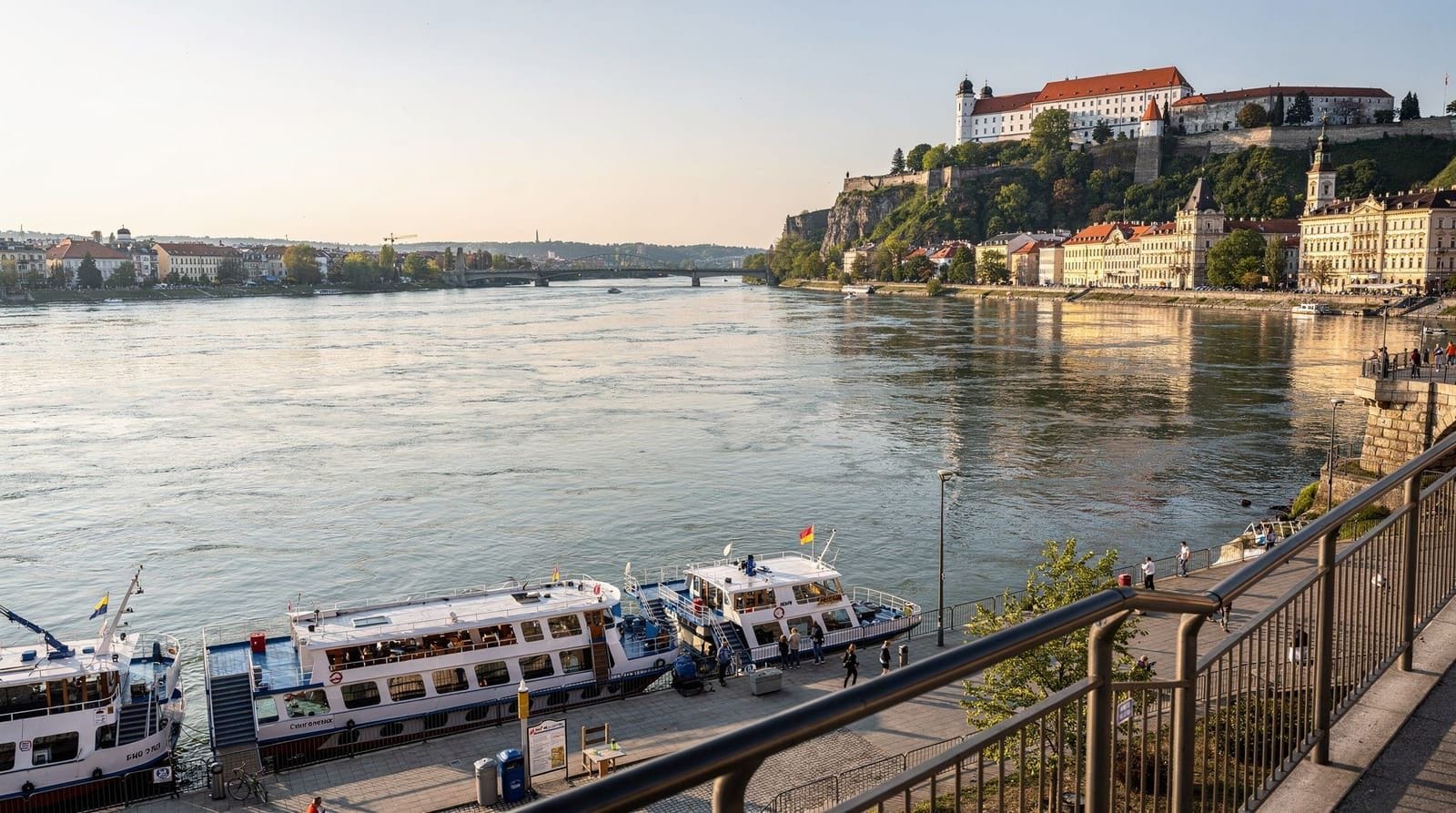
River sightseeing boats: Seasonal boat tours lasting 1–2 hours depart from the Bratislava passenger port (near the same Fajnorovo nábrežie terminal) and cover the Bratislava waterfront, the area below Devín cliff, and the Danube islands. These cost approximately €12–18 per adult and give you the river experience without the full Vienna commitment.
Devín Castle river cruise: Some operators run a boat tour to Devín Castle from Bratislava’s waterfront, travelling by river rather than the bus. This is a seasonal, occasional service rather than a regular scheduled route; check current offerings at the tourist information office near the Old Town.
Sunset and evening cruises: Summer evening boat trips on the Danube from the Bratislava waterfront are a popular local activity, typically including wine or drinks and lasting 1.5–2 hours. These are more social than sightseeing-focused. Book through the tourist office or waterfront operators in season.
See the Danube cruises overview for a full comparison of all the river options from Bratislava.
Practical tips for the Twin City Liner
Book early. Friday and Sunday departures in July and August sell out weeks in advance. April–May and September–October crossings are much easier to book last-minute. If you have a specific date in mind, book it when you book your accommodation.
Sit on the right side. Travelling from Bratislava to Vienna, the Austrian riverbank is on your right (south), where the Hainburg castle and more of the scenic river width is visible. On the Vienna to Bratislava upstream crossing, the Devín cliff comes up on the left (north). Either way, seats near windows on both sides offer good views — the catamaran is narrow enough that most seats have reasonable visibility.
Bring an extra layer. The deck observation area (when weather permits) is open air and can be cool even in summer at the catamaran’s speed. The interior is air-conditioned and can also be cool. A light jacket is useful.
Check the current schedule before you go. The Twin City Liner has been known to adjust its seasonal schedule, add or remove departures depending on demand, and occasionally cancel individual crossings for maintenance. Always confirm your specific departure on the website before relying on it.
Combine with the Bratislava waterfront. After returning to Bratislava by catamaran, the waterfront area below the Old Town — the embankment cafés, the UFO restaurant approach, and the castle views from the riverside — is excellent for an evening walk. The returning catamaran from Vienna typically arrives in time for a pre-dinner stroll.
Frequently asked questions about the Danube cruise to Vienna
Is the Twin City Liner comfortable?
Yes. The interior is airline-standard seating with air conditioning, large windows, and a café. The catamaran rides smoothly at speed; the Danube is not a particularly rough river, and motion sickness is uncommon. Outside on the small observation deck area, the wind can be significant at full speed.
Can I bring luggage on the Twin City Liner?
Yes. Large bags are stored in a luggage hold below the passenger deck. Backpacks and cabin-bag-sized luggage can be kept at your seat. There is no weight limit per se but extremely large items (full-size suitcases plus additional bags) may be asked to be stored below. If you are using the catamaran as part of a city-to-city transfer with significant luggage, this works fine.
What happens if weather forces a cancellation?
The Twin City Liner occasionally cancels crossings due to high water levels or severe weather. In this case, the operator typically notifies ticket holders by email and offers a refund or rebooking. This is most likely to affect spring departures (April–May) when the Danube is at its highest from snowmelt. Summer cancellations due to weather are rare.
Is the Twin City Liner accessible for passengers with mobility difficulties?
The terminal in Bratislava has step-free access to the departure area. Boarding the catamaran itself involves a short gangway ramp and a step onto the vessel. Passengers in wheelchairs should contact the operator in advance to discuss specific assistance needs. The observation deck area is not wheelchair accessible; the interior seating deck is accessible via the main entrance.
Can I buy tickets on board?
If there are unsold places on the day’s crossing, tickets can sometimes be purchased at the terminal desk. However, the catamaran operates a fixed-capacity system and does not allow boarding without a ticket. Buying on the day is possible only if the crossing is not sold out; in peak season, this is unreliable. Always book in advance.
How much does the onboard food and drink cost?
Onboard café prices are in line with airport pricing: expect to pay approximately €3.50–4 for a coffee and €5–7 for a beer or glass of wine. Sandwiches and snacks are €5–9. The café is a full bar service; Austrian wine is available. Bringing your own food on board is permitted.
Does the Twin City Liner run the Vienna to Bratislava direction too?
Yes. The service runs in both directions daily during the season. The Bratislava to Vienna crossing is downstream (faster, ~1h 45min); Vienna to Bratislava is upstream (~2 hours). Both directions use the same terminal locations: Bratislava’s Fajnorovo nábrežie and Vienna’s Schwedenplatz.
Is the Twin City Liner cheaper or better value than the train?
No — the train is both cheaper and faster. A Bratislava-Vienna train takes about an hour and costs well under the catamaran’s €28–32 one-way fare. The Twin City Liner is a scenic, premium experience rather than the practical choice; most experienced visitors take the train one way and the catamaran the other, as described above, to get the best of both. See trains to Vienna, Budapest and Prague for the rail comparison.
Planning the rest of your trip around the crossing
The catamaran works best when the rest of the trip is planned around it. For a fuller picture of the Vienna side, the Vienna day trip guide and the Vienna day trip destination page cover what to prioritise once you step off at Schwedenplatz. If you would rather spend several days in the region, the Bratislava and Vienna combo itinerary shows how the two cities fit together.
If you are arriving by air, the Vienna airport to Bratislava guide explains how to reach the city before you ever think about the river. Once in town, the Twin City Liner overview gives a second angle on the same service, and getting around Bratislava helps with the walk or tram ride to the terminal.
On a quieter day in Bratislava, the river is only one of several good options. The Devín Castle guide pairs well with the part of the route that passes beneath the cliff, and the summer on the Danube guide collects other warm-weather ideas along the waterfront. If you are weighing the two capitals against each other, Bratislava vs Vienna is a useful read before you commit to a full day away.
The Danube experience beyond the catamaran
The Twin City Liner is the premium Danube connection, but it is not the only way to experience the river from Bratislava. If you are interested in the Danube more broadly — its ecology, its role in Central European history, the cycling routes along its banks, and the shorter excursions available from the waterfront — the Danube cruises overview guide covers all the options.
For travellers who want to arrive in Bratislava by boat from Vienna and then explore by bicycle, the connection between the Twin City Liner and the EuroVelo 6 Danube cycle route is natural: the Bratislava waterfront terminal is the starting point for the cycle path that runs west along the Danube to Devín and into Austria. See the Danube riverside cycling guide for route details.
tours.vienna
Verified deep-linked GetYourGuide tours. Book through these links and we earn a small commission at no cost to you.