Why Bratislava is Europe's most underrated capital
| At a glance | |
|---|---|
| Where | Central Europe, on the Danube, bordering both Austria and Hungary |
| Cost | Around 50–80 € a day for meals, a sight or two, and evening drinks |
| Time needed | A weekend is a good minimum; two nights lets you add the wine region |
| Getting there | ~1 hour from Vienna by train or boat, ~2.5 hours from Budapest, ~4 hours from Prague |
| Best time | Late spring (May–June) or early autumn (September–October) |
The capital that nobody talks about
There’s a moment that happens to almost every traveller who arrives in Bratislava for the first time. You step out of the train station, walk twenty minutes into the old town, and think: why did nobody tell me about this place?
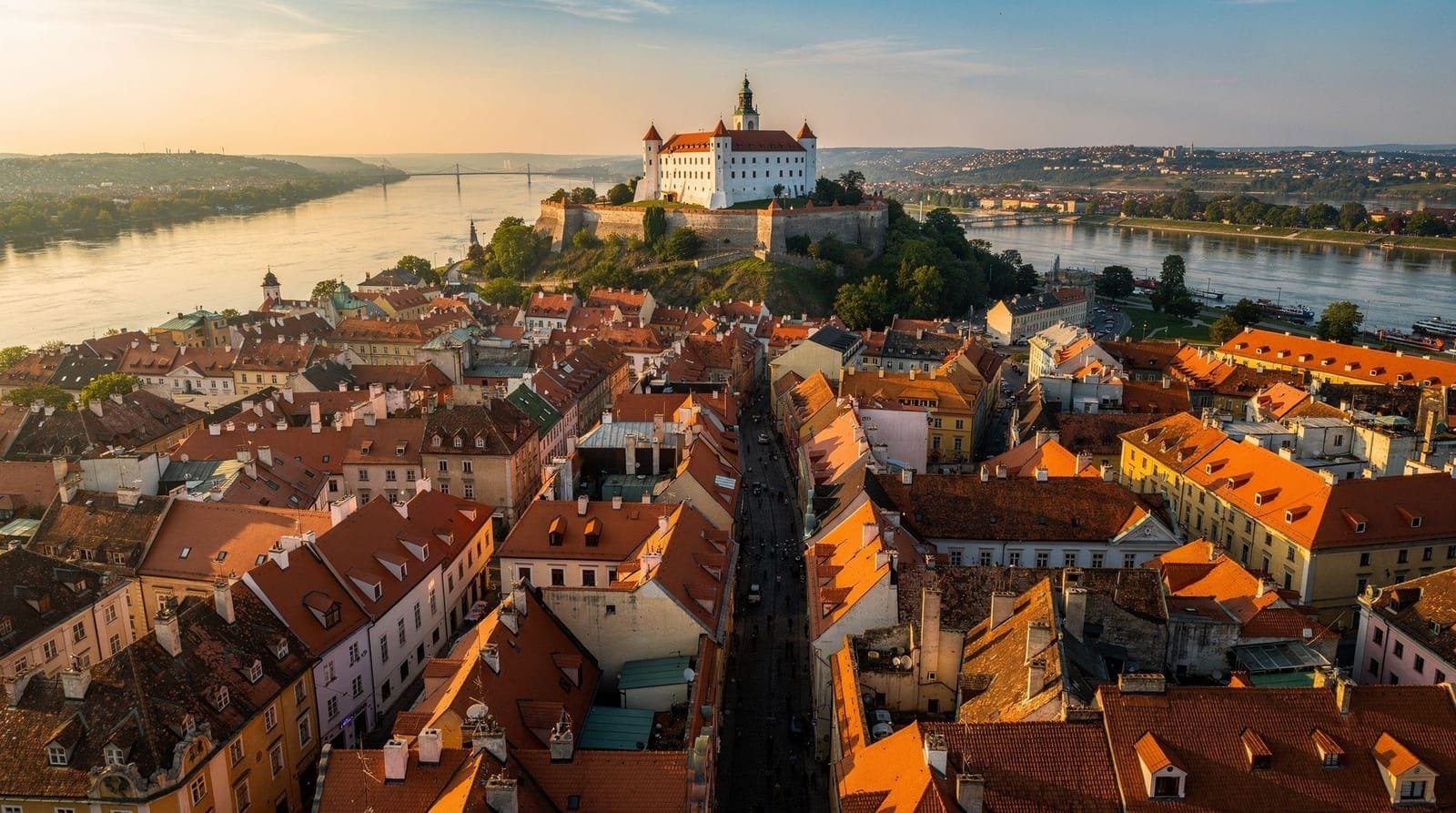
The cobblestones are quieter than Prague’s. The prices are lower than Vienna’s. The castle sits above the Danube like it owns the whole valley — and on a clear morning, it practically does. You can eat a proper Slovak lunch for 9 €, drink a half-litre of local Zlatý Bažant for 2.50 €, and wander the old town without once being herded by a tour group.
That’s the honest story of Bratislava in 2026. It’s not perfect. It has rough edges. But as European capitals go, it’s one of the most rewarding cities to visit precisely because the tourist industry hasn’t caught up with the reality on the ground.
This piece is an attempt to explain why — and to be honest about what Bratislava still lacks, so you can decide if it’s right for you.
How it compares to Vienna, Prague, and Budapest
Most people who visit Bratislava arrive from one of three directions: Vienna to the west (~1 hour by train or bus), Budapest to the east (~2.5 hours), or Prague to the north (~4 hours). The comparison is inevitable, and it’s worth making directly.
Vienna is magnificent and exhausting. The museums are world-class but entry costs 15–20 € each. A coffee at a Kaffeehaus sets you back 4–5 €. Everything is immaculate, everything is expensive, and you leave feeling simultaneously cultured and slightly bankrupt. Bratislava and Vienna share a border that was, for decades, an Iron Curtain. The contrast between the two cities tells a story that no museum exhibit can replicate. If you’re curious about that history, the communist and Iron Curtain history guide covers it well.
Prague is beautiful but has become a victim of its own success. The old town is genuinely stunning, but the stag party industry has colonised large parts of it. In high season, the Charles Bridge is more crowded than an airport terminal. Restaurant menus near the centre are written in six languages and priced accordingly. Bratislava’s old town is a fraction of the size — but that also means you can actually experience it without elbowing through tour groups.
Budapest is arguably the closest comparison. It’s bigger, more dramatic, with the Danube cutting through on a grander scale. It also has genuine rough edges — a more complex political situation, higher street crime in tourist areas, and prices that have climbed steeply in recent years. Bratislava feels more contained, more manageable, and — for a weekend trip — easier to get right.
What Bratislava offers that none of these cities quite match is a sense of discovering something on your own terms. The infrastructure for visitors is good enough — you can find good food, decent accommodation at fair prices, and reliable transport — but it hasn’t been polished into a theme park version of itself. See the Bratislava vs Vienna and Bratislava vs Prague and Budapest comparisons for a side-by-side breakdown.
What makes it genuinely worth visiting
The old town is small enough to actually know
Bratislava’s pedestrianised old town can be walked end-to-end in fifteen minutes. That’s not a criticism — it’s a feature. By the end of a single afternoon, you start to feel like you know the place. You recognise the woman selling trdelník near Michalská brána, the café where locals queue for espresso at 8am, the square where pigeons congregate around Maximilian’s fountain.
Michalská brána — the last remaining city gate, dating to the 14th century — is the unofficial entry point to the old town. It’s free to approach, and the narrow street that passes beneath it is one of the most photographed spots in the city. The Michalská brána guide has more detail on its history and the tower museum inside.
From there, the old town walking route takes you past the Main Square (Hlavné námestie), the old town hall, and the whimsical bronze statues that Bratislava has installed at ground level — the paparazzi photographer, Napoleon leaning on a bench, the man emerging from a manhole. They’re tourist traps in the best sense: small, human-scaled, and genuinely charming.
GetYourGuideBratislava classic walking tourCheck availability →The castle is free to visit (mostly)
Bratislava Castle stands on a hill above the Danube and the old town. The grounds are free to enter, open until late evening in summer, and offer some of the best views of the city — including the UFO bridge, the river, and on a clear day, Austria in the distance.
The museum inside charges admission, but the views from the castle terrace cost nothing. Come at golden hour. Bring something from one of the wine bars below. Sit on the stone wall and watch the light change over the Danube. This is the kind of moment Bratislava does better than cities ten times its size. The Bratislava Castle guide covers the museum, the history, and which entrance to use.
The food scene is honest and affordable
Slovak food is not fashionable. It’s hearty, meat-heavy, and built for cold winters. Bryndzové halušky — potato dumplings with sheep’s bryndza cheese and crispy bacon — is the national dish, and it’s the sort of thing that makes you want to go for a long walk afterwards. A proper portion costs 7–9 € in a decent restaurant in the old town.
Beyond the traditional dishes, Bratislava has a small but serious restaurant scene. For lunch without spending much, the covered market (Stará tržnica) has food stalls with fresh, local options for 6–10 €. In the evening, the streets around Obchodná and Laurinská have enough variety to eat somewhere different every night for a week. The best restaurants in the old town guide has specific recommendations with prices.
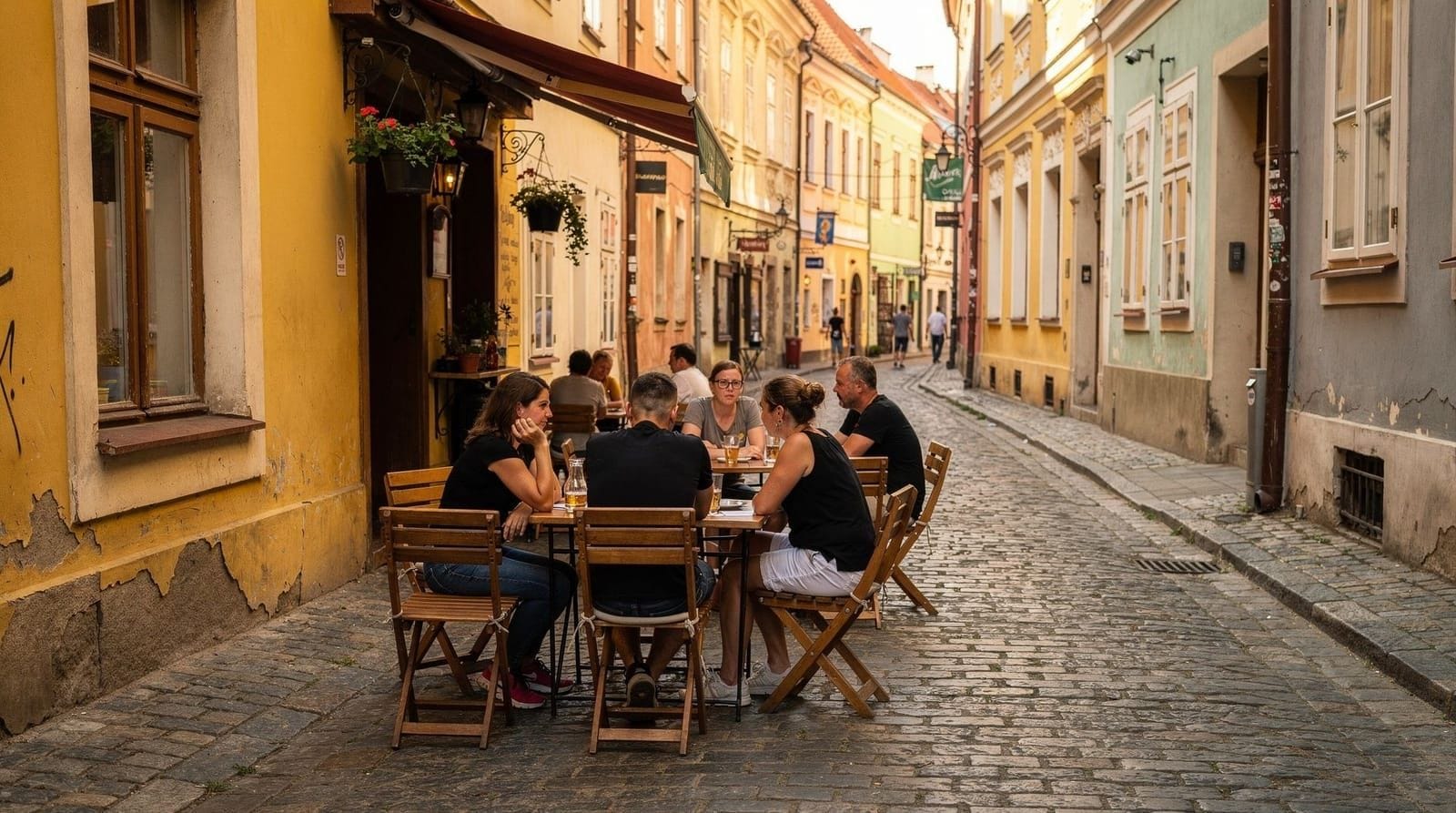
Beer is cheap and good. The local Zlatý Bažant lager costs 2–2.50 € in a bar. Craft beer bars charge 3–4 € for a half-litre. Sitting on a terrace in the old town with a beer in hand on a summer evening costs less than a single espresso in Vienna.
GetYourGuideBratislava 1-hour small group walking tourCheck availability →The wine region is literally twenty minutes away
This is Bratislava’s best-kept secret. The Small Carpathian wine region — Slovakia’s most important wine-producing area — begins at the city’s northern edge. The towns of Pezinok and Modra are 30–40 minutes away by bus, surrounded by vineyards producing Welschriesling, Müller-Thurgau, and local varieties that you’ll almost certainly never encounter outside Slovakia.
A wine tasting in Pezinok at a small family winery costs 10–15 € and typically includes five or six pours with local bread and cheese. The quality is genuinely high. The crowds are nonexistent. If you’re in Bratislava in autumn, the St. Martin’s wine harvest festival is worth planning around — it’s the most atmospheric event in the local calendar.
The Small Carpathians wine guide has winery recommendations and practical transport details.
What Bratislava honestly lacks
It’s worth being direct about this, because no honest travel piece pretends a city is without flaws.
The museum situation is patchy. The Slovak National Museum is worth a visit for the history, but it’s not in the same league as Vienna’s Kunsthistorisches or Budapest’s National Museum. If world-class museums are your primary motivation for travel, Bratislava will feel thin.
The nightlife is concentrated and can feel chaotic. Certain streets in the old town attract stag parties, particularly on weekends. If you’re looking for a quiet Friday evening, you may find yourself competing with groups in matching T-shirts. The Bratislava nightlife guide covers which areas to avoid and which to seek out.
Public transport to outer areas requires planning. Getting to Devín Castle, the Small Carpathians, or the Danubiana art museum at Čunovo is possible by bus, but timetables can be infrequent. Renting a car for a day, or booking a group tour, often makes more sense for day trips.
English is widely spoken in the centre, less so elsewhere. In the old town and most restaurants, you’ll have no language difficulties. Venture further out and a bit of patience helps.
What it costs to visit
For 2026, a realistic daily budget breaks down like this:
Accommodation in a solid mid-range hotel in or near the old town runs 60–100 € per night for a double room. Budget hostels start around 20–25 € per bed. Breakfast — coffee and a pastry at a local café — costs 3–5 €. A two-course lunch at a sit-down restaurant is 9–14 €. Dinner at a good restaurant with a glass of wine: 18–28 € per person. Two or three beers in the evening: 7–10 €.
All told, a comfortable day — proper meals, a museum or two, drinks in the evening — runs 50–80 € excluding accommodation. By Western European standards, that’s exceptional value. The Bratislava budget guide has more detailed breakdowns and the cheapest ways to handle each category.
The “escape” angle
The name of this site is Bratislava Escape, and there’s a reason for that framing. Bratislava works particularly well as an escape from the more exhausting parts of European travel — the crowds, the costs, the sense that you’re following a prescribed tourist circuit.
It’s close enough to Vienna and Budapest that combining all three in a single trip is easy. The Vienna day trip guide and Budapest day trip guide cover the logistics if you want to base yourself in Bratislava and explore the neighbours. Many travellers find this approach — using Bratislava as a quieter, cheaper base — is the best of all worlds.
If you have only a short time and want to make the most of it, start with the Bratislava in one day overview, or the full weekend itinerary for a two-day plan.
Frequently asked questions about Bratislava as a destination
Is Bratislava really worth visiting, or just a day trip from Vienna?
It’s worth both. As a day trip from Vienna, you can cover the old town, the castle, and a decent lunch comfortably. But Bratislava rewards an overnight stay — you get the evening atmosphere, the morning quiet before tour groups arrive, and time to venture beyond the old town. The is Bratislava worth visiting guide makes the case in more detail. In short: if you have the time, stay at least one night.
How cheap is Bratislava compared to Vienna or Prague?
Meaningfully cheaper. Beer costs roughly half what you’d pay in Vienna. Restaurant meals in the old town run 30–50% less than equivalent quality in Prague’s tourist centre. Museum entry is lower, accommodation is lower, and transport within the city is inexpensive. The savings are real, not marginal.
When is the best time to visit Bratislava?
Late spring (May–June) and early autumn (September–October) are the best windows. The weather is pleasant, the crowds are manageable, and in autumn you get the wine harvest season in the Small Carpathians. Summer is fine but July and August bring school groups and more stag tourism. Winter is underrated — the Christmas markets are genuinely good and the old town is beautiful in snow.
Is Bratislava safe for solo travellers?
Yes, straightforwardly. Bratislava has a low violent crime rate. Petty theft in tourist areas is the main concern, as in any city — keep your phone in a pocket rather than displayed on a café table. Solo women travellers report feeling comfortable in the old town, including in the evening. The areas around the bus station late at night are less appealing but not dangerous.
How do you get around Bratislava?
The old town is walkable without question. For further afield — the castle, Slavín memorial, or Petržalka — trams and buses are cheap and reliable. A single ticket costs under 1 €. Day passes are available at kiosks. The public transport guide and getting around Bratislava have everything you need including route numbers.
Can you do Bratislava and Vienna in the same trip?
Absolutely — and many travellers do exactly this. The two cities are 60–70km apart, connected by frequent trains (about 1 hour), buses (about 1.5 hours), and in summer, the Twin City Liner hydrofoil on the Danube. The Bratislava–Vienna combo itinerary lays out how to structure a visit that does both cities justice without feeling rushed.
Is Bratislava still underrated, or has that changed by 2026?
Relative to Vienna, Prague, and Budapest, yes — it’s still comparatively quiet. Weekend crowds have grown, particularly around stag tourism, but the wine region, Petržalka, and most of the city beyond the Old Town remain genuinely undervisited. The window for experiencing Bratislava before it catches up with its neighbours hasn’t fully closed, though it’s narrowing each year.
Culture & heritage tours
Verified deep-linked GetYourGuide tours. Book through these links and we earn a small commission at no cost to you.