Summer on the Danube in Bratislava: your guide to June, July and August
At a glance
| Where | Danube embankment, Čunovo, Zlaté Piesky, Devín |
| Cost | Free riverbank; lake entry around 3–5 €; boat cruises 15–40 € |
| Time needed | A half-day per swim spot or cycle route; a full day for Vienna via Twin City Liner |
| Getting there | Bike path, city bus, or the Danube passenger terminal near the old town |
| Best time | June for mild heat; July–August for full summer swimming weather |
What summer actually feels like here
Bratislava in June, July and August is a different city from the one most visitors know. The Christmas-market crowds are long gone, the old town empties of tour groups by early evening, and the Danube embankment fills with locals who know exactly how to use the river.
June is the sweet spot: 22–26°C most days, long evenings, the city in full bloom. July and August push higher — 26–32°C on average, with heatwaves that regularly hit 35°C and occasionally more. Humidity can make those peaks feel sticky. The good news is that the Danube itself generates a reliable breeze along the embankment, which makes riverside spots noticeably cooler than the cramped streets of the old town at noon.
The rhythm of summer here is shaped around that heat. Locals head out early, retreat indoors or to shade between about 12:00 and 16:00, then emerge again in the late afternoon. If you follow the same logic — morning activity, midday rest, long evening — you’ll have a much better time than if you try to march around in full sun at 13:00.
For orientation on the best months to visit more broadly, the best time to visit guide covers the full year. This piece is specifically about getting the most from summer on and around the Danube.
The Danube embankment (Nábrežie)
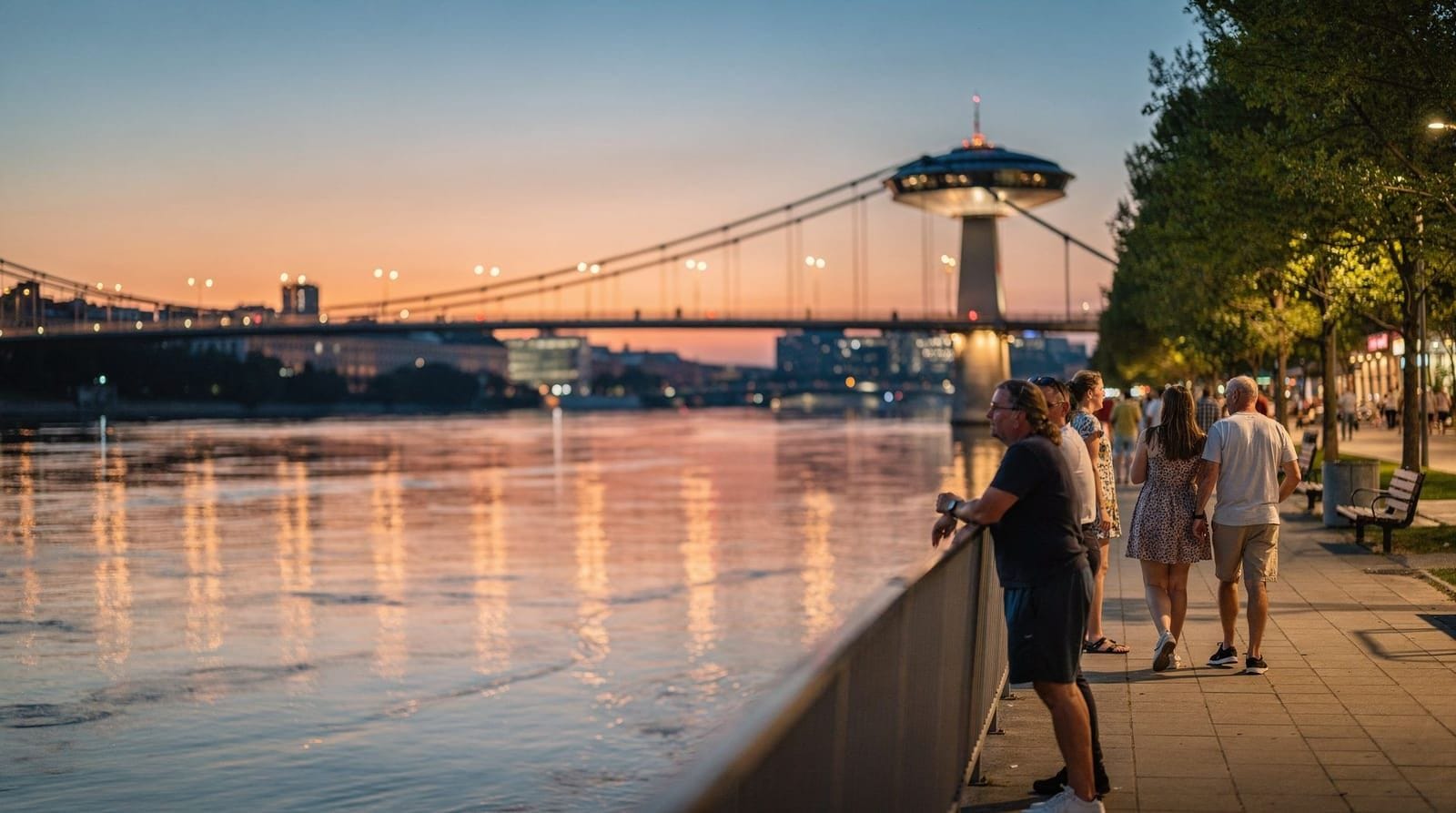
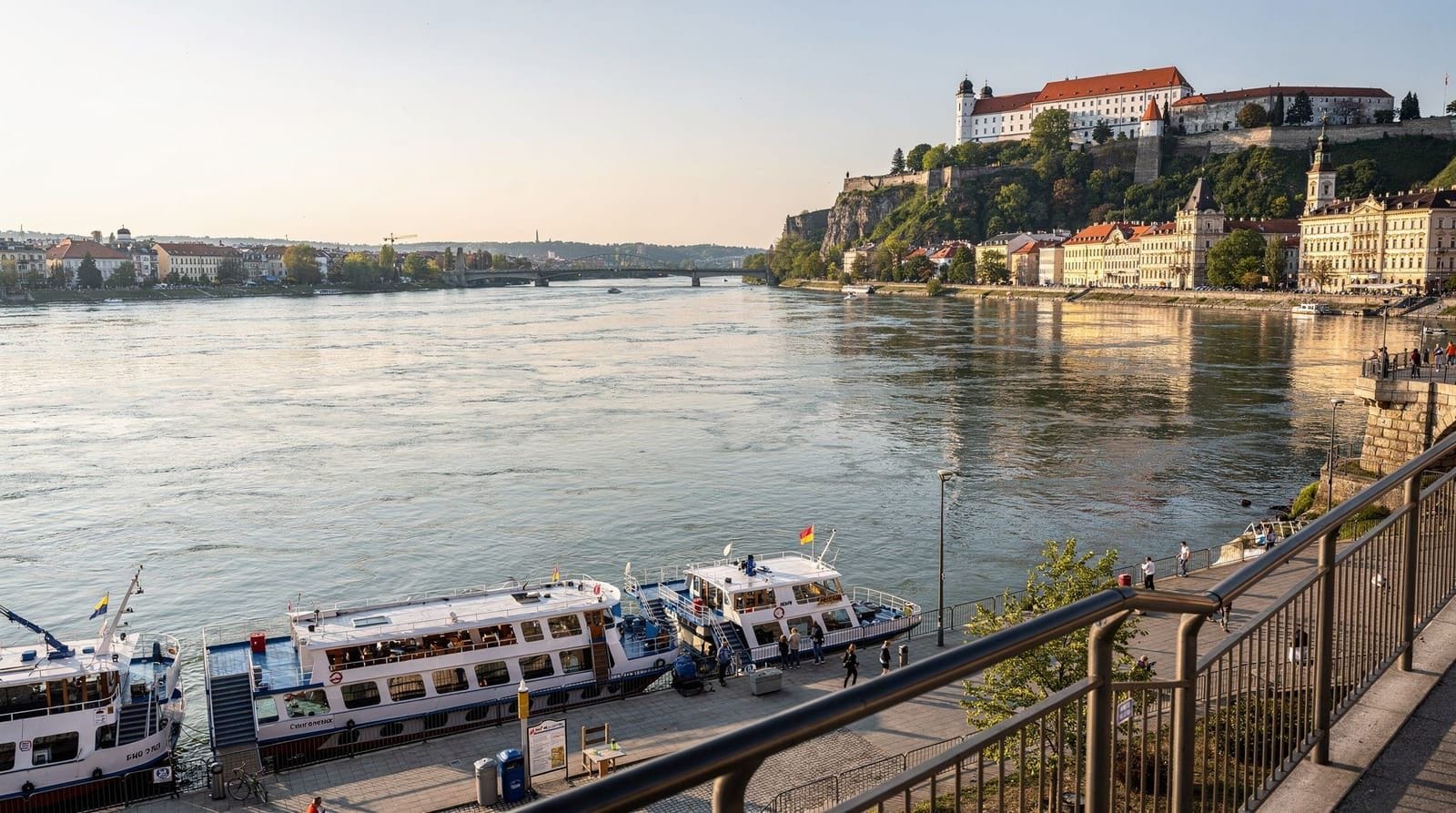
The riverside promenade below the old town — running roughly from the SNP Bridge down toward the port — transforms in summer. Pop-up bars appear on the lower level, terraces extend toward the water, and there’s a relaxed energy that the old town’s narrow streets don’t quite replicate.
Don’t expect a manicured beach here. The Danube embankment is a working river in the city, and the water itself is not for swimming (see the safety note below). What you do get is a place to sit with a beer for 2–3 € and watch the river slide past. In the evening, with the castle lit up above and the SNP Bridge’s UFO restaurant glowing, it’s one of the better free views in central Europe.
The UFO observation deck and SNP Bridge is worth going up once — the panorama across the Danube in summer evening light is excellent.
River beaches and swimming spots
Bratislava residents are practical about swimming. The Danube’s main channel has strong currents and significant barge traffic; you don’t swim in it. Instead, there are several good alternatives within 30–45 minutes of the centre.
Čunovo reservoir sits about 15km southeast of central Bratislava, accessible by bike along the Danube cycle path in about 45–55 minutes, or by bus in around 30 minutes. The reservoir was created when the Gabčíkovo dam was built, and it’s now used for white-water canoeing (there’s a proper kayak canal) and leisure swimming. The water is calm, the banks are sandy in places, and it’s popular but rarely overcrowded on weekdays. Entry to the water areas is free; some facilities cost a little extra.
Zlaté Piesky (Golden Sands) is closer and busier. It’s a cluster of artificial lakes in Bratislava’s eastern suburbs — about 20 minutes from the city centre by bus 65 from Trnavské mýto. This is the city’s main local beach: sun loungers, paddleboats, a water park for families, beach volleyball courts, and a full range of food stalls. Entry fees are low, typically 3–5 €. It’s genuinely pleasant in the way that local city beaches are — unpretentious, full of families, slightly chaotic, fun.
Senec Sunny Lakes, 30 minutes from Bratislava by bus or car, is a step up in scale. A whole cluster of lakes with accommodation, watersports, and a proper summer-holiday atmosphere. It’s a good choice if you want a half-day or full day away from the city — the Senec destination page has the detail on getting there and what to expect.
Cycling along the Danube
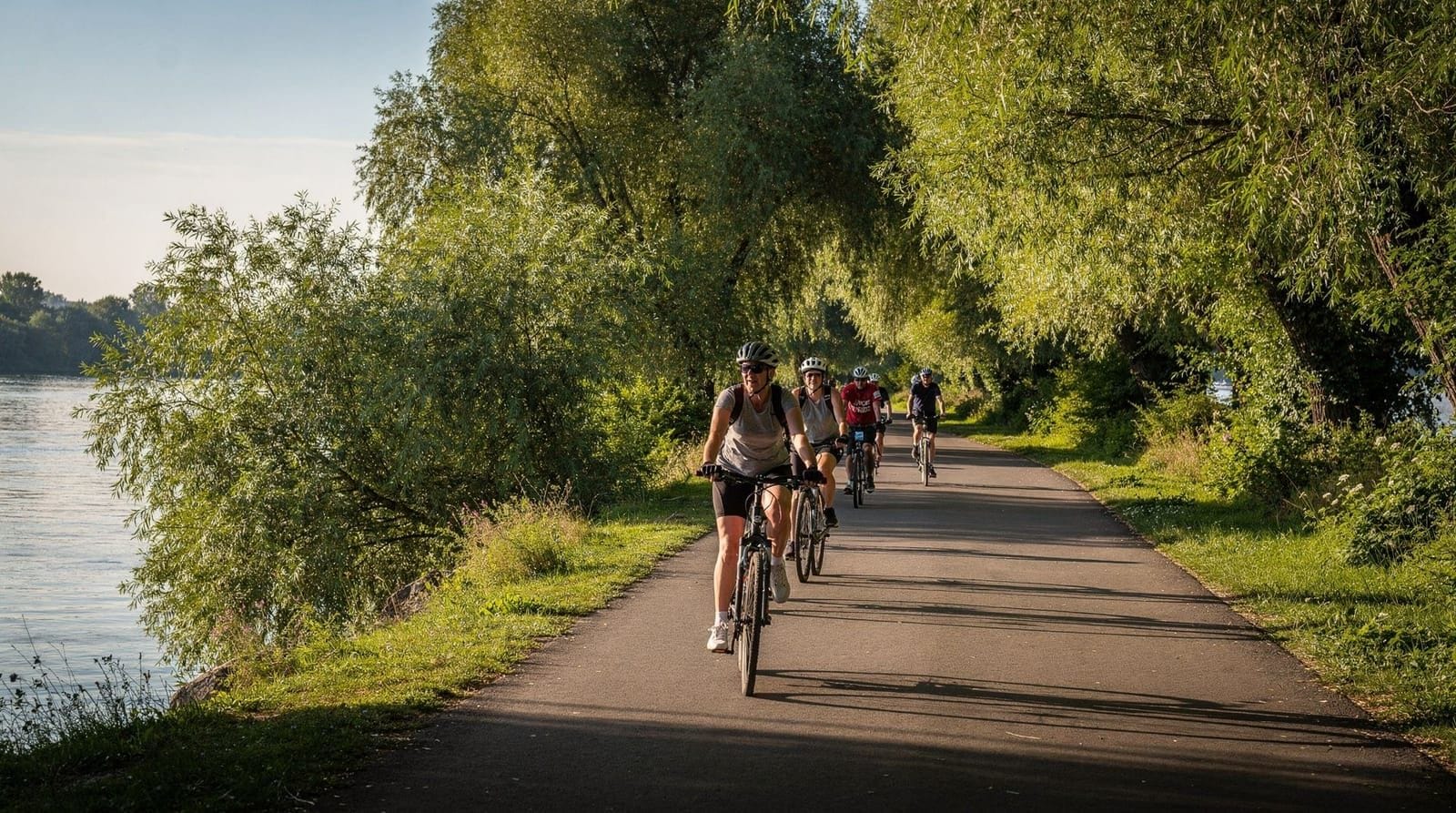
The Danube Cycle Path — part of EuroVelo 6, which eventually connects the Atlantic to the Black Sea — passes directly through Bratislava. In summer it’s one of the best ways to spend a morning.
Upstream toward Devín: The path follows the river west from central Bratislava for about 10km to reach Devín Castle, perched dramatically above the confluence of the Danube and the Morava. The ride is flat, well-surfaced, and passes through quiet riverside woodland. Round trip is 20km — easily done in a relaxed two hours with a stop at the castle. The castle itself charges around 5–7 € entry and is genuinely worth it; the Devín Castle day trip guide covers the visit in detail. This is one of the better half-days you can spend around Bratislava, whatever the season.
Downstream toward Čunovo and Danubiana: The other direction takes you southeast along the Danube toward the reservoir and the Danubiana art museum (see below). About 15km each way on good paths.
Bike rental is available at several points in central Bratislava, including near the old town and at various hotels. Expect to pay 15–25 € per day for a decent city or hybrid bike. There’s also a public bike-share system for shorter urban trips. The Danube riverside cycling guide goes into route detail and rental options.
GetYourGuideBratislava riverside, castle or complete city segway tourCheck availability →Danubiana Meulensteen Art Museum
This is one of those places that’s genuinely hard to categorise and genuinely worth going to. Danubiana sits on a narrow peninsula that juts into the Danube near Čunovo — surrounded by water on three sides, with the Slovak and Hungarian banks visible across the river. The building is a striking piece of contemporary architecture that makes sense of its location rather than fighting it.
The collection is modern and contemporary art, rotating exhibitions alongside a permanent collection. Quality varies, as it always does in contemporary art spaces, but the setting alone — the light off the water, the silence, the sense of being on a peninsula in the middle of a great river — is worth the journey. Entry is around 10 €.
Getting there is part of the appeal. By bike along the Danube path it’s about 15km from central Bratislava — a flat, easy ride that takes 45–60 minutes and lets you swim at Čunovo on the same trip. By bus it’s around 30 minutes. The Danubiana and Čunovo destination page has the practical detail.
Combine it with a morning swim at the Čunovo reservoir and you have a perfect summer day out that costs almost nothing.
Danube boat options
The river is obviously best experienced on the water, and there are several distinct options depending on what you want.
Short city cruises: The most accessible option. One to two hours on the Danube, usually departing from the main passenger terminal near the old town. These cover the central Bratislava stretch — past the castle, under the SNP Bridge, sometimes as far as Devín. Lunch and evening cruise versions exist. Expect to pay 15–25 €. Good for orientation, pleasant for an evening. The Danube cruises overview covers what’s available in detail.
GetYourGuideBratislava panorama cruise on the Danube RiverCheck availability →Cruise to Devín Castle: A slower, more scenic alternative to cycling. The boat takes about 1.5 hours upstream to Devín — longer than the bike ride, but you’re sitting down with a drink and watching the landscape change. The return journey is faster. This is a nice option for a relaxed half-day if you don’t want to cycle.
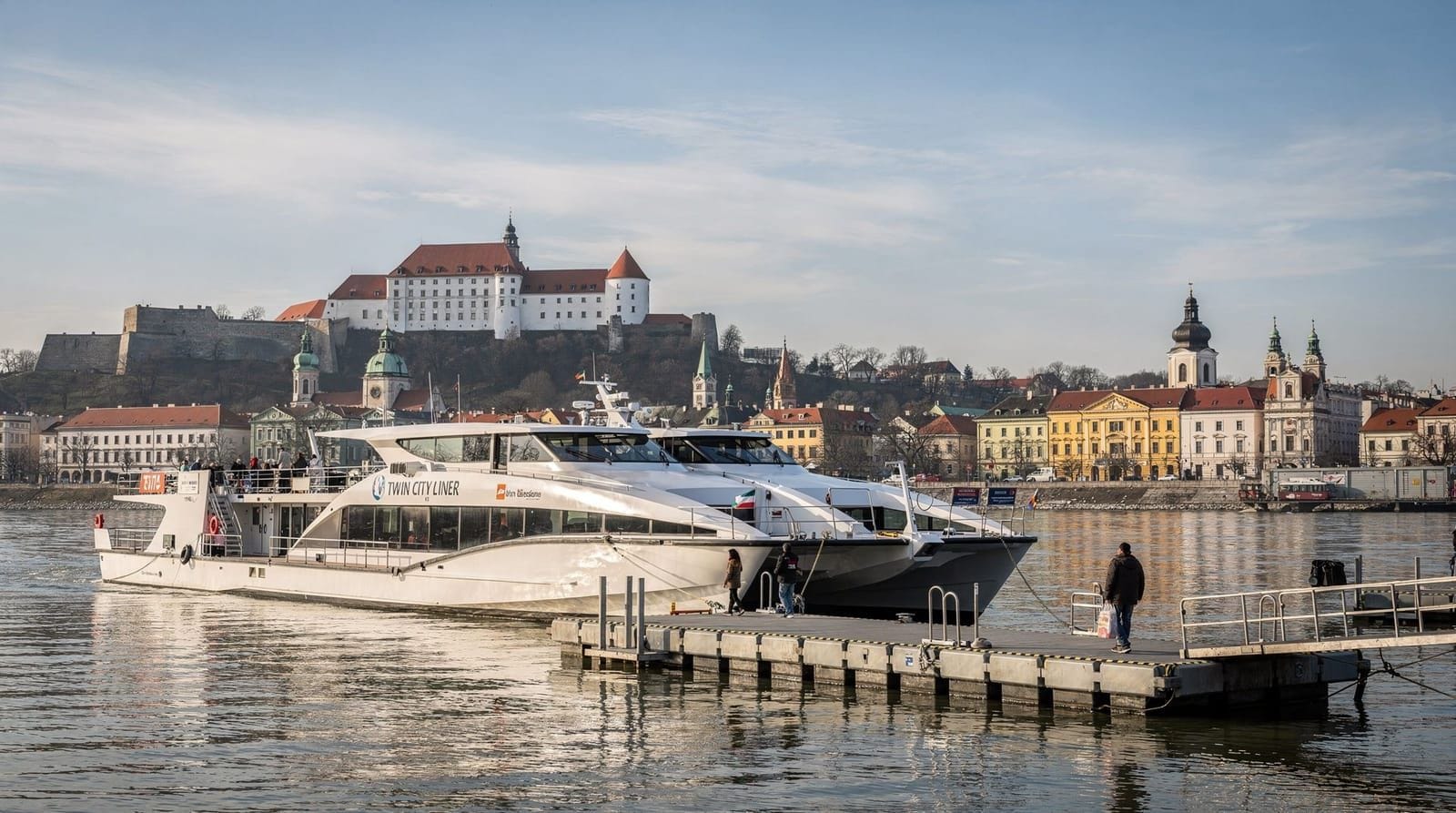
Twin City Liner to Vienna: This is the standout summer option for anyone combining Bratislava with Vienna. The fast catamaran runs several times daily in summer, connecting the two city centres in about 75 minutes — dock to dock, no airport stress, no train stations on the edge of town. The fare is roughly 30–40 € one way. It’s genuinely one of the more pleasant ways to move between two capitals, and in summer the views of the Slovak and Austrian Danube landscapes are excellent. Book ahead for July and August — it fills up. The Twin City Liner guide and the broader Danube cruise to Vienna page cover booking and practicalities.
Evenings in the old town
The old town is at its most atmospheric in summer evenings, when the heat has dropped and the light goes golden around 20:00. The streets are still busy but the midday chaos has calmed.
Hviezdoslavovo námestie is the long, tree-lined square running from the Slovak National Theatre toward the Danube. In summer it’s lined with outdoor terraces on both sides — better value and more local-feeling than the heavily touristed Hlavné námestie, which has its charm but prices to match. The best restaurants in the old town guide covers where to eat well without overpaying.
For drinks specifically, the riverside bars below the UFO bridge are worth knowing about. They’re slightly hidden — down a ramp from the embankment road — but that’s part of the appeal. A cold beer at 2.50 € watching the Danube at 21:00 in late July, with the castle silhouette above: there are worse ways to end a day. The best bars in the old town page has the current list.
The rooftop options in Bratislava are limited compared to some capitals, but there are a few. The views from Bratislava Castle’s courtyard (free after entry, open until late in summer) are among the best in the city — across the Danube into Petržalka and the floodplain beyond. The Bratislava Castle guide has opening hours and what to expect.
Summer festivals and events
The city calendar fills up considerably in summer. A few anchors:
Bratislava City Days typically run in late June — outdoor concerts, street performers, food stalls in the squares and parks. Free and genuinely lively.
Open-air events at the castle: The castle courtyard hosts concerts and cultural events throughout summer. Programming varies year to year; check the Bratislava City website closer to your visit.
Pohoda Festival: Not in Bratislava itself — it takes place in Trenčín, about 1.5 hours northeast by train — but it’s Slovakia’s biggest and most internationally recognized music festival, usually held in July. If your dates align and the lineup appeals, it’s worth building a trip around.
The summer season also overlaps with the beginning of the wine harvest cycle. The Small Carpathians wine region starts to come alive from late August, and by September it’s full swing. The Small Carpathians wine guide and the Pezinok and Modra wineries page are useful if you’re arriving at the end of August and want to combine beach days with wine-country day trips.
Day trips from Bratislava in summer
The heat actually makes a few day trips more appealing than they’d otherwise be — cooler countryside, river settings, shade.
Devín Castle remains the easiest and most rewarding. 20 minutes by bus 29 from the old town, or the bike ride along the Danube described above. The ruined castle on its cliff above the river confluence is dramatic in any season but particularly photogenic in summer morning light. Devín Castle destination page and the Devín Castle guide cover everything you need.
Small Carpathians: The forested hills 30–40 minutes from the city are noticeably cooler than the city or the Danube plain. A hike to Červený Kameň castle (about 30 minutes by bus to Modra or Pezinok, then walking or local bus to the castle) gives you medieval architecture, cool forest air, and a very different landscape from the flat river country. The Small Carpathians day trip guide and hiking guide are the practical starting points.
Vienna: Obvious but worth saying — a day trip or overnight to Vienna in summer is easy by the Twin City Liner or by train (about 1 hour). The combination of Bratislava and Vienna in one trip is genuinely underrated. The Bratislava–Vienna combo itinerary and the Vienna day trip guide lay out the options clearly.
Budapest: 2.5 hours by train or bus. Longer as a day trip but very doable — and Budapest in summer has its own river beach culture (the Danube ruin bars, the outdoor pools). The Budapest day trip guide covers the logistics.
Practical notes for summer
Safety on the water: The Danube’s main channel is not for swimming. The current is strong, the water is cold below the surface, and barge traffic creates dangerous underwater turbulence. Use the designated lakes and reservoir areas — Čunovo, Zlaté Piesky, Senec. This is not overcautious advice; locals take it seriously.
Sun and heat: Between 11:00 and 16:00 in July and August the sun is punishing. If you’re doing the old town walking circuit or a castle visit, start early (before 10:00 is ideal) or go late afternoon. Factor in shade — the old town walking guide routes include shaded streets. Sunscreen and a water bottle are genuinely necessary, not optional.
Water: Tap water in Bratislava is good and safe. The city has drinking fountains in several public spaces. Use them. Buying bottled water constantly is unnecessary and expensive.
Budget: Summer prices are broadly similar to the rest of the year — Bratislava doesn’t have dramatic seasonal surges in most restaurants and bars. A sit-down meal runs 8–15 €, a beer 2–3 €, and a comfortable daily budget covering accommodation, food, transport and one or two activities sits around 50–90 € per person. July and August are the peak months for accommodation booking; prices go up and availability tightens, so book ahead. The budget guide has the full breakdown.
Getting around: The public transport guide covers trams, buses and the bike-share. For summer specifically: trams and buses are air-conditioned (mostly), which makes them preferable to walking in peak heat. The bike paths along the Danube are shaded in sections and have their own breeze from the river.
For a full picture of what to do across the summer season, the summer on the Danube guide is the companion piece to this one.
Which swim spot suits you
| Spot | Distance from centre | Vibe | Cost |
|---|---|---|---|
| Čunovo reservoir | ~15km, 45–55 min by bike or ~30 min by bus | Calm, sandy banks, kayak canal nearby | Free water access, some facilities extra |
| Zlaté Piesky | ~20 min by bus 65 | Busy local city beach, families | Around 3–5 € |
| Senec Sunny Lakes | ~30 min by bus/car | Larger, resort-like, watersports | Varies by facility |
Frequently asked questions about summer on the Danube
Can you actually swim in the Danube in Bratislava?
Not in the main river channel — the current is strong and barge traffic makes it unsafe. Locals swim instead at nearby managed spots: the Čunovo reservoir, the Zlaté Piesky lakes, and Senec Sunny Lakes, all within 20–45 minutes of the centre. See the swim spot comparison above for which suits your trip.
Is the Twin City Liner to Vienna worth it in summer?
Yes, if you want a scenic and low-stress way to combine the two capitals. The catamaran takes about 75 minutes dock-to-dock and costs roughly 30–40 € one way — more than the train, but with river views and no station transfers. Book ahead for July and August sailings. See the Twin City Liner guide for schedules and booking.
tours.river-cruise
Verified deep-linked GetYourGuide tours. Book through these links and we earn a small commission at no cost to you.