Best views in Bratislava: where to see the city from above
Bratislava is a compact city, which means its best viewpoints are genuinely within reach — no long drives, no queues around the block. What you do get is a surprisingly varied set of perspectives: a communist-era suspension bridge with a UFO-shaped restaurant on top, a medieval gateway tower peering down at cobblestones, a hilltop war memorial with almost no tourists, and a ruined castle perched above a river confluence that was, within living memory, the edge of the Iron Curtain.
This guide ranks six viewpoints honestly — what they cost, when to go, what you actually see, and whether they are worth your time.
At a glance
| Viewpoints ranked | 6, from the UFO bridge deck to the Kamzík TV tower |
| Cost | Free (castle terrace, Slavín) to around 8 € (UFO deck) |
| Time needed | 30–45 minutes per stop; a full afternoon for two or three |
| Getting there | All reachable on foot from the old town except Devín and Kamzík (bus) |
| Best time | Sunset for the UFO deck and castle terrace; morning for Slavín and the tower |
How the six viewpoints compare
Before going into detail, here is the short version:
- UFO/SNP bridge deck — best overall view, small fee, stunning at night
- Bratislava Castle terrace — free, excellent at sunset, crowded in summer
- Michalská brána tower — rooftop old-town views, cheap, slightly cramped
- Slavín memorial — free, panoramic, almost no tourists
- Devín Castle cliff — dramatic, historically loaded, worth the bus ride
- Kamzík TV tower — most relaxed, best for forest-plus-city combination
1. UFO observation deck (Most SNP)
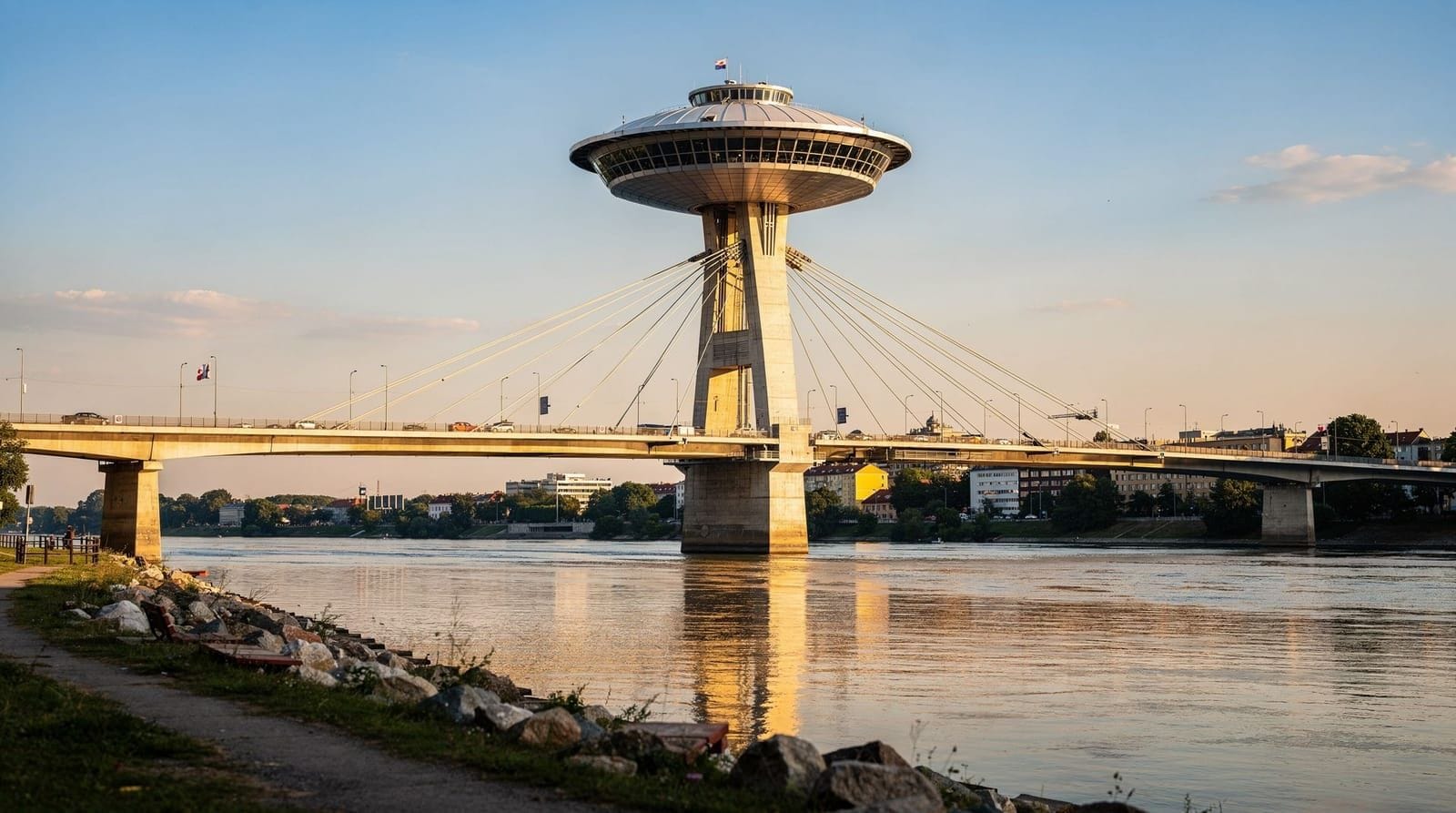
The SNP bridge — Bratislava’s single suspension bridge — is hard to miss. The pylons hold a disc-shaped structure 85 metres above the Danube, and that disc houses both an observation deck and a restaurant called UFO. The nickname is self-explanatory.
What the view looks like. You step out onto the circular open-air walkway and get an unobstructed 360-degree panorama. To the north: the castle hill and the old town spread below you. To the south: Petržalka, the vast concrete housing estate built during the communist era, which is home to around 110,000 people and is one of the most densely populated areas in central Europe. To the east and west: the Danube stretching in both directions, with the flat Danubian plain fading toward Hungary. On clear days you can pick out the Austrian border and the start of the Small Carpathians.
Practicalities. Entry to the observation deck costs around 8 €, and that fee is fully redeemable against food or drinks at the restaurant — so if you buy a coffee or a glass of wine, the deck itself costs you nothing extra. The elevator ride takes seconds. The restaurant is upscale and pricey (main courses in the 25–40 € range), but nobody will chase you out for ordering just a drink.
Best time to go. The golden-hour window 30–40 minutes before sunset is the classic answer — the castle and old town glow amber and the light on the Danube is genuinely beautiful. But the night view, with the bridge lights and city grid below, is arguably more spectacular. If you are here for photography, consider two visits: one at dusk, one after dark.
Tips. Book a table at the restaurant if you want to dine — it fills up. For the deck only, just show up. A light jacket is useful even in summer; the height creates its own breeze.
Read the full breakdown in our UFO observation deck guide.
GetYourGuideBratislava Old Town with castle private tourCheck availability →2. Bratislava Castle terrace
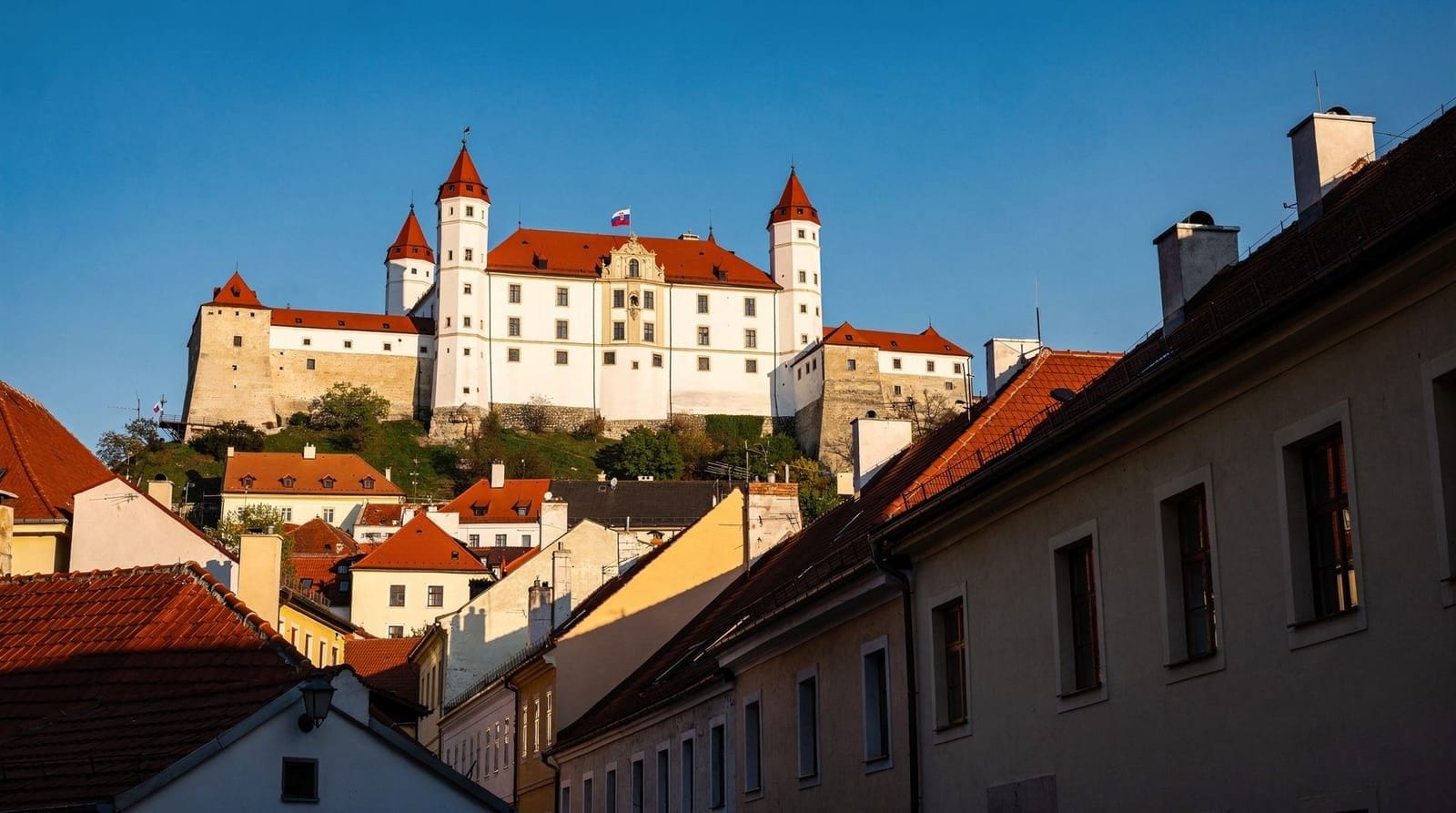
The castle sits on a promontory above the old town, and its south and east terraces give you one of the cleanest views of the Danube corridor you will find anywhere in Slovakia. It is also free.
What the view looks like. From the main terrace you look east and south: the SNP bridge directly below you, Petržalka behind it, the Danube bending toward Hungary, and on exceptionally clear days a faint line of Austrian countryside beyond. To the west you can see the start of the Small Carpathians. The castle courtyard gives you a good view back over the old town rooftops.
Practicalities. Entry to the castle courtyard and terraces is free at all hours. The interior museum — which covers Slovak history from the Stone Age through to the 20th century — costs around 10 €, and it is genuinely worth it if you have two hours to spare. But for the view alone, just walk up.
The walk from the old town takes about 15 minutes via a staircase that starts near St. Martin’s Cathedral. There is also a road if you prefer to drive or take a taxi.
Best time to go. Summer sunset is the classic moment — arrive 30–45 minutes before the sun drops behind the Small Carpathians and find a spot on the terrace. Spring and autumn mornings are also excellent, especially if there is low mist over Petržalka. In winter the view is crisp and the crowds disappear almost entirely.
Tips. Bring a jacket in any season except peak summer; the terrace is exposed. The castle café is decent and reasonably priced by Bratislava old-town standards.
Our Bratislava Castle guide covers the full history and interior.
3. Michalská brána (Michael’s Gate) tower
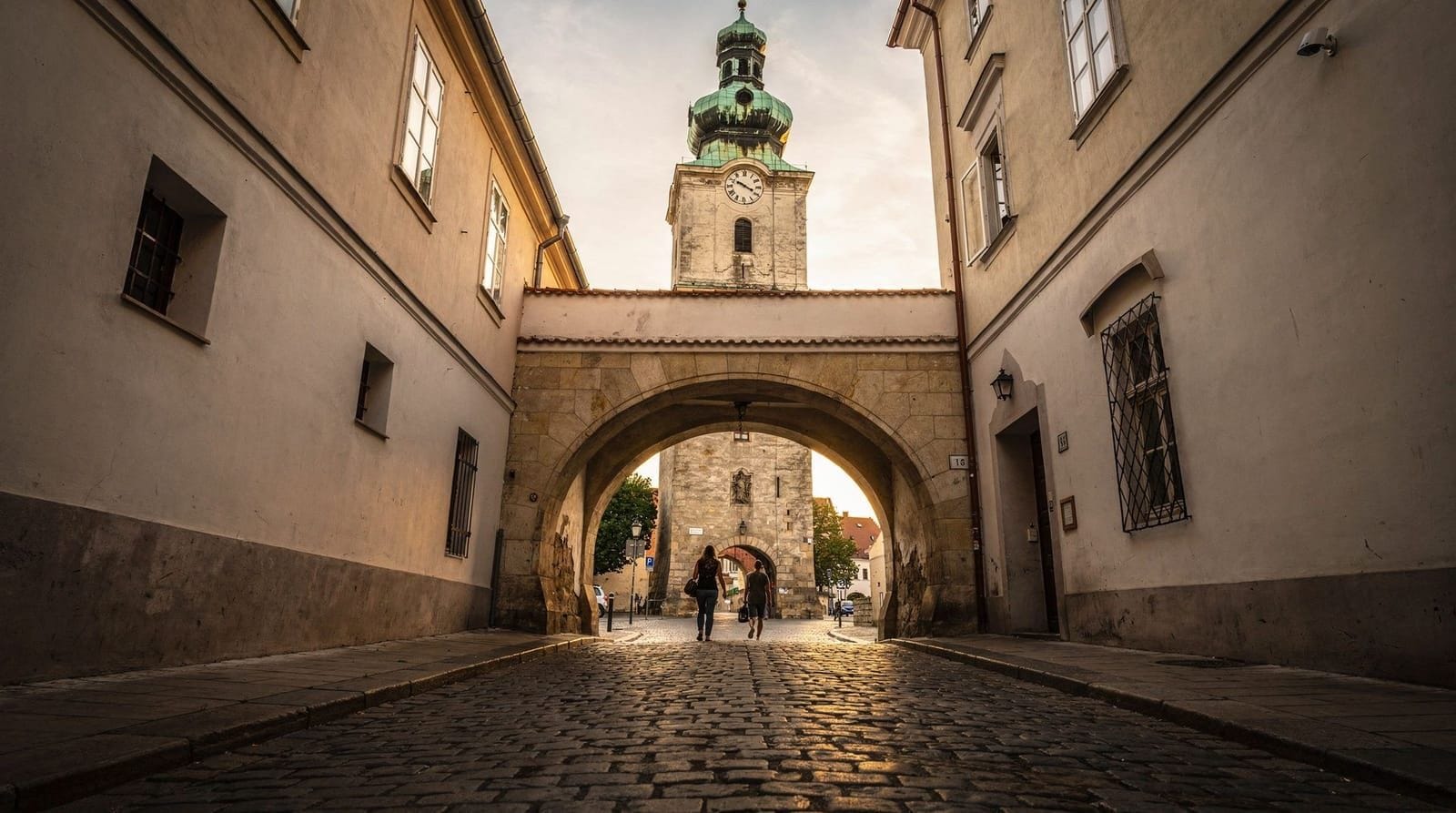
Michael’s Gate is the only surviving medieval city gate in Bratislava, and its tower is climbable. The result is a view that none of the other spots on this list can replicate: you are looking DOWN at the old town rooftops from the inside, not at the Danube from above.
What the view looks like. The tower puts you at roughly the same height as the church spires and upper floors of the old town’s baroque buildings. Below you: the pedestrian street (Michalská ulica), the rooftops of medieval and baroque townhouses, the occasional courtyard garden you would never notice at street level. It is an intimate, detailed perspective rather than a grand panorama.
Practicalities. Entry costs around 5 €. The tower is narrow — the staircase is a genuine medieval spiral — and the viewing platform at the top is small enough that four or five people fills it. Go early or in the late afternoon to avoid the bottleneck.
Best time to go. Midday light works well here because you are looking down rather than toward the horizon, so the harsh overhead sun does not create unflattering shadows. Early morning is quieter and the streets below are almost empty.
Read more in our Michael’s Gate guide.
4. Slavín memorial
Slavín is the Soviet war memorial on a hill in the residential neighbourhood of the same name, about 15–20 minutes on foot from the old town (or a short bus ride). It commemorates the Soviet soldiers who died taking Bratislava in 1945. It is also one of the most underrated viewpoints in the city.
What the view looks like. The memorial sits at around 200 metres above sea level — higher than the castle. From the esplanade around the obelisk you can see the city spread north and west, the Small Carpathians rising behind it, and the Danube below to the south. Because you are looking from a residential hilltop rather than a purpose-built viewpoint, there is almost nothing between you and the horizon.
Practicalities. Completely free, open at all times. The bus that runs up the hill drops you a short walk from the memorial.
The monument itself. The Soviet obelisk is 37 metres tall, topped with a soldier figure. The whole complex is simultaneously imposing and melancholy — 6,845 soldiers are buried here. For context on Bratislava’s communist-era history, our communist and Iron Curtain history guide is worth reading before or after.
Tips. This is one of the few viewpoints where you are likely to have space to yourself, especially on weekday mornings. Locals come here to walk dogs and jog. The neighbourhood is safe and pleasant. If you are combining it with the castle, Slavín is a 20–25 minute walk west of the castle hill.
5. Devín Castle cliff
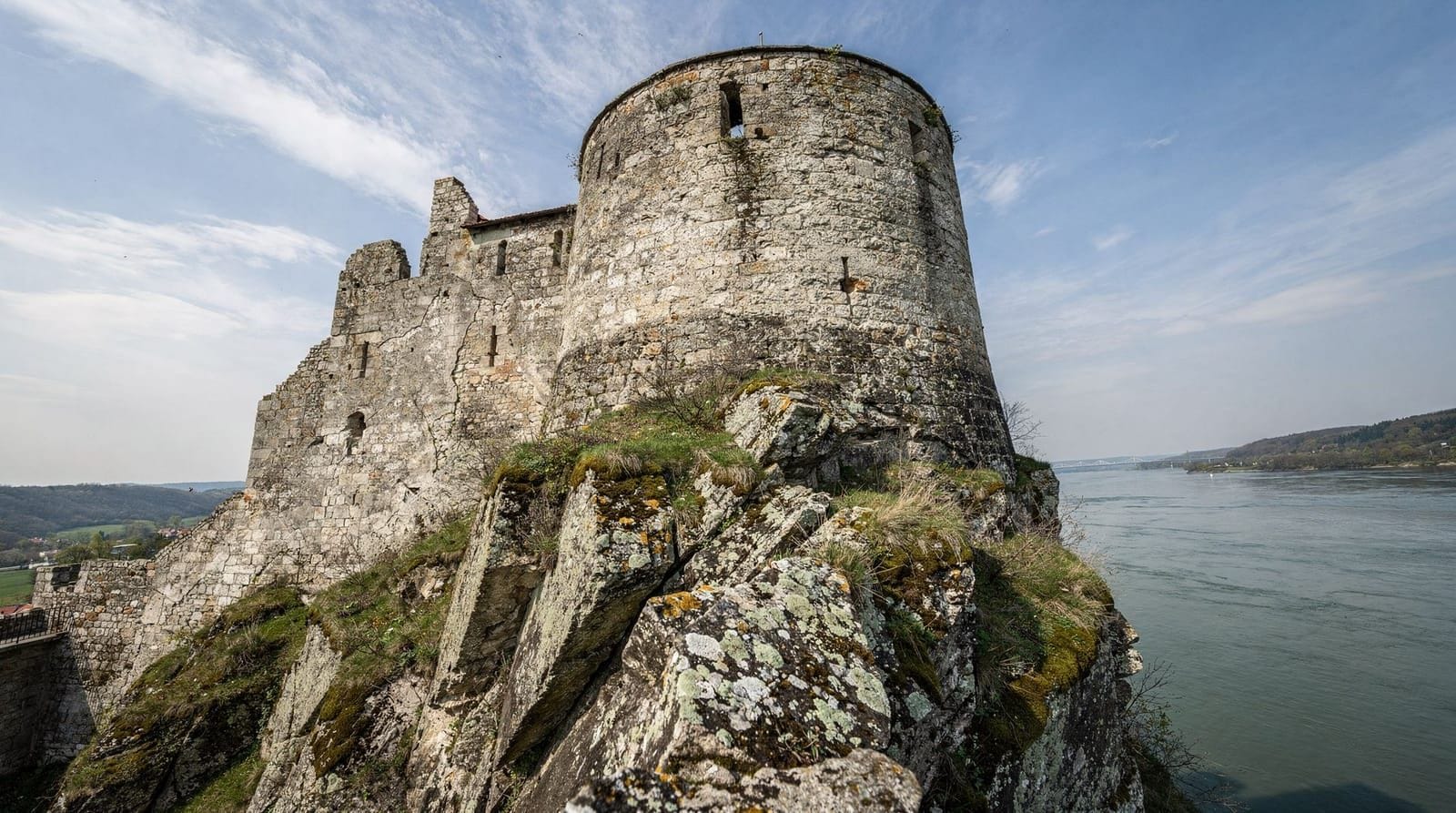
Devín is not technically inside Bratislava — it is a separate village about 9 kilometres west of the city centre — but bus 29 from the old town gets you there in around 30 minutes. The ruined castle at its heart sits on a dramatic basalt cliff at the confluence of the Danube and Morava rivers.
What the view looks like. This is the most historically charged view on this list. Below the cliff: the Danube and Morava rivers merging, with Austria on the opposite bank. The border crossing at Devín was one of the most tightly controlled points on the Iron Curtain. You can look directly into Austrian territory. Back toward Bratislava, the city sits in the distance with the SNP bridge visible on clear days.
Practicalities. Entry to the castle ruins costs around 5 €. The site is managed by the Bratislava City Museum. A small café operates in summer. The bus runs regularly from the stop near the old town market; check the timetable on the Bratislava transport authority site.
Best time to go. Spring and early summer, when the hillside vegetation is green and the rivers are running high. Autumn is dramatic — the foliage above the cliff turns gold and amber. Avoid very windy days if you are going to the upper ramparts.
Historical context. Devín was not just an Iron Curtain border point — the cliff has been fortified since at least the Bronze Age, and the Great Moravian Empire used it as a stronghold in the 9th century. Our Devín Castle guide covers the full history.
GetYourGuideBratislava grand city tour with Devín CastleCheck availability →6. Kamzík TV tower (forest hill viewpoint)
Kamzík is the television transmission tower in the Malé Karpaty hills above the city, reached either by hiking through Železná studienka forest park or by taking the chairlift (lanovka) that runs from the lower park station. The tower has a small café/restaurant with a viewing terrace.
What the view looks like. At around 440 metres, Kamzík offers the highest vantage point on this list. But the view is partly obscured by forest, so it is less of a clean panorama and more of a framed picture — the city appearing through the trees, the Danube glinting below, the Austrian plain beyond. It is the least dramatic view here in terms of immediate impact, but the most pleasant as an overall experience.
Practicalities. The chairlift (lanovka) costs a few euros each way and runs seasonally — check current schedules before going, as it closes in bad weather and for maintenance. The forest hike from Železná studienka takes 45–60 minutes and is easy enough for most fitness levels. The tower café is open when the tower is staffed.
Best time to go. Summer, when the lanovka is running and the forest is in full leaf. This is also where Bratislava locals go to escape the heat — the forest is several degrees cooler than the city centre. Our Železná studienka guide has the full hiking and access details.
Practical planning: combining viewpoints
Most visitors have one or two days in Bratislava. Here is how the viewpoints fit together:
One afternoon. Castle terrace at sunset, then walk down to the old town for dinner. The UFO deck is a natural add-on — it is open until late and sits at the far end of the old town waterfront walk (about 20 minutes on foot from the castle hill).
Two days. Day one: Michalská brána in the morning, castle terrace at sunset, UFO at night. Day two: Slavín in the morning (combine with a walk through the Slavín neighbourhood), Devín in the afternoon. This covers all the main perspectives — old town from above, city from height, and the river confluence.
With kids. The castle terrace and Slavín are the most accessible. Devín is good if the children like outdoor exploration. Michalská brána’s narrow staircase may be too tight for pushchairs.
Budget. If you want free views only: castle terrace and Slavín cover you completely, and both are genuinely excellent. If you are paying: the UFO deck (8 €, redeemable) and Michalská brána (5 €) give the most distinct perspectives for the money.
For broader trip planning, our Bratislava in one day itinerary fits several of these into a single efficient loop. If you have more time, the weekend itinerary builds in Devín and leaves room for the castle museum as well.
Beyond the city: day-trip views
Devín aside, two other spots within easy reach offer views that are worth mentioning.
Červený Kameň (Red Stone Castle) in the Small Carpathians — about 35–40 minutes from Bratislava — sits above the wine village of Modra and gives panoramic views over the Danubian lowlands. Our Small Carpathians day trip guide covers how to combine this with wine tasting.
Vienna from the Kahlenberg hill — if you are making the Vienna day trip from Bratislava (about 1 hour by train or the Twin City Liner boat), the Kahlenberg viewpoint north of the city is one of central Europe’s great urban panoramas. Worth factoring in if you are doing both cities.
A note on photography
A few practical things that will improve your photos at these spots:
Filters. A polarising filter makes a real difference at Devín and on the castle terrace — the Danube’s surface goes from a washed-out grey to a deep blue-green. At the UFO at night, a tripod is more useful than any filter.
Timing and weather. The classic golden-hour advice is real, but partially cloudy days often produce more interesting light than perfectly clear ones — broken cloud creates moving patches of illumination across the city. After rain, the air is clean and the light is sharp.
Crowds at the castle. Summer weekends between 10 am and 4 pm are the worst. If your priority is photography, come on a weekday morning in April, May, or September.
For more photography locations around the city, our best photo spots guide covers street-level spots that complement these elevated viewpoints.
Frequently asked questions about Best views in Bratislava
Which Bratislava viewpoint is completely free?
Both the Bratislava Castle terrace and Slavín memorial are free and open at all times, and together they cover most of the panoramic views the city has to offer.
Is the UFO observation deck worth the entry fee?
Most visitors say yes — the fee is redeemable against food or drink inside, and the 360-degree view over the old town, castle, and Petržalka is unlike anything else in the city, especially at night. See the UFO observation deck guide for full ticketing details.
Culture & heritage tours
Verified deep-linked GetYourGuide tours. Book through these links and we earn a small commission at no cost to you.